The Evolutionary Advantage of Immobilization
In the silent, slow-motion battle for survival, plants have developed an arsenal of defenses. While we often think of deadly poisons as the ultimate weapon, some plants have adopted a more calculated strategy: paralysis. This isn’t a failure to kill but a sophisticated evolutionary trade-off. Producing lethal toxins requires a tremendous amount of metabolic energy, much like building a cannon to stop a single intruder. A paralyzing agent, by contrast, is the biological equivalent of a perfectly aimed tranquilizer dart. It neutralizes the threat with far less effort.
This approach offers two distinct advantages. For carnivorous plants, keeping prey alive but immobilized is a matter of practical food storage. A dead insect quickly begins to decay, spoiling the meal before the plant can slowly absorb its nutrients. A paralyzed insect, however, remains a fresh and stable source of nourishment. It’s a strategy that maximizes the return on their predatory investment.
For non-carnivorous plants, the benefit is even more cunning. A paralyzed herbivore clinging to a leaf serves as a living scarecrow. Unlike a dead bug that is quickly removed by scavengers or the wind, a twitching, immobilized pest is a persistent and visible warning to others of its kind. This is one of the most fascinating aspects of the world of plants that paralyze insects; it’s a long-term defensive posture that showcases the incredible foresight of evolution. Nature is full of such clever strategies, and you can find more stories about the wilder side of biology by exploring other amazing adaptations on our blog.
Mechanical Traps and Rapid Movements
Beyond chemical warfare, some plants have become masters of mechanical engineering, devising physical traps that immobilize insects with chilling efficiency. These are not passive structures but active, intricate systems. The most famous are the pitfall traps of pitcher plants. Their vibrant colors lure insects to a slippery rim, called a peristome, which is often coated in nectar. One misstep sends the victim sliding down the waxy inner walls, past downward-pointing hairs, and into a pool of digestive fluid. A 2015 study in PNAS revealed an even more remarkable trick: some species use the kinetic energy of raindrops hitting their lids to catapult insects directly into their traps, a stunning example of passive-dynamic capture.
Other plants use speed as a weapon. The Sensitive Plant employs the well-known Mimosa pudica defense mechanism. Its leaves snap shut at the slightest touch, a reaction known as thigmonasty. While primarily defensive, this rapid movement can dislodge small herbivores or temporarily pin them against the stem, neutralizing them without a drop of poison.
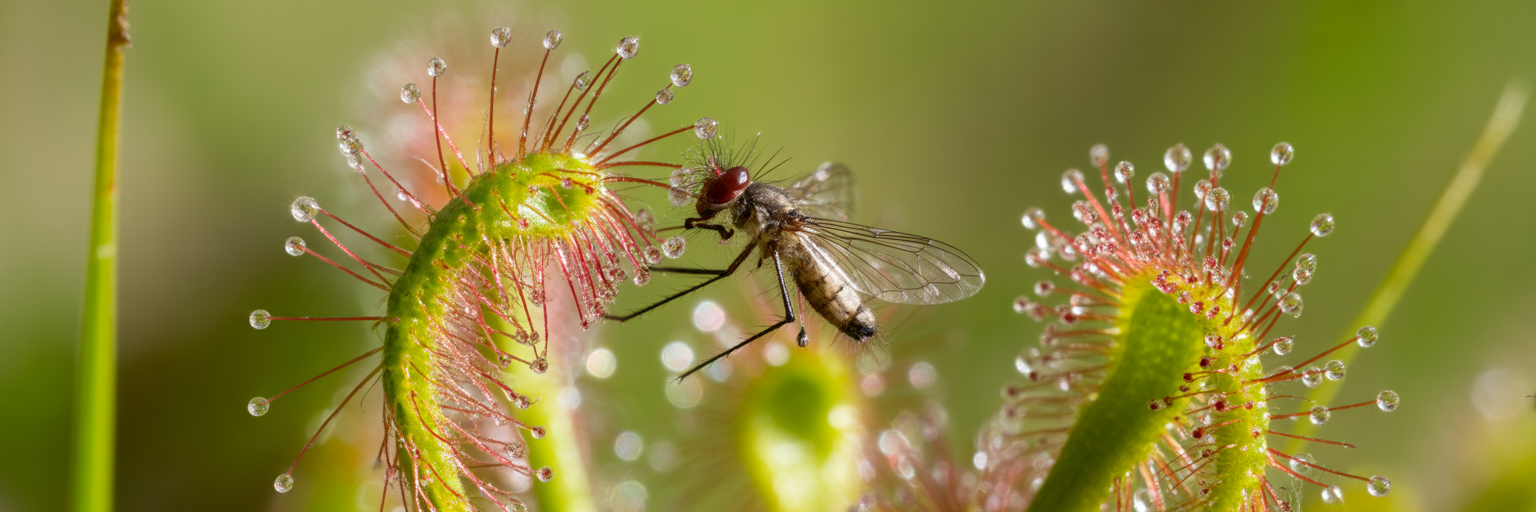
Then there are the adhesive traps, perfected by sundews. The sundew plant insect trap is a marvel of sticky simplicity. Its tentacles are tipped with glistening droplets of mucilage, a sweet-smelling but incredibly tacky glue. When an insect lands, it becomes hopelessly stuck. The plant then slowly curls its tentacles around the struggling prey, securing it for digestion. These diverse carnivorous plant trapping mechanisms show that physical control can be just as effective as chemical intervention. The way a sundew overpowers an insect is an unsettling display of control, much like the strange case of the parasite that turns snails into zombies.
| Trap Type | Example Plant | Mechanism of Action | Primary Goal |
|---|---|---|---|
| Pitfall Trap | Pitcher Plant (Nepenthes) | Insects slip on a waxy rim and fall into a pool of digestive fluid. | Capture & Digestion |
| Rapid Movement | Sensitive Plant (Mimosa pudica) | Leaves fold instantly upon touch, dislodging or temporarily trapping insects. | Deterrence & Defense |
| Adhesive ‘Flypaper’ Trap | Sundew (Drosera) | Sticky tentacles ensnare insects, then curl to secure and digest them. | Capture & Digestion |
This table summarizes the distinct physical strategies plants use to immobilize insects. The examples are chosen to illustrate the diversity of carnivorous plant trapping mechanisms, from passive pitfalls to active movements.
The Subtle Chemistry of Paralysis
While mechanical traps are visually dramatic, the chemical tactics used by plants are arguably more sophisticated. These are not crude, carpet-bombing poisons. Instead, they are highly specialized neurotoxins engineered to disrupt an insect’s nervous system without causing immediate death. It’s a form of biochemical warfare waged with surgical precision. Scientists are still working to isolate the exact compounds, but they generally fall into a few categories:
- Blocking nerve signals from reaching muscles, which causes a limp, flaccid paralysis.
- Over-stimulating nerve receptors, leading to uncontrollable spasms that quickly exhaust the insect into submission.
- Mimicking an insect’s own neurotransmitters to hijack and effectively shut down its central nervous system.
What makes this strategy so brilliant is its specificity. As Knowable Magazine explains in its piece on natural pest control, plants have evolved to use their enemies’ enemies and other subtle tactics to defend themselves. The compounds in plants that paralyze insects are often tailored to insect physiology, leaving other animals, like pollinators or larger herbivores, completely unaffected. This targeted approach is a testament to millions of years of evolutionary refinement. This level of biochemical adaptation is remarkable, reminding us of other survival masters like the frog that freezes solid and thaws back to life.
Paralysis as a Defensive Warning System
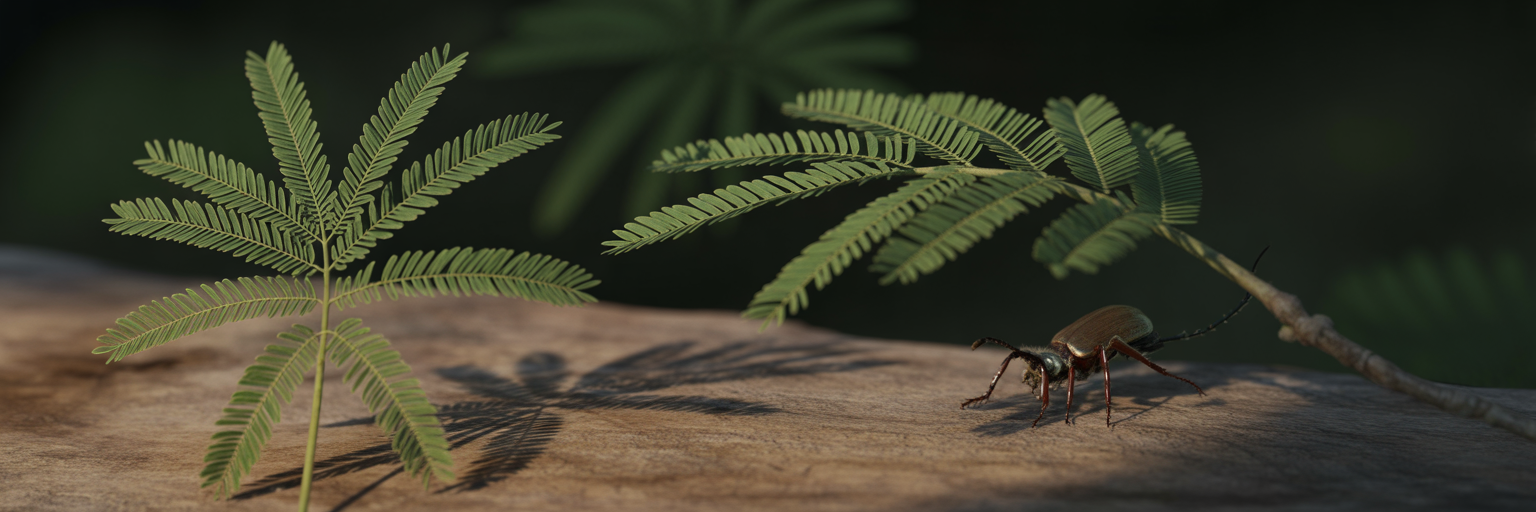
Moving beyond carnivory, paralysis serves as a powerful tool for pure plant defense against insects. Here, the goal isn’t to eat the pest but to teach it a lesson. We can revisit the Mimosa pudica defense mechanism from this new angle. The sudden folding of its leaves does more than just shake off an insect; it makes the plant appear smaller and less appetizing. It’s a visual trick that screams, “I am not worth eating.” This is a form of communication, a clear signal to any would-be herbivore to move along.
This strategy introduces the concept of sub-lethal effects. A plant’s chemicals might not kill an insect but instead make it sick, disoriented, or unable to feed. This negative experience effectively trains the pest and potentially its entire colony to avoid that plant species in the future. It’s a long-term defensive investment that pays dividends across generations of pests.
There is also a wider ecological benefit to this non-lethal approach. By not killing the insect, the plant avoids attracting scavengers or predators that might cause secondary physical damage while foraging for the carcass. It helps maintain a stable, low-threat environment around the plant. This form of signaling is as intricate as some of the most complex communication systems in the animal kingdom, like the reasons why lyrebirds mimic chainsaws and camera shutters.
Bio-Inspired Solutions for Modern Agriculture
These fascinating plant strategies are more than just natural curiosities; they represent a vital, untapped library of sustainable solutions. Scientists are now studying these paralyzing mechanisms to develop a new generation of natural insecticide alternatives. The most promising aspect is their specificity. Imagine a pesticide that could temporarily immobilize aphids on a crop without harming the bees pollinating its flowers or the ladybugs that prey on those same aphids.
This bio-inspired approach could help us move away from broad-spectrum chemical pesticides that disrupt entire ecosystems. We stand firm in our belief that nature holds the blueprints for a more intelligent and sustainable future. The solutions to many of our biggest challenges might already exist, waiting to be discovered in the intricate survival tactics of a humble plant. The world is full of these amazing stories, and you can find more at NatureIsCrazy.com.