The Core Hypothesis of a Second Genesis
Every living thing we know, from the smallest bacterium to the largest whale, shares a common biochemical heritage. All life on Earth is built from the same fundamental blueprint: DNA. But what if this isn’t the only way life can exist? What if another form of life arose independently on our planet and has simply remained hidden from us?
This is the central question behind the concept of a shadow biosphere. So, what is a shadow biosphere? It is a theoretical ecosystem populated by life that uses fundamentally different molecular building blocks. These organisms would be invisible to our current scientific tools, which are designed to detect the biology we already know. It’s like trying to tune into an AM radio station with an FM receiver; you won’t hear the broadcast not because it isn’t there, but because your equipment isn’t designed to pick it up.
This idea goes far beyond discovering a new species in the rainforest. We are talking about life that is alien at its most basic chemical level. The theory suggests a “second genesis,” an event where life started more than once on the early Earth. While our DNA-based ancestors came to dominate the planet, it’s possible another lineage survived, evolving in parallel within isolated niches.
This possibility forces us to confront a critical bias. Our entire search for life, both on Earth and beyond, has been shaped by a sample size of one: our own. The shadow biosphere hypothesis suggests that we might need to start looking for something we can’t yet imagine.
What This Hidden Life Might Look Like

Moving from the theoretical to the tangible, what might this life with different biochemistry actually look like? The possibilities are as fascinating as they are speculative. Instead of DNA and RNA, these organisms could use alternative genetic molecules, such as theoretical polymers known as PNA or TNA, to store their biological information.
One of the most compelling ideas is the concept of “mirror life.” Chirality is a property of molecules, much like our left and right hands are mirror images of each other but not identical. All known life uses “left-handed” amino acids to build proteins. A shadow biosphere could be built from the “right-handed” mirror images. Such life would be biochemically incompatible with our world. An organism from our biosphere trying to consume a mirror-life organism would be like trying to eat a meal made of plastic; the nutrients would be unrecognizable and unusable.
The infamous “arsenic life” controversy surrounding the GFAJ-1 bacterium was a pivotal moment for these ideas. While the initial claims were later disputed, the debate forced scientists to seriously consider alternative biochemistry theories and question the rigid rules we thought governed all life. It opened the door to imagining organisms that might use a solvent other than water, like ammonia or methane, or harness energy from chemical reactions that are toxic to everything we know.
| Biochemical Feature | Life-as-We-Know-It | Potential Shadow Life Possibilities |
|---|---|---|
| Genetic Material | DNA and RNA | XNA (Xeno Nucleic Acids), PNA (Peptide Nucleic Acids), or other self-replicating polymers |
| Protein Building Blocks | 20 ‘left-handed’ amino acids | ‘Right-handed’ amino acids (Mirror Life), or a different set of amino acids entirely |
| Primary Solvent | Water (H₂O) | Ammonia, methane, formamide, or sulfuric acid in extreme environments |
| Cellular Structure | Lipid bilayer membrane | Non-lipid membranes or structures without discrete cells |
This table contrasts the established biochemistry of all known life with plausible alternatives that could form the basis of a shadow biosphere. These alternatives are based on theoretical chemistry and astrobiological models.
Where We Could Find These Organisms
If a shadow biosphere exists, where would it be hiding? The search focuses on places where our familiar form of life struggles to survive, leaving a potential opening for something different to take hold. These locations fall into a few key categories.
Extreme and Isolated Environments
The most obvious places to look are environments where competition from DNA-based life is low. These extreme refuges could have allowed a second form of life to persist without being outcompeted. Potential locations include:
- Deep-sea hydrothermal vents, where superheated, mineral-rich water creates unique chemical conditions.
- The high-altitude atmosphere, a cold, irradiated environment where microbes are known to exist.
- Hypersaline lakes in Antarctica, which are both incredibly cold and salty.
- Deep subterranean rock formations, isolated from the surface world for millions of years.
Chemically Unique Niches
Environments that are toxic to our form of life could act as a natural filter, creating a sanctuary for different biology. The arsenic-rich waters of Mono Lake in California or volcanic pools with extreme pH levels are perfect examples. In such places, the very chemistry that poisons known organisms might be the foundation for an entirely different ecosystem.
Hiding in Plain Sight
Perhaps the most unsettling idea is that these undetected organisms on Earth are not in some remote, exotic location, but are all around us. Microbiologists face a well-known problem called the “Great Plate Count Anomaly,” which reveals that we can only culture and study less than 1% of the microbes in any given sample. The other 99% represent a vast biological “dark matter.” Could a shadow biosphere be hidden within this uncultured majority? As an article in Science.org highlights, it’s possible that scientists are already encountering this strange life but are discarding it as contamination or experimental anomalies because it doesn’t fit expected patterns.
The Scientific Hunt for a Shadow Biosphere
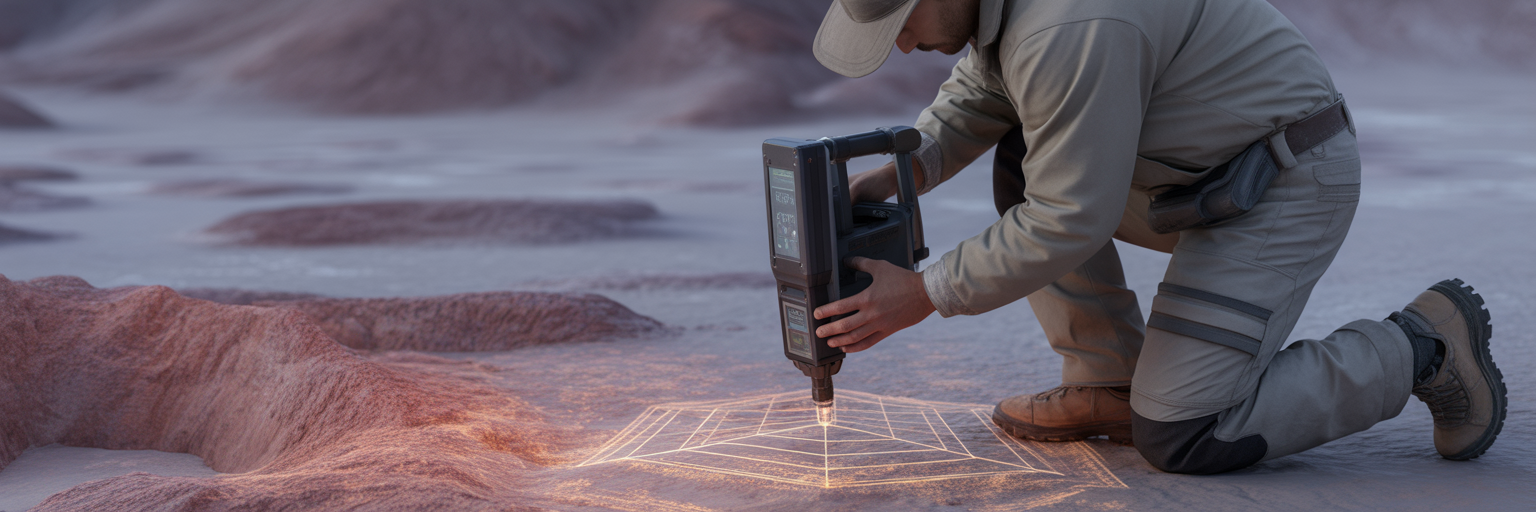
Finding something that is, by definition, invisible to your current tools requires a complete shift in strategy. The hunt for a shadow biosphere is not about using more powerful microscopes; it’s about developing entirely new, “biochemistry-agnostic” detection methods that do not assume life must have DNA or proteins.
Scientists have proposed several clever strategies to begin this search. These methods are designed to spot the telltale signs of biology without knowing its specific chemistry:
- The “poisoned nutrient” approach. Researchers could create a lab culture medium with only “mirror” molecules, such as right-handed amino acids and sugars. Known life would starve, but any mirror life present in the sample would thrive and reveal itself.
- Searching for molecular complexity. Using advanced instruments like mass spectrometers, scientists can analyze environmental samples for complex polymers. Molecules that are too large and structured to have formed by random chance could be a sign of a non-standard biological process.
- Analyzing isotopic ratios. All living things process elements in predictable ways, leaving behind a specific isotopic signature. Finding unusual ratios of elements like carbon or sulfur that cannot be explained by known geology or biology could point to a novel metabolic process at work.
This work represents the very first step in searching for alien life on Earth, a process that begins right in our own backyard. However, it is important to maintain a balanced perspective. This is a high-risk, high-reward field with no direct evidence yet. Many anomalies that initially seem promising turn out to have conventional explanations. The search requires immense patience and scientific rigor.
Why Finding It Would Change Everything
Discovering a shadow biosphere would be more than just a scientific curiosity; it would fundamentally reshape our understanding of the universe and our place in it. The implications would be profound and far-reaching.
First, it would redefine biology itself. Finding a second, independent genesis of life on our own planet would transform our view of life from a miraculous, one-off fluke into a more common and perhaps even predictable outcome of planetary chemistry. Life would no longer be a single tree of life but a forest.
This discovery would also have a massive impact on astrobiology. If life started twice on one planet, it dramatically increases the odds that it exists elsewhere in the cosmos. It would give scientists a new, proven template of life with different biochemistry to look for on Mars, Europa, or distant exoplanets.
Beyond the philosophical, there could be revolutionary practical applications in biotechnology, from novel enzymes that function in extreme conditions to new materials with unique properties. Ultimately, realizing we share our planet with a hidden, separate form of life would be a moment comparable to the Copernican Revolution. It would forever alter our biological story and our connection to the cosmos.