A Bizarre Transformation in the Wild
Deep within a North American forest, an amber snail moves in a way that defies its nature. Its eyestalks, normally slender and muted, are swollen into thick, pulsating tubes. Bright green and yellow bands pulse rhythmically, creating a lurid display that seems entirely out of place in the quiet undergrowth. This is not some rare mutation or a vibrant mating ritual. It is the work of an internal puppeteer, a parasite that has seized control of its host’s body and mind.
This creature is what has become known as a “zombie snail,” a living vehicle for a master manipulator. The strange sight of a snail with pulsating eyes is the first clue to a complex biological drama unfolding. The snail is no longer in command of its own destiny. Instead, it has become a pawn in a brilliant and ruthless survival strategy, driven by an organism it cannot see or fight.
Meet the Green-Banded Broodsac
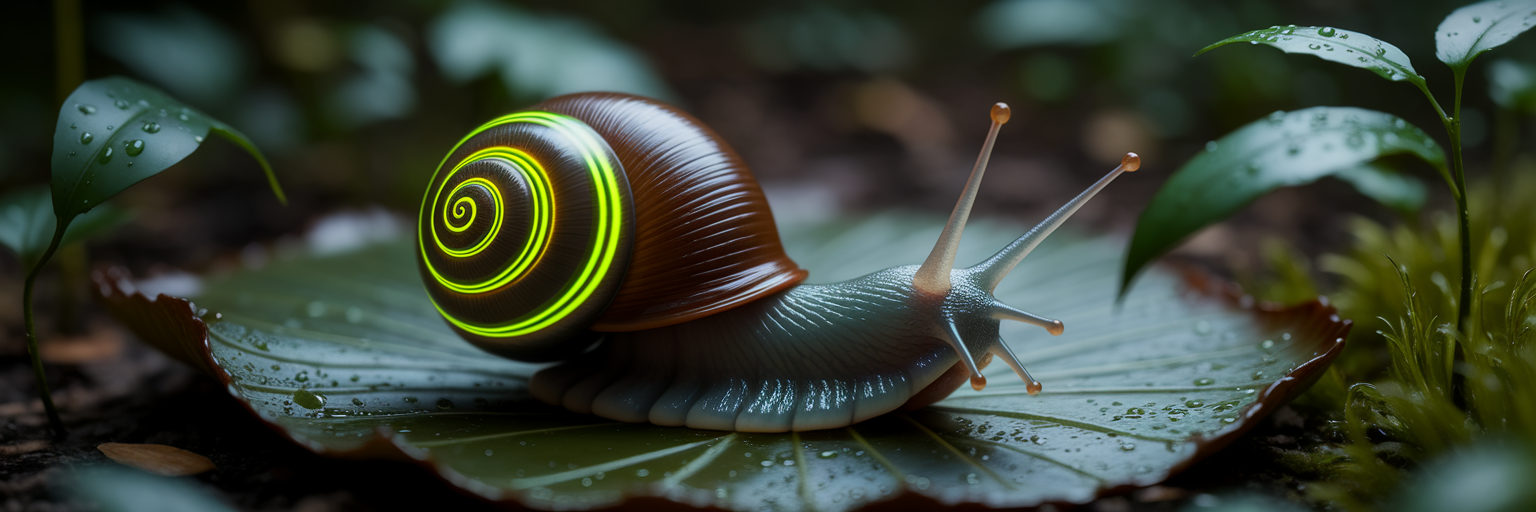
The architect behind this unsettling transformation is a parasitic flatworm named Leucochloridium paradoxum. More commonly known as the green-banded broodsac, this organism has a single, critical objective: to reach the digestive system of a bird. Birds are its definitive host, the only place where the parasite can mature and reproduce. The snail, however, plays an indispensable role as an intermediate host, serving as a living incubator and a delivery mechanism.
The vibrant, throbbing sacs that fill the snail’s eyestalks are the broodsacs themselves. Each one is packed with hundreds of parasitic larvae, known as cercariae, all waiting for the next stage of their journey. The parasite’s entire existence hinges on tricking a predator into eating its current home. This intricate relationship between parasite and host is a powerful example of nature’s strange logic. Such phenomena remind us that the natural world is full of complex systems, many of which are explored in the innovations of modern science we continue to uncover.
The Parasite’s Intricate Journey
The complete Leucochloridium paradoxum life cycle is a masterclass in manipulation, unfolding in several distinct stages. It is a calculated process that ensures the parasite can travel from one host to another with remarkable efficiency.
- Ingestion: The cycle begins when an unsuspecting snail consumes bird droppings that are contaminated with the parasite’s eggs. This simple act of foraging sets the entire takeover in motion.
- Incubation: Once inside the snail’s digestive system, the eggs hatch into larvae called miracidia. These microscopic invaders migrate from the gut to the hepatopancreas, or digestive gland, where they begin to multiply and develop. From there, they extend into the snail’s eyestalks.
- Transformation: Inside the eyestalks, the larvae mature into long, swollen tubes called sporocysts, or broodsacs. This growth is a form of aggressive mimicry. The colorful, pulsating sacs are designed to look and move like juicy caterpillars, a favorite meal for many insect-eating birds.
- Transmission: A foraging bird spots the conspicuous, caterpillar-like display and is tricked into pecking off the snail’s eyestalk. According to LiveScience, the broodsacs pulsate at a rate of 60 to 80 contractions per minute to maximize their visibility. Once consumed, the larvae mature into adult flatworms inside the bird’s gut, reproduce, and release their eggs into the bird’s feces, allowing the cycle to begin anew.
How the Snail Loses Its Will
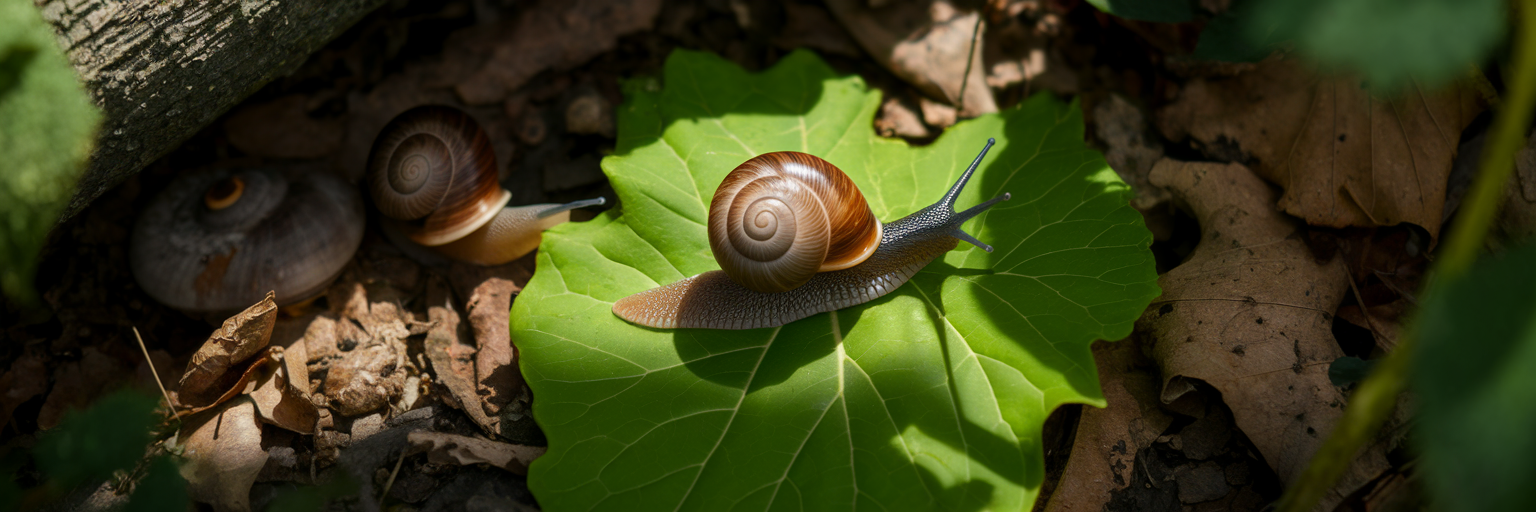
The most fascinating aspect of this relationship is how parasites control hosts on a neurological level. The Leucochloridium parasite does not just change the snail’s appearance; it fundamentally alters its behavior. Healthy amber snails are photonegative, meaning they avoid light and prefer to stay hidden in dark, damp areas to prevent dehydration and evade predators. Infected snails, however, are driven to do the exact opposite. They are compelled to climb to the tops of leaves in exposed, well-lit locations, making them easy targets for birds.
Scientists hypothesize that the parasite releases chemicals that hijack the snail’s nervous system, overriding its most basic survival instincts. The swollen broodsacs also physically impair the snail’s vision, making it less aware of its surroundings and less able to detect an approaching predator. The pulsations are not random; they are triggered by light, ensuring the display is most active during the day when birds are hunting. While humans might seek adventure by exploring the wild off the beaten path, this snail is forced onto an exposed trail against its will.
| Behavioral Trait | Uninfected Amber Snail | Infected Amber Snail (Zombie Snail) |
|---|---|---|
| Habitat Preference | Shady, moist, low-lying areas | Exposed, well-lit, elevated locations (e.g., top of leaves) |
| Response to Light | Photonegative (avoids light) | Photopositive (attracted to light) |
| Daily Activity | Primarily nocturnal or crepuscular | Active during daylight hours |
| Eyestalk Appearance | Slender, retractable, uniform color | Swollen, banded with bright colors, constantly pulsating |
| Predator Evasion | Retracts into shell when threatened | Reduced ability to retract; more conspicuous |
This table summarizes the stark behavioral and physical changes induced by the Leucochloridium paradoxum parasite, highlighting how it manipulates its host to increase predation risk.
The Ripple Effect in the Ecosystem
The zombie snail parasite is not an isolated anomaly but a powerful example of co-evolution. Over millions of years, the parasite and its hosts have shaped one another’s development, resulting in a highly efficient pathway through the food web. This manipulation ensures that energy flows directly from snail to bird, sustaining both the parasite and the predator, albeit at the snail’s expense.
This form of host manipulation is a surprisingly common evolutionary strategy in nature. Other notable examples include:
- The Ophiocordyceps fungus, which forces ants to climb and clamp onto leaves before killing them.
- Hairworms (Nematomorpha), which compel crickets and grasshoppers to seek water and drown themselves, allowing the aquatic adult worm to emerge.
- Toxoplasma gondii, a protozoan that makes rodents lose their innate fear of cats, increasing their chances of being eaten.
Studying these systems gives us profound insights into neurobiology and the fundamental drivers of behavior. In a way, this parasitic manipulation represents one of nature’s most sophisticated biological tech innovations, demonstrating how organisms can develop complex tools for survival.
Lessons from a Parasitic Takeover
The journey of Leucochloridium paradoxum is a stark reminder of the intricate and often ruthless strategies that evolution produces. From an egg in bird droppings to a mind-controlling force inside a snail, this parasite demonstrates an incredible capacity for survival. This unsettling phenomenon challenges our ideas about free will and control in the natural world. It proves that even a common creature like a snail can become the centerpiece of a profound biological drama, blurring the line between an individual’s actions and the invisible forces that guide them.