A Freeloader’s Guide to Parasite Life Cycles
For nearly every insect species out there, scientists have found at least one type of parasite that sees it as a walking buffet. This isn’t some rare, unfortunate event. It’s one of the most successful business models in the entire natural world, and it gets wonderfully weird. The world of parasite life cycles is less about a balanced ecosystem and more about nature’s most dedicated freeloaders finding creative ways to avoid paying rent.
The Ultimate Mooching Lifestyle
Imagine a roommate who not only eats your food and uses your Wi-Fi but also lives inside your walls, slowly consuming the house itself. That’s a parasite. In the insect world, this strategy is an art form. Parasitism is all about one organism, the parasite, living off another, the host, which foots the bill for everything. It’s the ultimate mooching lifestyle, and it has produced some of the most bizarre and horrifying relationships you can imagine.
Surface-Dwellers vs. Uninvited Houseguests
Insect parasites generally fall into two categories of awful. First, you have the ectoparasites. These are the clingy types that live on the outside of their host, like a tick that just refuses to take a hint. They’re annoying, sure, but they’re not nearly as committed as their cousins.
The endoparasites are the real uninvited houseguests. They take things to a whole new level by moving right inside the host’s body. This is where things go from a simple nuisance to a full-blown body horror movie. But even these internal freeloaders seem tame compared to the true villains of this story: the parasitoids. While a regular parasite just wants a free meal and a place to crash, a parasitoid’s kids have a much darker endgame. They will eventually kill and eat their host from the inside out. Get ready for a soap opera of zombies, body snatchers, and the worst roommates imaginable.
Parasitoids: The Ultimate Bad Roommates
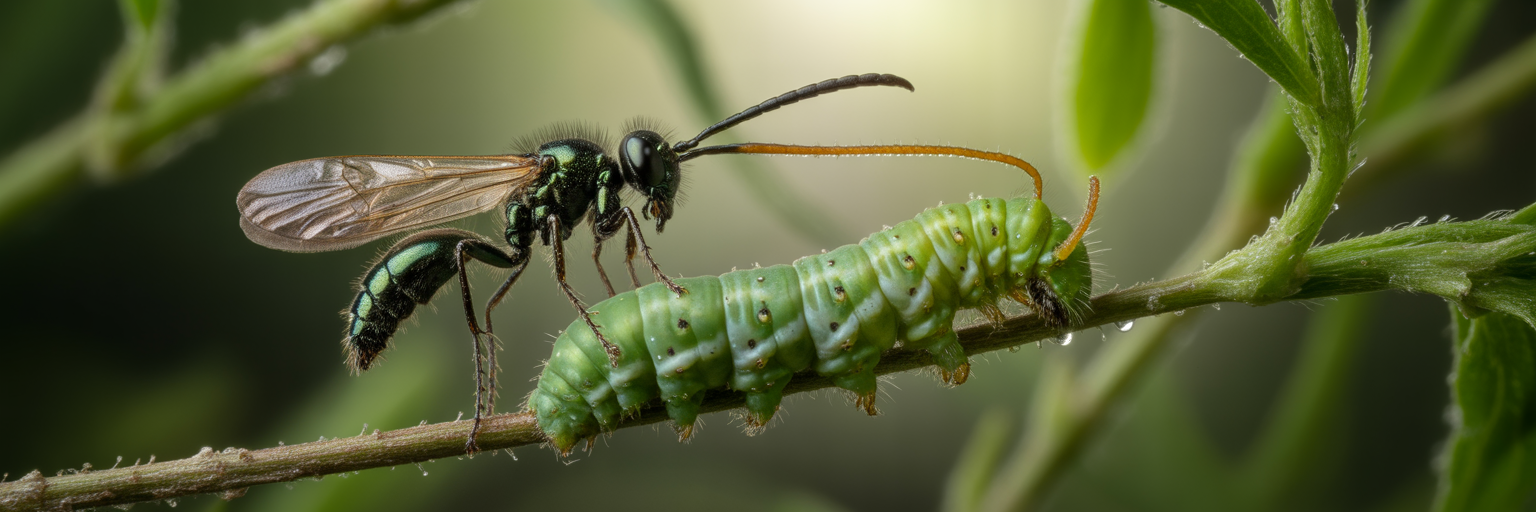
If a regular parasite is like a vampire that takes a little sip and leaves, a parasitoid is the chest-burster from Alien. Killing the host isn’t an unfortunate side effect. It’s a mandatory, non-negotiable part of the plan. So, what is a parasitoid? It’s an organism that spends a huge chunk of its life attached to or inside a single host, which it methodically consumes and ultimately kills. It’s a one-host, one-kill kind of deal.
The Chest-Burster of the Insect World
The most famous practitioners of this horrifying lifestyle are parasitoid wasps. The female wasp is equipped with an ovipositor, which is basically a biological hypodermic needle she uses to inject her eggs directly into a living, unsuspecting host, like a plump caterpillar. Forget a flu shot. This is the worst kind of surprise injection you could ever receive. The caterpillar has no idea it just became a walking nursery for its own doom.
A Slow and Methodical Takeover
Once the eggs are inside, the real nightmare begins. The process is horrifyingly precise, like a surgeon with a vendetta.
- The wasp eggs hatch, and the tiny larvae get to work. The host is still alive, blissfully munching on leaves.
- The larvae start eating, but with terrifying strategy. They first consume non-essential fatty tissues and fluids, carefully avoiding the vital organs. It’s like a house guest eating all the snacks in your pantry before they start chewing on the load-bearing walls. This keeps the host alive, fresh, and mobile for as long as possible.
- Once the larvae have grown large enough, they finally move on to the important bits. The host’s organs are now on the menu.
- For the grand finale, the fully-grown larvae chew their way out of the host’s body to pupate, leaving behind a mummified, hollowed-out husk. The host’s final, terrible service is to be both a nursery and a last meal. It’s a brutally effective strategy, and a terrible way to go.
Mind Control: When Parasites Turn Hosts into Zombies
Just when you thought it couldn’t get any worse, some parasites don’t just eat their hosts. They hijack their brains and turn them into fleshy, six-legged puppets. This isn’t just about getting a meal. It’s about taking complete control of the host’s body to serve the parasite’s sinister agenda. It’s less of a freeloader situation and more of a hostile takeover.
The Zombie Ant Fungus
The most famous example of this is the *Ophiocordyceps* fungus, also known as the zombie ant fungus. When a spore infects an ant, it doesn’t just make it sick. It seizes control of its central nervous system. The fungus compels the ant to abandon its colony, climb up the stem of a plant to a very specific height with just the right humidity, and clamp its mandibles onto a leaf in a final “death grip.” Why all the fuss? This elevated perch is the perfect launchpad for the fungus to grow a stalk out of the dead ant’s head and rain spores down on the unsuspecting ants below. It’s a calculated, diabolical plan executed by a mushroom.
The Puppet Master’s Web
There are many other incredible insect parasites examples of this mind control. A species of parasitoid wasp stings a spider, paralyzing it just long enough to lay an egg on its abdomen. The spider recovers and goes about its business, but the wasp larva attached to it begins releasing chemicals that slowly brainwash it. When the larva is ready to pupate, it forces the spider to abandon its normal web-spinning and instead build a bizarre, super-strong, cocoon-like web. This new web is designed for one purpose: to protect the wasp pupa after it finally kills and eats its spider nanny. The spider literally builds a nursery for its own murderer.
A Comparison of Parasitic Mind Control Tactics
| Parasite | Unlucky Host | The Sinister Plan (What it makes the host do) | The Payoff (Why it does it) |
|---|---|---|---|
| Ophiocordyceps Fungus | Ant | Climb a plant and bite down in a ‘death grip’. | Positions the ant perfectly for the fungus to grow and spread its spores to new victims below. |
| Hymenoepimecis argyraphaga | Spider | Abandon its normal web and build a special, reinforced ‘cocoon web’. | Creates a safe, durable nursery for the wasp larva to pupate in after it kills the spider. |
| Glyptapanteles Wasp | Caterpillar | Violently defend the wasp pupae that just burst out of its body. | Turns the dying host into a zombie bodyguard to protect the parasite’s offspring from predators. |
This table highlights a few examples of host manipulation, showing how different parasites have evolved unique strategies to control their hosts for their own survival and reproduction.
This isn’t random chaos. It’s an evolutionary masterpiece of manipulation. The host is no longer in charge. It’s just a vehicle for its parasitic overlord, chauffeuring it around until it’s time to become lunch.
Reproductive Chaos and Gender-Bending Bacteria
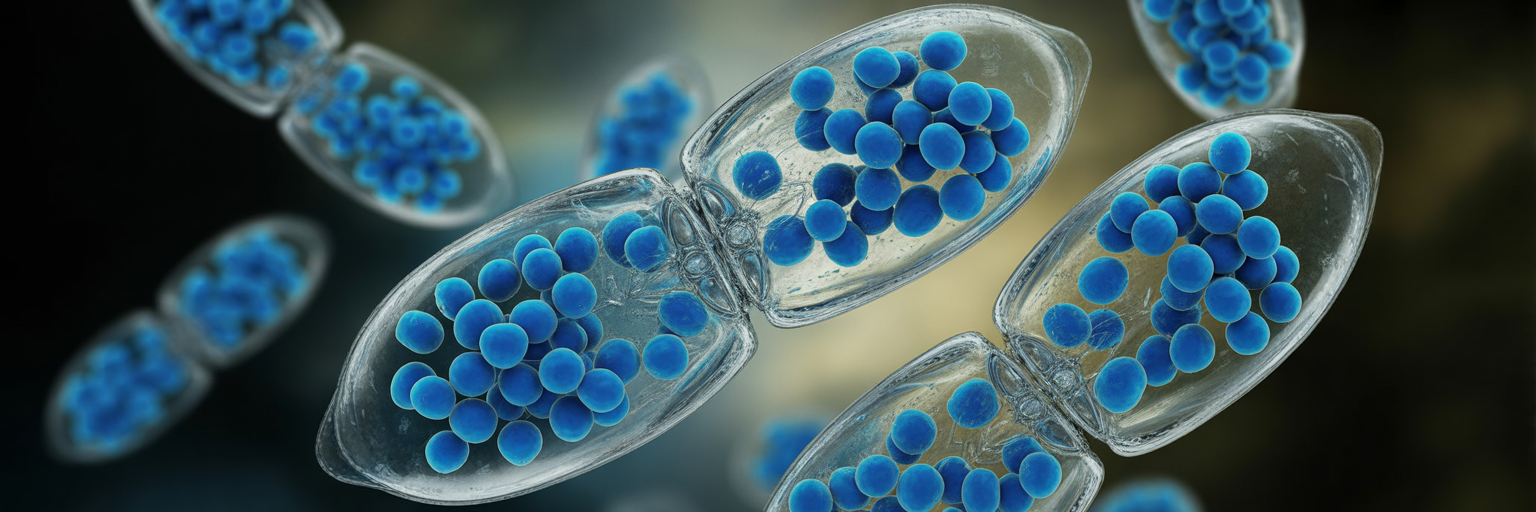
Some parasites have moved beyond simple murder and mind control. Their game is far more subtle but just as sinister: they hijack reproduction itself. The horror here isn’t about being eaten alive, but about having your entire family line taken over by a microscopic squatter. It’s the ultimate identity theft.
The master of this domain is the Wolbachia bacteria in insects. This isn’t some rare infection. According to research materials from the Vanderbilt University Wolbachia Project, it infects a massive portion of all insect species. It’s a sneaky infection passed down from mother to child, and its only goal is to spread itself to the next generation, no matter the cost to the host.
The Ultimate Reproductive Cheat Code
Wolbachia’s most common trick is called cytoplasmic incompatibility. It’s a brilliant and devious reproductive cheat code. If an infected male mates with an uninfected female, her eggs are duds. They never hatch. But if an infected female mates with *anyone*—infected or not—her offspring are perfectly fine and, more importantly, they carry the infection. This gives infected females a massive evolutionary advantage, ensuring the bacteria spreads like a scandalous rumor through the population.
When Bacteria Decide Your Gender
If that wasn’t enough, Wolbachia has a few other tricks up its sleeve that are even weirder. It’s not just influencing who can have kids. It’s deciding what those kids will be.
- Male-killing: In some species, the bacteria simply kills off all the male embryos. Why? Because males are a dead end. They can’t pass the infection to their offspring. So, Wolbachia gets rid of them to favor the females who can.
- Feminization: This is where it gets truly wild. The bacteria can take an embryo that is genetically male and force it to develop into a functional female. Imagine a bacterium forcing you through puberty again, but for its own selfish benefit.
- Parthenogenesis: In some cases, Wolbachia can even make it so females can reproduce without any males at all, creating clones of themselves that are all infected daughters. Who needs males when you have bacteria-powered immaculate conception?
This reproductive meddling isn’t limited to bacteria. Some parasitic wasps have a system called haplodiploidy, where the female can choose the sex of her offspring. If she fertilizes an egg, it becomes a daughter. If she lays an unfertilized egg, it becomes a son. The level of family planning is just staggering.
Nematodes: The Microscopic Assassins in the Soil
Let’s introduce a new character to our horror show: the parasitic nematode. These are microscopic roundworms, and they are the silent, invisible assassins of the insect world. They live in the soil, constantly on the hunt, turning your peaceful garden into a microscopic warzone.
The Hunt for a Host
While they may be tiny, nematodes operate in huge numbers. They don’t have eyes or ears. Instead, they “sniff out” their victims by detecting chemical cues, like the carbon dioxide an insect breathes out. Once they lock onto a target, they swarm it and invade its body through any opening they can find. The mouth, the anus, the breathing holes along its side—no door is locked to them. They are relentless and they are coming in.
The Tag-Team Takedown
Here’s the twist: the nematode itself isn’t what kills the host. It’s just the delivery vehicle for an even deadlier weapon. Once inside the insect, the nematode essentially vomits up a mouthful of symbiotic bacteria. This bacteria is the real killer. It multiplies at an explosive rate, causing fatal blood poisoning (septicemia) that completely liquefies the host’s insides in about 24 to 48 hours. It’s a gruesome and brutally efficient tag-team takedown. The nematode then feasts on the bacteria-ridden soup that was once an insect, reproduces like crazy, and a new generation of millions of nematodes bursts from the rotting corpse to start the hunt all over again. This horrifying cycle is what makes nematodes for pest control so effective.
The Parasite Arms Race and Human Allies

After all these tales of doom and gloom, you might think insects are just helpless victims in a world full of monsters. But the truth is far more interesting. The relationship between parasites and hosts is a never-ending evolutionary arms race, and humans have even figured out how to pick a side.
A Never-Ending Battle
Hosts are constantly evolving new defenses. Some develop stronger immune systems to fight off invaders, while others change their behavior to avoid getting infected in the first place. But for every defense a host develops, parasites evolve a new way to get around it. It’s a constant, high-stakes battle of one-upmanship. And just to make things more complicated, there’s hyperparasitism. This is when a parasite gets its own parasite. A parasitoid wasp infects a caterpillar, but then a *second* parasitoid comes along and infects the first one. It’s parasites all the way down.
Hiring Microscopic Assassins
Here’s the best part: we’ve figured out how to weaponize these natural horrors for our own benefit. Farmers and gardeners can now buy and release huge numbers of parasitoid wasps or nematodes for pest control into their fields. It’s like hiring a microscopic army of assassins to take out pests like aphids and grubs without spraying a single drop of chemical pesticide. As highlighted by agricultural resources like the Colorado State University Extension, these beneficial nematodes are fantastic at hunting down insect pests but are completely harmless to people, pets, and plants.
So, while the world of insect parasites sounds like something straight out of a sci-fi horror film, it’s just another Tuesday in the natural world. The next time you’re in your backyard, remember that there’s an invisible war of betrayal, zombie-making, and reproductive chaos unfolding right under your nose. And sometimes, the monsters are on our side.