
Meet the Rat Eating Plant: Nature’s Most Unexpected Predator
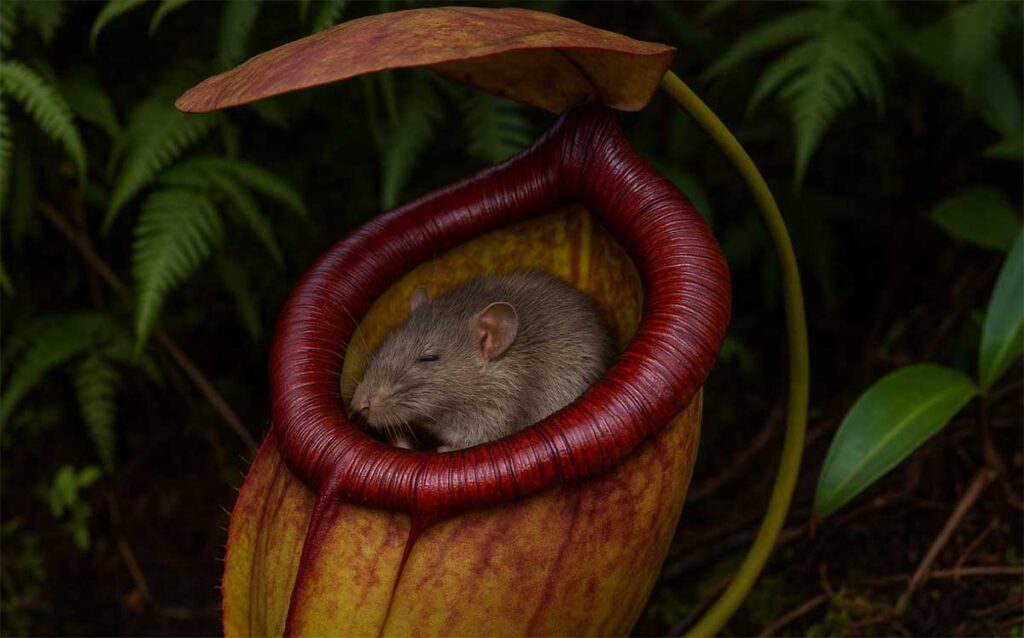
If you thought lions, sharks, or even crocodiles were the scariest carnivores on Earth, allow me to politely shove you into a botanical reality check. Because sitting quietly in the rain-soaked mountains of Borneo is a creature that doesn’t roar, stalk, or chase. Instead, it just… waits.
And somehow, that’s even more terrifying.
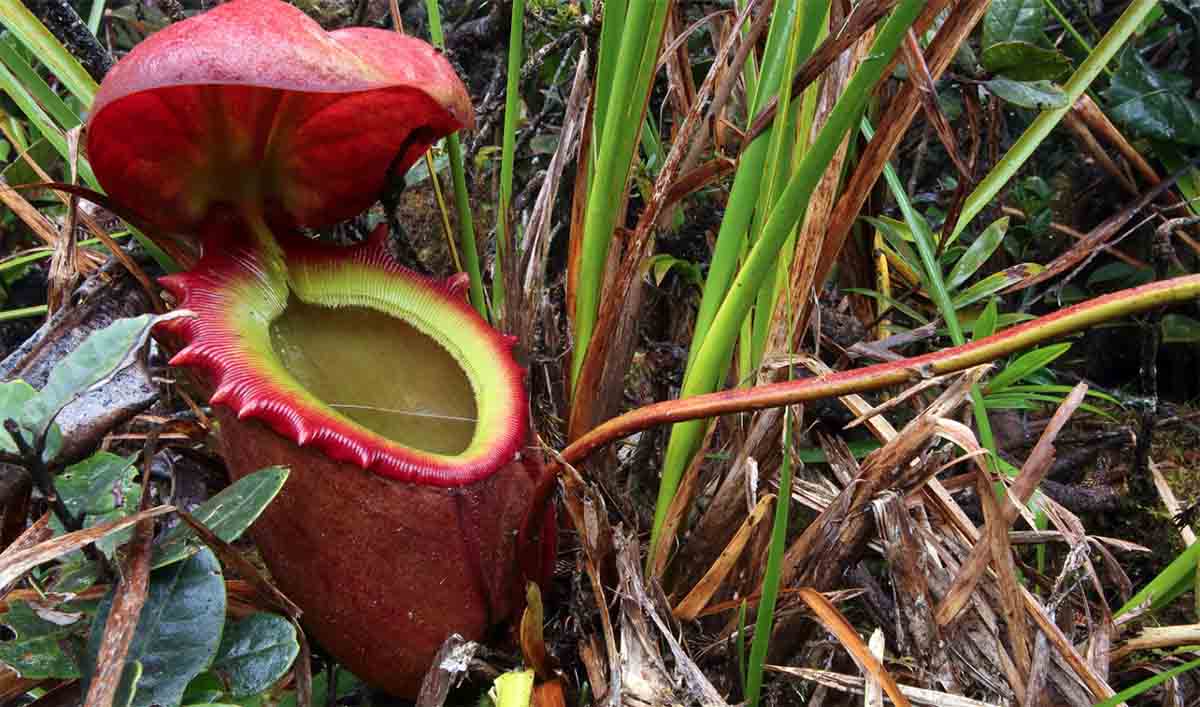
This beast is the Nepenthes rajah, the “rat eating plant,” also known as the world’s largest carnivorous plant. It’s one of those “plants that eat animals” that makes you wonder if evolution was drunk when it signed off on the design.
While it usually sips on insects like a well-mannered vegetarian trying meat for the first time, every now and then — BAM — it lands itself a rodent. And that’s when the legend of the rat-digesting plant becomes very, very real.
How Does a Plant Even Catch a Rat? (The Rat Slip ’n Slide Effect)
Let’s be honest: rats don’t typically leap into plants. This isn’t a Disney movie.
So how does a pitcher plant eats rat moment actually happen?
Here’s the recipe:
- Step 1: The plant produces sweet, irresistible nectar around its slippery rim.
- Step 2: A rat comes over for a sniff and a snack.
- Step 3: The rat’s feet say, “nah,” and it accidentally skateboards right into the plant’s digestive hot tub.
- Step 4: The plant becomes a slow, leafy crockpot.
It’s tragic.
It’s weird.
It’s also prime content for people who love weird nature phenomena, which is exactly why you’re reading this.
Scientists have confirmed multiple cases of rats, shrews, and even small birds taking the plunge. Once inside, the animal quickly tires out — the sides are too slick to climb, and the digestive fluid is dense and exhausting to swim in (basically nature’s version of a Jacuzzi full of slime).
Why Evolution Created a Giant Flesh-Eating Bucket
The soils where these carnivorous monsters grow are notoriously poor. Plants need nitrogen, phosphorus, and other nutrients to thrive — and Nepenthes rajah said, “Fine, I’ll get them myself.”
Enter:
meat-eating plants.
Big ones.
In fact, N. rajah’s pitchers can hold up to two liters of fluid. That’s more capacity than the stomach of my uncle at Thanksgiving.
These plants aren’t malicious; they’re just starving entrepreneurs. If the soil refuses to provide, they’ll take nutrients from whatever decides to fall in — bugs, frogs, lizards, unlucky rodents… you name it.
Other species, like Nepenthes attenboroughii, the equally horrifying cousin, also dabble in the whole “plants that trap animals” thing. It’s a family business.
Inside the Digestive System of the World’s Largest Carnivorous Plant
Let’s talk digestion.
Inside that pitcher is a biochemical cocktail that would make a stomach acid factory jealous:
- proteases that dissolve flesh
- bacteria that assist in breaking down tissue
- acids that turn bone and muscle into soup
- wet plant vibes
The process is slow, methodical, and about as gentle as dissolving a marshmallow in nuclear waste.
From a scientific perspective, it’s fascinating: the plant literally absorbs nutrients across the inner walls of its pitcher. That rat? It becomes nitrogen fuel, helping the plant grow bigger, stronger, and more terrifying.
The Rat-Digesting Plant’s Secret Superpower: Size Actually Matters
When you hear “carnivorous plant,” you probably picture a tiny Venus flytrap, snapping shut on a bug like a toddler clapping. Cute, harmless, nothing that keeps you up at night.
But Nepenthes rajah laughs in flytrap.
This thing is huge. Comically huge. Terrifyingly huge.
Its pitchers can grow over a foot tall, wide enough to fit a soda can — or, you know, a small mammal that made one very bad decision. That size isn’t just for show; it’s the foundation of its success as the world’s largest carnivorous plant and one of the most extreme plants evolution ever coughed out.
And the bigger the pitcher, the bigger the buffet options.
Even its cousin, Nepenthes attenboroughii, looks like it could eat your AirPods if you left them unattended. These species aren’t just plants — they’re glorified organic bear traps for the tiny and the reckless.
Why Rats Don’t Stand a Chance: The Engineering Marvel of a Meat-Eating Plant
Let’s break down the structural engineering of a rat eating plant — because yes, someone at some point had to study this with a straight face.
1. The Lid (Umbrella of Doom)
Keeps rainwater out so the digestive soup doesn’t get diluted. Rats prefer their bathwater warm; the plant prefers it… potent.
2. The Peristome (Slippery Rim of Regret)
A glossy, ribbed ring coated with nectar that basically screams:
“Come closer, tiny mammal. No reason. I definitely won’t dissolve you.”
3. The Pitcher Walls (The No-Climb Zone)
Slicker than Teflon soaked in baby oil.
4. The Digestive Pool (Rodent Reduction Sauce)
A biological blend of enzymes strong enough to break down muscle and bone over days.
This is the Formula One machine of plants that eat animals.
Every part has a purpose.
Every structure is a trap.
Every trap is a slow-motion disaster for any creature that slips inside.
Do They ACTUALLY Eat Rats for Food? Yes. And They Love It.
In nutrient-poor environments, plants get desperate — and desperate plants turn carnivorous.
The rat-digesting plant absorbs:
- nitrogen
- phosphorus
- potassium
- amino acids
- trace minerals
Basically, everything it normally can’t get from the crummy soil it grows in.
A rat is like a multi-day protein shake.
One rat provides such a high nutrient boost that the plant grows stronger, produces larger leaves, and builds even bigger pitchers capable of catching… you guessed it… bigger meals.
In other words:
eating a rat is an evolutionary jackpot.
Borneo: The Land Where Plants Eat Back
These monstrous carnivorous plants in the wild live in the mountains of Borneo, where humidity is high, soil is poor, and evolution seems to be doing improv comedy.
Borneo is home to:
- cloud forests
- absurdly diverse ecosystems
- weird, spicy biodiversity
- plants that trap animals
- creatures that absolutely should not exist, but do anyway
The Borneo pitcher plant species have adapted to survive in environments where regular plants would curl up and cry.
Some species even form symbiotic relationships with tree shrews and bats.
They offer sweet nectar → the animals poop into them → the plant eats the poop.
Nature has no shame.
How Pitcher Plants Digest Prey (Science & Horror Combined)
So how does how pitcher plants digest prey actually work?
Step 1: Lure
Nectar drips around the rim like sugary bait.
Step 2: Slip
The animal loses its grip and falls in.
(Imagine slipping into a crockpot. But worse.)
Step 3: Exhaustion
The creature tries to escape. It fails. Repeatedly.
Step 4: Digestion
Enzymes go to work breaking down soft tissues.
Bones soften and settle.
Step 5: Absorption
The plant absorbs nutrient-rich broth over several days.
Step 6: Reset
Like a haunted Airbnb, the room is cleaned and ready for the next guest.
This is plant horror at its finest — clinically efficient but also hilarious in a dark nature-is-metal way.
Carnivorous Plant Facts Most People Will Never Believe
- Some pitcher plants can hold over half a gallon of digestive fluid.
- They can detect chemical cues from prey inside the pitcher.
- Some species are so big they’re mistaken for alien eggs by hikers.
- A few can live over 20 years, patiently waiting for their next meal.
- They attract rats with nectar that smells like fruit.
- They have evolved multiple times independently — nature just really likes fleshy buckets.
These are not your grandma’s houseplants.
These are the extreme plants of the botanical world.
Are Rat-Eating Plants Dangerous to Humans?
Short answer:
No.
Unless you’re mouse-sized, you’ll be fine.
Long answer:
They’re about as dangerous as a wet traffic cone.
You could stick your entire hand into one (don’t do that), and the worst thing that happens is you get a whiff of eau de decaying bug smoothie.
But visually? Emotionally? Existentially?
Yes, they’re dangerous.
They awaken something primal in the human brain that whispers:
“If plants are eating meat now… we’re next.”
(We’re not. Probably.)
The Legacy of the Rat-Eating Plant: Nature’s Most Unexpected Predator
Nepenthes rajah and its cousins might not run, leap, or roar, but they do something far more unsettling:
They kill by existing.
No movement.
No effort.
Just passive-aggressive death buckets waiting for gravity to do the work.
And that’s what makes the rat eating plant one of the most fascinating lifeforms on Earth. It’s a reminder that nature isn’t just strange — it’s creative, hilarious, and occasionally horrifying.
If a plant can eat a rat, what else is out there?