The Shocking Truth About This Amazon Predator
One of the most persistent electric eel facts is a complete misnomer. The electric eel is not an eel at all. It is a species of knifefish, more closely related to carp and catfish. This surprising classification is just the beginning of what makes this creature so remarkable. Thriving in the murky, low-visibility waters of South America’s Amazon and Orinoco river basins, keen eyesight would be of little use. Instead, evolution equipped this predator with an advanced electrical sense that is far more practical for its environment.
This ability is not merely a defense mechanism triggered in moments of panic. It is a sophisticated biological toolkit used for navigation, communication, and predation. In the dark, muddy waters it calls home, the electric eel perceives its surroundings through a self-generated electric field. It actively senses distortions caused by objects, prey, or other eels, allowing it to “see” without light. This adaptation transformed it from a creature navigating blindly into one of the Amazon’s most effective predators, long before it unleashes its famous jolt.
Anatomy of a Living Power Plant
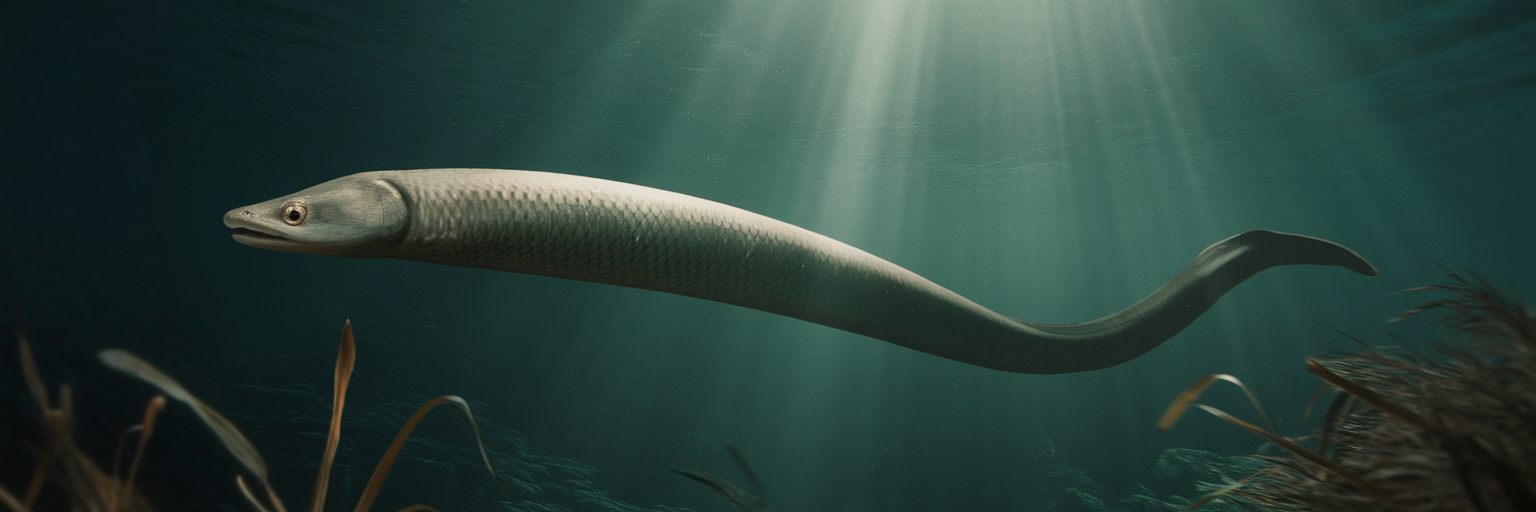
The question of how do electric eels generate electricity is answered by a marvel of biological engineering. The creature’s entire body is dominated by this function, with its vital organs compressed into the front 20% of its length. The remaining 80% is dedicated almost entirely to its electrical apparatus, a clear indicator of its evolutionary priority. This system is composed of three distinct electric organs, each with a specialized role.
The Three Electric Organs
The electric eel’s power comes from three pairs of organs: the Main organ, the Hunter’s organ, and the Sachs’ organ. The Main and Hunter’s organs are responsible for producing the high-voltage discharges used for stunning prey and defending against threats. The Sachs’ organ, on the other hand, generates lower-voltage pulses for navigation and communication. This division of labor allows the eel to conserve energy, using its most powerful weapon only when necessary while constantly maintaining its electrical sensory field.
Electrocytes: The Biological Batteries
The foundation of bioelectricity in animals like the electric eel lies in specialized cells called electrocytes. Thousands of these cells are stacked in long columns, functioning much like batteries connected in series. Each electrocyte can only produce a tiny voltage, around 0.15 volts. However, when a threat or prey is detected, a command from the eel’s brain triggers a near-instantaneous, simultaneous discharge of all the cells in a column. The small voltages add up, culminating in a single, massive jolt.
A Spectrum of Electrical Signals
The electric eel’s electrical output is not a one-size-fits-all weapon. It wields a spectrum of signals, carefully managed for different tasks. This distinction is crucial to understanding its efficiency as a predator and navigator. The eel produces both low-voltage pulses for sensing its environment and high-voltage discharges for more forceful interactions. This dual-mode system allows it to operate with remarkable precision.
The low-voltage signals, originating from the Sachs’ organ, are typically around 10 volts. These pulses create an electric field around the eel’s body, functioning as a kind of biological radar. Any object with a different conductivity than the surrounding water, such as a rock or another fish, distorts this field. The eel detects these distortions with hundreds of receptors along its body, building a detailed three-dimensional map of its dark environment.
In stark contrast, the high-voltage discharges from the Main and Hunter’s organs are reserved for hunting and defense. These powerful jolts can reach up to 860 volts, more than enough to stun a fish or deter a potential predator like a caiman. This powerful discharge is a rapid, energy-intensive action used with strategic intent.
| Feature | Low-Voltage Discharge | High-Voltage Discharge |
|---|---|---|
| Generating Organ(s) | Sachs’ Organ | Main Organ & Hunter’s Organ |
| Primary Purpose | Navigation & Communication | Hunting & Defense |
| Voltage | ~10 Volts | Up to 860 Volts |
| Function | Creates an electric field to sense objects | Stuns or paralyzes prey/threats |
The Art of the Electric Hunt
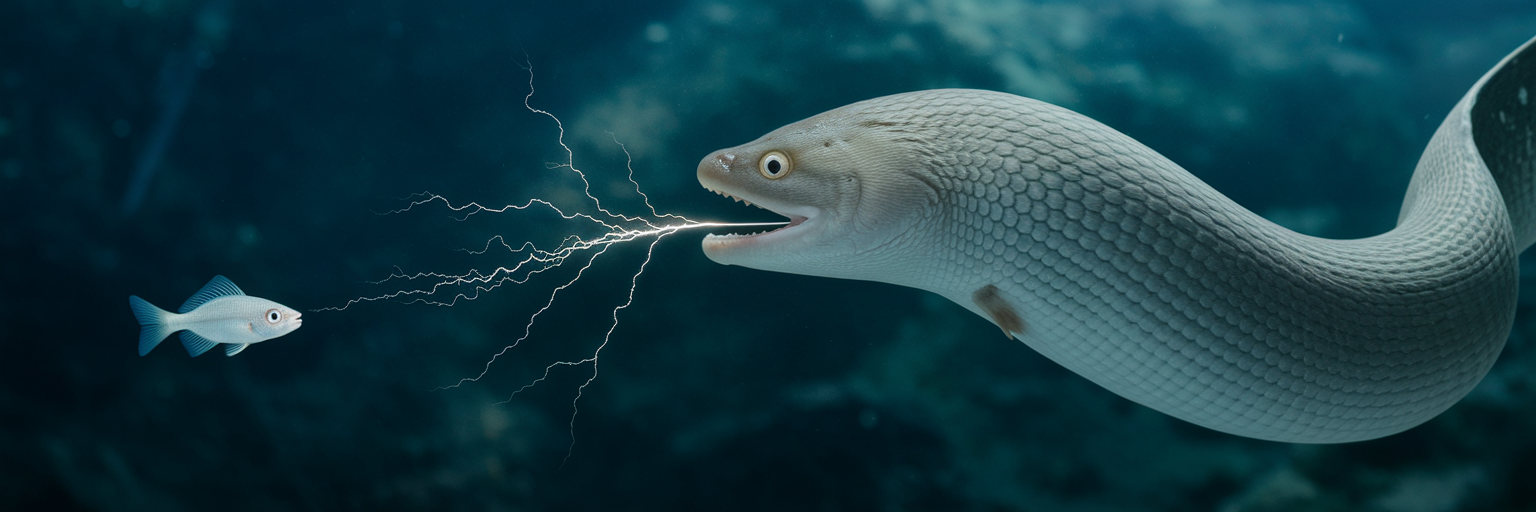
The electric eel hunting strategy is a masterclass in biological warfare, combining stealth, sensory precision, and overwhelming force. It is far more sophisticated than simply shocking anything that moves. Scientists have identified a clear, step-by-step process that reveals the eel’s calculated approach to securing a meal.
The hunt unfolds in a few distinct phases:
- Locating Hidden Prey: The eel first uses its passive electrolocation to scan the area. If it suspects prey is hiding, it emits two rapid, high-voltage pulses called “doublets.” These pulses cause involuntary muscle spasms in any nearby fish, forcing them to twitch and reveal their exact location.
- Immobilizing the Target: Once the prey is located, the eel unleashes a high-frequency volley of shocks. This sustained electrical assault doesn’t just stun the target; it causes complete muscle paralysis by overwhelming the prey’s nervous system, making escape impossible.
- Remote Control: Perhaps the most astonishing part of the hunt is what happens next. The eel’s electric field can directly hijack the prey’s motor neurons. As reported by BBC News, research reveals that the eel can manipulate the prey’s muscles, effectively using its electric field as a form of remote control to guide the paralyzed fish toward its mouth.
For a long time, these creatures were considered solitary hunters. However, recent observations have documented groups of eels working together to herd and attack schools of smaller fish. This social hunting behavior challenges decades of assumptions and adds another layer of complexity to this already incredible animal.
Nature’s Blueprint for Future Technology
The electric eel’s remarkable abilities are not just a biological curiosity; they serve as a blueprint for technological innovation. The field of biomimicry looks to nature for solutions to human engineering challenges, and the biomimicry electric eel connection is a prime example. Scientists are actively studying the eel’s electrocytes to develop new forms of power generation that are both efficient and biocompatible.
One of the most promising areas of research is the creation of soft, flexible batteries inspired by the eel’s electric organs. Researchers have developed hydrogel-based power sources that mimic the structure of electrocytes, capable of generating electricity from saline solutions. While still in early stages, this technology could one day power internal medical devices like pacemakers or biosensors without the need for rigid, conventional batteries. It could also be used in soft robotics, providing a safe and flexible power source for machines that interact with humans.
The electric eel demonstrates how millions of years of evolution can produce solutions far more elegant than what we can design from scratch. Its biological power plant is a powerful reminder that nature is the ultimate innovator. By studying these systems, we can discover new approaches to some of our most complex technological hurdles, joining the ranks of other technological advancements that are shaping our world.