

An Unsettling Transformation
Imagine walking through a North American forest. While many who are exploring the wild hope to see majestic animals, sometimes the most fascinating encounters are with the smallest of creatures. You spot a snail, but something is profoundly wrong. Its eyestalks are not the usual slender, sensory organs. Instead, they are swollen into pulsating, brightly colored sacs that throb with green and yellow stripes, looking disturbingly like caterpillars.
This grotesque display is a stark contrast to the camouflaged appearance of a healthy snail. Even more bizarre is its behavior. This snail is perched precariously on top of a leaf in broad daylight, a suicidal act for a creature that normally shuns sunlight to avoid predators. It seems to be advertising its presence. This is the work of the zombie snail parasite, a master manipulator that has taken complete control. The sight leaves you with one unsettling question: what could possibly cause this?
The Master Manipulator’s Life Cycle
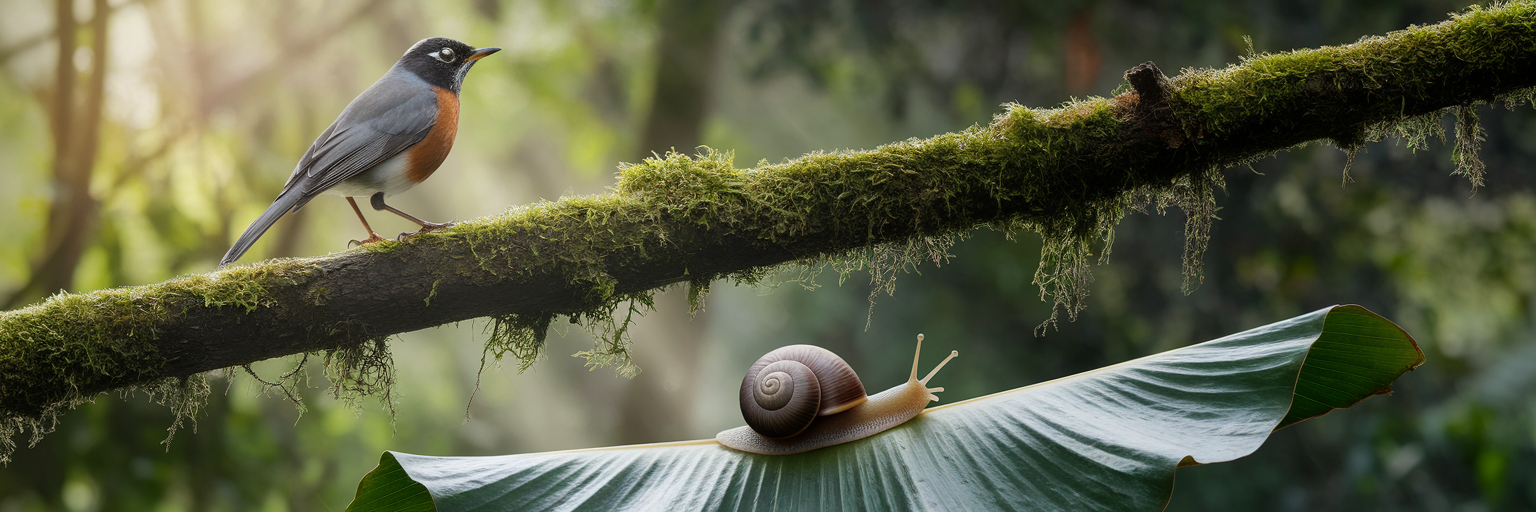
The creature behind this bizarre transformation is a parasitic flatworm, Leucochloridium paradoxum. Its entire existence revolves around a single, complex goal: reaching the digestive system of a bird to reproduce. The journey it takes is a chilling example of evolutionary precision. The Leucochloridium paradoxum life cycle unfolds in several distinct stages, each one perfectly orchestrated for transmission.
- The Beginning in a Bird: The cycle starts when the parasite’s eggs are shed in the droppings of an infected bird, the definitive host. These droppings fall onto vegetation, waiting for the next victim.
- The Unsuspecting Host: An unsuspecting snail, typically from the Succinea genus, consumes the bird droppings while feeding. This act seals its fate as the intermediate host.
- Invasion and Growth: Inside the snail, the eggs hatch into larvae called miracidia. These transform into sporocysts, which grow into long, branching tubes that spread throughout the snail’s body. These tubes eventually form vibrant, pulsating broodsacs that invade the snail’s eyestalks.
- The Final Deception: A foraging bird spots the throbbing, caterpillar-like eyestalks. Mistaking them for a juicy meal, the bird pecks them off. Once consumed, the parasite matures into an adult worm inside the bird’s rectum, lays its eggs, and the cycle begins anew.
This intricate process highlights a strategy where the parasite does not just inhabit its host, but fundamentally repurposes it for its own survival. The snail becomes little more than a vehicle for the parasite’s next evolutionary step.
Hijacking the Host’s Behavior
The parasite’s life cycle depends on getting the snail eaten, and it achieves this through astonishing behavioral manipulation. An uninfected snail is photophobic, meaning it instinctively avoids light. It spends its days hidden in dark, damp soil or under leaf litter to stay safe from predators and dehydration. The parasite completely inverts these survival instincts, turning the snail into a willing sacrifice.
This is a calculated strategy, not a random side effect of infection. The question of how parasites control hosts is answered with chilling clarity in this relationship. The parasite’s modifications include:
- Forcing the snail to climb to high, exposed locations like the tops of leaves, making it impossible for birds to miss.
- Rewiring its brain to actively seek sunlight, a behavior that would otherwise be fatal.
- Disabling the snail’s natural startle response, which would normally cause it to retract its eyestalks when a shadow passes over.
By hijacking the host’s nervous system, the parasite ensures the broodsacs remain visible and tantalizingly active. The snail is no longer in control. It is a puppet, driven by its invader to perform a final, fatal act for the sake of parasitic transmission.
| Behavior | Uninfected Snail (Succinea genus) | Snail Infected with Leucochloridium |
|---|---|---|
| Light Preference | Photophobic (avoids light) | Photophilic (attracted to light) |
| Preferred Location | Dark, damp, low-lying areas | High, exposed vegetation in direct sunlight |
| Startle Response | Retracts eyestalks when threatened | Eyestalks remain exposed and pulsating |
| Daily Activity | Primarily nocturnal or crepuscular | Active during the day |
This table summarizes the stark behavioral shifts induced by the parasite, highlighting how it overrides the snail’s fundamental survival instincts to increase its visibility to birds.
The Biology of Mind Control
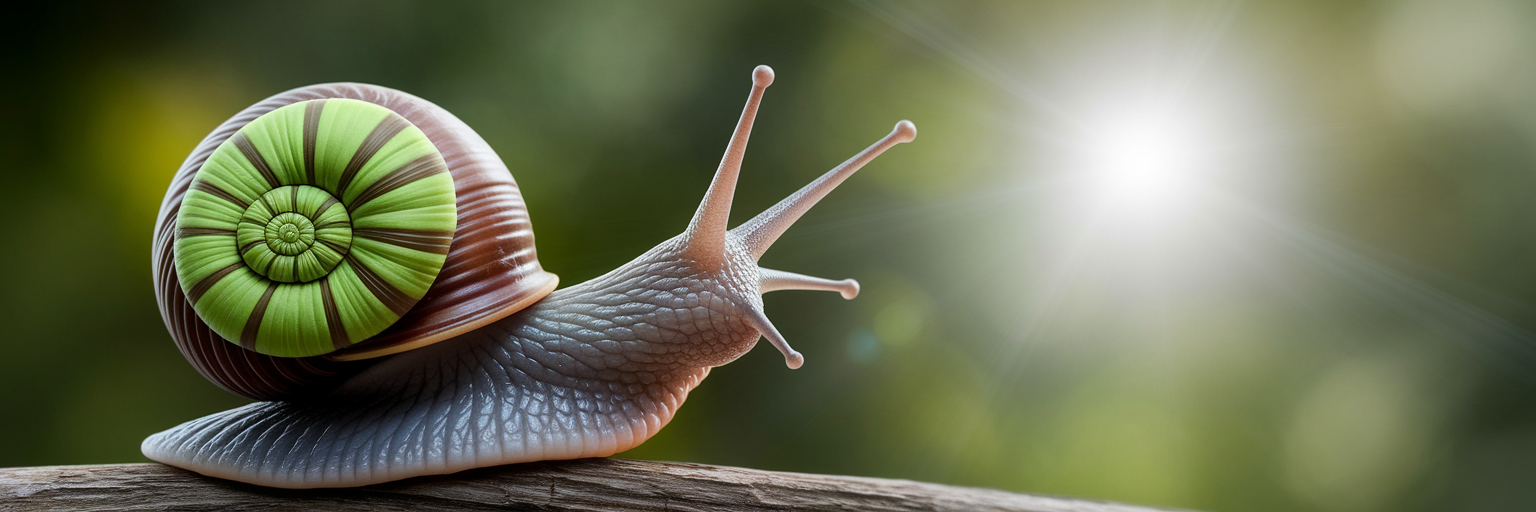
The behavioral changes are driven by a combination of physical and chemical warfare. The takeover begins with the broodsacs of the snail eyestalk parasite physically swelling the host’s tentacles. They become so engorged that the snail can no longer retract them, leaving the colorful sacs permanently on display. The parasite even controls the pulsation rate, making the broodsacs throb more vigorously in brighter light to better attract a bird’s attention.
The chemical manipulation is even more insidious. While the exact compounds are still being investigated, scientists theorize that the parasite secretes chemicals that directly interfere with the snail’s central nervous system. These neurochemicals likely override the snail’s innate aversion to light, compelling it to move into the open. Studies on host manipulation, such as those published in journals like the Proceedings of the Royal Society B, explore how these complex interactions allow parasites to influence host behavior.
Furthermore, the parasite performs what is known as “parasitic castration,” diverting the snail’s metabolic energy away from its own reproduction to fuel the parasite’s growth. In a final bizarre twist, the snail can often survive a bird’s attack. It regenerates its lost eyestalk, only for the remaining sporocyst to grow a new broodsac and begin the horrifying cycle all over again.
An Evolutionary Survival Strategy
The zombie snail is more than just a biological curiosity. It is a textbook example of aggressive mimicry in nature, a strategy where a predator or parasite imitates a harmless species or a food source to get close to its target. In this case, the parasite forces its host to mimic a caterpillar, the preferred food of its next host. This manipulation of both the snail’s appearance and its behavior is a brutally efficient survival strategy.
The relationship showcases a delicate co-evolutionary balance. The parasite must keep the snail alive and healthy enough to climb and be seen, yet it must completely override the very survival instincts that would keep the snail safe. It is a testament to the relentless and creative forces of evolution, honed over millions of years to ensure survival against incredible odds.
The story of the zombie snail is a powerful reminder of the complex and often unsettling interactions that govern the natural world. It is just one of many incredible phenomena waiting to be discovered, showcasing that often, nature is crazier than fiction.