The Ultimate Biological Takeover
In nature, the line between one organism and another can become unsettlingly blurred. While we often think of parasites as simple thieves stealing nutrients, some have evolved strategies that are far more invasive. This is not just an infection but a complete biological hijacking, where the parasite becomes a functional part of its host. This phenomenon of parasitic organ replacement pushes the boundaries of what we understand about life itself.
The central question is both fascinating and disturbing: how and why do some creatures evolve to integrate themselves so completely into another’s body? The process goes beyond mere survival, representing an extreme form of evolutionary efficiency. Two remarkable examples, the barnacle Sacculina carcini and the fluke Dicrocoelium dendriticum, showcase this bizarre form of existence, where one life form systematically dismantles and replaces another from the inside out.
The Crab Hijacker: Sacculina Carcini
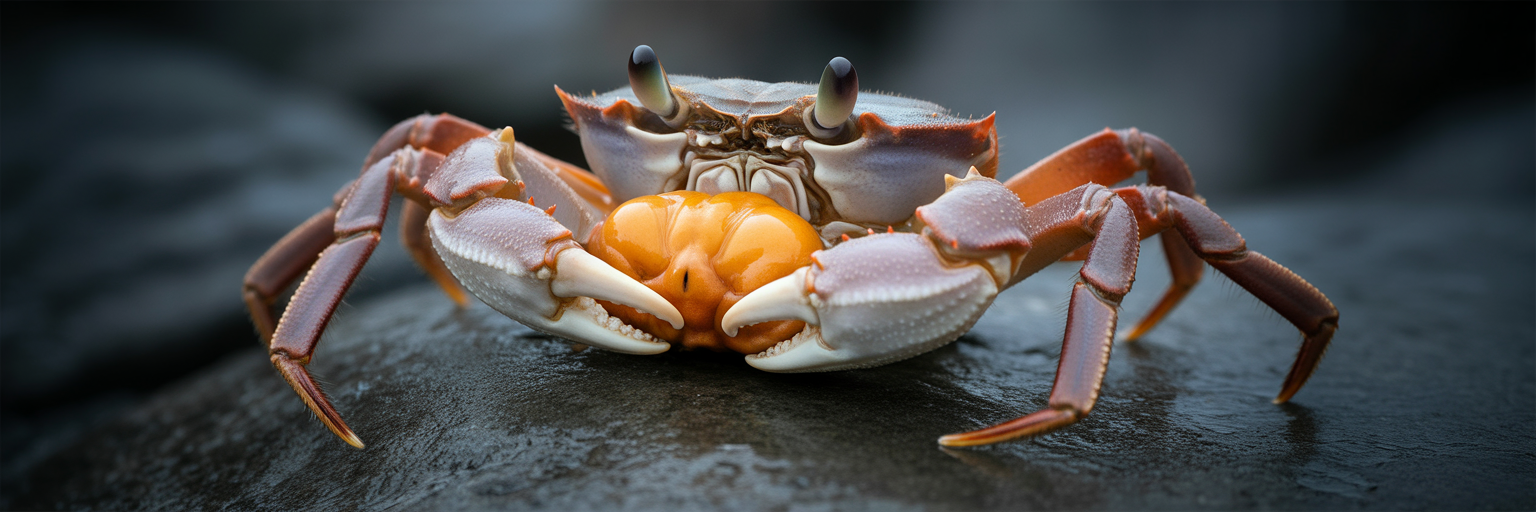
At first glance, Sacculina carcini seems like an ordinary barnacle, but its life cycle is anything but. This parasite begins its assault when a microscopic female larva finds a suitable crab host. Instead of attaching to a rock, she injects a small cluster of her own cells into the crab’s body, often through a joint in its leg. From there, the invasion is slow and methodical. Those cells grow into a root-like network called the “interna,” which spreads throughout the crab’s entire body, wrapping around its organs and siphoning nutrients directly from its blood.
The crab is kept alive, but its autonomy is gone. The parasite’s primary goal is reproduction, and it achieves this by fundamentally altering its host. The interna prevents the crab from molting and chemically castrates it, halting its own reproductive cycle. All the energy the crab would have used for growth and mating is redirected to the parasite. This level of biological integration is one of the many marvels uncovered by the innovations of modern science.
The takeover becomes visible when a portion of the parasite, the “externa,” erupts from the crab’s abdomen. This external sac is where the parasite’s eggs develop, and it emerges precisely where a female crab would carry her own egg pouch. The Sacculina carcini crab parasite has effectively replaced the host’s reproductive system with its own. The manipulation is so complete that it even hijacks the crab’s behavior. Infected male crabs begin to perform maternal duties, instinctively protecting and grooming the parasite’s egg sac as if it were their own brood. The crab becomes a living nursery, a puppet forced to care for its conqueror’s offspring.
Mind Control for Survival: The Lancet Liver Fluke
While Sacculina replaces physical organs, the lancet liver fluke, Dicrocoelium dendriticum, specializes in a different kind of takeover: neural manipulation. Its strategy is a direct consequence of its incredibly complex life cycle, which requires it to move through three different hosts. The fluke’s eggs are first eaten by a snail, which excretes them in a slime ball. An ant then consumes the slime ball, becoming the second intermediate host. This is where the mind control begins.
Inside the ant, most of the fluke larvae encyst in the abdomen, but one or two embark on a specific mission. They migrate to the ant’s sub-oesophageal ganglion, a cluster of nerve cells that functions as part of its brain. This is no random journey; it is a targeted strike. The zombie ant parasite Dicrocoelium doesn’t kill the ant but seizes control of its actions. As dusk approaches and temperatures drop, the infected ant is compelled to abandon its colony, climb to the top of a blade of grass, and clamp its mandibles shut, waiting motionlessly.
This behavior makes the ant a perfect, stationary target for a grazing animal like a cow or sheep, which is the fluke’s final host. If the ant isn’t eaten by morning, it climbs back down and behaves normally until the next evening, when the compulsion returns. This is one of the most striking examples of parasites that control hosts. According to a study published in Nature’s Scientific Reports, 3D imaging reveals the fluke physically positioning itself next to the ant’s brain cells, likely to exert direct mechanical or chemical control. The ant’s final act is not its own; it is a command issued by the parasite within.
The Evolutionary Logic Behind Host Domination
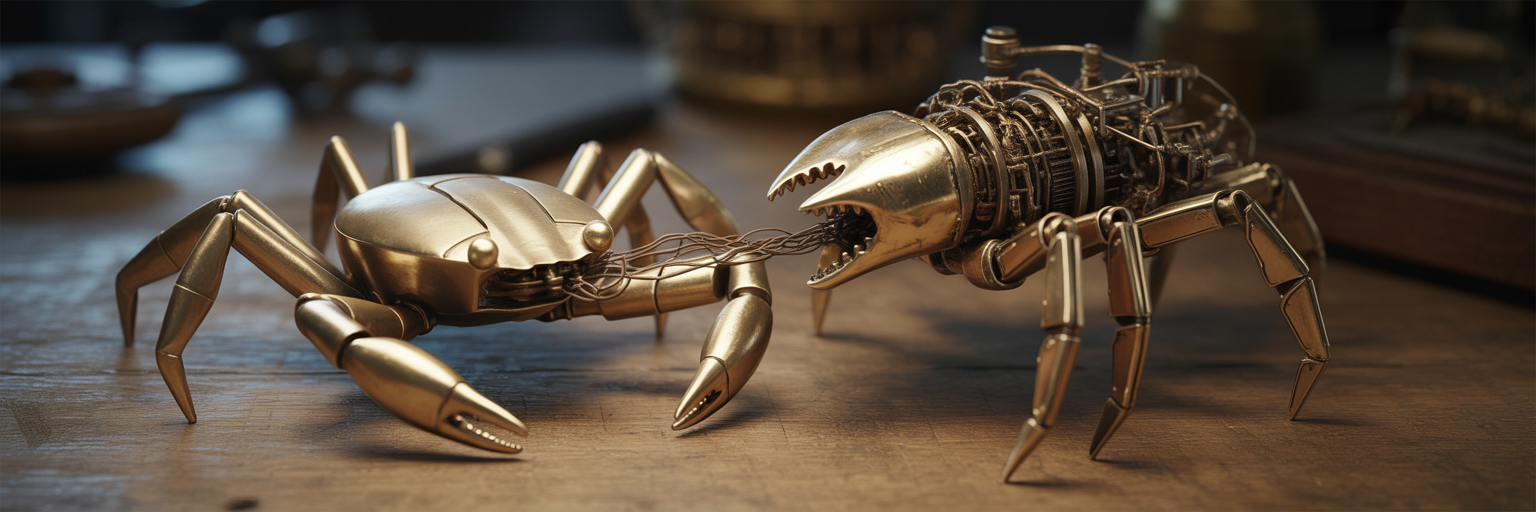
These extreme adaptations are not random acts of cruelty but highly efficient evolutionary strategies. For parasites with complex life cycles, ensuring transmission from one host to the next is the greatest challenge. Host manipulation dramatically increases the odds of success. This is a clear example of the “extended phenotype,” a concept where a parasite’s genes are expressed through the behavior of its host. The ant climbing the grass is, in effect, an extension of the fluke’s own biology.
The evolution of host manipulation relies on several key mechanisms:
- Hormonal Mimicry: The parasite produces or influences chemicals that trick the host’s body. Sacculina, for instance, manipulates the crab’s hormones to induce maternal behavior.
- Direct Neural Interference: The parasite physically or chemically alters the host’s brain. The lancet fluke’s position in the ant’s ganglion allows it to directly influence motor functions.
- Physical Replacement: The parasite supplants a host organ, taking over its function entirely. This strategy, known as parasitic castration, is a well-documented evolutionary outcome where the parasite diverts the host’s reproductive energy for its own survival, as detailed in research available through PubMed.
This dynamic is best understood as an evolutionary arms race. As hosts develop defenses, parasites evolve more sophisticated methods of control. This biological conflict drives constant change, a process not unlike the rapid pace we see in our coverage of tech innovations.
Other Masters of Bodily Invasion
The world is filled with masters of bodily invasion, but few are as direct as the tongue-eating louse, Cymothoa exigua. This isopod enters a fish through its gills and latches onto the base of its tongue. It then severs the blood vessels, causing the tongue to atrophy and fall off from lack of blood. But the parasite’s work is not done. It attaches its own body to the remaining stub of the tongue, effectively becoming the fish’s new, fully functional mechanical tongue.
The fish can use the Cymothoa exigua tongue louse just as it would its original organ, and the parasite survives by feeding on the fish’s blood or mucus. This is perhaps the most literal case of functional organ replacement known to science. The host and parasite become a single, bizarre entity, living in a forced symbiosis.
Parasites like Sacculina, Dicrocoelium, and Cymothoa are not just monsters from a horror story. They are powerful testaments to the creative, relentless, and often brutal efficiency of natural selection, reminding us that the boundaries of life are far more fluid than we imagine.