
The Phenomenon of Biological Fusion
The concept of a single, self-contained organism seems fundamental to our understanding of life. We see ourselves and the animals around us as distinct individuals. Yet, nature sometimes operates by a different set of rules, blurring the lines where one body ends and another begins. This process, known as somatic fusion in nature, occurs when two separate animals physically merge into a single, functional being. This is far more extreme than symbiosis, where organisms cooperate while remaining separate entities.
In biological fusion, tissues, organs, and even circulatory systems combine to create a composite creature. This remarkable phenomenon is not just a biological curiosity. It represents elegant solutions to life’s harshest challenges. We see this in two vastly different creatures: the delicate comb jelly, which fuses to survive catastrophic injury, and the deep-sea anglerfish, which merges as a permanent reproductive strategy. These examples force us to ask a profound question. What does it truly mean to be an individual when biology itself provides a blueprint for two to become one?
The Comb Jelly’s Remarkable Recovery Mechanism
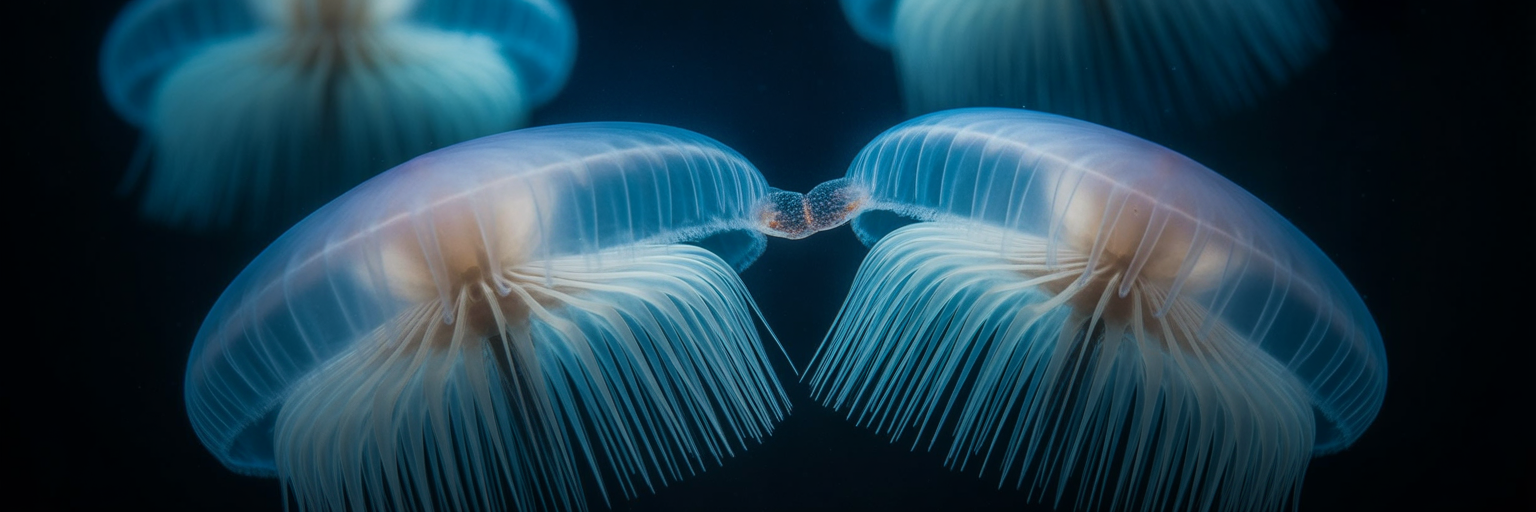
For the sea walnut, a species of comb jelly, fusion is not about creating new life but about preserving it. When these gelatinous animals are wounded, they can perform an act that seems to defy biological logic. If two injured comb jellies meet, they can physically connect their bodies at the wound sites and begin a process of complete integration. This isn’t just two animals sticking together. It is a true merger that results in a single, larger, and fully healed organism.
The outcome of this comb jelly body merging is astonishingly seamless. Their internal systems become completely shared and functional. The digestive tracts connect, allowing the new, larger animal to process food efficiently. Their circulatory canals also join, ensuring nutrients are distributed throughout the newly formed body. Perhaps most impressively, their nervous systems unify, leading to perfectly synchronized movements and responses. As a recent study highlighted by Science News confirmed, the fused entity behaves as a single individual, with no trace of its dual origins.
This capacity for fusion is a unique evolutionary strategy for resilience. In an environment where physical damage is a constant threat, the ability to merge and regenerate provides a powerful survival advantage. It’s a testament to how life finds a way, pushing the boundaries of what we consider possible and representing one of the many innovations of modern science that nature perfected long ago.
Anglerfish and the Extremes of Sexual Parasitism
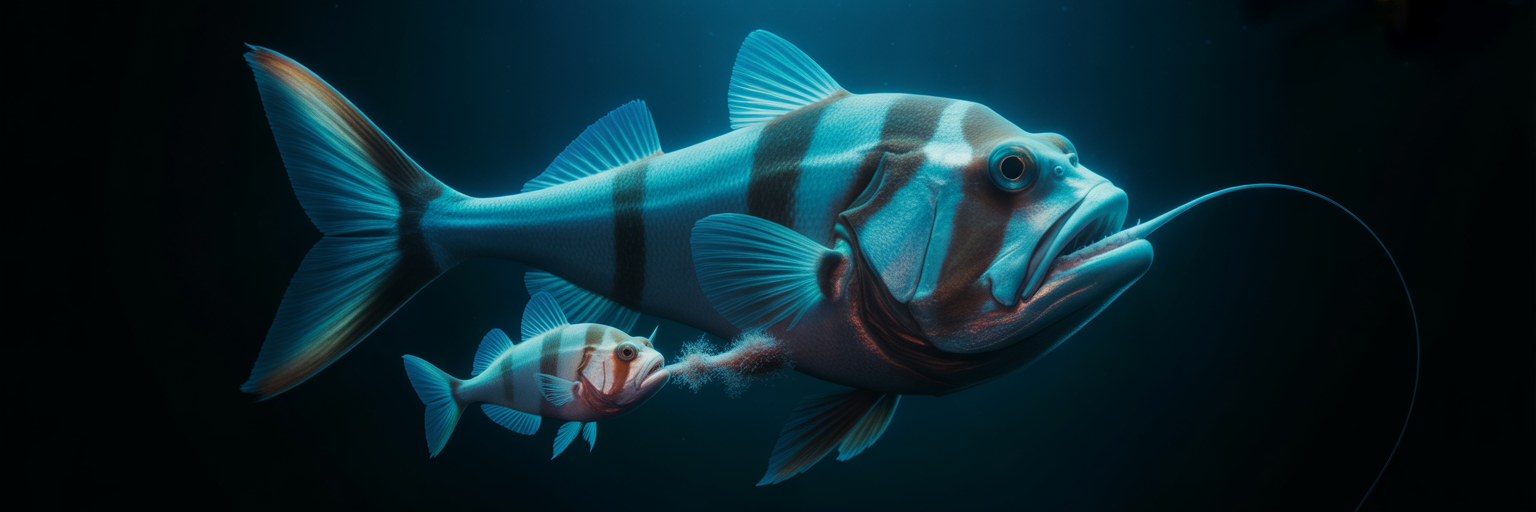
In the crushing darkness of the deep sea, life operates under immense pressure. Resources are scarce, and finding a mate in the vast, empty expanse is a monumental challenge. It is this environment that drove the evolution of one of the most extreme reproductive strategies on the planet: anglerfish sexual parasitism. Unlike the comb jelly’s survival-driven fusion, the anglerfish merges for the sole purpose of reproduction. The process begins when a tiny male anglerfish locates a female, who can be hundreds of times his size.
He bites into her flesh and holds on, triggering a profound biological transformation. Their skin and tissues fuse, and their circulatory systems connect completely. Over time, the male’s body atrophies. His eyes, fins, and internal organs wither away until he is little more than a pair of testes permanently attached to the female. He becomes entirely dependent on her for survival, receiving all his nutrients directly from her blood. This makes them one of nature’s most fascinating examples of shared circulatory system animals.
This permanent bond is a highly specialized solution to the problem of deep-sea dating. The female never has to search for a mate again, and the male secures his genetic legacy. It is a stark and beautiful example of how extreme environments can produce equally extreme adaptations, turning two separate individuals into a single reproductive unit.
Overcoming the Body’s Natural Defenses

A permanent physical merger between two individuals seems to violate a core principle of biology: the immune system’s powerful drive to identify and attack foreign tissue. This is why organ transplants require lifelong immunosuppressant drugs. So, how do these animals achieve what modern medicine struggles with? The answer reveals two different evolutionary paths toward achieving immune tolerance in animals.
The deep-sea anglerfish evolved a radical solution. As detailed in a study from the National Center for Biotechnology Information, certain anglerfish species have lost the key genes responsible for adaptive immunity. Their bodies lack the essential T-cells and antibodies that would normally trigger an immune rejection of the male’s tissue. In essence, they sacrificed a major part of their immune system to make sexual parasitism possible. The comb jelly, on the other hand, likely never developed such a rigid system in the first place. Its immune response is more primitive and may lack the complex self-versus-non-self recognition that characterizes more evolved animals. This allows two individuals to merge without triggering a defensive reaction.
One animal evolved to lose its immune function, while the other may have simply retained an ancestral, more permissive system. Both paths lead to the same extraordinary outcome.
| Factor | Deep-Sea Anglerfish | Comb Jelly (Mnemiopsis leidyi) |
|---|---|---|
| Primary Driver for Fusion | Reproduction (Sexual Parasitism) | Survival (Injury Repair) |
| Immune System Adaptation | Loss of key adaptive immunity genes (T-cells, antibodies) | Primitive immune system lacking complex self-recognition |
| Evolutionary Path | Specialized loss of function to enable permanent mating | Retention of an ancestral, more permissive immune response |
| Outcome | Permanent parasitic fusion of two individuals | Creation of a single, larger, healed individual |
What Natural Fusion Teaches Us About Medicine
The strange and wonderful biology of animals that merge bodies offers more than just a glimpse into evolution’s creativity. These creatures are natural laboratories that have already solved problems that continue to challenge scientists. By studying the anglerfish’s modified immune system, researchers could uncover new pathways for preventing organ transplant rejection in humans, potentially reducing the need for powerful immunosuppressant drugs.
Similarly, the comb jelly’s ability to seamlessly regenerate and fuse tissues provides a powerful blueprint for advanced regenerative medicine. Understanding its mechanisms could inspire new techniques for healing catastrophic injuries or improving tissue engineering. These natural phenomena are not just curiosities. They are roadmaps for future medical treatments and technological breakthroughs.
By exploring these unique evolutionary solutions, we can discover novel approaches to immunology and tissue repair. The answers to some of our biggest scientific questions may be waiting in the darkest depths of the ocean or within the simplest of creatures, reminding us that there is always more to discover in the world of tech innovations. To continue exploring the wonders of the natural world, visit us at Nature Is Crazy.