Our DNA is surprisingly fragile. In a single human cell, thousands of damage events occur every day, caused by everything from sunlight to the simple act of converting food into energy. To counteract this constant assault, our bodies run a continuous, energy-intensive repair service to patch up genetic errors before they lead to mutations or disease. It’s a biological truth that maintenance is life. Yet, some of the planet’s most resilient organisms defy this rule. They survive not by constantly fixing themselves, but by strategically pausing this vital function.
This isn’t a weakness. It’s a sophisticated evolutionary adaptation. This approach highlights two masters of survival, the tardigrade and the naked mole-rat, each employing a different strategy to manage its genetic integrity under pressure. Their methods reveal some of nature’s most fascinating extreme survival mechanisms, challenging our understanding of what it takes to endure. For those intrigued by nature’s strange and wonderful adaptations, you can explore more on our blog.
The Tardigrade’s Toolkit for Radiation Resistance
The tardigrade, or water bear, is famous for its ability to enter cryptobiosis, a state of suspended animation that allows it to withstand near-total dehydration, the vacuum of space, and extreme radiation. This isn’t just a passive shutdown. It’s an active biological process that prepares the organism for catastrophe. The truly remarkable part, however, is what happens when the danger passes and the tardigrade rehydrates. Its DNA is often shattered into fragments, a condition that would be instantly fatal for most other life forms.
This is where the tardigrade’s reactive strategy kicks in. Instead of preventing the damage, it excels at fixing it afterward. A 2023 study published on bioRxiv found that upon reanimation, tardigrades dramatically increase the production of DNA repair genes. This massive surge of activity allows them to efficiently stitch their broken DNA back together, demonstrating an incredible feat of tardigrade DNA repair. This on-demand system is a key insight into how animals survive radiation. But this repair mechanism isn’t a simple, body-wide shield. Certain tissues, like gut cells, remain more vulnerable, suggesting a highly regulated system that allocates its precious energy resources strategically. This level of resilience is reminiscent of other extremophiles, such as the frog that freezes solid and thaws back to life, which also uses unique biological tricks to cheat death.
A Molecular Shield Against Genetic Damage
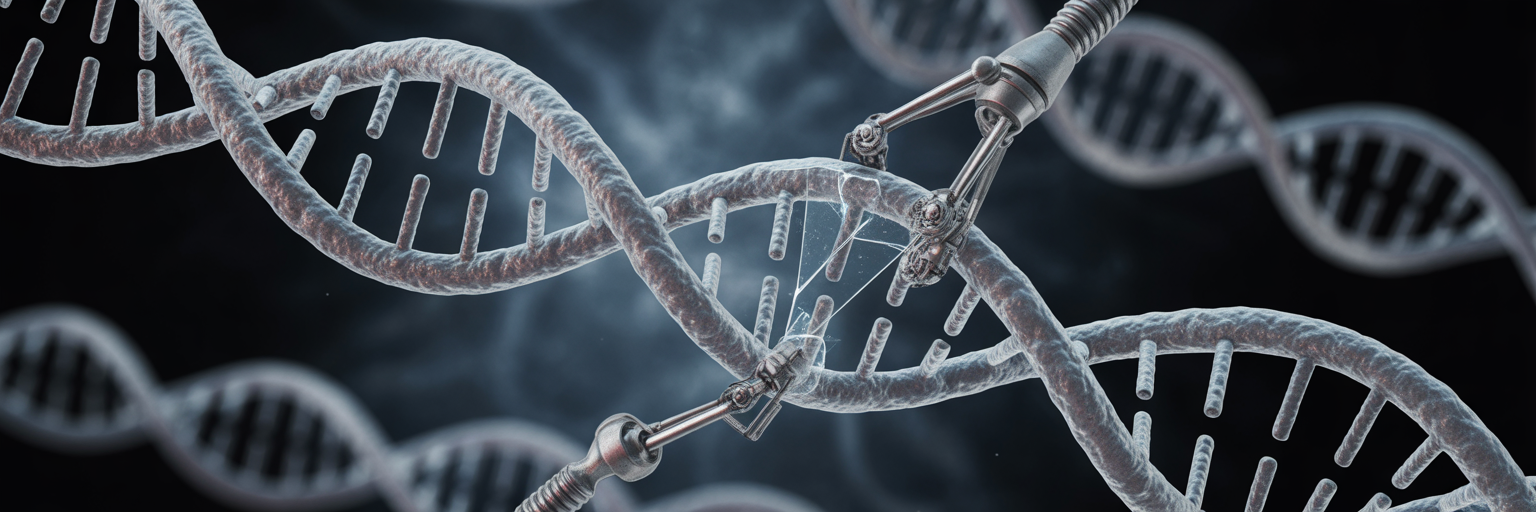
While the tardigrade’s reactive repair surge is impressive, it’s only half the story. The animal also employs a proactive strategy to protect its DNA before the worst of the damage can even occur. This defense is centered around a unique protein called Dsup, which stands for Damage suppressor. Think of it as a molecular bodyguard for the tardigrade’s genetic code. The Dsup protein function is to physically bind to chromatin, the structure that packages DNA. In doing so, it forms a protective cloud that shields the DNA from being shredded by hydroxyl radicals, which are highly destructive molecules produced during dehydration and radiation exposure.
This physical barrier is a powerful form of DNA damage suppression. A 2019 study detailed in NCBI PMC revealed how this protein works at the molecular level, binding directly to nucleosomes to form its protective shield. But the tardigrade has another trick. It also temporarily inhibits certain DNA repair pathways during the crisis. Why would it pause its own repair system? The logic is surprisingly sound. Trying to fix widespread damage in a chaotic, dehydrated state could introduce fatal errors. It’s like a surgeon wisely waiting for a patient to stabilize before beginning a complex operation. The tardigrade waits for more stable, hydrated conditions to initiate its massive repair effort. This multi-layered defense system can be summarized in three steps:
- Proactive shielding with the Dsup protein to prevent initial damage.
- Strategic pausing of error-prone repair pathways to avoid making mistakes.
- A massive, reactive repair surge after the danger has passed to fix any remaining damage.
The Naked Mole-Rat’s Blueprint for Longevity
Shifting from the tardigrade’s crisis-response toolkit, the naked mole-rat presents an entirely different approach to genetic integrity. This creature’s strategy is not about surviving a single catastrophic event but about achieving exceptional naked mole-rat longevity and near-total cancer resistance over a lifespan that can exceed 30 years. Its secret lies in a hyper-efficient, always-on DNA repair system, the complete opposite of the tardigrade’s on-demand model. This is preventative maintenance perfected.
Naked mole-rat cells are masters of upkeep. Their genetic enhancements include modifications to a protein called cGAS, which acts as a superior sensor for DNA damage. This heightened sensitivity allows their cells to detect and respond to errors far more effectively than those in other mammals, including humans. It’s like having a smoke detector that can sense a single stray spark before it has any chance to become a fire. This superior, continuous maintenance system is directly connected to the animal’s famous anti-aging properties. By managing potential damage with such high fidelity, the naked mole-rat dramatically slows the cumulative decay we associate with aging. This defiance of biological clocks brings to mind other organisms that challenge our ideas of mortality, like the jellyfish that learned to reverse its own aging.
Lessons from Nature’s Genetic Engineers

The tardigrade and the naked mole-rat offer two profoundly different blueprints for survival. The tardigrade relies on a crisis-management toolkit of shielding, pausing, and repairing to endure otherwise lethal events. In contrast, the naked mole-rat invests in high-fidelity, continuous maintenance to achieve a long and healthy life. These distinct evolutionary paths highlight the incredible adaptability of life in maintaining genetic integrity.
| Feature | Tardigrade Strategy | Naked Mole-Rat Strategy |
|---|---|---|
| Primary Threat | Acute, catastrophic environmental stress (radiation, dehydration) | Chronic, cumulative damage leading to aging and cancer |
| Timescale | Short-term, on-demand crisis response | Lifelong, continuous maintenance |
| Core Mechanism | Proactive shielding, strategic pausing, and reactive repair surge | Hyper-efficient, high-fidelity baseline repair |
| Key Protein/Gene | Dsup (Damage suppressor) protein | Enhanced cGAS protein for superior damage sensing |
| Primary Outcome | Survival of otherwise lethal events | Exceptional longevity and cancer resistance |
This table summarizes the distinct evolutionary paths taken by two of nature’s most resilient animals to maintain genetic integrity.
These natural mechanisms could inspire new biomedical approaches with profound implications for human health. Researchers are already exploring how these strategies could lead to:
- Radioprotective drugs based on the Dsup protein to shield the DNA of cancer patients during radiation therapy.
- Therapies that boost cellular repair efficiency to combat age-related diseases, inspired by the naked mole-rat’s biology.
- Applications in astrobiology for protecting astronauts from cosmic radiation during long-duration space missions.
Ultimately, these organisms prove that the perceived limits of biology are far more flexible than we once imagined. Their survival offers a new frontier for research, and you can continue exploring this incredible world of biology on our website.