The idea of an invisibility cloak has long been a staple of science fiction, but nature developed its own version ages ago. Some creatures have mastered the art of becoming see-through, a feat that seems to defy the fundamental rules of biology. This raises a fascinating question: how can an animal with opaque organs and vibrant red blood simply vanish in plain sight? This isn’t a one-off fluke. From the glassfrog of the Amazon to the delicate glasswing butterfly, evolution has repeatedly found a way to achieve transparency. These animals with transparent skin present a beautiful scientific mystery, challenging our understanding of what is biologically possible and inviting us to look closer at their incredible adaptations.
The Physical Barrier to Invisibility
For most complex animals, becoming transparent is a monumental challenge. The primary obstacle is coursing through their veins at all times: blood. Hemoglobin, the protein that carries oxygen, is rich in iron. This very property makes it incredibly effective at absorbing and scattering light, which is why blood appears bright red and completely opaque. The circulatory system alone acts as a dense, colored network that makes true invisibility seem impossible. But the challenges do not stop there.
Several biological factors work together to make animals solid and visible:
- Hemoglobin’s Light Absorption: Beyond just color, the sheer volume of red blood cells in a body creates a system that is fundamentally anti-transparent. It’s a stark contrast to other biological camouflage mechanisms that rely on reflecting or matching light, not letting it pass through.
- Tissue and Organ Density: Muscles, bones, and internal organs are naturally dense structures. They are not designed to be permeable to light and instead cast shadows, revealing an animal’s shape and presence.
- Skin Pigments: Even the skin itself is a barrier. Most animals have pigments like melanin that absorb light for protection from UV radiation, but this same function prevents light from passing through the body.
These hurdles make the existence of see-through creatures all the more remarkable. They have somehow found ways to overcome these basic biological constraints.
The Glassfrog’s Blood-Hiding Trick
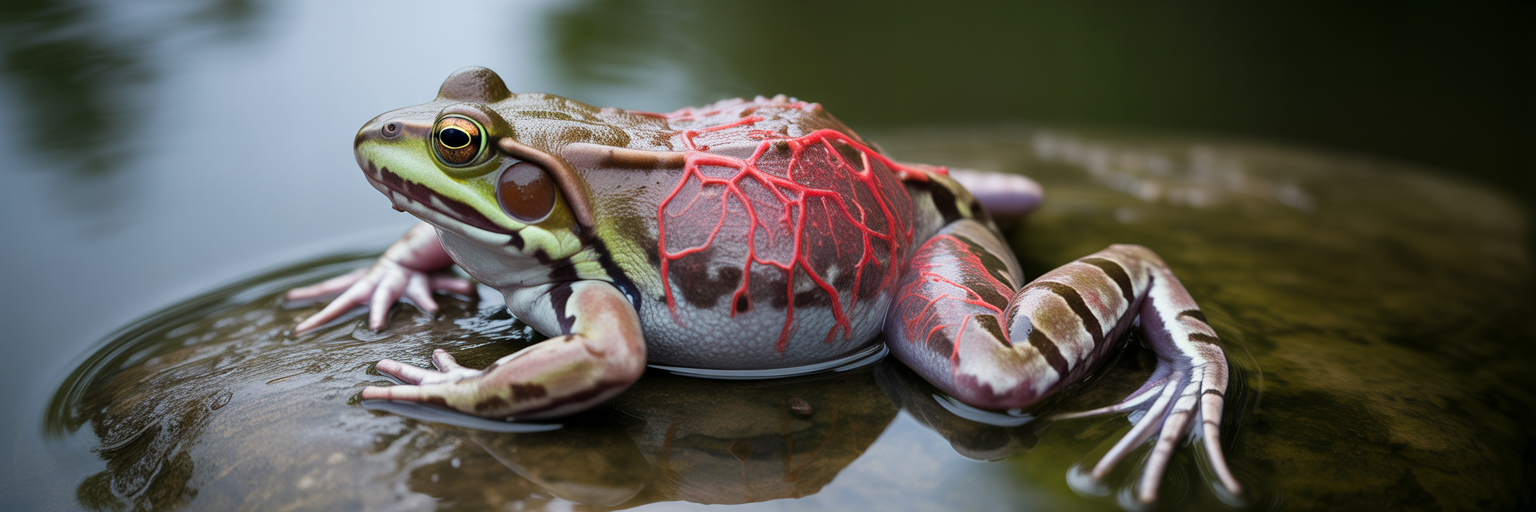
The glassfrog stands out as a master of biological deception. For years, scientists were puzzled by how it could appear so much more transparent when sleeping than when active. The answer, revealed in a groundbreaking 2022 study published in Science, is an astonishing feat of physiological control. The question of how do glassfrogs become transparent was finally answered: they actively hide their blood.
When a glassfrog settles down to rest during the day, it initiates a remarkable process. It pumps approximately 89% of its red blood cells out of circulation and packs them tightly into its liver. This organ is conveniently covered with a reflective membrane, which helps conceal the dense, red mass of stored cells. With the red blood cells tucked away, the circulatory system is left filled mostly with clear plasma. This act of glassfrog blood hiding dramatically increases the frog’s transparency, allowing it to blend seamlessly with the green leaf it rests upon.
What makes this process truly incredible is its dynamic nature. At night, the frog releases the red blood cells back into its bloodstream to become opaque and active again. It manages to do this daily without forming deadly blood clots, a phenomenon that could hold valuable lessons for human medicine. This ability to manipulate its own body for survival places the glassfrog among nature’s most extreme specialists, much like the frog that freezes solid and thaws back to life, showcasing how amphibians push the limits of biology.
Different Paths to a See-Through Body
While the glassfrog’s active blood-hiding is a complex solution, it is just one of several ways animals achieve transparency. Evolution has produced a variety of strategies, often tailored to an animal’s specific environment and physiology. Marine invertebrates like jellyfish, for example, take a much simpler route. Their bodies consist of over 95% water and lack red blood or dense organs, making transparency their natural state for blending into the open ocean. Their simplicity is an adaptation in itself, and some possess other incredible abilities, like the jellyfish that can reverse its own aging.
The glasswing butterfly offers yet another approach. Its wings are not clear because of a special pigment but because of what they lack: the colorful scales that cover most butterfly wings. Instead, their wing membranes are covered in nanoscale structures that scatter light randomly, minimizing reflection and allowing light to pass straight through. This makes the wings nearly invisible against any background. It is another example of the strange and effective strategies found in the invertebrate world, which is also home to oddities like the parasite that turns snails into zombies.
| Creature | Primary Mechanism | Key Advantage |
|---|---|---|
| Glassfrog | Actively hides red blood cells in the liver | Dynamic camouflage; transparent at rest, opaque when active |
| Glasswing Butterfly | Nanostructures on wings prevent light reflection | Wings are invisible against any background, aiding camouflage |
| Jellyfish | Body is >95% water with no red blood or dense organs | Structural simplicity allows for effortless blending in open water |
| Antarctic Icefish | Lacks hemoglobin and red blood cells entirely | Avoids blood thickening in freezing water; partial transparency |
Note: This table compares different evolutionary strategies for achieving transparency, highlighting that the ‘best’ method depends on the animal’s environment, physiology, and primary threats.
The Ultimate Advantage of Invisibility
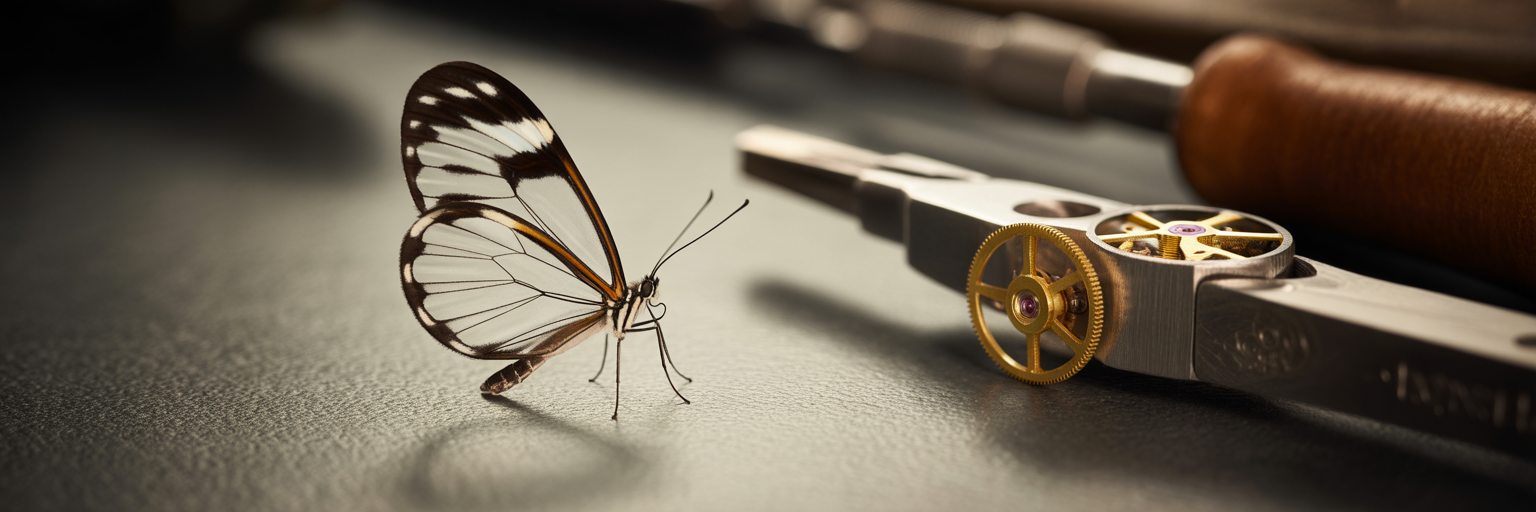
These complex mechanisms all serve one fundamental purpose: survival. For the glassfrog, transparency is the ultimate defense. Resting on the underside of a broad green leaf in the rainforest, its see-through body prevents it from casting a dark, obvious shadow. A predator looking up from below would see only the faint, green light filtering through the leaf, making the frog nearly impossible to spot. This is one of the most effective survival adaptations in nature because it works in three dimensions.
When compared to other forms of camouflage, the superiority of transparency becomes clear.
- Color Matching: An animal that is green can hide on a green leaf, but it becomes instantly visible against brown bark. This method is only effective against a specific background.
- Disruptive Coloration: Patterns like stripes or spots help break up an animal’s outline, but the animal itself is still visible to a keen-eyed predator.
- Transparency: This allows an animal to blend with any background, whether it’s a leaf, a rock, or open water. It is a universal form of camouflage that offers a more versatile and effective defense against predation.
By becoming living windows, these creatures have found a way to exist without being seen, giving them a life-or-death advantage in their constant struggle for survival.
Lessons from Nature’s Transparency
The ingenious solutions found in these transparent animals are more than just biological curiosities; they offer a blueprint for human innovation. Understanding how the glassfrog can safely pack and unpack its red blood cells without clotting could inspire new approaches to treating human cardiovascular conditions like thrombosis. The ability to manage blood flow so precisely holds immense potential for medical science.
Similarly, the glasswing butterfly’s anti-reflective wings provide a model for advanced optics. As noted in an article from The Conversation, these natural structures could lead to better coatings for solar panels, camera lenses, and even stealth technologies. Nature is the ultimate innovator, and these creatures remind us that some of the most advanced technologies are already functioning perfectly in the wild.
As we continue to study these animals, it is clear that the animal kingdom is full of incredible solutions. For more stories about the amazing strategies creatures use to survive, explore the wide world of natural wonders on Nature is Crazy.