

Respiration Beyond Oxygen
Think of your body’s cells as tiny biological engines. To generate energy from food, they need to get rid of metabolic exhaust. For humans and most life we see, that exhaust process requires oxygen. It acts as the final destination for electrons produced during metabolism, a fundamental step in cellular respiration. This is the model we all learn in biology class. But what happens in places where there is no oxygen, like deep in the mud of a lakebed or in contaminated groundwater?
Life doesn’t just give up. It finds another way. This is where the anaerobic respiration process comes into play, using different molecules to complete the energy cycle. All life must dispose of electrons created while making energy, and in the absence of oxygen, some organisms have turned to a surprising alternative: solid metals. This process is known as dissimilatory metal reduction.
Instead of breathing in oxygen gas, these microbes transfer their metabolic electrons directly to minerals. They are, in a very real sense, breathing rock. This form of heavy metal respiration allows them to thrive in environments that would be instantly fatal to us, turning solid metals into a source of life.
Meet the Metal-Breathing Microbes
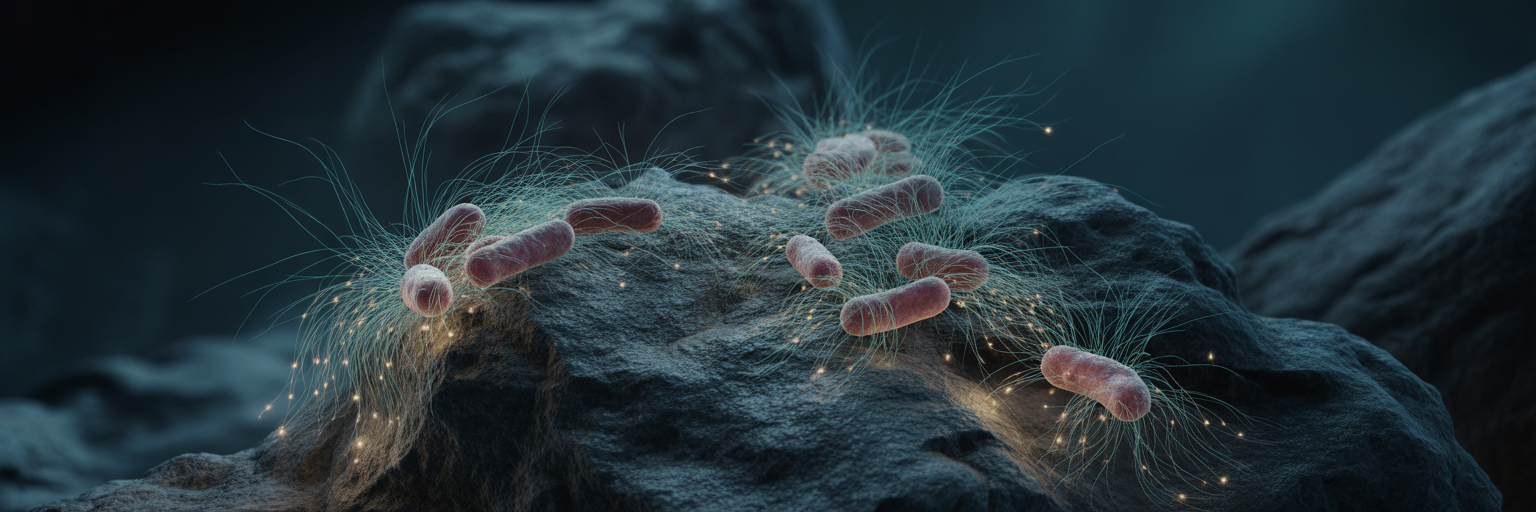
At the forefront of this strange metabolic world are two standout groups of extremophile bacteria examples: Shewanella and Geobacter. These are nature’s ultimate survivalists, flourishing in oxygen-free zones where they perform their unique chemistry. They take oxidized, insoluble metals like rust (iron(III)) and use them for respiration, reducing them to a soluble form. They effectively dissolve minerals to breathe.
When people ask what is Geobacter, they are often introduced to its most famous trait: the ability to create conductive protein filaments. These microbes are not just breathing nearby minerals; they are building biological wires to reach them. Some species can even respire more toxic heavy metals like chromium and uranium, making them critical players in environmental processes. They accomplish this using a specialized toolkit:
- Multi-haem c-type cytochromes: These are chains of iron-containing proteins that act as a biological wire, moving electrons from inside the cell to its outer surface.
- Extracellular Electron Transfer (EET): This is the overall strategy of reaching outside the cell to make electrical contact with a mineral, essentially breathing something it cannot bring inside.
- Nanowires: In the case of Geobacter, these are highly conductive filaments that allow entire colonies to link together, forming a living electrical grid to share energy and access distant minerals.
According to research published in an NCBI journal, these multi-haem c-type cytochromes are essential for how both Shewanella and Geobacter respire metals, acting as the key component in their biological wiring. These microbes are masters of adaptation, much like other organisms that have developed incredible survival mechanisms, such as the frog that freezes solid and thaws back to life.
| Feature | Shewanella oneidensis | Geobacter sulfurreducens |
|---|---|---|
| Primary Habitat | Aquatic and marine sediments | Subsurface soils and sediments |
| Metabolic Specialty | Highly versatile; can use many different metals | Specialized in iron reduction; highly efficient |
| Electron Transfer Method | Uses a mix of soluble shuttles and outer-membrane proteins | Famous for producing conductive ‘nanowires’ |
| Key Environmental Role | Bioremediation of various heavy metals | Iron cycling in soils and electricity generation |
Life in Earth’s Most Extreme Environments
The habitats where these microbes thrive are some of the most dramatic on the planet. Consider deep-sea hydrothermal vents, the “black smoker” chimneys that spew superheated, metal-rich water from Earth’s crust into the dark, high-pressure abyss. This toxic, oxygen-free soup is a paradise for metal-respiring microbes, providing a constant supply of minerals for their unusual metabolism. This is a prime example of life without oxygen.
The phenomenon isn’t limited to the deep ocean. In the high-altitude Atacama Desert in Chile, one of the driest places on Earth, scientists have found microbial communities that use arsenic for both respiration and photosynthesis. As the National Science Foundation (NSF) reports, this discovery suggests that early microbes on our planet likely relied on arsenic long before oxygen became common. It’s a powerful reminder that life can substitute even its most fundamental building blocks.
These modern extremophiles offer a window into our planet’s distant past. Before the Great Oxidation Event around 2.4 billion years ago, Earth’s oceans were anoxic and filled with dissolved iron. In that ancient world, metal respiration was not a niche survival strategy; it was likely a dominant form of life for billions of years. The strange survival tactics seen in these environments are a recurring theme in nature, not unlike the parasite that turns snails into zombies to complete its lifecycle.
Implications for Astrobiology and Future Technology
The existence of metal-breathing organisms has profound consequences for science and technology, challenging our assumptions about what life requires. It forces us to reconsider where, and how, we might find it.
The Search for Extraterrestrial Life
These microbes completely redefine the “habitable zone.” Life might not need an oxygen-rich atmosphere. It could exist on rocky planets like Mars or distant exoplanets that lack oxygen but possess active geology and a metal-rich crust. The search for life can now include looking for the chemical signatures of metal respiration, not just the presence of water and oxygen.
Cleaning Up Our Planet
The unique metabolism of these bacteria has direct applications in bioremediation. Scientists are already using them to clean up sites contaminated with toxic metals and radioactive waste. The process is elegant in its simplicity:
- Injection: Bacteria like Geobacter are introduced into contaminated groundwater.
- Stimulation: A simple organic acid is added to “feed” the microbes and encourage their growth.
- Reduction: The microbes respire the toxic, soluble metals, such as Uranium-VI, converting them into a solid, insoluble form like Uranium-IV.
- Immobilization: The now-solid uranium precipitates out of the water, trapping it in place and preventing it from contaminating wider areas.
The Dawn of Bioelectronics
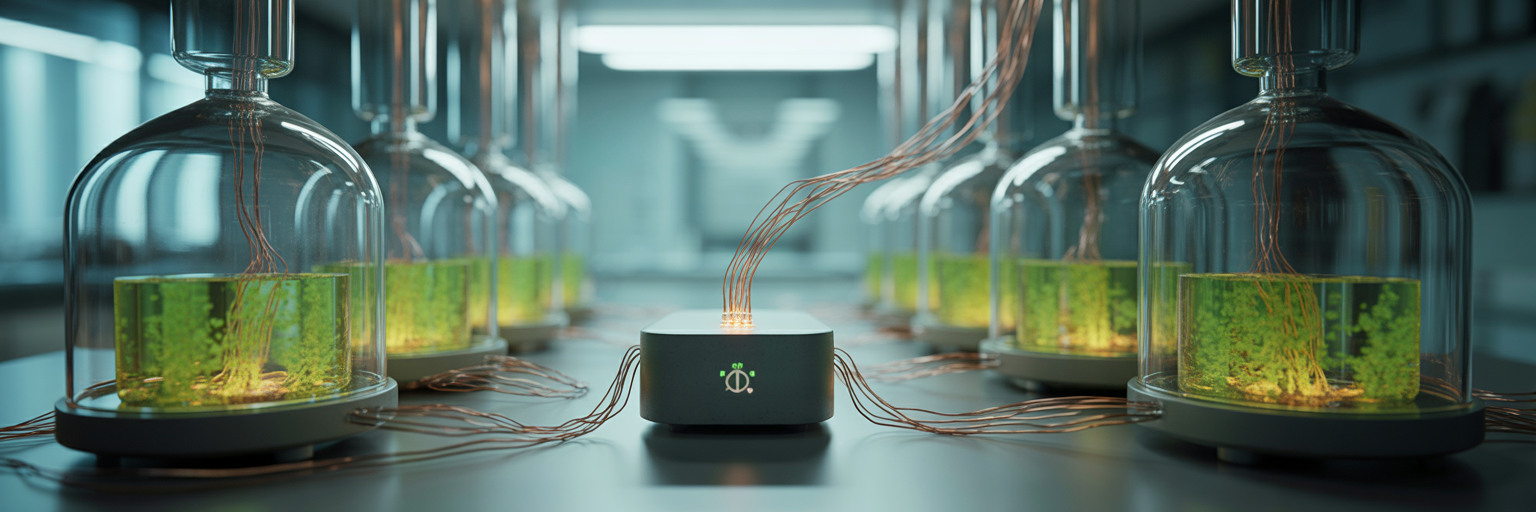
Perhaps the most futuristic application is in bioelectronics. Since these bacteria produce an electrical current as part of their metabolism, they can be harnessed in microbial fuel cells to generate electricity from waste. Researchers are exploring how to use their conductive nanowires to create self-healing, living circuits. These discoveries are as mind-bending as learning how one tiny jellyfish learned to reverse its own aging, pushing the boundaries of what we thought was possible. For those intrigued by nature’s endless creativity, our blog features many more such stories.