In the constant struggle between predator and prey, camouflage is a common weapon. But while many animals change their colors to blend in, a select few have mastered a more profound trick: manipulating light to vanish completely.
Beyond Pigment: The Science of Natural Invisibility
When we think of camouflage, we picture a leopard’s spots or a stick insect’s twig-like body. These are masters of disguise, using pigment and pattern to match their surroundings. Yet, some organisms take this a step further, achieving a form of invisibility that doesn’t rely on color at all. This is where the science gets interesting, moving beyond simple mimicry into the complex world of optical physics. Understanding this requires separating a few key ideas.
The core difference lies in how an animal interacts with light. Most creatures we see are visible because their bodies absorb some light and reflect the rest. Our eyes interpret these reflected wavelengths as color and shape. To disappear, an animal must disrupt this process. This leads to a few distinct strategies:
- Traditional Camouflage: This is the method we know best. It involves using pigmented cells in the skin to create patterns that match the texture and color of the background. It’s about hiding in plain sight by looking like something else.
- Transparency: This is a physical property where light passes directly through an organism’s body with minimal scattering or absorption. Instead of matching the background, the animal simply lets the background show through it. This is the foundation for the most effective forms of natural invisibility.
- Optical Invisibility: This is the broader category that includes transparency but also covers other advanced light-manipulating tricks. This could involve microscopic structures that bend light around the body or reflective surfaces that create a mirror effect.
- Antarctic Icefish: Perhaps the most extreme example, the icefish has taken transparency to its physiological limit. Living in the frigid, highly oxygenated waters of the Southern Ocean, it has completely abandoned red blood cells and hemoglobin. Its blood is a clear, watery plasma that absorbs oxygen directly from the water through its gills and skin. This is one of the most remarkable Antarctic icefish adaptations, allowing it to thrive where others would freeze, all while maintaining a ghostly, translucent appearance.
- Larval Eels (Leptocephalus): Before they mature into the eels we recognize, many species spend their larval stage as a leptocephalus. These ribbon-like creatures are almost entirely transparent, with gelatinous, water-filled bodies. Their simplicity is key to leptocephalus larvae transparency; they have minimal organs, no scales, and almost no pigment. This allows them to drift unseen in the water column, avoiding predators during this vulnerable stage of life.
- Comb Jellies (Ctenophores): Often mistaken for jellyfish, these beautiful creatures are made of more than 95% water, making them naturally transparent. They glide through the ocean as nearly invisible predators. The one exception to their invisibility is the stunning display of light they produce. The shimmering, rainbow-like patterns that ripple down their bodies are not bioluminescence but are caused by the scattering of ambient light off their tiny, beating cilia.
- Ghost Shrimp and Other Crustaceans: Transparency isn’t just for soft-bodied animals. Many shrimp, prawns, and other crustaceans have evolved thin, clear exoskeletons and muscle tissue. This allows them to blend seamlessly into a variety of aquatic backgrounds, from murky riverbeds to vibrant coral reefs, making them a frustrating target for predators and aquarium keepers alike.
The fundamental challenge here is that biological tissues are naturally opaque. They are filled with cells, proteins, and organelles, all of which scatter light and make the tissue visible, much like how fog obscures a landscape. The central question then becomes: how have certain animals that are transparent overcome this physical barrier? The answer involves a remarkable suite of evolutionary adaptations, providing a clear case of biological transparency explained through nature’s ingenuity.
The Physics of Vanishing
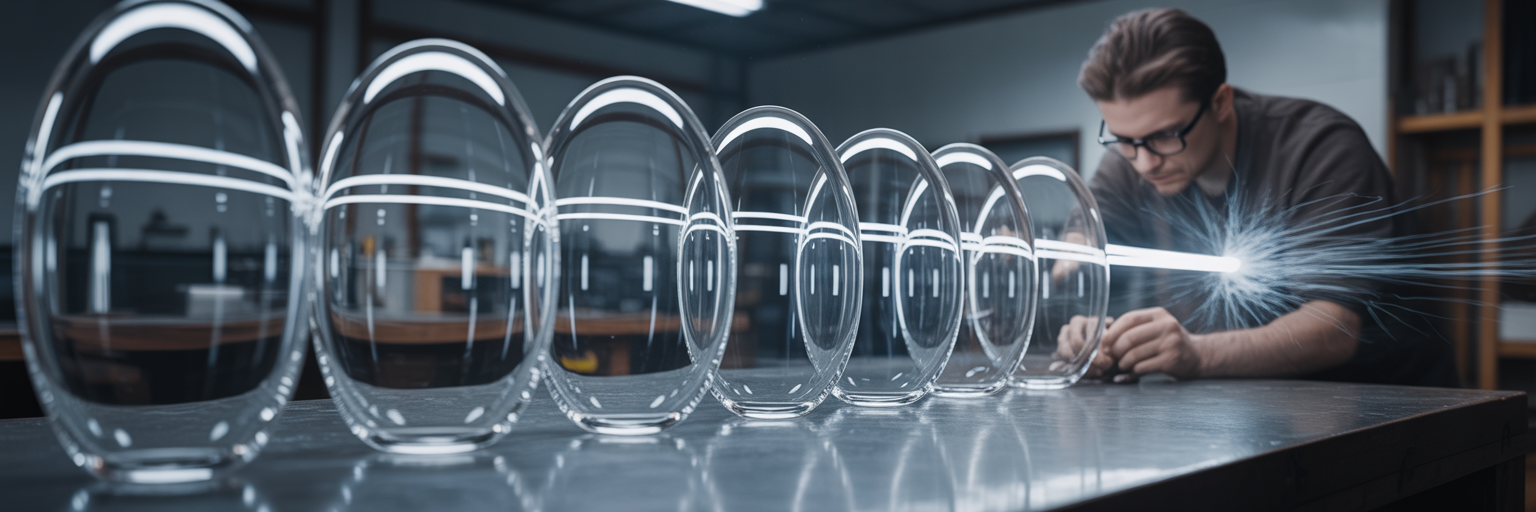
To understand how an animal can become transparent, we first have to ask why most things are visible at all. Light travels in a straight line until it hits something. When it strikes an object, that light can be absorbed, reflected, or scattered. It’s this scattering that makes most objects visible. Think of a sunbeam cutting through a dusty room; you don’t see the light itself, but the dust particles it illuminates. Biological tissue is like a very dense collection of these dust particles.
The main obstacle to transparency is something called the refractive index, which is a measure of how much a material bends light. Our bodies are made of countless components like cell membranes, nuclei, and mitochondria, each with a slightly different refractive index. As light passes from one component to another, it bends and scatters in random directions. This turns the tissue into a foggy, light-scattering medium. It’s the same principle that makes a cloud opaque; countless tiny water droplets, each scattering light, combine to form a dense, white mass.
So, how does an animal overcome this? Evolution has found two primary strategies. The first is simplification. Many transparent marine animals have gelatinous bodies with extremely high water content. By reducing the number of complex, light-scattering components and essentially becoming a structured bag of water, they minimize internal scattering. Light passes through them almost as easily as it passes through the water around them.
The second, more sophisticated strategy is organization. Instead of removing scattering components, some organisms arrange them in a highly ordered way. If internal structures are smaller than the wavelength of light or are arranged in a precise, uniform pattern, they no longer scatter light randomly. This creates a tissue with a nearly uniform refractive index, allowing light to pass through unimpeded. Some animals even employ nanoscale structural tissues on their surfaces that are inherently anti-reflective, guiding light through the body instead of letting it bounce off.
The Glass Frog’s Disappearing Act
While the open ocean is the primary home of transparent animals, the glass frog offers a stunning example of this adaptation in a complex terrestrial environment. Found in the humid canopies of Central and South America, these small amphibians have a vibrant green back that camouflages them against leaves from above. But from below, their skin is so translucent that you can see their beating heart, bones, and digestive system. For years, however, scientists were puzzled by one glaring exception: its red blood.
Hemoglobin, the protein that makes blood red, is a powerful absorber of light, making it a major obstacle to transparency. A circulatory system full of red blood should make the frog highly visible, yet it manages to effectively disappear. The solution, discovered only recently, is a physiological marvel. As detailed in a 2022 study published in Science, the frog performs an incredible disappearing act every time it goes to sleep. It actively removes nearly 90% of its red blood cells from circulation and packs them away.
This is how do glass frogs become invisible. The sequestered blood is stored in its liver, which is itself hidden by a unique adaptation. The liver is coated in a layer of reflective guanine crystals, which act like a mirror, scattering light and concealing the dark, blood-filled organ within. This process is an extraordinary feat. For hours, the frog’s tissues must survive on the minimal oxygen available in the remaining plasma, a state that would be lethal for most vertebrates. It’s a high-risk, high-reward strategy.
The evolutionary advantage is clear. During the day, while the frog rests motionless on a leaf, its enhanced transparency allows the green light filtering through the leaf to pass directly through its body. This eliminates the tell-tale shadow and silhouette that a predator would look for, making the frog almost completely vanish against its leafy background. It is a perfect example of evolution finding a radical solution to a life-or-death problem.
Life in the Clear: Masters of Marine Transparency
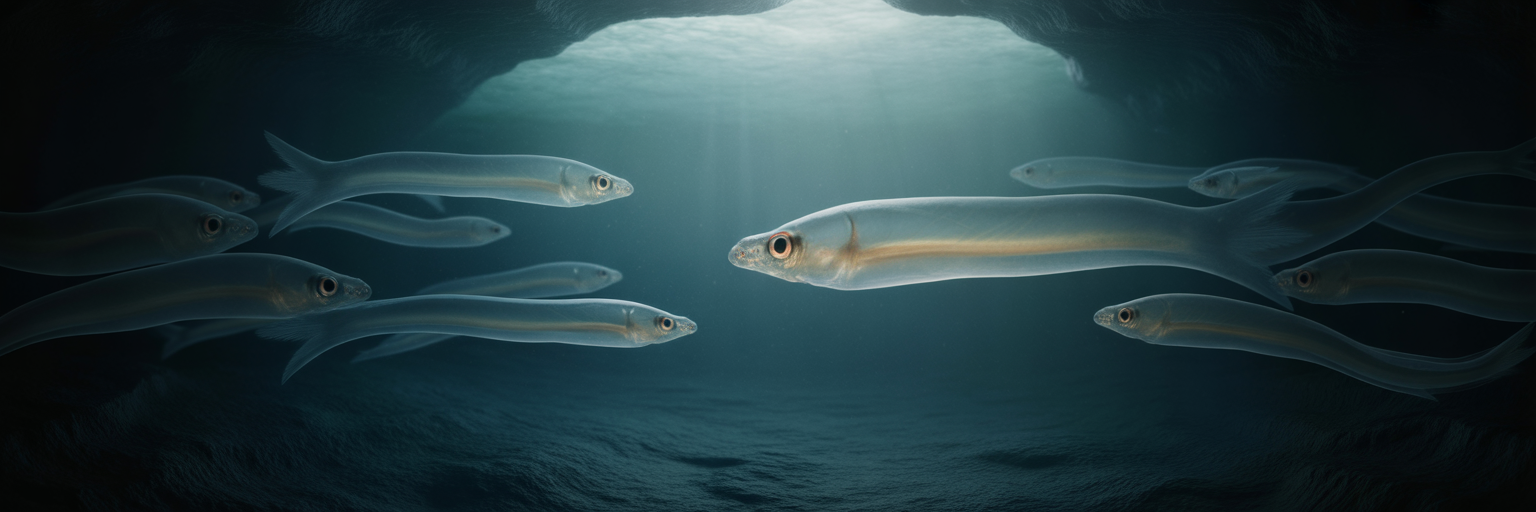
The open ocean is a world with no walls and nowhere to hide. In this vast, three-dimensional space, becoming invisible is the ultimate form of camouflage for both predator and prey. It’s no surprise, then, that the sea is home to the greatest diversity of transparent animals, each with a unique approach to vanishing. These creatures represent some of nature’s most bizarre and effective survival strategies, rivaling some of the other nature’s unsettling creations that we’ve seen defy belief.
Here are a few of the ocean’s masters of transparency:
The Cellular Blueprint for Invisibility
Achieving transparency is more than just being pale; it’s an engineering challenge at the microscopic level. The primary goal is to stop biological tissue from scattering light, and this requires a complete overhaul of cellular architecture. While reducing pigments like melanin is a necessary first step, it’s far from the whole story. The real work happens in the way cells and their components are organized.
In most tissues, cells are arranged in a somewhat haphazard fashion. This randomness is a major source of light scattering. In transparent tissues, however, cells are often arranged in highly ordered, almost crystalline lattice-like structures. This regularity forces light to pass through in a more uniform direction, preventing the scattering that creates opacity. Furthermore, the internal components of the cells, or organelles, may be reduced in number or strategically positioned to minimize their disruptive effect on light.
The material between the cells, known as the extracellular matrix, also plays a critical role. The cornea of the vertebrate eye is a perfect example. It is almost perfectly transparent, yet it is made of collagen, a protein that typically scatters light. The cornea’s secret lies in the precise arrangement of its collagen fibers. They are organized into a uniform grid with spacing so fine that it is smaller than the wavelength of visible light, rendering the structure transparent.
Of course, not every part of an animal can be made transparent. Eyes must be opaque to absorb light and form an image, and a recent meal in the digestive tract will be visible. Animals have evolved clever ways to handle these necessary opaque parts. Some orient their digestive tracts vertically to cast the smallest possible shadow. Others, like the glass frog, use reflective guanine crystals to create a mirrored shield around their organs, effectively cloaking them from view.
The Evolutionary Edge of Being Unseen
Why go through all the trouble of re-engineering your body at a cellular level to become transparent? The answer lies in the immense survival advantage that invisibility provides. In environments without cover, such as the open ocean’s pelagic zone, there are no rocks to hide behind or sand to burrow into. In this context, being invisible is a far more effective defense than any form of pigmented camouflage.
For prey animals, transparency means predators simply look right through them. For predators, it’s the perfect tool for ambush. A transparent predator, like a comb jelly or siphonophore, can drift undetected until an unsuspecting fish or crustacean swims right into its grasp. This dual benefit of offense and defense is a powerful evolutionary driver. The adaptation thrives in specific environments where the benefits outweigh the costs. In the deep sea, it helps animals evade the bioluminescent “searchlights” of predators. For the glass frog, it allows the color of its leafy perch to become its camouflage.
However, this evolutionary path comes with significant trade-offs. Transparent bodies are often fragile and gelatinous, lacking the structural integrity of more opaque tissues. The physiological compromises can be extreme, as seen in the icefish, which survives without the oxygen-carrying efficiency of hemoglobin. These costs help explain why transparency isn’t more widespread. The ability to survive under such conditions is a testament to evolution’s power to find solutions against immense pressure, much like how some animals can survive being swallowed and escape alive, showcasing nature’s knack for turning impossible situations into survival opportunities.
Why Land Dwellers Can’t Disappear
If transparency is such an effective survival strategy, why is it almost exclusively found in aquatic animals? The answer lies in a fundamental principle of physics: the difference in refractive index between an animal’s body and its surroundings. Water has a refractive index that is very close to that of biological tissue. This match means that when light passes from the water into a transparent animal’s body, it bends very little, allowing the animal to blend in seamlessly.
On land, the situation is completely different. There is a large mismatch between the refractive index of air and that of tissue. This difference causes significant reflection and refraction at the surface of any terrestrial animal’s body, making it immediately visible no matter how clear its tissues are. It’s the same reason a clear glass bead is nearly invisible in a bowl of water but stands out sharply in the air.
Beyond the physics of light, terrestrial life presents other major hurdles to transparency. Gravity demands strong, opaque support structures like bones and dense muscles, which are difficult to make transparent. The higher metabolic rates of most land animals also require complex, opaque organs and a rich circulatory system to transport oxygen, making transparency a biological impossibility.
| Factor | Aquatic Environment | Terrestrial Environment |
|---|---|---|
| Refractive Index Match | High (Water ≈ Tissue) | Low (Air ≠ Tissue) |
| Light Interaction | Minimal scattering at body surface | High reflection and refraction at body surface |
| Gravitational Support | Buoyancy supports delicate, gelatinous bodies | Requires dense, opaque bones and muscles |
| Metabolic Demands | Often lower, allowing for simpler systems | Higher, requiring complex, opaque organs and blood |
For these physical and biological reasons, land animals have overwhelmingly evolved to rely on pigmentation-based camouflage. Matching the complex visual textures of forests, grasslands, and deserts is a far more achievable goal than pursuing the near-impossible task of becoming invisible in the open air.
Nature’s Blueprints for Future Technology
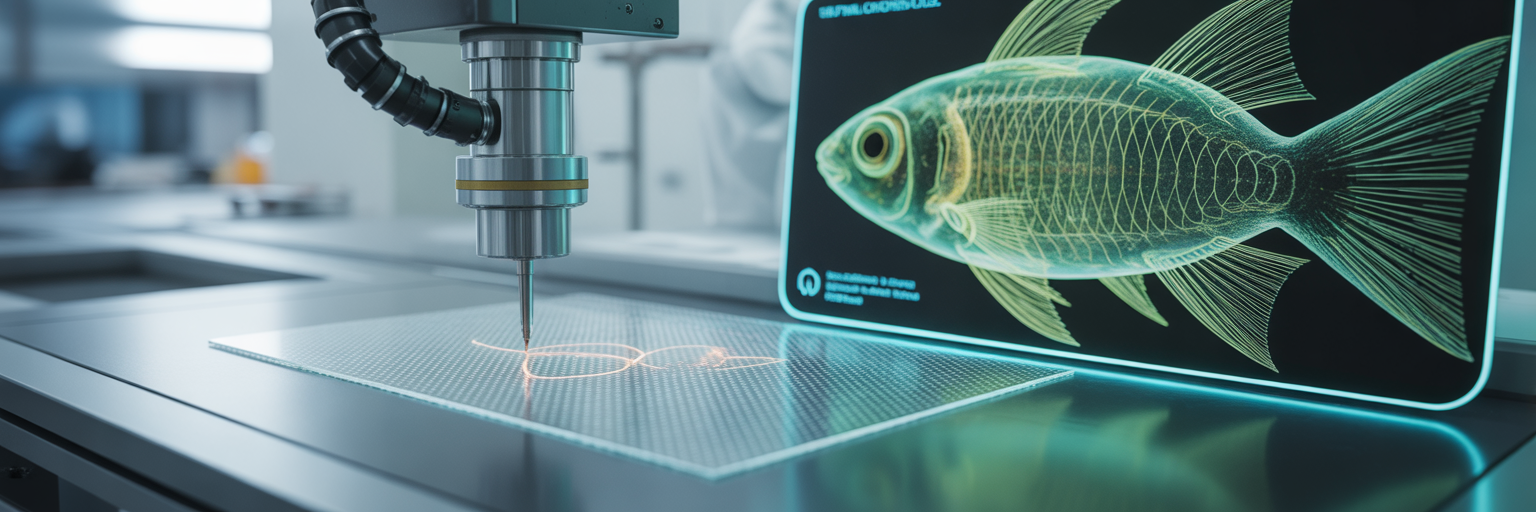
The remarkable ways animals achieve transparency are more than just biological curiosities; they are blueprints for future technologies. Scientists in the field of biomimicry are studying these natural solutions to engineer next-generation materials and devices. By understanding the principles of biological invisibility, we can develop innovations that were once the stuff of science fiction.
One of the most promising areas is biomimicry stealth technology. The surfaces of many transparent marine animals, as well as the eyes of some insects like moths, are covered in nanoscale structures that are incredibly effective at reducing reflection. Researchers are replicating these patterns to create new anti-reflective coatings for solar panels, allowing them to absorb more light, and for camera lenses and screens, reducing glare. These same principles could one day be applied to military vehicles to make them less visible to radar and other sensors.
While a true Harry Potter-style invisibility cloak remains a fantasy, the light-guiding principles used by some organisms offer inspiration for optical cloaking research. Scientists are developing “metamaterials” with engineered structures that can bend light around an object, rendering it invisible from certain angles. These biological blueprints provide a starting point for designing materials with unprecedented optical properties. Furthermore, as reported by outlets like Wired, understanding how to make tissues transparent is a major goal in biomedical imaging. A technique called clarity, which makes mouse brains and other organs transparent, allows for detailed 3D imaging without dissection, and it was inspired by these natural examples. This connection shows how studying nature can lead to profound breakthroughs, much like the discovery of life forms that can feed on plastic waste offers potential solutions to our environmental challenges.
The Ultimate Limit of Biological Invisibility
After exploring the incredible world of transparent animals, one question remains: could a large animal ever evolve to be completely invisible? The evidence suggests this is likely impossible. The physical and biological constraints are simply too great. The fundamental mismatch in the refractive index between air and tissue will always be a barrier for terrestrial animals. Even in water, where transparency is common, there are limits.
Certain organs, by their very nature, must be opaque to function. Eyes need to absorb light to form an image, not let it pass through. Nerves and brains are dense, complex structures that are difficult to make transparent. Even the most see-through creatures have their limits; a recent meal in a shrimp’s gut or the dark optic nerves of a larval fish are often visible giveaways. These limitations highlight that even the most impressive animals that are transparent are not truly invisible.
This brings us to a core principle of evolution: it is not a process that strives for perfection. It is a pragmatic process that finds “good enough” solutions for a specific environmental context. The partial transparency of a glass frog or the near-total transparency of a larval eel are perfectly adapted solutions for their respective niches. They provide a decisive survival advantage, and that is all that matters. While true, complete invisibility may remain in the domain of fiction, the real-world animals that have mastered the art of vanishing offer a stunning glimpse into the ingenuity of the natural world, pushing the boundaries of our understanding of both physics and biology.