The Unseen Puppeteers of the Natural World
In the vast theater of the natural world, survival is a performance of immense complexity. Some organisms have developed incredible strategies, including those that can live inside other living creatures without causing harm, forming neutral or even beneficial partnerships. You can learn more about these less harmful relationships and the delicate balance they maintain. However, a darker and more coercive strategy exists, one where survival depends not on cooperation, but on complete domination. This is the world of manipulative parasites, organisms that seize control of their host’s mind and body, turning them into unwilling puppets in a life-or-death drama.
When we talk about a parasite forcing its host to commit “suicide,” we are not implying a conscious decision. Instead, this term describes a set of parasite-driven behaviors that inevitably lead to the host’s death in a way that specifically benefits the parasite’s life cycle. The host is not choosing to die; its brain and nervous system have been hijacked to execute a fatal command. This chilling phenomenon is a highly evolved survival mechanism, a testament to millions of years of evolutionary refinement.
The primary evolutionary driver behind this manipulation is a concept known as Parasite-Increased Trophic Transmission (PITT). Many parasites have complex life cycles that require them to move between different host species. For instance, a parasite might start in a snail, need to get into a bird to mature, and then have its eggs spread through the bird’s droppings to infect more snails. The challenge is getting from the first host (the intermediate host) to the second (the definitive host). PITT is the parasite’s solution: it manipulates the intermediate host’s behavior to make it significantly more likely to be eaten by the definitive host. The host’s death is not a side effect; it is the entire point.
This article explores some of the most striking examples of these unseen puppeteers. We will examine the specific, often horrifying behaviors they induce, from a cricket’s compulsive death plunge into water to an ant’s nightly climb to its doom. From there, we will investigate the intricate neurological science of how parasites manipulate hosts, revealing the chemical and molecular tools they use to hijack the brain. Finally, we will consider what this bizarre field of neuroparasitology reveals about the very nature of behavior and the brain itself.
The Hairworm’s Compulsive Death Plunge
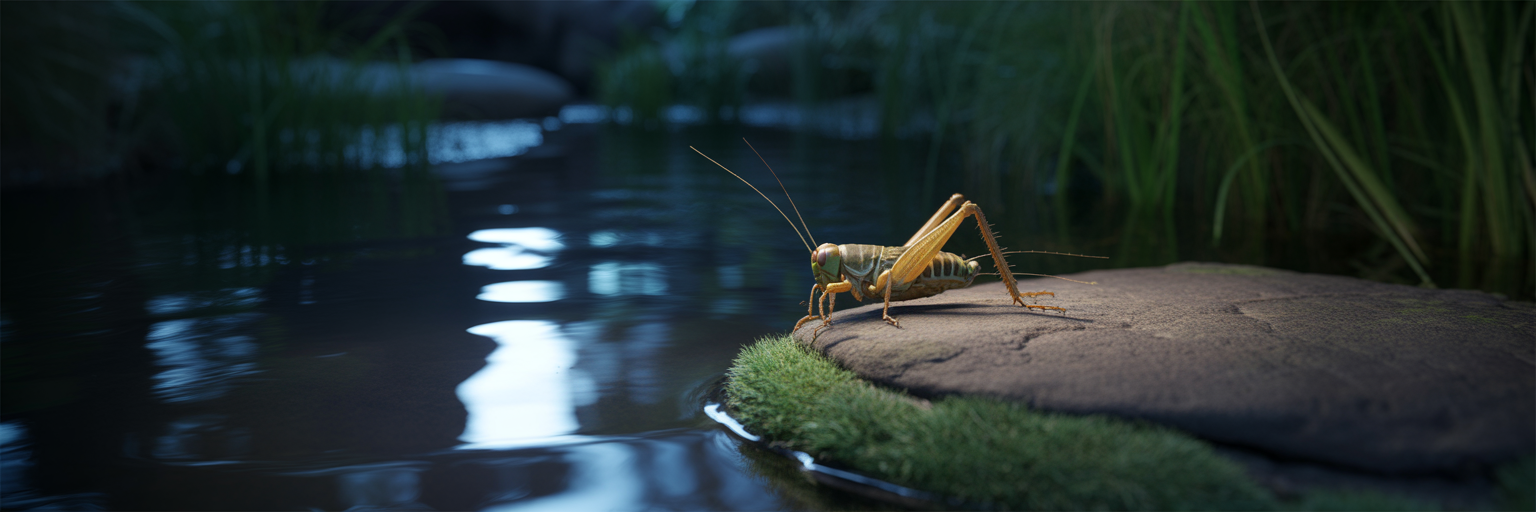
Imagine a cricket, an insect perfectly adapted for life on land, suddenly possessed by an overwhelming and unnatural urge. It abandons its familiar territory, its search for food and mates forgotten, driven by a single, frantic purpose: to find water. This compulsion grows until the cricket, upon finding a stream, pond, or even a swimming pool, takes a final, fatal leap into the water and drowns. This is not a random act of madness. It is the final, brilliant stage of manipulation by the horsehair worm (phylum Nematomorpha).
The horsehair worm’s life begins and ends in water, where it mates and lays its eggs. These eggs are ingested by aquatic insect larvae, which are later eaten by terrestrial predators like crickets and grasshoppers. Inside the cricket, the worm grows silently, sometimes reaching lengths of over a foot, coiling itself within the host’s body cavity. For months, it absorbs nutrients, biding its time. But once it reaches maturity, it must return to the water to reproduce, and its landlocked host becomes a prison. To escape, the parasite initiates one of the most dramatic examples of behavioral control, often referred to as hairworm cricket suicide.
The science behind this death plunge is a fascinating look into neural hijacking. The hairworm produces a cocktail of neuroactive proteins that directly interfere with the cricket’s central nervous system. Research published in a study in The American Naturalist suggests that these manipulations affect the host’s response to light, a behavior known as phototaxis. The parasite appears to alter how the cricket perceives polarized light, which is strongly reflected off the surface of water. What was once a neutral or even avoided environmental cue becomes an irresistible beacon.
The parasite is not merely giving its host a vague suggestion. It is rewriting the cricket’s fundamental instincts, turning its sensory system against it. The drive is so powerful that infected crickets will travel much farther than their uninfected counterparts in their desperate search for water. Once the cricket hits the water, the mature worm emerges from its host’s body, wriggling free to complete its life cycle, leaving the drowned cricket behind as an empty vessel. It is a chillingly efficient strategy, ensuring the parasite’s genes are passed on at the direct expense of its host’s life.
Fatal Attraction and the Feline Connection
Among the microscopic masters of manipulation, few are as widespread or as well-studied as Toxoplasma gondii. This single-celled protozoan has a complex life cycle that requires a member of the cat family (Felidae) as its definitive host, the only environment where it can sexually reproduce. To get there, it infects a vast range of warm-blooded animals, including birds and rodents, which serve as intermediate hosts. The parasite’s entire strategy hinges on ensuring its intermediate host ends up in the jaws of a cat, and it achieves this by engineering a truly fatal attraction.
A healthy rat or mouse has an innate, hardwired fear of cats. The scent of feline urine is a powerful danger signal that triggers immediate avoidance and defensive behaviors. This instinct is crucial for survival. However, when a rodent is infected with T. gondii, this fundamental survival circuit is not just silenced; it is reversed. The parasite forms microscopic cysts in the host’s brain, and it shows a remarkable preference for a specific region: the amygdala, the brain’s primary fear processing center. The result of this targeted infiltration is a profound behavioral change. The infected rodent loses its aversion to the smell of cat urine. Some studies have even shown that infected rats become curious, even attracted to the scent of their mortal enemy.
This phenomenon is a classic example of Toxoplasma gondii mind control. The leading theory behind this neurological coup involves the manipulation of dopamine, a key neurotransmitter associated with reward, motivation, and pleasure. The parasite appears to have the ability to directly synthesize or trigger the release of dopamine within the host’s brain. By increasing dopamine levels in the neural circuits that process the scent of a predator, T. gondii effectively rewires the brain’s response. The scent that should trigger terror instead triggers a sense of curiosity or reward. The predator no longer seems like a threat but an object of interest.
This manipulation is surgically precise. The parasite does not cause a general loss of fear. Infected rodents still show normal fear responses to other threats, like open spaces or non-predator dangers. The change is specific to felines, the one predator that can deliver the parasite to its final destination. By turning the host’s fear into a fatal attraction, T. gondii dramatically increases its chances of completing its life cycle, demonstrating a remarkable ability to manipulate one of the most powerful emotions in the animal kingdom.
The Zombie Snail’s Pulsating Display
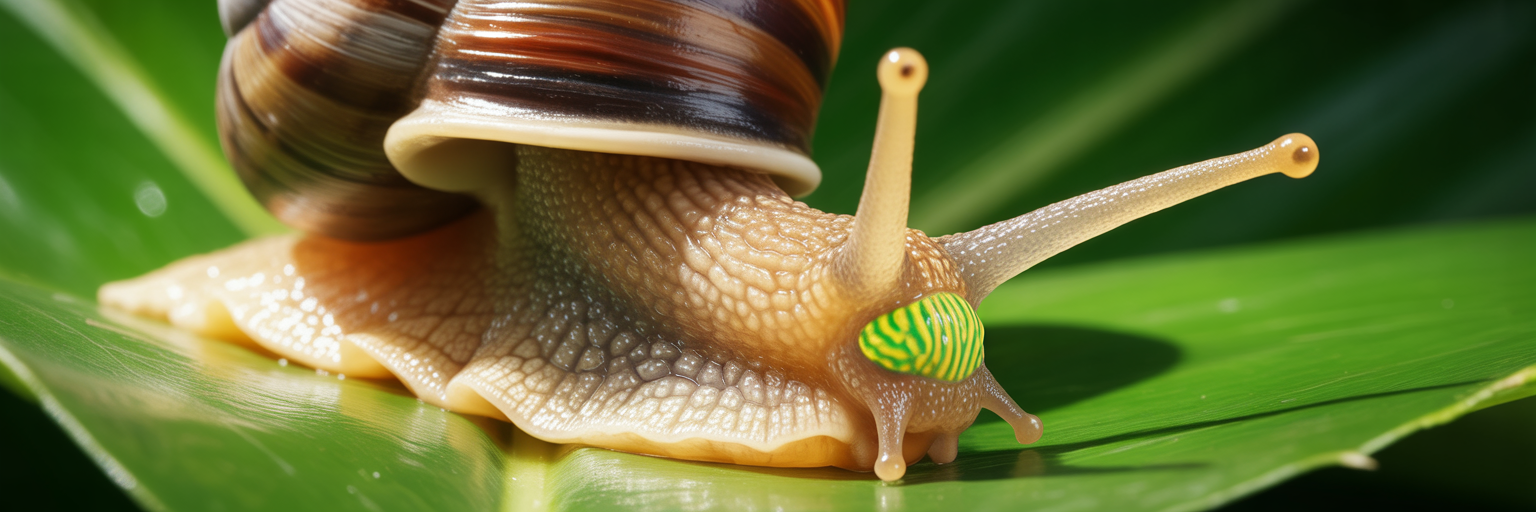
Some parasitic manipulations are subtle, operating on a purely chemical level. Others are shockingly overt, combining physical transformation with behavioral coercion in a strategy that is as bizarre as it is effective. The green-banded broodsac, Leucochloridium paradoxum, is a master of the latter, turning a humble snail into a pulsating, zombie-like lure for its next host.
The parasite’s life cycle begins when its eggs, contained in bird droppings, are eaten by a snail. Inside the snail, the parasite develops into long, branching tubes called sporocysts. These sporocysts then embark on a dramatic invasion. They snake their way up into the snail’s eyestalks, which become grotesquely swollen and transformed. The normally plain, translucent eyestalks become brightly colored with green and brown bands and begin to pulsate rhythmically, in sync with the ambient light. The visual effect is uncanny: the snail’s own eyestalks now look exactly like plump, wriggling caterpillars or grubs, a favorite food of many insect-eating birds.
This physical transformation is only half of the parasite’s strategy. A healthy snail is a reclusive creature, preferring dark, damp environments to avoid drying out and being spotted by predators. But the parasite cannot afford for its beautiful lure to remain hidden. It hijacks the snail’s motor control, forcing it out of the shadows and into the open. The infected snail is driven to climb onto exposed leaves in broad daylight, a behavior that would normally be suicidal. There, it sits in full view, its pulsating eyestalks performing an irresistible dance for any bird flying overhead.
The final act is swift and precise. A bird, tricked by the convincing mimicry, swoops down and pecks at the pulsating “caterpillar.” It rips off the eyestalk, consuming the broodsac filled with parasitic larvae. The parasite has now successfully reached its definitive host, where it will mature and reproduce. The snail, meanwhile, is left maimed but often alive. Its remarkable regenerative abilities allow it to regrow its eyestalk, which is then promptly re-infected by the remaining sporocysts within its body, readying it for another round of manipulation. The snail is reduced to a living, regenerating factory for bird bait, its body and behavior completely subservient to the parasite’s reproductive needs.
Caterpillar Bodyguards and Ant Summits
The precision of parasitic control can be breathtaking, with strategies tailored perfectly to the host, the parasite, and the environment. Two examples that stand out for their specificity are the wasp that creates a zombie bodyguard out of its host and the fluke that forces an ant on a daily pilgrimage to its death.
- The Caterpillar Bodyguard
The parasitic wasp Glyptapanteles uses a caterpillar as a living incubator for its young. The female wasp injects her eggs into a caterpillar, and the larvae develop inside, feeding on the host’s non-essential tissues. But the most fascinating manipulation occurs after the larvae are finished with their host. Dozens of wasp larvae chew their way out of the caterpillar’s body and attach themselves to a nearby branch to form pupae. The caterpillar, now empty and dying, should simply perish. Instead, it becomes a zombified protector. It stops eating and moving, except to stand guard over the cluster of wasp pupae. If a predator, like a stink bug, approaches, the caterpillar will violently thrash its head back and forth, fending off the attacker. This bodyguard behavior is a final, posthumous service, ensuring the survival of the parasite’s offspring at the cost of the host’s last ounces of energy. The caterpillar is no longer an individual; it is a tool, a shield programmed to defend its own killers.
- The Ant’s Final Climb
The lancet liver fluke (Dicrocoelium dendriticum) has one of the most complex life cycles known, involving snails, ants, and finally, grazing mammals like sheep or cattle. Its journey from one host to the next showcases an incredible feat of behavioral engineering, giving rise to the zombie ants parasite phenomenon. After being excreted by a mammal, the fluke’s eggs are eaten by a snail. The snail then secretes slime balls containing the parasitic larvae, which are in turn eaten by ants. Inside the ant, most of the larvae encyst in the abdomen, but one or two embark on a special mission. A single larva migrates to the ant’s sub-esophageal ganglion, a cluster of nerve cells that functions as part of its brain.
This lone “brain worm” does not damage the brain but seizes control of the ant’s motor functions. Every evening, as the temperature drops, the infected ant is compelled to leave its colony and perform a unique “summiting” behavior. It climbs to the very tip of a blade of grass, clamps its mandibles shut, and waits. This position makes it highly likely to be accidentally eaten by a grazing sheep or cow during the cool hours of the evening or early morning. The control is remarkably precise and even reversible. If the ant survives the night, as the sun warms it the next day, the parasite releases its control. The ant unclamps its jaws, climbs down, and rejoins its colony, behaving normally until the next evening, when the compulsion returns. This cycle repeats night after night, a daily gamble that stacks the odds firmly in the parasite’s favor.
Hijacking the Brain’s Command Center

The bizarre behaviors seen in infected hosts are not random malfunctions; they are the result of targeted, sophisticated attacks on the host’s nervous system. Parasites have evolved to become master neurochemists, capable of manipulating the very molecules that govern thought, emotion, and movement. Understanding how parasites manipulate hosts means looking at the specific command centers they target within the brain. These diverse strategies, seen across many neuroparasitology examples, often converge on a few key systems.
The Dopamine System Takeover
Dopamine is a powerful neurotransmitter that plays a central role in the brain’s reward and motivation systems. It is associated with feelings of pleasure and reinforces behaviors that are beneficial for survival, like eating or mating. Several parasites have learned to hijack this system to their own advantage. As seen with Toxoplasma gondii, the parasite can increase dopamine production in the rodent’s brain. By flooding the neural circuits with this “feel-good” chemical in response to a predator’s scent, the parasite rewires a fear response into a reward-seeking one. The host is chemically tricked into believing that what should be terrifying is actually desirable. This is not just suppressing fear; it is actively replacing it with a fatal form of motivation.
Suppressing the Fear Response
For many parasites using PITT, the host’s natural fear and caution are major obstacles. To overcome this, some parasites launch a direct assault on the brain’s fear center, the amygdala. This is another key strategy of T. gondii, which forms cysts directly within this brain region. The physical presence of these cysts, combined with the chemical signals they emit, appears to dampen the amygdala’s ability to process threat signals. This effectively turns off the brain’s alarm system, making the host bolder and more reckless. An infected animal is more likely to venture into open spaces, less likely to flee from danger, and ultimately, an easier meal for the parasite’s next host. The parasite achieves its goal by creating a host that is no longer capable of perceiving the risks around it.
Controlling Navigation and Movement
Perhaps the most direct form of control is the hijacking of fundamental behaviors like navigation and movement. The horsehair worm’s manipulation of the cricket’s phototaxis (response to light) is a prime example. By altering how the host’s brain interprets light, the parasite can steer it toward a specific location—in this case, water. Similarly, the lancet fluke’s control over the ant involves manipulating its response to temperature and likely its geotaxis (response to gravity), compelling it to climb upwards. This level of control is astonishing, turning the host into a vehicle that the parasite can drive. It’s a reminder that even complex behaviors are governed by basic neural circuits that can be exploited. This ability to navigate is not unique to complex brains; some of the most impressive feats are performed by animals that can navigate without a brain, showing how deeply ingrained these systems are in biology.
| Parasite | Intermediate Host | Neurological Target | Primary Mechanism | Behavioral Outcome |
|---|---|---|---|---|
| Horsehair Worm (Nematomorpha) | Cricket/Grasshopper | Central Nervous System, Visual Pathways | Production of host-mimicking proteins, altering phototaxis | Compulsive drive to seek and enter water |
| Toxoplasma gondii | Rodent | Amygdala, Dopamine Pathways | Cyst formation, increased dopamine production | Loss of innate fear of feline predators |
| Lancet Liver Fluke (Dicrocoelium) | Ant | Sub-esophageal Ganglion (Brain) | Targeted manipulation of motor neurons | ‘Summiting’ behavior; clamping mandibles on grass |
| Broodsac (Leucochloridium) | Snail | Eyestalks, Motor Control | Physical invasion and mimicry, forcing movement to light | Conspicuousness, attracting predatory birds |
Note: This table summarizes the primary, currently understood mechanisms for each parasite. The exact molecular interactions are complex and a subject of ongoing research.
The Co-Evolutionary Arms Race
The intricate and often horrifying manipulations performed by parasites are not random occurrences. They are the highly refined products of a co-evolutionary arms race that has been waged between parasites and their hosts for millions of years. This dynamic is a relentless cycle of adaptation and counter-adaptation. A host might evolve a more robust immune response to fight off an infection, or a behavioral defense, like grooming more meticulously to remove parasites. In response, only the parasites that can evade that immune response or whose manipulation is strong enough to override the new behavior will survive and reproduce.
This constant pressure pushes parasites to develop ever more precise and effective methods of control. The biologist Richard Dawkins coined the term “extended phenotype” to describe this phenomenon. The phenotype is the set of observable characteristics of an organism, resulting from the interaction of its genotype with the environment. Dawkins argued that a parasite’s genes do not just build the parasite’s own body; their influence extends beyond it to manipulate the host’s body and behavior. The cricket’s final leap into the water, the ant’s climb up a blade of grass, or the snail’s pulsating eyestalks are not behaviors of the host anymore. They are physical manifestations of the parasite’s genetic code, as much a part of the parasite’s phenotype as its own skin.
Success in this arms race is defined by precision. A parasite that kills its host too quickly, before it is mature, fails. A parasite that drives its host to the wrong location or makes it attractive to the wrong predator also fails. The most successful parasites are those that have evolved surgical-like control. The lancet fluke’s ability to make an ant climb grass only during the cool hours of the evening and morning is a perfect example. This timing maximizes the chance of being eaten by a grazing mammal while minimizing the risk of the ant dying from heat exposure during the day, which would kill the parasite along with it. This level of sophistication is a testament to the immense selective pressures that have shaped these relationships over deep evolutionary time.
Ecological Ripple Effects of Mind Control
While it is easy to focus on the dramatic one-on-one battle between a single parasite and its host, the influence of these manipulations extends far beyond the individual. When multiplied across thousands or millions of infected hosts, parasites that control behavior can become a powerful and often overlooked ecological force, sending ripples through entire ecosystems and fundamentally altering food webs.
By making prey easier to catch, these parasites can significantly influence predator populations. If a large number of rodents in an area are infected with Toxoplasma gondii, the local cat population may have an easier time hunting, which could lead to an increase in their numbers. This, in turn, could affect the populations of other animals that cats prey on. The parasite, in its quest for transmission, effectively subsidizes the predator, shifting the delicate balance of the entire community.
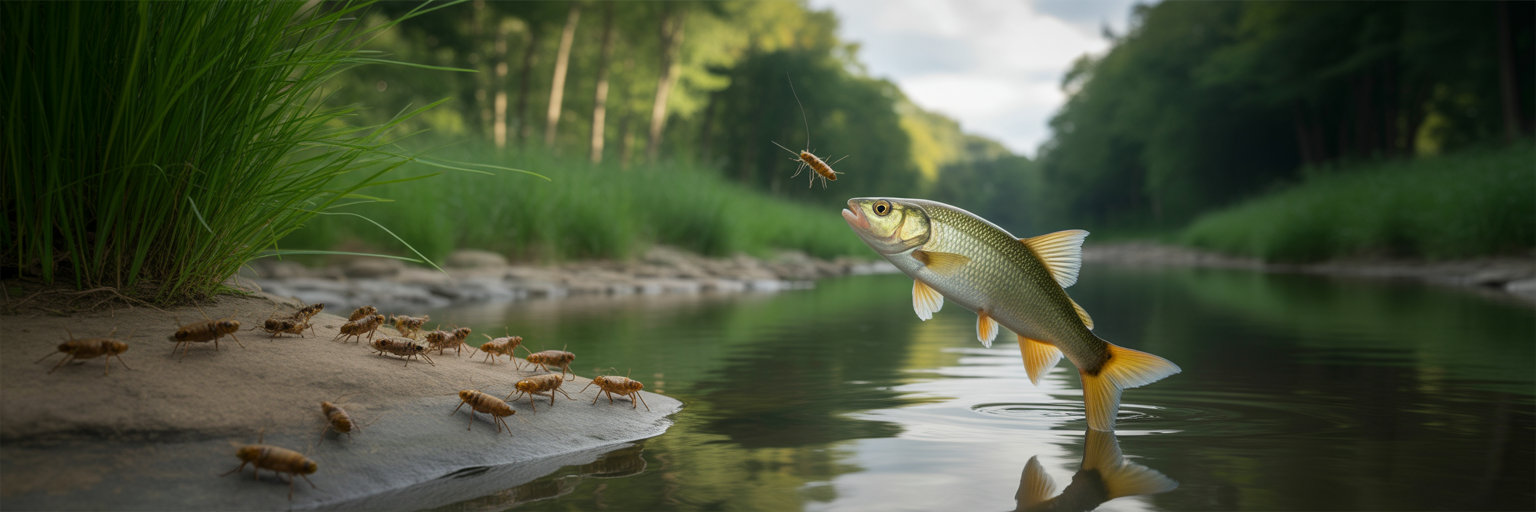
The hairworm provides one of the most striking examples of large-scale ecological impact. In some Japanese streams, researchers have found that the seasonal “suicide” of infected crickets constitutes a massive transfer of biomass and nutrients from the terrestrial ecosystem to the aquatic one. This sudden influx of high-protein food provides a critical seasonal feast for fish, such as the endangered Japanese trout. In some cases, these drowned crickets can make up over 60% of the trout’s diet during certain times of the year. The parasite’s manipulation is not just a curiosity; it is a vital link in the food chain, connecting two disparate environments. Without the hairworm, the fish population might struggle.
These examples show that parasitic manipulation is not an aberration of nature but an integral part of it. It is a hidden engine that helps shape species interactions, regulate populations, and direct the flow of energy and nutrients through ecosystems. These complex interdependencies are a reminder of nature’s surprising functionality, much like the discovery of creatures that can switch between warmblooded and coldblooded states, which challenges our simple classifications. By studying these mind-controlling parasites, ecologists gain a deeper appreciation for the complex and often invisible forces that structure the natural world.
The Human Connection: Are We Also Puppets?
After learning about these powerful manipulations, an unsettling question inevitably arises: can this happen to humans? The conversation almost always turns to Toxoplasma gondii, the same parasite that makes rodents fearless of cats. It is one of the most successful parasites on Earth, estimated to infect up to a third of the global human population. For most people with healthy immune systems, a T. gondii infection is asymptomatic or causes mild, flu-like symptoms before becoming dormant. But could it be subtly influencing our behavior from the background?
It is crucial to state upfront that humans are a “dead-end” host for T. gondii. The parasite cannot complete its life cycle in us, as we are highly unlikely to be eaten by a cat. Therefore, any behavioral effects observed in humans would be unintentional byproducts of adaptations that evolved for manipulating rodents, not a targeted strategy to control us. The scientific community is actively debating this topic, and the evidence is complex and often contradictory. A number of correlational studies have suggested potential links between latent T. gondii infection and subtle shifts in human personality and behavior. Some research has associated infection with increased risk-taking, such as a higher rate of traffic accidents. Other studies have pointed to correlations with personality traits like impulsivity, aggression, and even links to mental health disorders like schizophrenia.
However, and this cannot be stressed enough, correlation does not equal causation. As a review from The Scientist highlights, establishing a definitive causal link in humans is incredibly difficult. Unlike controlled lab experiments with rodents, human life is filled with countless confounding variables: genetics, diet, culture, socioeconomic status, and life experiences all shape our behavior. It is extremely challenging to isolate the effect of a single, dormant parasite from this complex web of influences. While the idea of a microscopic puppeteer in our brains is a compelling narrative, the current scientific consensus is that there is no definitive proof that T. gondii significantly controls human behavior. It remains a fascinating and unresolved area of research, a scientific mystery that reminds us of the profound complexity of the human brain.
What Parasites Teach Us About the Brain

While the study of mind-controlling parasites may seem like a journey into the macabre, the field of neuroparasitology offers profound opportunities for understanding the brain. These organisms, in their relentless drive for survival, have become nature’s own neuroscientists. They have spent millions of years conducting “natural experiments,” developing molecular tools that can target and manipulate specific neural circuits with a precision that human science is only beginning to achieve.
By studying exactly how a parasite turns off a fear circuit, hijacks a navigational system, or alters a motivational state, scientists can map those systems in reverse. It is like having a tool that can selectively disable one component of a complex machine, allowing us to observe exactly what that component does. For example, the lancet fluke’s ability to control the ant’s motor function without killing it provides a unique model for studying the neural basis of movement. Toxoplasma gondii‘s targeted effect on the amygdala offers insights into the chemical pathways of fear and anxiety.
The potential for future discoveries is immense. The neuroactive compounds that parasites produce are a treasure trove of pharmacological possibilities. These molecules have been perfectly honed by evolution to interact with the nervous system. By isolating, analyzing, and synthesizing these compounds, researchers could potentially develop novel treatments for a range of psychiatric and neurological disorders. A chemical that a parasite uses to reduce anxiety in its host could become the basis for a new anti-anxiety medication. A molecule that promotes a specific motor action could offer clues for treating movement disorders like Parkinson’s disease.
In the end, these parasites force us to confront a fundamental truth about ourselves: our thoughts, emotions, and behaviors are all products of complex biological machinery. These organisms, in their ancient and intricate work, have learned to pull the levers of that machinery. By studying their methods, we are not just satisfying a morbid curiosity. We are gaining profound insights into the very mechanisms that create consciousness, personality, and the essence of what it means to be a living, thinking being.