A Glimpse Beyond Extinction
In early 2026, the scientific community received news that felt more like fiction than fact. Two marsupial species, known only from fossils and believed to be extinct for over 7,000 years, were found alive and well in the remote highlands of New Guinea. This period of absence is staggering. It stretches back to a time before the first pyramids were built, when human civilization was just beginning to experiment with agriculture. The announcement of these extinct animals rediscovered sent a wave of disbelief and excitement through research institutions worldwide.
The two species at the center of this incredible story are the pygmy long-fingered possum (Dactylonax kambuayai) and the ring-tailed glider (Tous ayamaruensis). Until now, our only knowledge of them came from fragmented bones unearthed from ancient sediment. They were ghosts of a prehistoric world, textbook examples of life that had vanished long ago. To find them clinging to existence in the 21st century is a biological miracle.
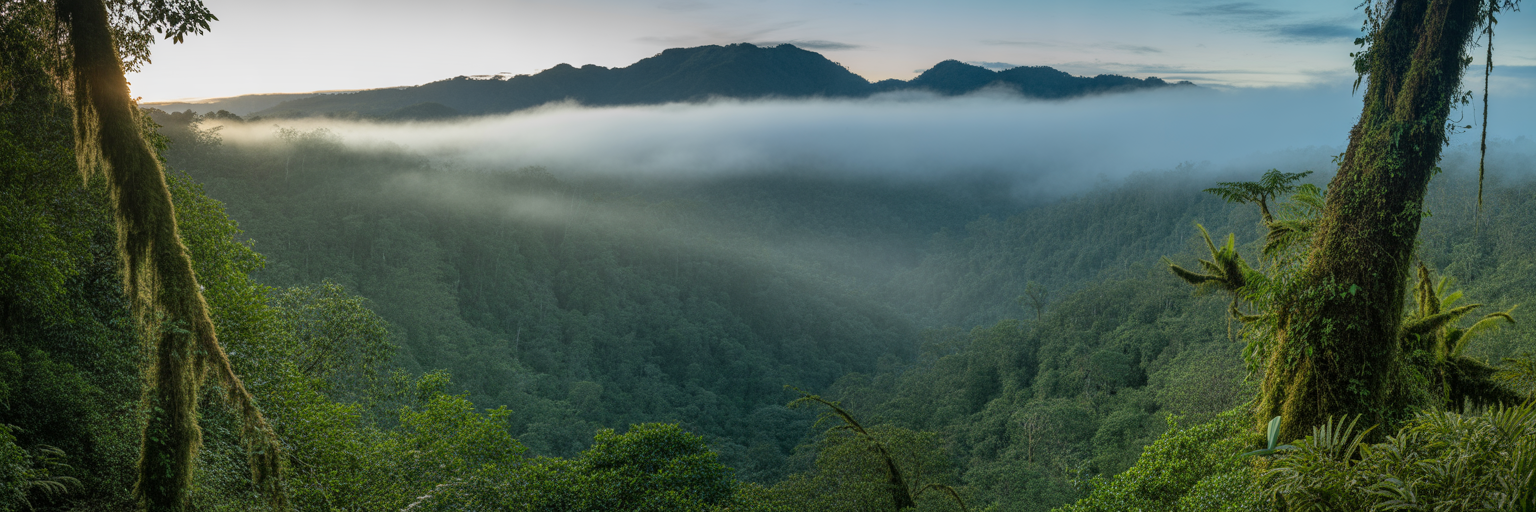
The discovery took place in the mist-shrouded mountain forests of West Papua, Indonesia, a region that remains one of Earth’s last great wildernesses. Its extreme isolation and rugged terrain have acted as a natural fortress, preserving ecosystems that have remained virtually untouched by modern human activity. This unique geography is precisely why such a monumental discovery was possible. The forests served as a living museum, quietly sheltering species that the rest of the world had long forgotten.
The initial reaction from scientists was a mix of profound shock and intense curiosity. For paleontologists, it was like seeing a dinosaur walk out of a textbook. For conservationists, it was a powerful symbol of hope. As Dr. Kristofer, a conservation biologist on the team, told NBC News, “Finding these animals alive feels like a second chance to learn about and protect these remarkable species.”
These animals are now classified as “Lazarus species,” a term for any organism that disappears from the fossil record for a significant period only to reappear suddenly, as if risen from the dead. While other Lazarus species exist, the 7,000-year gap for these mammals makes their reappearance one of the most dramatic ever recorded. This rediscovery adds to a growing list of nature’s unsettling creations that defy belief and challenge our understanding of the natural world.
Survivors from a Prehistoric World
Moving beyond the initial shock of the announcement, scientists are now focused on understanding the biology of these living fossils. The pygmy long-fingered possum and the ring-tailed glider New Guinea offer a rare opportunity to compare paleontological inferences with direct observations of living, breathing animals.
Profile: The Pygmy Long-Fingered Possum (Dactylonax kambuayai)
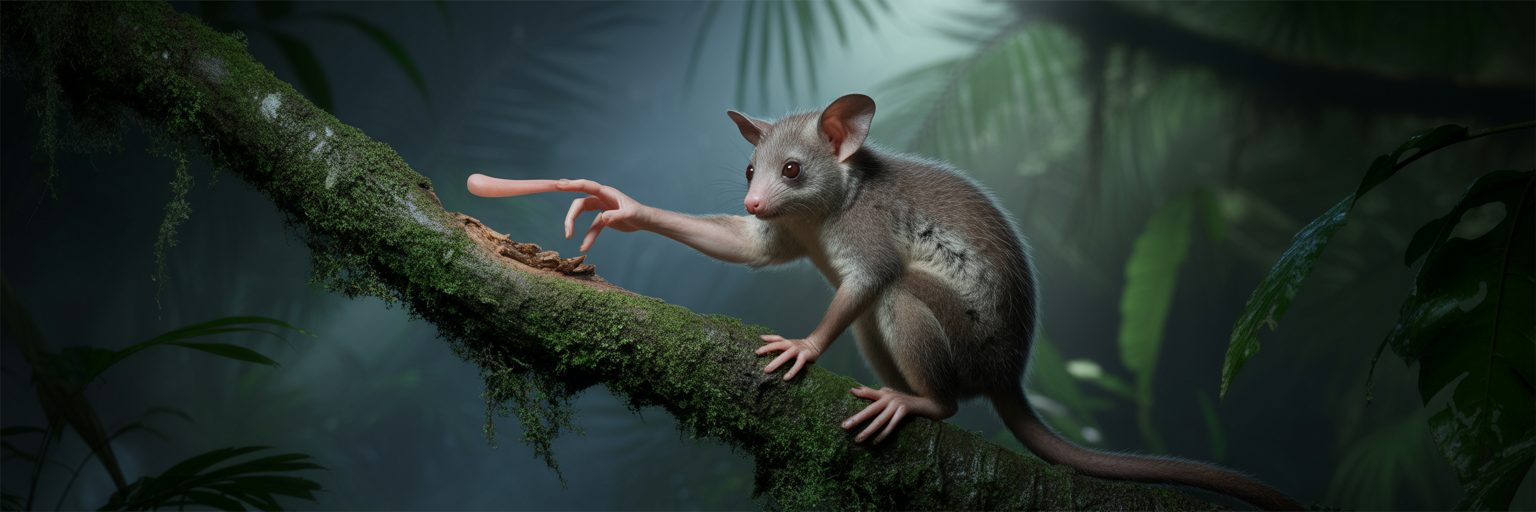
From fossil records, scientists knew Dactylonax kambuayai was a small marsupial with a specialized dental structure, suggesting it fed on insects. However, seeing the living animal revealed its most astonishing feature: an extremely elongated third and fourth finger. This physical trait is a striking example of convergent evolution, bearing a remarkable resemblance to the aye-aye of Madagascar. The possum is nocturnal and uses these slender digits for percussive foraging. It taps rapidly on tree bark and decaying wood, listening for the hollow sounds of insect larvae tunnels beneath. Once a meal is located, it gnaws a hole and uses its specialized finger to extract the grub. This level of specialization is a testament to evolution’s power, much like creatures that can survive being swallowed and escape alive.
Profile: The Ring-Tailed Glider (Tous ayamaruensis)
Fossils of Tous ayamaruensis hinted at a gliding mammal, but the skeletal remains could not prepare researchers for the animal’s grace and agility. The living ring-tailed glider New Guinea possesses an expansive gliding membrane, or patagium, that stretches from its wrists to its ankles. In the wild, it has been observed launching from high canopy trees, soaring for considerable distances with remarkable control. Its long, prehensile tail acts as a rudder, allowing it to make sharp turns to evade predators or navigate the dense forest. It is a nocturnal herbivore, feeding on a diet of nectar, sap, and soft fruits found in the highest reaches of the forest, a niche it has occupied for millennia.
| Feature | Pygmy Long-Fingered Possum (Dactylonax kambuayai) | Ring-Tailed Glider (Tous ayamaruensis) |
|---|---|---|
| Known From Fossils | Small size, specialized dental structure suggesting an insectivorous diet. | Skeletal structure indicating gliding capabilities, estimated body size. |
| Key Physical Trait | Extremely elongated third and fourth fingers for percussive foraging. | Expansive gliding membrane (patagium) and a long, prehensile tail for steering. |
| Observed Diet & Behavior | Nocturnal; uses long fingers to tap on wood and extract insect larvae. Highly elusive. | Nocturnal; glides between canopy trees to feed on nectar, sap, and fruits. |
| Ecological Niche | Specialist insectivore, occupying a niche similar to woodpeckers or the aye-aye. | Arboreal herbivore, navigating the highest levels of the forest canopy. |
New Guinea’s Marsupial Legacy
The fact that both rediscovered animals are marsupials is significant. New Guinea, like Australia, was part of the ancient supercontinent of Gondwana. After breaking away, it became an isolated evolutionary laboratory. While Australia is known for its kangaroos and koalas, New Guinea fostered its own unique radiation of marsupials, including tree-kangaroos, cuscuses, and numerous species of possum and glider. The rediscovery of Dactylonax and Tous adds two ancient lineages to this incredible marsupial family tree.
Decoding 7,000 Years of Evolution
The most exciting work is now happening in the lab. Scientists are sequencing the complete genomes of both species. This genetic analysis will act as a time machine, allowing researchers to compare the DNA of these living animals to that of their fossil ancestors. How much have they changed over 7,000 years? Are they genetically distinct from their closest living relatives? Answering these questions will reveal how evolution operates over millennia in a stable, isolated environment and provide a priceless window into a world that was thought to be lost forever.
The Expedition into New Guinea’s Lost Forests
The story of how these animals were found is as remarkable as the animals themselves. It is a tale of scientific rigor, incredible perseverance, and a crucial partnership that bridged modern science with ancient knowledge. This was not a lucky accident but the result of a targeted, multi-year effort to document New Guinea wildlife discoveries.
Navigating an Untouched Frontier
The expedition focused on the Foja Mountains of West Papua, a range so remote and inaccessible it is often called the “Lost World.” The team faced immense physical challenges. There are no roads, no trails, and the terrain is a punishing mix of steep ravines, dense undergrowth, and constant, soaking rain. Helicopters were needed to drop the team and their supplies at a base camp, from which they ventured out on multi-day treks into the jungle. The team’s perseverance mirrored that of the animals they sought, reminiscent of life forms that can survive being completely dried out for years only to spring back to life.
A Partnership of Disciplines
This was not a solo endeavor. The expedition was a collaboration between international conservation biologists from several universities, scientists from the Indonesian Institute of Sciences (LIPI), and, most importantly, members of the local Kwerba and Papasena indigenous communities. Each group brought essential skills. The biologists provided the scientific framework and technology, while the Indonesian scientists navigated the logistical and political landscape. The indigenous guides, however, held the key to the forest itself.
From Local Legend to Scientific Fact
The first clues did not come from fossil maps but from conversations. During a previous biodiversity survey, expedition leaders heard anecdotal reports from local hunters about two unusual animals that matched the descriptions of the long-lost species. These were not myths but casual observations passed down through generations. The animals had local names and were known to inhabit specific micro-habitats in the highest, most remote parts of the mountains. These stories, dismissed by some as folklore, became the expedition’s guiding light, prompting a formal investigation to turn local legend into scientific fact.
The Moment of Confirmation
With the search area narrowed by indigenous knowledge, the scientific team deployed a systematic methodology to confirm the animals’ existence. The process was patient and meticulous:
- Camera Traps: Motion-activated camera traps were set up in locations identified by the guides, often near specific fruiting trees or rock formations known to be frequented by wildlife.
- Nocturnal Surveys: Teams conducted nightly surveys, using powerful spotlights and thermal imaging cameras to scan the forest canopy for any sign of movement.
- Non-Invasive Evidence: The team collected hair, scat, and other environmental DNA samples. These were carefully bagged and sent for analysis to see if they matched genetic material extracted from the fossils.
- The First Sighting: The breakthrough came on the fourteenth night of the expedition. A high-resolution camera trap captured a crystal-clear image of a pygmy long-fingered possum tapping on a log. Days later, a survey team recorded the first-ever video footage of a ring-tailed glider soaring between two giant trees. The quiet elation in base camp was palpable. After years of planning and weeks of hardship, they had found their ghosts.
Redefining the Boundaries of Extinction
The rediscovery of these two marsupials does more than just add two species to the list of living animals. It forces a fundamental re-evaluation of what extinction means and challenges the finality we often associate with it. This is a moment that will be discussed in biology textbooks for decades to come.
The Lazarus Phenomenon Explained
A “Lazarus taxon” is a species that vanishes from the fossil record, is presumed extinct, and is then unexpectedly rediscovered. The classic example is the coelacanth, a prehistoric fish found alive off the coast of South Africa in 1938 after being thought extinct for 66 million years. However, the case of the New Guinea marsupials is uniquely compelling. Finding Lazarus species found alive is rare, but finding terrestrial mammals that have been missing for 7,000 years in an era of advanced satellite imagery and global connectivity is extraordinary. It suggests that our planet still holds deep secrets.
Challenging the Finality of Extinction
We tend to think of extinction as an irreversible event. A species is declared extinct when it has not been sighted for a certain period, and its habitat has been thoroughly searched. But how can we ever be sure a search is truly “thorough”? This discovery proves that the fossil record is an incomplete library of life. Gaps in the record do not always mean absence, but can sometimes mean we were simply looking in the wrong place, or that a species has survived in a place we could not look.
Islands of Time: The Role of Refugia
So, how did they survive for so long in secret? The answer lies in the concept of “refugia.” A refugium is an isolated geographical area where a population can survive during a period of unfavorable conditions, such as climate change or the arrival of new predators. The high-altitude rainforests of New Guinea acted as a perfect, stable sanctuary. Shielded by impenetrable mountains and largely unaffected by the climatic shifts that altered landscapes elsewhere, these forests became islands of time, preserving ancient lineages long after they vanished from the wider world.
A Message of Hope in the Biodiversity Crisis
In an age dominated by headlines of habitat loss and species decline, this discovery offers a powerful counter-narrative. It is a reminder that nature is resilient and that our knowledge of it is far from complete. It injects a dose of optimism into the conservation movement, proving that even species we have written off as lost might still be out there, waiting to be found. As evolutionary ecologist Dr. Maria Chen explained to The Nordic Times, “These Lazarus species remind us that extinction is not always final and that conservation efforts must continue in even the most remote habitats.”
The Critical Role of Indigenous Knowledge

While technology like camera traps and DNA analysis confirmed the discovery, it is essential to recognize that the expedition would have failed without the partnership of the local indigenous communities. Their deep, ancestral connection to the land was the true key that unlocked this 7,000-year-old secret. This discovery stands as a powerful testament to the value of Traditional Ecological Knowledge (TEK).
The indigenous guides did not just lead the scientists into the forest; they taught them how to see it. They could identify the subtle scratch marks of a possum on a tree trunk, recognize the specific fruiting plants that a glider might feed on, and interpret the faint, high-pitched calls that echoed through the canopy at night. This is a level of ecological literacy that comes only from generations of direct observation and cultural transmission. It is a form of science in its own right, one that is holistic, observational, and deeply embedded in place.
For the Kwerba and Papasena people, these animals were not extinct animals rediscovered; they were simply a known, if elusive, part of their world. They had local names for them and stories that described their behaviors. This cultural documentation, passed down orally, had preserved the knowledge of these species long after they had vanished from the scientific record. The expedition succeeded because it treated this knowledge with respect, integrating it as a valid and essential dataset.
This collaboration provides a compelling case for a new model of scientific discovery, one that formally partners modern science with TEK. This partnership model offers several clear advantages:
- It accelerates the pace of discovery in complex ecosystems where technology alone is inefficient.
- It ensures research is conducted with cultural respect and sensitivity, building trust with local communities.
- It empowers local communities as active participants and stewards of their own natural resources.
- It combines empirical data with generations of observational knowledge for a more complete and nuanced picture of an ecosystem.
Moving forward, it is critical that the local communities benefit directly from this discovery. This includes co-managing the newly protected areas, receiving formal recognition for their intellectual contributions, and developing economic opportunities like eco-tourism that allow them to continue their role as guardians of this incredible lost world.
A Blueprint for Future Conservation
The rediscovery of the pygmy long-fingered possum and the ring-tailed glider is more than just a feel-good story. It is a call to action and a blueprint for how we approach conservation in the 21st century. It reminds us that the fight to protect biodiversity is far from over and that there are still incredible wonders worth fighting for.
The immediate priority is to ensure the long-term survival of these two species. This means working with the Indonesian government and local communities to establish formal protected status for their habitat in the Foja Mountains. Even in this remote area, the threats of illegal logging and potential future mining exploration are real. A conservation plan must be put in place now to safeguard this fragile population from future pressures.
More broadly, this discovery reinforces the urgent need to protect the world’s last remaining primary forests. These are not just collections of trees; they are reservoirs of untold biological diversity. This finding begs the question: What else is out there? How many other species, written off as extinct or not yet known to science, are hidden in the remote corners of the Amazon, the Congo Basin, or the deep jungles of Borneo? This discovery should fuel a new era of exploration, providing a powerful argument for funding expeditions to the planet’s least-known biodiversity hotspots.
Ultimately, the success of this endeavor provides a clear model for the future. Conservation and discovery are most effective when they are collaborative. By partnering with local scientists and indigenous peoples, we combine cutting-edge technology with invaluable traditional knowledge. This respectful partnership is the essential blueprint for success, not only in finding lost species but in protecting them for generations to come.
The biodiversity crisis remains severe, but the story of these Lazarus species found alive is a powerful reminder of nature’s resilience and the profound mysteries it still holds. It is a message of hope that should inspire us all to work harder to preserve these lost worlds before they are truly gone forever. Discoveries like this remind us that nature is full of surprises, and there is always more to learn about our incredible planet.