
Nature’s Most Extreme Last Resort
The deep sea is a realm of perpetual twilight, a place where survival is a constant, silent conflict. Down in the crushing pressure and cold, life moves at a different pace. Here, among the strange gardens of coral and the slow drift of marine snow, lives one of nature’s most unassuming creatures: the sea cucumber. It looks less like an animal and more like a fleshy, forgotten vegetable, inching its way across the seabed. It is soft, slow, and seemingly defenseless, an easy meal in a world of armored crabs and swift, toothy fish.
Imagine a hungry crab, its claws clicking with anticipation, scuttling toward this sluggish prize. The sea cucumber has no shell to retreat into, no fins to flee, and no claws to fight back. The predator closes in, confident in its advantage. It prods and pinches, ready to tear into the soft flesh. The sea cucumber contracts, a seemingly futile gesture of panic. But then, something deeply unsettling happens. In a violent, convulsive spasm, the creature turns itself inside out.
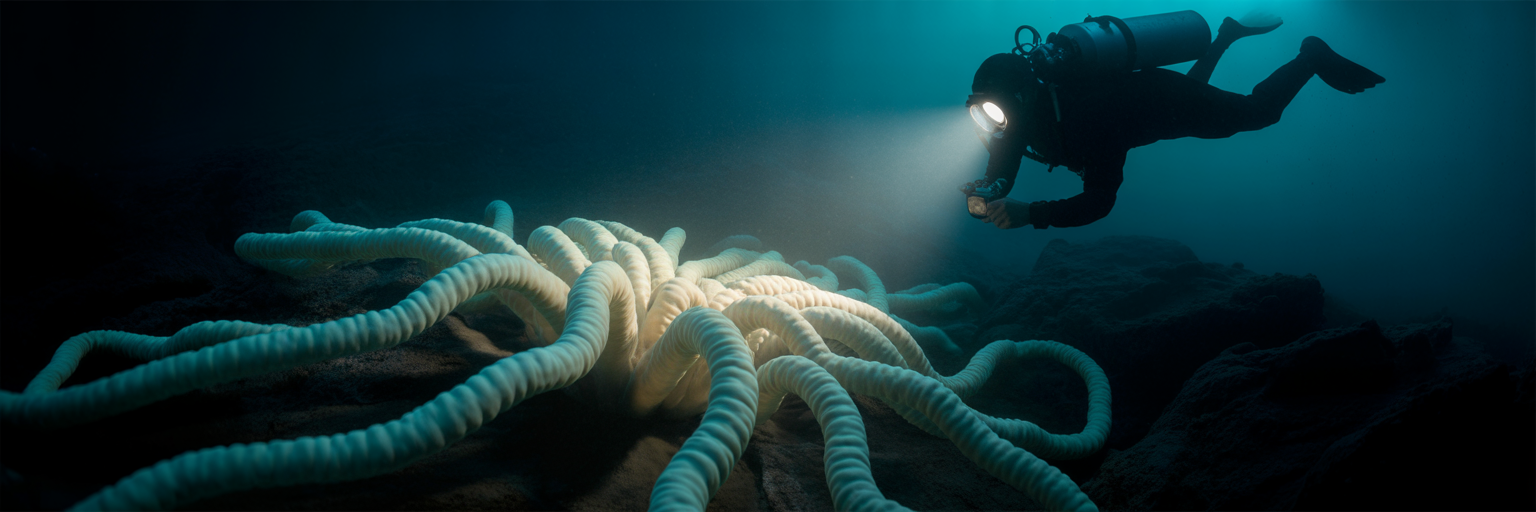
From its rear end, it expels a tangled, sticky mass of its own internal organs. What was supposed to be a straightforward meal has suddenly become a scene of biological chaos. The predator, once so sure of its attack, is now confronted with a cloud of stringy, adhesive entrails. This is evisceration, a last-ditch defense so extreme it borders on self-destruction. The attacker is not wounded, but it is confused, entangled, and utterly thwarted. The sticky filaments cling to its legs and face, immobilizing it in a bizarre, gooey trap made of the very organs it sought to consume.
This shocking act is one of the most effective weird animal defense mechanisms known to science. It is a strategy that relies not on strength, but on pure, unadulterated shock value. The sea cucumber sacrifices a part of itself to save the whole, leaving its attacker to struggle with a messy, confusing, and often toxic surprise. This tactic is just one of many of nature’s unsettling creations that defy belief, proving that in the fight for life, sometimes the most gruesome strategy is the most successful one. The sea cucumber, now partially hollowed out, lies still, having turned its own body into a weapon of confusion and escape.
The Violent Mechanics of Evisceration
The shocking spectacle of a sea cucumber expelling its organs is more than just a panic response; it is a highly specialized biological process. This act of self-mutilation for defense, known scientifically as evisceration, is a well-documented form of autotomy in echinoderms, as detailed in sources like Wikipedia’s entry on the topic. It is a controlled, albeit violent, mechanism that turns the creature’s anatomy against its attacker.
An Extreme Form of Autotomy
Autotomy, or self-amputation, is common in the animal kingdom. A lizard dropping its tail is a classic example. The sea cucumber defense mechanism, however, takes this concept to a visceral extreme. When a threat is detected, a powerful reflex is triggered. The muscles in the sea cucumber’s thick body wall contract with immense force, generating a surge of internal pressure. Think of squeezing a water balloon with all your might. Eventually, the pressure finds the weakest point, and the balloon bursts. For the sea cucumber, this weak point is intentionally located near its cloaca, the all-purpose posterior opening. The body wall ruptures, and the internal organs are shot out with explosive force.
The Power of Cuvierian Tubules
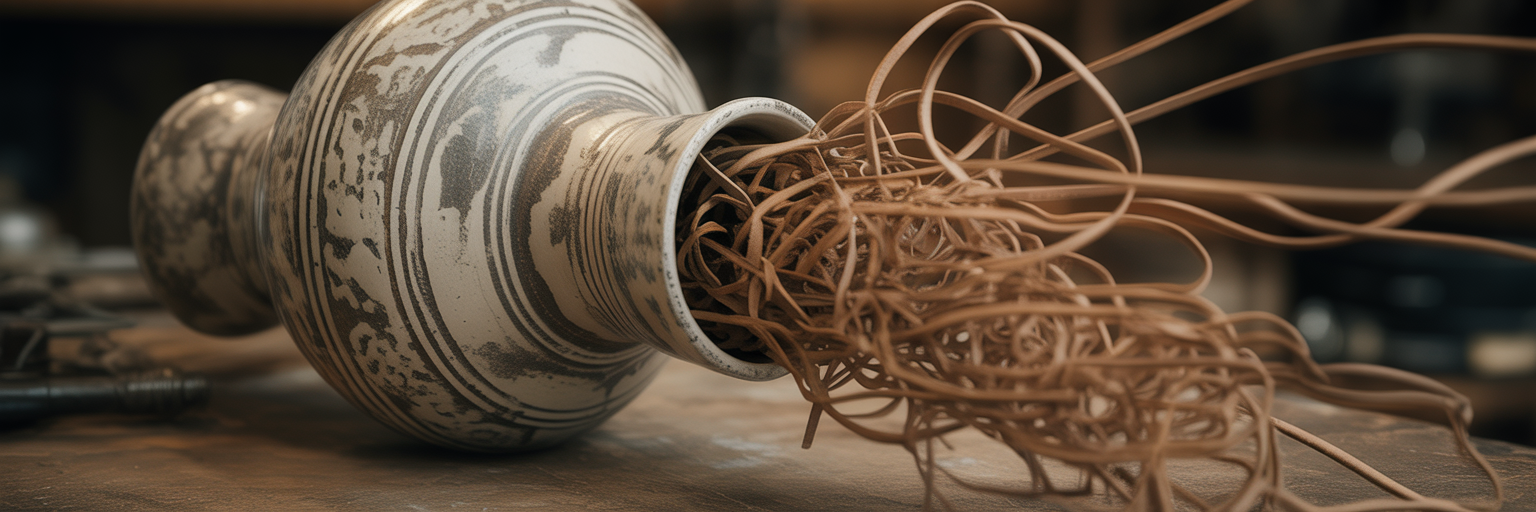
At the heart of this defense are the Cuvierian tubules, a specialized set of organs found in many sea cucumber species. These are not the primary digestive or respiratory organs but are instead dedicated weapons. In their resting state, they are a compact bundle of fine, spaghetti-like filaments. When expelled into seawater, they undergo a dramatic transformation. They rapidly elongate, sometimes to many times their original length, and become incredibly sticky. These threads form a net that instantly ensnares a predator, gumming up its claws, gills, or mouth. The adhesive is so powerful that a small sea cucumber can effectively immobilize a much larger crab or fish, giving it ample time to escape.
A Touch of Chemical Warfare
As if being entangled in a web of sticky guts wasn’t enough, some sea cucumbers add chemical warfare to the mix. Their Cuvierian tubules are laced with a soap-like toxin called holothurin. This compound can be irritating or even lethal to many marine animals, adding another layer of deterrence. The predator is not just stuck; it is also being chemically assaulted. This combination of physical entanglement and toxic compounds makes the experience of attacking a sea cucumber a profoundly unpleasant one, ensuring the predator will likely think twice next time.
The entire sequence of stomach evisceration in animals like the sea cucumber is a rapid, coordinated biological event:
- A persistent threat triggers the defensive reflex.
- Massive contraction of the body wall muscles generates extreme internal pressure.
- The internal pressure builds until it reaches a critical point.
- The body wall near the cloaca ruptures in a controlled manner.
- Cuvierian tubules, and sometimes parts of the respiratory tree and intestine, are violently expelled toward the threat.
- In the seawater, the tubules instantly elongate and become sticky, entangling the predator.
The High Price of Survival and Regeneration
Evisceration is a brutally effective defense, but it comes at a tremendous cost. The sea cucumber has just jettisoned vital parts of its body, including organs responsible for breathing and digestion. This act of survival is an evolutionary trade-off of the highest order, a desperate gamble that hinges on one of nature’s most astonishing abilities: total regeneration.
The Immediate Energetic Cost
After expelling its organs, the sea cucumber is left in a severely weakened and vulnerable state. It enters a period of dormancy, unable to feed or breathe efficiently. It must rely entirely on stored energy reserves within its body wall to survive. During this time, which can last for weeks, it is at high risk of infection through the rupture site and is an easy target for any other predator that might happen upon it. The animal has won the battle, but the war for survival is far from over. It has traded a moment of certain death for a long, precarious period of recovery.
The Miracle of Organ Regrowth
Here is where the sea cucumber’s strategy moves from gruesome to miraculous. It can regrow its entire expelled organ system from scratch. This remarkable feat is orchestrated by specialized, stem-like cells called coelomocytes, which circulate within the animal’s body cavity. Following evisceration, these cells migrate to the site of the injury. They then begin to divide and differentiate, slowly rebuilding the complex structures of the respiratory tree, the intestine, and the Cuvierian tubules. This ability is reminiscent of other amazing animals that can regrow skin stronger than before, showcasing nature’s diverse solutions to injury.
The timeline for this regeneration varies depending on the species, water temperature, and available energy, but it can take anywhere from a few weeks to several months. The remarkable feat of regenerating a digestive system from scratch is not without its challenges, a process that, as noted by Discover Magazine, highlights an extreme survival adaptation. During this time, the sea cucumber is essentially a hollowed-out version of itself, waiting patiently for its internal machinery to come back online.
An Evolutionary Masterstroke
When you consider the sea cucumber’s lifestyle, this extreme strategy makes perfect sense. For a slow, soft-bodied creature with few other defenses, the ability to sacrifice and then regrow its organs is a winning formula. A predator cannot eat what it cannot catch or handle. Evisceration turns a fatal encounter into a survivable, albeit energetically expensive, event. It is a testament to the power of evolution to produce solutions that are as bizarre as they are brilliant. The sea cucumber’s body is not just a single entity but a modular, repairable system where even the most vital parts are ultimately disposable.
Dining Out: The Starfish’s External Stomach
The sea cucumber is not the only creature to externalize its digestive system, but its relatives use this ability for a completely different purpose. The starfish, or sea star, also pushes its stomach outside its body, not as a desperate act of defense, but as a calculated and patient method of feeding. This is not a weapon of last resort; it is a finely honed tool for consumption.
A Different Purpose, A Different Method
The contrast between the two animals could not be more stark. The sea cucumber’s evisceration is an explosive, chaotic expulsion designed to shock and entangle. The starfish’s approach is slow, deliberate, and controlled. It everts its stomach to bring the process of digestion directly to its prey. This external digestion is as bizarre as the tactics used by animals that can survive being swallowed and escape alive, demonstrating the incredible versatility of digestive systems in nature.
The Slow, Relentless Siege
A starfish’s favorite meal is often a bivalve, like a mussel or a clam, which protects its soft body inside two tightly sealed shells. A starfish cannot break the shell, so it uses a different strategy: a war of attrition. It wraps its arms around the bivalve, attaching its hundreds of tiny, suction-cupped tube feet to both sides of the shell. Then, it begins to pull. It is not a contest of brute force but of relentless, hydraulic pressure. The starfish applies a steady, unwavering pull for hours if necessary, until the bivalve’s adductor muscle, which holds the shell shut, finally fatigues. The shell opens, even if just by a fraction of a millimeter.
Digestion on the Outside
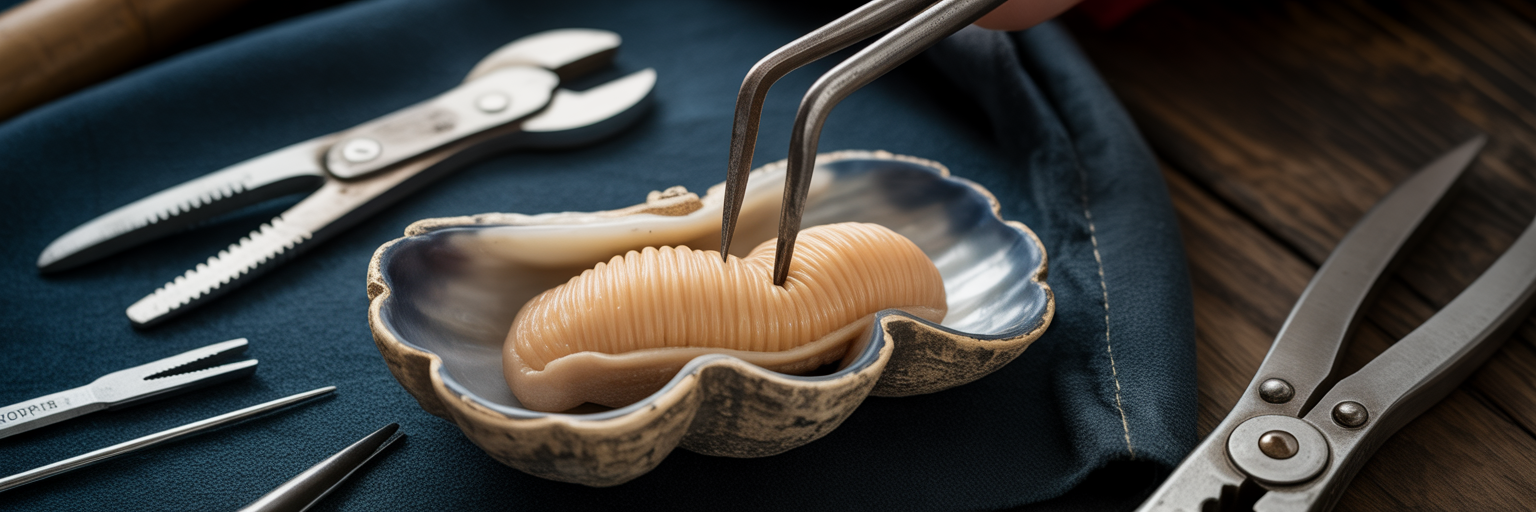
That tiny gap is all the starfish needs. It then everts its cardiac stomach, a thin, sac-like organ, out through its mouth located on its underside. This stomach is flexible enough to slide into the minuscule opening in the bivalve’s shell. Once inside, the starfish feeding stomach releases powerful digestive enzymes, which begin to liquefy the bivalve’s soft tissues within the safety of its own shell. The starfish is essentially digesting its meal before it even eats it. After the tissues are broken down into a nutrient-rich slurry, the starfish absorbs the meal and retracts its stomach back into its body, leaving behind an empty shell.
The process is a marvel of biological engineering:
- The starfish envelops its prey, such as a mussel.
- Its tube feet apply constant, opposing pressure to the two shells.
- A tiny gap, often less than a millimeter wide, is eventually created.
- The cardiac stomach is everted through the mouth and slipped into the gap.
- Digestive enzymes are secreted directly onto the prey’s soft tissues.
- The liquefied meal is absorbed, and the stomach is retracted back into the starfish’s body.
A Widespread Strategy in the Invertebrate World
The idea of externalizing organs, whether for defense or feeding, is not limited to sea cucumbers and starfish. Across the invertebrate world, evolution has repeatedly favored strategies where the body becomes a modular toolkit. This is particularly true for slow-moving or soft-bodied creatures, for whom conventional methods of attack and defense are not an option. These are not just biological quirks; they are recurring themes in the story of survival, making them some of the most fascinating animals that eject organs or other body parts.
The Ribbon Worm’s Harpoon
Consider the ribbon worm (Nemertea). These unassuming, worm-like predators house a remarkable weapon: an eversible proboscis. This long, tube-like structure is stored inside a fluid-filled cavity above its gut. When prey is detected, the muscles around this cavity contract, shooting the proboscis out with hydrostatic pressure like a biological harpoon. Depending on the species, this proboscis can be a sticky, entangling whip used to ensnare prey, or it can be armed with a sharp, venom-injecting stylet to stab and paralyze its victim. It is a multi-purpose tool for both predation and defense, an organ that exists to be shot out of the body.
The Brittle Star’s Disposable Limbs
A close relative of the starfish, the brittle star, provides a more common but equally effective example of autotomy. When threatened by a predator, a brittle star will readily detach one of its long, slender arms. The severed arm continues to wriggle and writhe, creating a compelling distraction that allows the rest of the animal to escape. The brittle star can later regenerate the lost limb with little long-term cost. Like the sea cucumber’s entrails, the brittle star’s arm is a disposable decoy, a piece of the body sacrificed for the survival of the whole. These strategies are as complex as the relationships of organisms that can live inside other living creatures without harm.
Each of these strategies highlights a different evolutionary solution to the same fundamental problems of feeding and defense. For these invertebrates, the boundary between “inside” and “outside” is surprisingly fluid.
| Creature | Mechanism | Primary Purpose | Key Feature |
|---|---|---|---|
| Sea Cucumber | Evisceration (Organ Expulsion) | Defense | Expels sticky, toxic internal organs to entangle predators. |
| Starfish | Stomach Eversion | Feeding | Pushes stomach outside the body to digest prey externally. |
| Ribbon Worm | Proboscis Eversion | Predation / Defense | Shoots out a long tube to stab, poison, or ensnare prey. |
| Brittle Star | Arm Autotomy | Defense | Detaches a limb to distract a predator and escape. |
What Extreme Biology Teaches Us About Life
Revisiting the gruesome and fascinating worlds of the sea cucumber, starfish, and ribbon worm reveals a profound biological truth: the concept of a body as a fixed, sacred entity is a vertebrate prejudice. In the deep sea and beyond, life has found elegant solutions that challenge our most basic assumptions. The line between what is “inside” and what is “outside” can be surprisingly blurry, and sometimes, the most effective tool an animal has is a part of itself that it is willing to sacrifice.
These strategies, born from intense evolutionary pressure, are not merely bizarre; they are masterpieces of efficiency. For a slow, vulnerable creature, the ability to turn its own guts into a net, or to digest a meal outside its body, is a game-changing adaptation. Where speed, strength, and armor are not viable options, nature finds other paths. It turns anatomy into a weapon, physiology into a tactic, and self-destruction into a means of survival.
The study of these extreme organisms is more than just a biological curiosity. It holds immense potential for human innovation. The incredible regenerative abilities of the sea cucumber could offer profound insights for regenerative medicine, teaching us how to repair or even regrow damaged human tissues. The powerful, water-activated adhesive produced by its Cuvierian tubules could inspire new generations of biocompatible glues for surgery or underwater construction.
Ultimately, these creatures remind us that the natural world is far stranger and more inventive than we can often imagine. The seemingly simple animals that inhabit our planet hide complex, brutal, and mind-bending biological machinery. They are a testament to the endless, bizarre creativity of evolution, and you can explore more of it at Nature is Crazy. The next time you see a humble sea cucumber, remember the violent, beautiful chaos it holds within, ready to be unleashed at a moment’s notice.