A Biological Anomaly in the Animal Kingdom
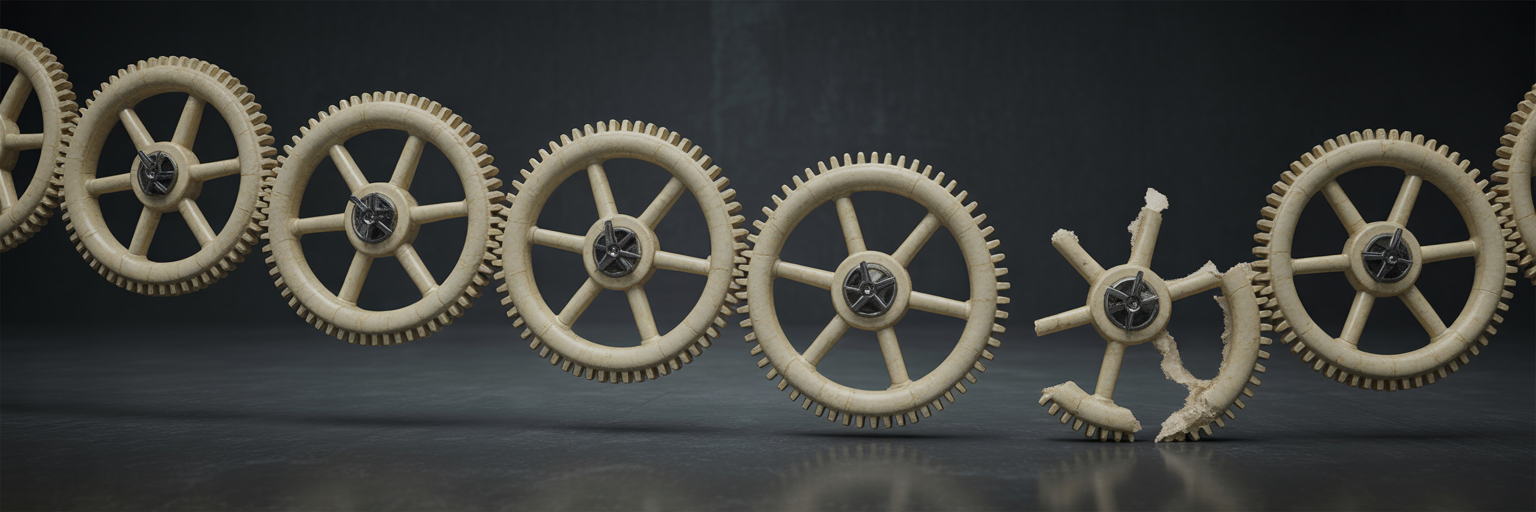
For nearly every mammal on Earth, the rules of life are straightforward. You are born, you mature, you grow old, and you die. This gradual decay, known as senescence, is as predictable as the changing of the seasons. It is not a disease but the slow, inevitable accumulation of wear and tear. Think of a classic car. With each passing year, its parts degrade, performance wanes, and the probability of a critical breakdown climbs steadily. For most animals, this means wounds heal slower, immune systems weaken, and the risk of death rises with each birthday after reaching maturity.
Defining Senescence as the Standard Model of Aging
Senescence is the biological signature of growing old. It is the reason a ten year old dog is considered a senior while a ten year old human is still a child. This process manifests as a decline in physiological function and an increased vulnerability to disease and environmental stress. The body’s ability to repair itself diminishes, cellular errors accumulate, and the intricate machinery of life begins to falter. This pattern is so consistent across the animal kingdom that it has long been considered a fundamental law of biology.
The Evolutionary Rationale for Aging
Why does this happen? The leading explanation is the “disposable soma” theory. It proposes a simple biological trade off. Every organism has a limited budget of energy. Evolutionarily, the most critical investment is in reproduction, passing genes to the next generation. Once that mission is accomplished, the evolutionary pressure to maintain the body, or “soma,” decreases significantly. It becomes more efficient for nature to let the old model wear out rather than invest precious resources in perpetual maintenance. This is why, for most species, the period after peak fertility is marked by a steady decline.
Introducing the Naked Mole-Rat as the Ultimate Outlier
Then there is the naked mole-rat, a creature that seems to have torn up biology’s rulebook. This small, wrinkled, subterranean rodent from East Africa lives for over 30 years, a staggering lifespan compared to a similarly sized mouse, which is lucky to see its third birthday. But its longevity is not the most remarkable part. The truly astonishing fact is that for the vast majority of its life, the naked mole-rat shows almost no signs of aging. It does not grow frail, its bones do not weaken, and its fertility does not decline. It is one of the most profound examples of anti-aging animals known to science. How does this humble rodent defy one of life’s most basic principles?
Life in the Underground Colony
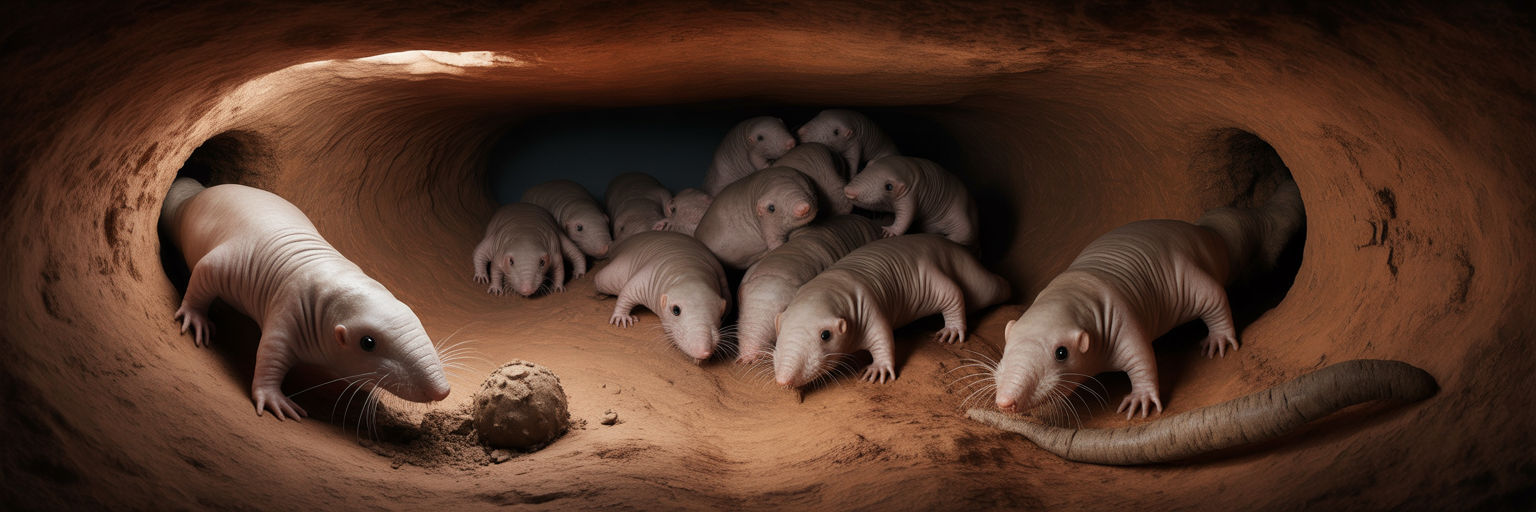
To understand the naked mole-rat’s defiance of aging, we must first look at the world it inhabits. Its biology is not an accident but a brilliant adaptation to an extreme and unique lifestyle. The conditions of its environment and the structure of its society created the perfect evolutionary crucible for a “live slow, die old” strategy to emerge. This context helps explain why such a life history is possible, even if it seems to break all the rules we observe on the surface.
A Protected and Stable Subterranean World
Imagine a fortress buried deep beneath the African soil. This is the naked mole-rat’s home. They live in extensive, self-dug tunnel systems that are dark, low in oxygen, and high in carbon dioxide. While this sounds harsh, this subterranean world is a sanctuary. It provides near total protection from predators like snakes and birds of prey, which are a primary cause of death for most small mammals. It also insulates them from the drastic temperature swings and droughts of the world above. By removing these major external threats, their environment eliminates many of the random, violent ends that cut short the lives of other creatures.
The Eusocial Structure of the Colony
Even more peculiar is their social life, which mirrors that of bees or ants. Naked mole-rats are eusocial, one of only two mammal species known to live this way. In a colony of up to 300 individuals, only a single female, the queen, reproduces. She mates with a small handful of males, while the vast majority of the colony consists of sterile workers. These workers spend their lives digging tunnels, finding food, and defending the colony. This division of labor is critical. It frees most individuals from the immense biological costs and physical dangers of pregnancy and raising young, a key factor in the “disposable soma” trade off. Their energy is redirected from making babies to maintaining their own bodies.
Physical Adaptations for a Harsh Life
Their strange appearance is a direct result of their environment. Their famously wrinkled, seemingly hairless skin is insensitive to many forms of pain, allowing them to squeeze through tight, rough tunnels without issue. Their large, protruding incisors are not just for eating but are their primary digging tools, functioning like a pair of living shovels. Their eyes are tiny and their vision poor, as sight is of little use in perpetual darkness. These traits, while bizarre to us, are perfect solutions to the challenges of their world. Some of nature’s unsettling creations that defy belief show how evolution crafts organisms for specific, often extreme, niches. The naked mole-rat is a prime example, where a safe haven and a cooperative, non-reproductive workforce made its extraordinary longevity an evolutionary advantage.
Breaking the Biological Rules of Mortality
The most stunning revelation about the naked mole-rat is not just that it lives a long time, but that it fundamentally breaks the statistical law of mortality that governs almost every other species, including humans. This discovery has forced scientists to reconsider the very definition of aging. It is one thing to live long; it is another thing entirely to not get old.
Explaining the Gompertz Law of Mortality
For most animals, the risk of dying is not constant throughout life. After reaching maturity, this risk grows exponentially. This predictable increase is described by the Gompertz-Makeham law of mortality. Think of it like a car’s warranty expiring. For the first few years, the chance of a critical failure is low. But after a certain point, the probability of a breakdown does not just increase, it skyrockets. For humans, our risk of dying roughly doubles every eight years after the age of 30. This exponential curve is a mathematical certainty of aging for typical mammals.
The Naked Mole-Rat’s Flat Mortality Curve
The naked mole-rat simply ignores this law. Its mortality risk does not follow an exponential curve. Instead, after reaching sexual maturity at around six months, its daily probability of death remains constant and incredibly low for the rest of its life. A landmark 2018 study published in Science, which analyzed data from thousands of naked mole-rats over three decades, confirmed this. It found their daily risk of death was about 1 in 10,000, and this number did not change whether the animal was one year old or 25 years old. This phenomenon is the very definition of negligible senescence in mammals.
This “flat mortality curve” means a 25 year old naked mole-rat is, for all practical purposes, as physiologically robust and likely to survive the next day as a two year old. Contrast that with a 25 year old horse, which would be ancient and frail, or a 90 year old human, whose body is clearly showing its age. The study of naked mole-rat aging reveals a creature that does not experience the statistical penalties of growing older. This is not an anecdotal observation but a conclusion drawn from decades of meticulous research in controlled laboratory settings.
| Life Stage | Typical Mammal (Gompertz Law) | Naked Mole-Rat (Negligible Senescence) |
|---|---|---|
| Young Adult (Post-Maturity) | Mortality risk is at its lowest point. | Mortality risk is extremely low (approx. 1 in 10,000 per day). |
| Middle Age | Mortality risk has increased exponentially from the baseline. | Mortality risk remains constant and extremely low. |
| Old Age | Mortality risk is at its highest, increasing sharply each year. | Mortality risk remains constant and extremely low. Physiologically similar to a young adult. |
The Cellular Machinery of Perpetual Youth

The flat mortality curve of the naked mole-rat raises a profound question: how do naked mole-rats live so long without showing signs of decay? The answer lies deep within their cells, where a suite of unique biological mechanisms works tirelessly to prevent the damage that causes aging in other mammals. They possess an arsenal of superior cellular repair mechanisms that keep their bodies in a state of suspended youth.
Extraordinary Resistance to Cancer
Cancer, a disease of uncontrolled cell growth, is a common consequence of aging. Naked mole-rats are almost completely resistant to it. One reason is a phenomenon called “contact inhibition.” In most animals, cells stop dividing when they touch their neighbors. In naked mole-rats, this response is hypersensitive. Their cells stop dividing much earlier, at a lower density, effectively preventing a tumor from ever getting started. This early warning system is a powerful, built-in defense against one of aging’s biggest killers.
High-Fidelity Protein Maintenance
Aging is also linked to the accumulation of damaged, misfolded proteins that clog up cells and disrupt their function, a process implicated in diseases like Alzheimer’s. Naked mole-rats are masters of cellular housekeeping. Their ribosomes, the cellular factories that build proteins, are exceptionally accurate, making fewer errors in the first place. Furthermore, they have an abundance of “chaperone proteins” that are incredibly efficient at identifying, refolding, or clearing out any damaged proteins that do appear. This prevents the toxic buildup that contributes to cellular decline.
The Unique Role of High-Molecular-Mass Hyaluronan
A key molecule in the naked mole-rat’s anti-aging toolkit is a substance called high-molecular-mass hyaluronan (HMM-HA). This “super-goo” is a component of the extracellular matrix, the scaffolding that holds cells together. In naked mole-rats, HMM-HA is five times larger and more abundant than in humans or mice. This not only contributes to their famously elastic, wrinkly skin but also plays a direct role in their cancer resistance. The presence of this large molecule enhances their sensitive contact inhibition, providing another layer of defense against rogue cell growth.
Managing Oxidative Stress and Metabolism
Finally, they manage cellular energy with remarkable efficiency. The process of converting food to energy in mitochondria creates harmful byproducts called reactive oxygen species, which cause oxidative stress and damage cells over time. While naked mole-rats live in a low-oxygen environment, their mitochondria are exceptionally good at producing energy with minimal waste. They have a slow metabolism and a low body temperature, which further reduces the rate of cellular damage. Their ability to maintain their bodies is remarkable, much like other animals that can regrow skin stronger than before, showcasing nature’s diverse strategies for resilience.
When the Clock Finally Stops
This brings us to the central paradox of the article’s title. If naked mole-rats do not die of old age, what eventually kills them? Their end is often as mysterious as their life. It is typically abrupt and not preceded by the long, slow decline of frailty and sickness we associate with the end of life in other mammals. The clock does not wind down; it simply stops.
The Enigma of a Sudden End
Observing a naked mole-rat colony reveals a strange reality. An animal can be active, healthy, and indistinguishable from its younger colony mates one day, and gone the next. There is no geriatric ward in a mole-rat burrow. This sudden departure from life has led scientists to theorize about what could cause such a robust system to fail. The absence of a predictable aging process means death must come from other sources, either from within the colony or from a sudden, catastrophic system failure.
Theories of Catastrophic Failure
The leading hypothesis is a form of catastrophic failure. Imagine a perfectly maintained vintage aircraft. All its parts are in pristine condition, and it flies beautifully for decades. However, it is not invincible. A single, random event, like a sudden patch of extreme turbulence or a bird strike, could cause an instantaneous, system-wide collapse that a newer plane might survive. Similarly, a very old naked mole-rat, while physiologically robust, might lack the redundancy to recover from a sudden shock. A minor infection or injury that a younger animal would easily overcome might trigger a fatal cascade in a system that has been running perfectly for 30 years.
The Impact of Social Dynamics
Many deaths are not from internal failure but from the brutal politics of their social lives. As research highlighted in GeroScience notes, mortality in captive colonies is often linked to external stressors. The most common causes of death are tied to their eusocial structure. Violent conflicts can erupt, especially during a power struggle to overthrow an aging or infertile queen. Workers may fight over resources or status. In the wild, while they are safe from most predators, a breach in the tunnel system could expose them to a snake. In laboratory settings, exposure to a novel pathogen their immune system has never encountered can also be fatal. Their unique physiology, including their ability to withstand pain, is a fascinating aspect of their survival, and you can learn more about similar adaptations in creatures that can shut down pain signals at will.
The main causes of death for a naked mole-rat are therefore not linked to age:
- Social Conflict: Violence from colony infighting, particularly succession battles.
- External Factors: Predation in the wild or exposure to new diseases in captivity.
- Catastrophic System Failure: A theoretical tipping point where a sudden stressor overwhelms their otherwise robust systems.
Lessons from a Wrinkled Methuselah
The naked mole-rat is more than just a biological curiosity. This small, wrinkled rodent is forcing a fundamental shift in how we think about aging and offering a biological roadmap toward a healthier future for humanity. Its existence challenges the assumption that decline is inevitable and provides tangible hope for tackling age-related diseases.
Shifting the Paradigm to ‘Healthspan’
For decades, aging research focused on extending “lifespan,” the total number of years lived. The naked mole-rat, however, is the ultimate model for a different concept: “healthspan.” This is the period of life lived free from chronic disease and disability. A naked mole-rat does not just live long; it lives well for its entire life. This has inspired scientists to move beyond simply trying to add years to life and instead focus on adding life to years. The goal is not immortality but to compress the period of sickness and frailty into the very end of life, allowing people to remain healthy and active for as long as possible.
Translating Insights to Human Medicine
This research has opened promising avenues for human medicine. Scientists are not trying to turn people into mole-rats, but to understand and mimic their superior biological defenses. This includes developing therapies that replicate their powerful anti-cancer mechanisms, creating treatments that improve our own cellular housekeeping to clear out toxic proteins linked to neurodegeneration, and investigating how their unique hyaluronan could be used to protect tissues. These superior cellular repair mechanisms offer clues for preventing or treating some of our most devastating age-related conditions, including cancer, heart disease, and Alzheimer’s.
Of course, it is important to maintain a realistic perspective. The naked mole-rat’s traits are the product of millions of years of evolution in a very specific underground niche. We cannot simply copy and paste its biology into humans. However, its body serves as a guide, pointing scientists toward the most critical pathways that regulate health and longevity. It proves that the gradual decay we call aging is not an immutable law of nature. By studying this creature, we are learning which parts of the aging process might be negotiable. The naked mole-rat is a symbol of biological possibility, a testament to the incredible diversity of life, and a source of inspiration for a future where we can all live healthier for longer. To continue your journey into the amazing and bizarre, explore more of nature’s incredible phenomena.