Our Desperate Need for a Drink
Let’s start with a feeling we all know. It begins as a tickle in the back of your throat, a minor inconvenience. But ignore it, and the horror unfolds. Your tongue feels like a dry sponge, sticking to the roof of your mouth. Your skin tightens, threatening to crack like old parchment. A dull headache throbs behind your eyes as your thoughts grow sluggish and confused. Simple tasks become monumental challenges. This isn’t a scene from a horror movie. This is your body, a machine made of roughly 60% water, beginning to shut down.
Without water, your blood thickens into a sludge, forcing your heart to work harder to pump it through your veins. Your kidneys, desperate to conserve what little fluid is left, stop producing urine. Your core temperature spirals out of control because you can no longer sweat. Within a few days, your organs fail. It’s a grim, undignified end dictated by a simple, universal rule: life needs water. It’s the solvent for every chemical reaction, the transport system for every nutrient, the coolant for the entire biological engine.
This dependence is a fundamental contract every living thing on Earth has signed. From the smallest bacterium to the largest whale, all are bound by the desperate, constant search for H2O. It’s an absolute, a non-negotiable law of nature that governs survival. Or is it?
What if something found a loophole? What if a creature simply read the fine print of that biological contract and decided to opt out? Imagine a life form that treats our most vital need as an optional extra, a creature that has so thoroughly hacked its own biology that it can simply ignore thirst. There is an animal that can survive without water, not just for days or weeks, but for its entire life. It exists as a glitch in the system, a walking, hopping defiance of nature’s most sacred rule.
Meet the Master of Dehydration
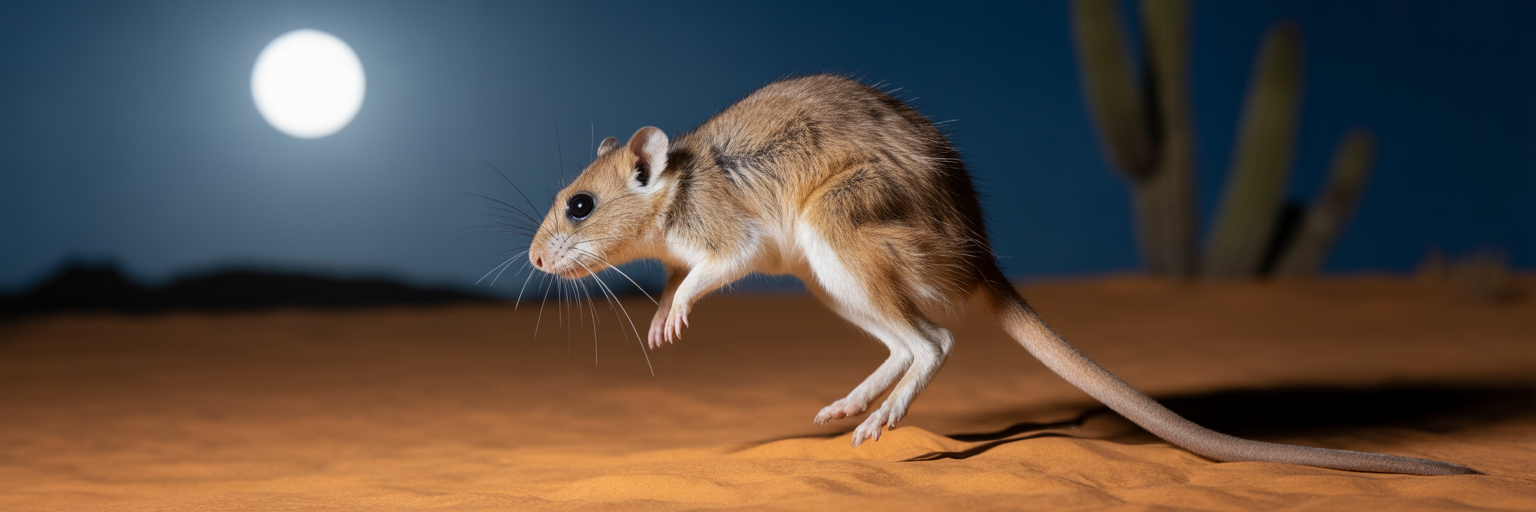
Forget what you think you know about survival. Now, picture a creature assembled from leftover parts in nature’s workshop. It has the comically oversized hind legs of a miniature kangaroo, built for frantic, zigzagging hops across a barren landscape. It has a ridiculously long, tufted tail that acts as a rudder and a counterbalance during its panicked escapes. And its face is dominated by two enormous, black, soulless eyes that seem to absorb all light, perfect for a life lived in absolute darkness. This is the kangaroo rat, and it is the undisputed master of a waterless existence.
This bizarre little rodent doesn’t just tolerate dry conditions. It thrives in a world that would kill most other animals in hours. Its home is the sun-scorched, brutal deserts of North America, places where rain is a distant memory and the ground is hot enough to cook on. This isn’t an animal that’s just good at finding a rare puddle or a juicy cactus. This is an animal that has completely and utterly abandoned the act of drinking.
Let this fact sink in: the kangaroo rat can live its entire life without ever taking a single sip of water. While a human needs gallons of water every week just to stay functional, this five-inch-tall creature has engineered a life of total water independence. It looks at our desperate search for hydration with what can only be described as evolutionary pity. Its existence is so absurdly efficient it feels like a biological prank.
How is this possible? What dark magic or alien technology allows this tiny mammal to break the most fundamental rule of life? It’s not magic, but it’s close. The kangaroo rat’s body is a fortress of conservation, a masterpiece of biological engineering built on a set of horrifyingly effective superpowers. It has secrets, and we’re about to uncover the unholy trinity of its waterless survival.
The Unholy Trinity of Waterless Survival
The kangaroo rat’s ability to live without drinking isn’t based on a single trick. It’s a three-pronged strategy of such ruthless efficiency that it borders on the supernatural. This “unholy trinity” of survival allows it to create a life of abundance in a world of scarcity. It doesn’t find water. It manufactures it, steals it, and hoards every last molecule with a fanaticism that is both terrifying and brilliant.
The three pillars of its waterless life are:
- Moisture from Food (The Great Seed Heist)
First, the kangaroo rat gets a small amount of water from its diet. This seems impossible, considering it eats almost nothing but dry seeds. We’re talking about seeds that feel like tiny pebbles in your hand. But even the driest organic matter contains trace amounts of water locked within its cells. The kangaroo rat’s digestive system is a master extractor, wringing out these microscopic droplets with incredible precision. It’s like surviving by licking the condensation off a cold stone. It’s a start, but it’s nowhere near enough to live on. - Metabolic Water Production (Internal Alchemy)
This is where things get truly weird. The kangaroo rat is a biological alchemist. It literally brews its own water. When its body metabolizes the fats and carbohydrates from the seeds it eats, a chemical reaction occurs. The byproducts of this reaction are energy, carbon dioxide, and pure, life-sustaining H2O. This process, known as metabolic water production, is its greatest secret. It doesn’t need to find water because it creates it internally. According to research highlighted by the Institute for Environmental Research and Education, this internal water production is the absolute cornerstone of its survival. It’s a superpower that turns food directly into fluid. - Radical Conservation (A Fortress of Frugality)
Creating water is one thing; keeping it is another. The third pillar of the kangaroo rat’s strategy is an obsessive, fanatical hoarding of every single molecule. It cannot afford to waste a drop. Not through breathing, not through excretion, and certainly not through sweat. Its entire body is a collection of specialized tools designed for maximum water retention. This radical conservation is what makes the whole system work.
Think of the kangaroo rat as the ultimate doomsday prepper. It lives off its stored “canned goods” (moisture from seeds), but it also has a machine that can create fresh water out of thin air (metabolic water) and a state-of-the-art recycling system that loses almost nothing (conservation). It’s one of Nature’s Unsettling Creations That Defy Belief, a creature that has solved a problem the rest of us can only dream of.
A Body Built for a Waterless Nightmare

The kangaroo rat’s survival strategies are powered by a body that is a marvel of grotesque efficiency. Every part of its anatomy has been ruthlessly optimized for a life without water. These kangaroo rat adaptations are not just helpful; they are the very hardware that runs its waterless operating system.
Super-Efficient Kidneys
Human kidneys are decent filters, but a kangaroo rat’s kidneys are on another level. They are biological purification machines, so powerful that they can concentrate urine to a degree almost unheard of in mammals. They reclaim nearly every drop of water, producing waste that is almost solid. The urine is so concentrated that it’s more like a paste, a salty sludge that represents the absolute minimum amount of water required to expel waste. It’s a disgusting but brilliant example of extreme recycling. This level of specialization is rare, but not entirely unique in the animal kingdom, where some animals can change their internal organs seasonally to adapt to changing needs.
A Dehumidifier for a Nose
Every time you exhale, you lose a tiny puff of water vapor. For a kangaroo rat, that’s an unacceptable waste. Its nasal passages are a complex, winding labyrinth of thin bone and tissue that acts as a built-in dehumidifier. When it exhales, the warm, moist air from its lungs passes over these cooler surfaces. The temperature drop forces the water vapor to condense back into liquid, which is then reabsorbed by the body. It literally recaptures the moisture from its own breath before it can escape into the dry desert air.
The Luxury of Not Sweating
For humans, sweating is a life-saving cooling mechanism. For a kangaroo rat, it would be a death sentence. These creatures have no sweat glands. Wasting precious water on something as frivolous as temperature regulation is simply not an option. This lack of a cooling system is a major reason for its strictly nocturnal lifestyle. If it were caught out in the daytime sun, it would cook from the inside out, its body unable to shed the heat.
Spit-Proof Snack Pouches
Like many rodents, the kangaroo rat has cheek pouches for carrying food back to its burrow. But unlike a hamster’s, a kangaroo rat’s pouches are lined with fur, not moist mucous membranes. This seemingly minor detail is critical. It allows the rat to stuff its cheeks full of dry seeds without coating them in precious saliva. It keeps its food dry and its spit inside its body, where it belongs. Every adaptation works in concert, creating a perfectly sealed system.
| Adaptation | Primary Function | Horrifyingly Efficient Analogy |
|---|---|---|
| Hyper-Efficient Kidneys | Concentrates urine to reclaim almost all water. | A water treatment plant that turns sewage back into pure water, leaving behind only dust. |
| Complex Nasal Passages | Cools exhaled air to condense and recapture water vapor. | Breathing through a high-tech dehumidifier that traps every drop of moisture. |
| No Sweat Glands | Prevents any water loss through perspiration. | A sealed system that would rather cook itself from the inside than waste a single drop on cooling. |
| Fur-Lined Cheek Pouches | Transports dry seeds without coating them in saliva. | Built-in, waterproof grocery bags that keep your snacks from getting soggy. |
Living Like a Creature of the Night
Having a body built for a waterless world is only half the battle. The kangaroo rat’s behavior is just as crucial as its anatomy. Its entire life is a silent, disciplined ritual dedicated to avoiding the one thing that can undo all its brilliant adaptations: the desert sun. For this creature, the sun is a death star, an unforgiving enemy that it must hide from at all costs.
Its primary defense is its burrow. This isn’t just a hole in the ground; it’s a sophisticated life-support system. During the scorching day, the kangaroo rat remains deep underground in its cool, dark home. Before settling in, it performs a critical task: it plugs the entrance to its burrow with soil. This simple act traps the humid air from its own breathing inside the tunnel. Over hours, this creates a cool, moist microclimate, an underground oasis where the relative humidity is much higher than in the parched world above. It literally sleeps in a self-made humidor to minimize passive water loss.
When night falls, the desert cools, and the rat emerges to forage. Its movements are quick and frantic. Using its powerful hind legs, it makes lightning-fast dashes from one patch of vegetation to another, gathering seeds as quickly as possible. The goal is to minimize its time exposed to the dry night air. It stuffs its fur-lined pouches and scurries back to the safety of its burrow.
Even its hoarding strategy is a masterclass in water conservation. The seeds it collects are stored in special chambers within the humid burrow. Here, the dry seeds can actually reabsorb a tiny amount of moisture from the air that the rat so carefully trapped. It’s a subtle but vital part of its water budget. Every action, from plugging its home to storing its food, is a calculated move in a lifelong chess game against dehydration. This extreme method of temperature regulation is a fascinating survival tactic, reminiscent of other creatures that can switch between warmblooded and coldblooded states to survive environmental pressures.
Earth’s Other Water-Defying Freaks
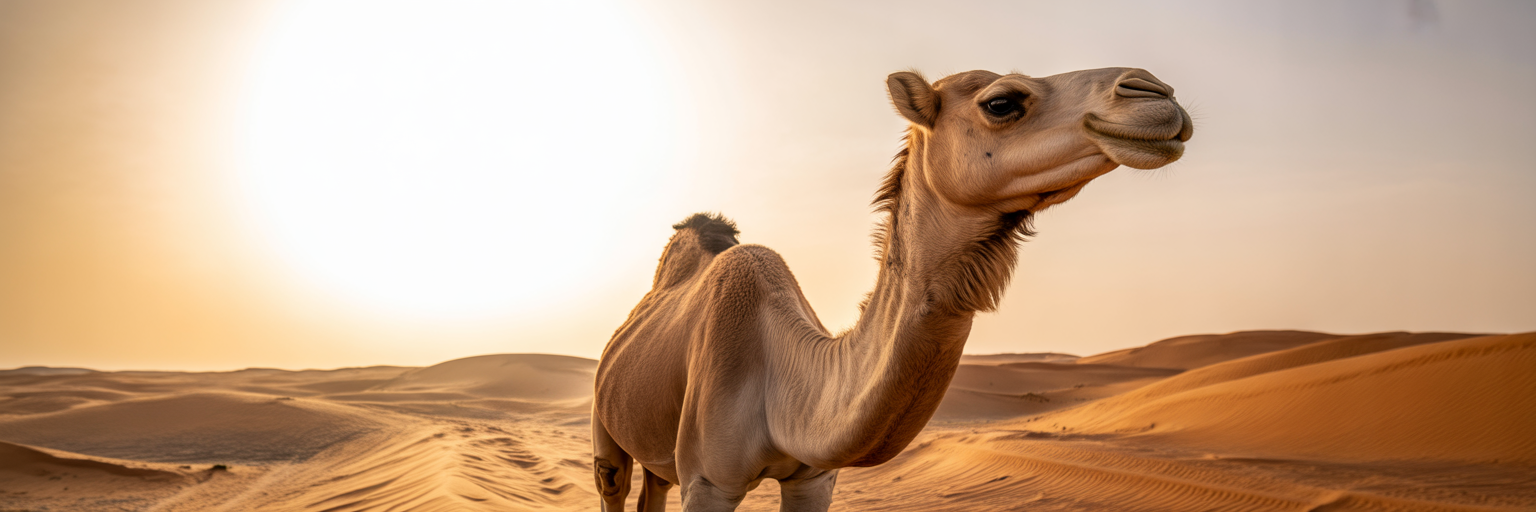
The kangaroo rat may be the king, but it’s not the only creature to have developed bizarre ways to survive in arid environments. The question of how do desert animals survive has led to some of nature’s most creative and strange solutions. These other water-defying freaks have their own tricks, though none are quite as absolute as the kangaroo rat’s.
Here are a few other animals that don’t drink water in the conventional sense:
- The Camel: Let’s debunk a myth. A camel’s hump does not store water. It’s a massive lump of fat. When food is scarce, the camel metabolizes this fat, which, just like in the kangaroo rat, produces a significant amount of metabolic water. They are also masters of conservation, with oval-shaped blood cells that flow easier when dehydrated and kidneys that are almost as efficient as a kangaroo rat’s.
- The Thorny Devil: This Australian lizard looks like a miniature dragon, and its skin is just as magical. Its body is covered in a network of microscopic grooves. When it encounters morning dew or any moisture, these channels act like tiny straws, using capillary action to funnel every droplet directly to the corners of its mouth. It literally drinks through its skin.
- The Namib Desert Beetle: Living in one of the driest places on Earth, this beetle has a bizarre morning ritual. It climbs to the top of a sand dune, faces into the wind, and performs a headstand. The fog that rolls in from the coast condenses on its back and trickles down its body into its mouth. It harvests water from the air itself.
These creatures are incredible survivors. But here’s the crucial difference: they all rely on some external source of water, whether it’s fog, dew, or water-rich plants. They have found clever ways to collect it, but they still need it from the outside world. The kangaroo rat stands alone. It is the only one that can take something completely dry, like a seed, and manufacture a life from it through its own internal chemistry. While others are expert collectors, the kangaroo rat is a master creator. This ability to thrive in extreme dryness is a recurring theme in nature, with some life forms that can survive being completely dried out for years, waiting for the slightest hint of moisture to return to life.
Lessons from a Life Without Thirst
The existence of the kangaroo rat is more than just one of many weird animal facts. It’s a mind-bending lesson in the sheer, bizarre creativity of evolution. It demonstrates that life can find a way to thrive under conditions that seem utterly impossible. The rules we consider absolute are, for some, merely suggestions. This tiny rodent didn’t just adapt to the desert; it conquered it by rewriting its own biological source code.
However, this perfect adaptation comes with a hidden fragility. By becoming a master of one specific environment, the kangaroo rat has become incredibly vulnerable to changes in it. Its entire existence is balanced on a knife’s edge. A subtle shift in climate or the introduction of invasive grasses could disrupt the delicate ecosystem it depends on, rendering its perfect adaptations useless.
So the next time you feel that familiar tickle of thirst and reach for a glass of water, take a moment to remember this tiny, hopping creature of the night. Think of its internal alchemy, its dehumidifier nose, and its spit-proof pouches. In the eyes of an animal that can survive without water, our constant, desperate need for a drink must seem like a quaint and primitive weakness. It has hacked life itself, leaving the rest of us bound to the tyranny of thirst.