The Unseen Terror Beneath Your Feet
Imagine you’re a flounder. Life is good. You’ve just settled into a cozy blanket of sand, wiggling until you’re perfectly hidden. You are the master of camouflage, a living, breathing patch of seafloor. Nothing can see you. You’re smug about it, and frankly, you’ve earned it. The water is calm, the sun is a gentle warmth from above, and you are completely, utterly invisible. Or so you think.
Then, a feeling. It’s not a shadow or a sound. It’s a creeping dread, a silent, unnerving presence that seems to know you’re there. Something is coming. It doesn’t have to see you. It doesn’t have to smell you. It’s one of the ocean’s most effective hunters, and it’s closing in on a meal it cannot possibly detect with ordinary senses. This is the chilling reality of ocean predators hunting with a biological superpower that feels like it was ripped from a science fiction script.
How does a hunter find something that has vanished from the visible world? What kind of predator can locate a perfectly still, perfectly buried creature? The answer isn’t about sharper eyes or a better sense of smell. It’s about tapping into a hidden dimension of reality, a world of invisible energy that every living thing gives off. For prey like our poor flounder, this means there is almost nowhere to hide from a hunter that can sense life itself. The science behind this sixth sense is both bizarre and terrifying, and it proves that in the ocean, being invisible is not the same as being safe.
Decoding the Ocean’s Electrical Ghost World
The superpower we’re talking about is called shark electroreception. Forget sight, sound, and smell. This is a sense so alien to us it’s hard to wrap your head around. Imagine being able to see a ghostly electrical aura surrounding every living creature. While we perceive a world of light and color, sharks and their relatives experience an entirely different layer of reality. They see the electricity of life.
The science is surprisingly simple and deeply unsettling. Every time you move a muscle, your brain sends a signal, or your heart beats, you generate a tiny, faint electrical field. It’s a fundamental byproduct of being alive. For a shark, this isn’t just random noise. It’s a bright, flashing sign that says, “Dinner is here.” This is the sharks sixth sense in action, turning the very functions that keep an animal alive into a homing beacon.
Let that sink in. A shark doesn’t need to see you move. It doesn’t need to hear you splash. It knows you are there simply because your heart is beating. This is the ultimate form of biological surveillance. It’s not tracking your movements; it’s tracking your existence. For a small fish hiding in a reef or a stingray buried in the sand, this is a terrifying prospect. Holding your breath won’t work. Staying perfectly still is useless. Your own life force is betraying you, broadcasting your location into the water for any nearby predator tuned to the right frequency.
The Freaky Freckles That Act Like Antennas
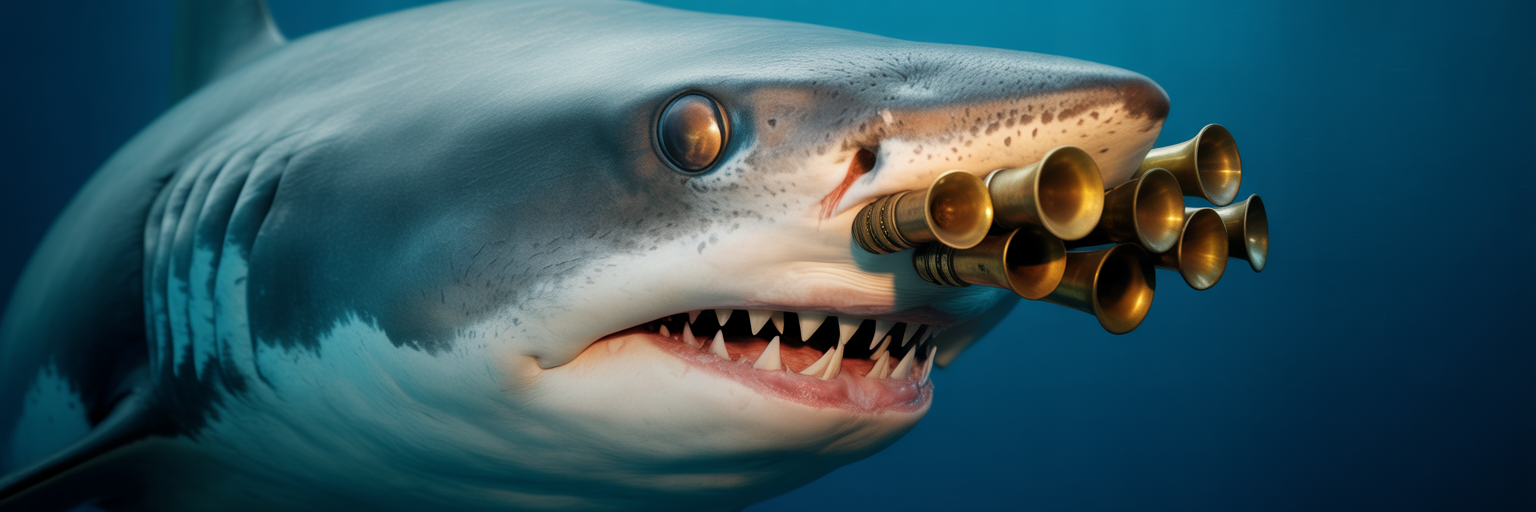
So, how does a shark physically do this? The biological hardware is even weirder than the concept itself. Look closely at a shark’s snout, and you’ll see it’s covered in tiny, dark pores. These aren’t just freckles or blemishes. They are the ampullae of Lorenzini, and they are nature’s most terrifying data ports. Each one is an opening to a long, gel-filled canal that leads directly to a nerve ending, essentially acting as a biological USB port plugged straight into the shark’s brain.
This isn’t just any gel, either. It’s a highly conductive goo, perfectly designed to channel faint electrical signals from the surrounding water down to the sensitive nerve cells. This network of pores creates a sophisticated sensory array, like a web of tiny voltmeters spread across the shark’s face. As the shark swims, it’s constantly sampling the electrical world around it, building a three-dimensional map of every living thing nearby.
The sensitivity of this system is staggering. As explained by HowStuffWorks, these organs can detect electrical fields as faint as five billionths of a volt per centimeter. To put that in perspective, it’s sensitive enough to detect the tiny electrical field generated by a AA battery from a mile away if the signal were clear. This incredible ability allows a shark to “see” the precise location of a hidden fish based on its heartbeat alone. It’s just one of many examples of nature’s unsettling creations that defy belief, proving that evolution is far more creative than we can imagine.
Turning a Heartbeat into a Bullseye
Let’s connect this freaky science to a real-world hunt. Picture a stingray buried under the sand off the Florida coast. It’s invisible, motionless, and safe from any predator relying on sight. But it’s not safe from a hammerhead shark. This is a perfect example of how sharks hunt using their electrical sense.
The stingray, even while resting, is alive. Its heart beats rhythmically, and its gills gently pump water to breathe. Each of these actions generates a weak, predictable electrical pulse that radiates out into the sand and water. It’s a faint signal, but it’s there. Above, the hammerhead shark begins its search. Its wide, flat head, packed with thousands of ampullae of Lorenzini, sweeps across the seafloor like a high-tech minesweeper. It’s not looking for the stingray; it’s scanning for its electrical ghost.
Suddenly, the shark’s sensory organs pick up the faint, rhythmic field. Its brain instantly recognizes the signature of life. It’s not the random electrical noise of saltwater reacting with minerals; it’s the unmistakable pulse of a living creature’s heart. As reporting from KQED has detailed, both sharks and rays use this ability to find hidden prey with terrifying precision. The hammerhead pivots, pinpoints the source, and strikes. The stingray’s camouflage was perfect, but it couldn’t hide its own life force. Its very act of staying alive turned its location into a bullseye.
The Ocean’s Electric Detective Squad

This superpower isn’t exclusive to sharks. They are just the most famous members of the ocean’s electric detective squad. The entire elasmobranch family, which includes skates and rays, are also masters of electroreception. A stingray, for instance, doesn’t just use its sense to avoid becoming prey; it uses it to become a predator. By hovering over the sand, it can detect the faint electrical fields of buried clams and crustaceans, turning the tables on other hidden creatures.
But the club of electric hunters has some even more surprising members. In the murky rivers of South America lives the elephantnose fish. This bizarre-looking creature not only detects electric fields but also generates its own. It emits weak electrical pulses to “illuminate” its dark environment, using distortions in its field to navigate and find food. It’s like biological sonar, but with electricity instead of sound.
This paints a picture of an ocean teeming with invisible signals and conversations. It’s a world where ocean predators hunting are not just looking but are also listening to an electrical symphony. Sharks may be the apex predators in this unseen realm, but they are part of a much larger community of animals that have tapped into this hidden dimension. The existence of such varied survival tactics is a testament to evolution’s creativity, much like the incredible cases of animals that can survive being swallowed and escape alive. Life always finds a way, and sometimes that way is electric.
Hunting Scenarios from Your Nightmares
To truly appreciate this sense, let’s look at a few hunting scenarios that feel like they were pulled straight from a horror movie. These predators use their electrical sense in different ways, each one more chilling than the last.
The Electrical Scream
Off California’s Farallon Islands, a great white shark patrols the murky water. It’s not using its eyes. It’s tracking a wounded seal. The seal’s frantic, panicked muscle spasms are creating a powerful, chaotic electrical “scream.” This isn’t the gentle pulse of a resting heart; it’s a beacon of distress. The shark homes in on this signal with chilling accuracy, striking from the depths without ever needing a clear line of sight.
The Patient Ambush
On the seafloor, a bottom-dwelling angel shark lies perfectly still, a flat, camouflaged predator waiting for an opportunity. It’s a master of the patient ambush. It doesn’t chase its prey. It waits for its prey to come to it. The moment an unsuspecting fish swims overhead, its bioelectric field enters the angel shark’s detection range. In an explosive burst of speed, the shark strikes from below, its attack triggered by an invisible signal.
The Night Navigator
In a complex coral reef at night, a reef shark glides through the darkness. Here, its electrical sense is used for more than just predation; it’s used for awareness. The ampullae detect the faint, stationary fields of sleeping fish tucked away in crevices. The shark isn’t actively hunting them all, but it’s building a mental map of the reef’s inhabitants in total darkness, aware of every living thing around it. For these predators, darkness and cover are not obstacles. They are an advantage.
| Hunting Style | Predator Example | Key Electroreception Use | Prey Type |
|---|---|---|---|
| Active Pursuit | Great White Shark | Tracking strong, chaotic signals from distressed animals | Wounded seals, large fish |
| Passive Ambush | Angel Shark | Detecting the faint bio-signature of prey swimming overhead | Unsuspecting fish, crustaceans |
| Systematic Scanning | Hammerhead Shark | Sweeping the seafloor to find rhythmic signals from buried life | Stingrays, flounder, crabs |
| Environmental Mapping | Reef Shark | Detecting stationary fields to navigate and locate sleeping animals | Sleeping fish, hidden invertebrates |
When the Superpower Gets It Wrong

So, can this incredible sense be fooled? Absolutely. In fact, it happens all the time, and the results are pretty funny. You’ve probably heard stories of sharks biting boat propellers, dive cages, and undersea cables. This isn’t malice or a case of a shark trying to eat metal. It’s a simple case of mistaken identity.
The electrochemical reaction between metal and saltwater creates an electrical field that can be surprisingly similar to the one generated by struggling prey. The shark’s brain, hardwired over millions of years to investigate these signals, can’t tell the difference. It’s like a dog obsessively chasing a laser pointer; the shark is just following its instincts, even when they lead it to an inedible piece of equipment. This quirk makes the predator seem less like an infallible monster and more like an instinct-driven animal that sometimes gets it wrong.
This vulnerability has also led to a practical application: the development of shark repellent technology. Some devices work by emitting a powerful electrical field that overloads or “jams” the ampullae of Lorenzini, creating a sensory overload that drives sharks away. The quirky behavior of sharks biting metal is a perfect example of the strange realities of the animal kingdom, and for those who enjoy such oddities, there are countless other weird animal facts to explore.
An Internal Compass for Global Road Trips
As if sensing heartbeats wasn’t impressive enough, electroreception has another major function that has nothing to do with hunting: navigation. Sharks use their ampullae of Lorenzini to detect Earth’s magnetic field, giving them a built-in, biological compass. This ability is the secret behind their incredible long-distance migrations across entire oceans.
The science is elegant. As a shark swims through the planet’s invisible magnetic field lines, it induces a faint electric current across its body. Its hyper-sensitive organs can detect this current, allowing the shark to determine its direction relative to magnetic north. It’s like a pilot using instruments to fly through clouds or a hiker using a compass to navigate a dense forest. This sense gives sharks an unerring sense of direction on their global road trips.
This ability elevates the shark from a mere predator to a sophisticated global navigator, capable of crossing thousands of miles of open ocean and returning to the same locations year after year. This advanced biological system is remarkably complex, especially when you contrast it with the more rudimentary methods used by animals that can navigate without a brain. It’s another layer to the shark’s mystique, proving it’s far more than just a mindless eating machine.
You Can’t Hide Your Own Beating Heart

In the end, the most profound truth about sharks is this: the ocean is not just a physical space but an electrical one, and they are its undisputed masters. Let’s go back to that small flounder, hidden and feeling safe in the sand. We now understand the futility of its camouflage. The approaching shark doesn’t need to find the flounder. It just needs to detect the faint, persistent, and unavoidable pulse of its life.
This ability is one of nature’s most chilling and impressive creations, a perfect example of how evolution equips predators with tools that seem to defy the laws of physics. It’s one of those weird animal facts that changes how you see the world. It leaves you with a newfound respect for sharks not as monsters, but as perfectly adapted, highly sophisticated survivors.
In the deep, dark ocean, the most dangerous thing you can do is be alive. Because a predator is always listening for your heartbeat, and it’s a sound you can’t silence.