
Nature’s Most Absurd Survivalist
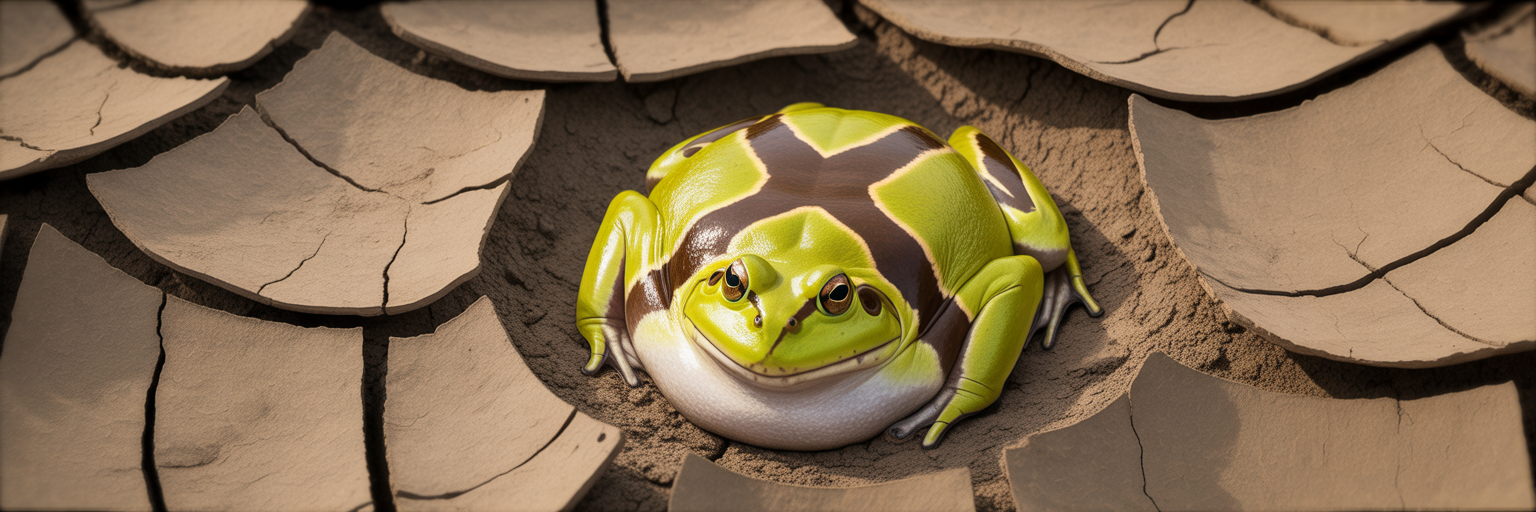
Imagine you’re on a hike. The air is damp, the ground is soft, and you spot something strange near a log. It’s a frog, but not quite. This creature looks less like an animal and more like a glistening, vaguely annoyed water balloon that someone dropped in the mud. It’s perfectly round, taut, and seems to be staring at you with an expression that says, “Yes? Can I help you?” You feel a strange mix of amusement and a deep, primal unease. It’s ridiculous, yet there’s something profoundly unsettling about it.
This brings us to one of nature’s most bizarre strategic decisions. In a world of sharp teeth, fast claws, and deadly venom, why would any creature evolve to become a wobbly, seemingly defenseless orb? It feels like showing up to a knife fight armed with a pool noodle. Yet, this transformation is not a sign of weakness. It is a calculated, high-stakes gamble rooted in terrifyingly clever biology. The answer to why do frogs inflate isn’t a single, simple explanation. It’s a tale of two distinct, life-or-death scenarios.
One is a desperate, split-second bluff against a hungry predator. The other is a slow, deliberate preparation for an apocalypse of heat and drought. Both involve turning the frog’s body into a biological balloon, but for wildly different reasons and with horrifyingly different methods. This isn’t just a weird party trick. It’s a masterclass in survival, where looking absurd is the key to staying alive. Join us as we explore the terrifying genius behind the living water balloon and uncover how these amphibians weaponize their own bodies against the horrors of the natural world.
The ‘Too Big to Swallow’ Defense
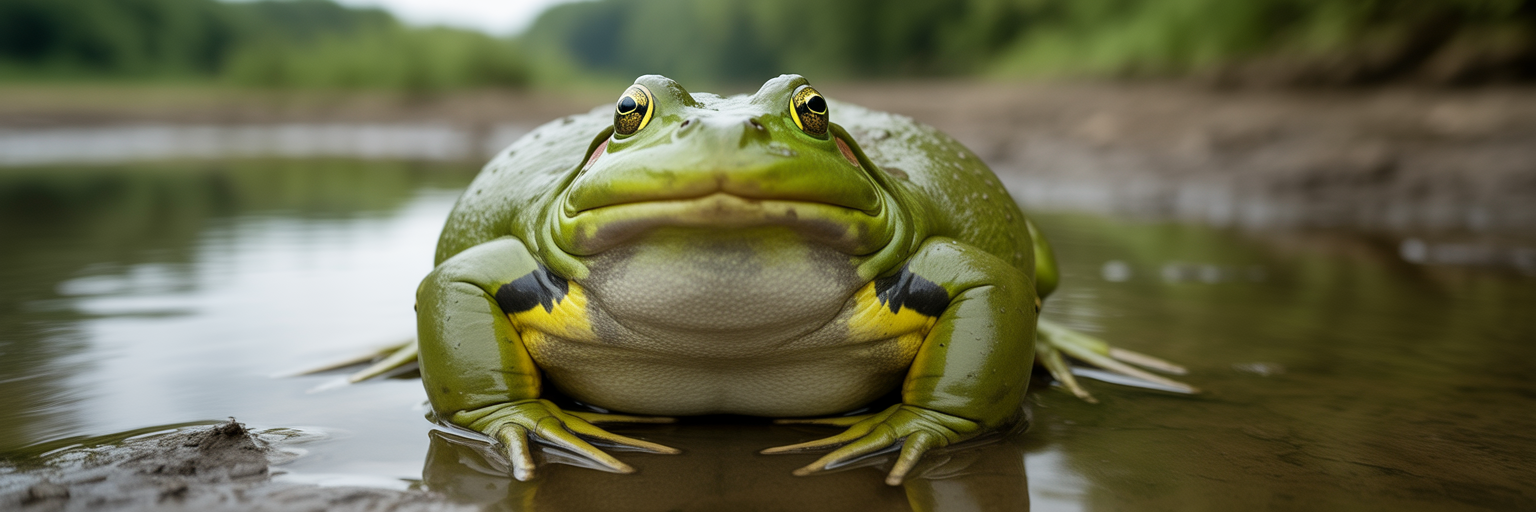
The first and most immediate reason a frog might puff up is brutally simple: to make itself an inconveniently shaped meal. This is the frog’s version of standing its ground and screaming, “I dare you to fit this in your mouth.” It’s a defensive mechanism aimed squarely at the physics of a predator’s jaw. A small, slippery frog is an easy snack for a snake, bird, or raccoon. A taut, spherical frog that’s suddenly twice its original size? That’s a logistical nightmare.
This isn’t about storing water. This is pure, unadulterated air. The process is a frantic, desperate act. When threatened, the frog shuts its mouth and nostrils and begins rapidly gulping air, forcing it down into its lungs and specialized vocal sacs. The transformation is almost instantaneous, turning a bite-sized morsel into an impassable sphere. This display is a full-sensory assault, a core part of many frog defense mechanisms.
The sequence is a masterwork of panicked efficiency:
- Threat Detection: The shadow of a hawk or the flicker of a snake’s tongue triggers an immediate hormonal panic.
- Rapid Air Ingestion: The frog begins a series of frantic gulping motions, swallowing air like its life depends on it, because it does.
- Body Transformation: In seconds, its lungs and sacs expand, stretching its skin taut and turning its body into a rigid ball.
- Sensory Assault: To complete the “back off” message, many frogs accompany the inflation with loud hisses, piercing screams, or by standing on their tiptoes to look even larger.
The common rain frog of Southern Africa is a master of this technique. When disturbed, it swells into a grumpy, round ball and emits a surprisingly ferocious squeak. From a predator’s perspective, the target has not only become too big to swallow but also too difficult to grip. A taut, smooth sphere offers no purchase for teeth or talons. As noted by professionals like the Sunshine Coast Snake Catchers, this is a well-documented technique to look more formidable when it feels threatened. It’s a bluff, but a surprisingly effective one. Some amphibians are so adept at surviving ingestion that they are among the few animals that can survive being swallowed and escape alive, proving that even from inside a predator’s stomach, the fight isn’t always over.
The Amphibian as a Living Canteen
If inflating with air is a desperate shout, then inflating with water is a long, silent prayer. This is where we meet the frogs that store water, creatures that have turned their bodies into living canteens to survive some of the harshest environments on Earth. This adaptation is arguably even more bizarre than the defensive puffing. It’s not a temporary bluff but a long-term commitment to becoming a biological reservoir.
The mechanism is both simple and grotesque. Frogs don’t drink through their mouths. Instead, they absorb water through a specialized patch of skin on their belly and thighs called the pelvic patch. To prepare for a drought, certain species will sit in a puddle and absorb a horrifying amount of water, storing it in an incredibly expandable urinary bladder and surrounding lymph sacs. We’re not talking about a little extra hydration. A frog can hold 30 to 50 percent of its body weight in water. To put that in perspective, it’s like a 150-pound human walking around with over 50 pounds of water sloshing around inside their body.
The undisputed champion of this strategy is the water-holding frog of Australia (*Cyclorana platycephala*). This amphibian endures brutal droughts by burrowing deep underground and entering a dormant state for months, or even years. As highlighted by Australian Geographic, these frogs rely entirely on the massive reservoir stored in their bladder to survive until the next rain. This leads to one of the most fascinating water holding frog facts: for generations, some Indigenous Australian peoples in the desert learned to locate these buried frogs. They would carefully dig them up and give them a gentle squeeze, procuring clean, filtered drinking water before carefully reburying the frog to let it continue its slumber. It’s a perfect example of nature’s horrifying brilliance, a survival strategy so effective it can be shared.
| Feature | Air-Based Inflation (Defense) | Water-Based Storage (Survival) |
|---|---|---|
| Primary Purpose | Deter predators by appearing too large to eat | Endure long periods of drought |
| Inflation Substance | Air | Water |
| Inflation Speed | Seconds | Hours or days |
| Primary Storage Area | Lungs and vocal sacs | Urinary bladder and lymph sacs |
| Duration | Temporary, for the duration of the threat | Months or even years |
| Key Species Example | Common Rain Frog, African Clawed Frog | Water-Holding Frog (Cyclorana platycephala) |
Buried Alive in a Mucus Bunker
Just when you think it can’t get any weirder, it does. For some frogs, simply becoming a water balloon and hiding underground isn’t enough. To survive the most extreme droughts, they engage in a process called estivation, which is essentially hitting the pause button on life in the most grotesque way imaginable. This is the frog’s strategy for burying itself alive and waiting for the apocalypse to pass.
The process begins as the land dries up. The frog frantically burrows down, sometimes several feet into the clay or soil, to escape the searing surface heat. Once it has excavated its tomb, the real horror begins. The frog starts secreting layers upon layers of mucus from its skin. This slime dries around its body, forming a hard, parchment-like shell. This is its mucus cocoon, a nearly impermeable barrier that drastically reduces water loss to almost zero. This incredible adaptation makes it one of those incredible life forms that can survive being completely dried out for years, sealed away from the world.
But where does inflation fit into this subterranean nightmare? Some species, after burrowing, will inflate their bodies with the last of their water reserves. This serves two critical purposes. First, it wedges them tightly into their earthen chamber, making it incredibly difficult for any digging predator to pull them out. It’s like a biological security anchor. Second, it ensures a snug, perfectly sealed fit for their cocoon, leaving no gaps for precious moisture to escape. The result is a bloated, dormant frog, entombed in its own dried slime, its metabolism slowed to a near-standstill. It will stay like this for months or even years, waiting for the deep vibrations of heavy rainfall to signal its resurrection. It’s nature’s version of a zombie apocalypse, but with more slime and a much greater appreciation for hydration.
Anatomy of a Biological Balloon
So, how is any of this physically possible? Why doesn’t a frog just pop? The answer lies in a suite of specialized anatomical features that amount to a masterclass in biological engineering. A frog’s body isn’t just a simple bag of organs; it’s a high-tech, expandable vessel designed for extreme transformation. Understanding balloon frog survival means looking at the machinery that makes it work.
Several key adaptations are at play:
- Hyper-Elastic Skin: Amphibian skin is nothing like ours. It is packed with flexible collagen and elastin fibers that allow it to stretch to an astonishing degree without tearing. Think of it less as skin and more as a high-performance, self-repairing fabric. This elasticity is what permits the frog to swell to double or triple its normal volume without suffering catastrophic failure.
- The Bladder as a Super-Reservoir: In water-storing frogs, the urinary bladder is not a simple waste sac. It is a highly specialized, distensible organ with thin, muscular walls that can expand to fill a huge portion of the body cavity. It’s less of an organ and more of a built-in, high-capacity water tank.
- The Lymphatic System’s Role: Frogs also possess large subcutaneous lymph sacs, which are essentially bags of fluid located just under the skin. These can also fill with water, acting as a secondary reservoir and contributing to the overall swollen, “water balloon” appearance. It’s a redundant system for maximum hydration.
The poster children for this strategy belong to the *Uperodon* genus, known colloquially as balloon frogs. Their nearly spherical body shape is a direct result of these adaptations being pushed to their evolutionary limit. They are the undisputed specialists of the inflation world, creatures whose entire anatomy is built around the principle of becoming a ball. Their existence is a testament to how evolution can produce some of nature’s unsettling creations that defy belief, all in the name of survival.
The Perils of Being a Puffball

As brilliant as this strategy is, it’s a high-stakes gamble, not a foolproof plan. Becoming a living balloon comes with a set of significant risks and trade-offs. The most obvious downside is mobility. An inflated frog is, for all intents and purposes, a stationary target. It sacrifices all agility and the ability to flee for the hope that its size alone will be a sufficient deterrent. It’s the biological equivalent of going all-in on a single, desperate bet.
And while it’s a myth that you can “pop” a frog like a party balloon, the physiological stress is immense. Maintaining that level of inflation puts enormous pressure on the internal organs. It also costs a significant amount of energy, both to inflate and to hold the posture. If the bluff works, the frog is safe but exhausted. If the bluff is called—if the predator is undeterred, has a big enough mouth, or is simply persistent—the consequences are dire. The frog is left slow, tired, and more vulnerable than it was before it started its display.
Imagine the sheer terror of that moment: you’ve played your only card, transforming into a formidable sphere, and the snake simply opens its jaw wider. At that point, there is no plan B. The entire strategy is an act of sheer, desperate audacity. It’s a powerful reminder that in the brutal game of survival, sometimes the most absurd-looking move is the only one you have. This kind of evolutionary gamble is what makes the natural world so fascinating, and you can explore more of these wild strategies at NatureIsCrazy.com.
Evolution’s Weird and Watery Masterpiece
In the end, the image of a frog as a living water balloon is a perfect symbol of evolution’s strange and wonderful logic. What appears at first glance to be a comical, bizarre, and even pathetic trait is, in fact, a highly complex and brutally effective solution to life-or-death problems. Frog inflation is not one trick, but a brilliant, dual-purpose tool: a shield of air for immediate defense and a life-sustaining canteen of water for long-term survival.
It’s a masterpiece of biological engineering, born from pure necessity. The “too big to swallow” bluff, the living canteen, and the subterranean mucus bunker are all connected by a single, unifying principle: manipulating the body’s form to conquer impossible environmental challenges. It’s a testament to the idea that there is no single “right” way to survive. Sometimes, the best defense is to become too awkward to eat. Sometimes, the only way to outlast a drought is to become the oasis yourself.
So the next time you see a frog, look closer. You’re not just seeing a simple amphibian. You’re looking at a potential self-inflating fortress, a walking, croaking reservoir, and a perfect, living symbol of nature’s terrifying, absurd, and utterly ingenious spirit.