Nature’s Most Alarming Rear End
Picture this. You are a hungry frog. Life is good. A plump, dark beetle is scurrying across a leaf, minding its own business. It looks like an easy, crunchy snack. You flick out your long, sticky tongue, snag it, and pull it into your mouth. Victory. Dinner is served.
Then, something goes horribly wrong. A sharp, popping sound erupts from inside your mouth, followed by an impossibly hot, acrid spray. It’s not just hot, it’s boiling. The taste is vile, a chemical burn that sears your tongue and throat. Your entire world becomes pain and confusion. You gag, you heave, and you violently spit out the beetle, which lands on the ground, shakes itself off, and calmly walks away as if nothing happened.
You have just had a very bad encounter with a creature that weaponizes its own backside. This is no ordinary insect. This is a master of chemical self-defense, an organism that carries a tiny, explosive cannon in its abdomen. The “freeze” in its attack isn’t from cold. It’s the full-body paralysis of shock, searing pain, and chemical incapacitation delivered by a blast of boiling poison.
This is not science fiction. This is the reality of one of nature’s most bizarre survival strategies. What you just experienced was a controlled detonation, a masterpiece of biological engineering. We are about to explore the unsettling world of an insect that perfected the art of weaponized flatulence, turning its rear end into a precision-aimed turret of agony. Prepare to meet one of the most impressive examples of weird insect defenses ever documented.
Meet the Bombardier Beetle: An Unassuming Terror
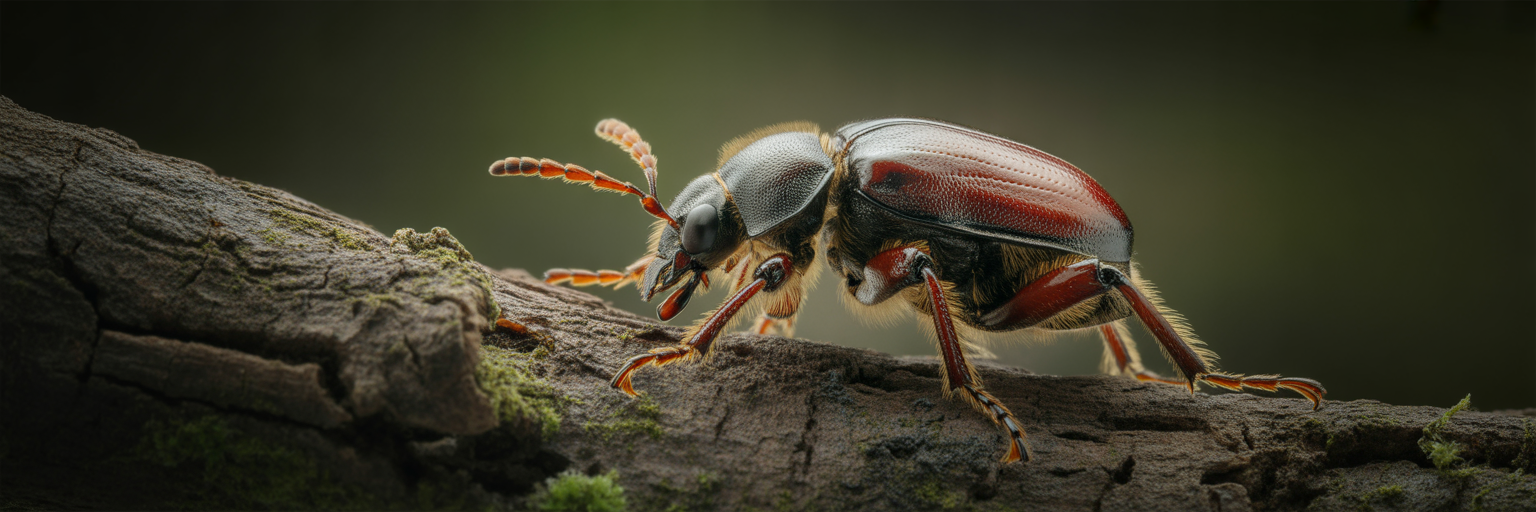
The architect of this misery is the bombardier beetle, a member of the ground beetle family Carabidae. At first glance, it’s profoundly unimpressive. It’s a small, dark insect, usually less than an inch long, that you might easily overlook. In the United States, you can find them scurrying through woodlands and grasslands, often near streams or ponds, looking for all the world like any other generic bug.
Its daily life is perfectly ordinary. It hunts smaller insects and other arthropods, hides under logs and rocks, and generally tries to avoid becoming someone else’s lunch. There is absolutely nothing about its appearance that screams “I contain a sophisticated chemical weapons factory.” It’s the insect equivalent of a quiet neighbor who you later discover has a secret laboratory in their basement. This stark contrast between its mundane exterior and its extraordinary internal power is what makes it so fascinating and, frankly, terrifying.
This beetle is a walking paradox. It seems vulnerable, a simple morsel for any passing predator. Yet, it possesses a defense mechanism so effective that it can escape from the stomach of a toad that has already swallowed it whole. The bombardier beetle defense is not just a deterrent, it is a statement. It is one of nature’s unsettling creations that defy belief, a testament to the strange paths evolution can take.
So, how does this plain-looking bug manage such a feat? How does it mix, heat, and fire a chemical weapon without blowing itself to pieces? The answer lies in a perfectly designed, miniature biological cannon hidden within its body, an apparatus of astonishing complexity and efficiency.
The Anatomy of a Biological Cannon
To understand the bombardier beetle’s power, you have to look inside its abdomen. It’s not just guts and digestive tracts in there. It’s a highly specialized weapons system, an organic cannon that would make any military engineer jealous. Let’s take a guided tour of this remarkable hardware.
The Twin-Chamber Fuel Tank
The system starts with a large reservoir, a sort of fuel tank. This chamber stores two key chemicals: hydrogen peroxide and hydroquinones. If you remember high school chemistry, you might recognize hydrogen peroxide. But the beetle uses a much more concentrated form than the stuff in your bathroom cabinet. Crucially, in this storage chamber, the two chemicals are mixed together but remain perfectly stable and harmless. They are fuel waiting for a spark.
The Catalyst Injector
Connected to the main reservoir by a small, controlled valve is a second, smaller chamber. Think of this as the catalyst injector or ignition chamber. This vestibule contains a mixture of special enzymes, specifically catalase and peroxidase. These enzymes are the trigger. Their entire purpose is to kickstart a violent chemical reaction, but they are kept completely separate from the fuel until the moment of truth.
The Reinforced Reaction Chamber
This second chamber is where the magic, or rather the violent chemistry, happens. It’s not just a simple sac. The walls are thick, tough, and lined with a specialized, heat-resistant material called chitin. This is the detonation room, built to withstand extreme temperatures and pressures. It has to be, because what happens inside is nothing short of an explosion.
The Aimable Turret
Finally, the reaction chamber opens to the outside world through a pair of nozzles at the very tip of the beetle’s abdomen. This isn’t a fixed exhaust port. The beetle has muscular control over the tip, allowing it to function as an aimable turret. It can swivel its backside with surprising speed and accuracy, directing its boiling-hot spray at an attacker from almost any angle, whether the threat is coming from the side, the front, or even directly above.
A Crash Course in Explosive Chemistry

Now that we’ve seen the hardware, let’s get to the software: the explosive chemistry that powers this defense. The process of how bombardier beetles work is a masterclass in rapid, exothermic reactions. When a predator attacks, the beetle contracts the muscles around its fuel reservoir, forcing the hydrogen peroxide and hydroquinones through the valve and into the reaction chamber where the enzymes are waiting.
The moment the fuel meets the catalysts, all hell breaks loose. The enzymes, catalase and peroxidase, act as hyper-efficient triggers. The catalase immediately begins breaking down the hydrogen peroxide into water and a huge volume of oxygen gas. Simultaneously, the peroxidase causes the hydroquinones to oxidize into a nasty, caustic compound called p-benzoquinone. This entire reaction is violently exothermic, meaning it releases an enormous amount of energy as heat.
The heat is so intense that it instantly boils the water produced in the reaction, turning it into steam. This creates a massive and sudden increase in pressure inside the reinforced chamber. The result is the bombardier beetle explosion: a pressurized, boiling-hot jet of steam and noxious benzoquinones erupting from its rear nozzles. The spray emerges at 100°C (212°F), the boiling point of water. The benzoquinones are the chemical payload, a foul-smelling irritant that causes intense pain and damage to cellular proteins and respiratory systems.
It’s a multi-pronged attack. The predator is hit with scalding heat, a blast of pressure, and a face full of chemical irritants all at once. It’s not just a deterrent, it’s a lesson written in pain.
| Component | Chemical Name | Role in the Reaction | Everyday Analogy |
|---|---|---|---|
| Fuel | Hydroquinones | The primary substance that gets oxidized to release energy. | Lighter Fluid or Gunpowder |
| Oxidizer | Hydrogen Peroxide | Decomposes to provide oxygen and immense heat (steam). | Rocket Fuel Oxidizer |
| Catalysts | Catalase & Peroxidase | Enzymes that trigger the reaction at incredible speed. | The Match or Spark Plug |
| Final Product | Benzoquinones & Steam | The weaponized output: a caustic irritant and scalding vapor. | Pepper Spray mixed with Boiling Water |
Note: This table simplifies the complex biochemistry to illustrate the distinct roles each component plays in creating the beetle’s defensive blast.
The Physics of a Pulsating Blast
If the beetle simply mixed all the chemicals at once, it would create a single, massive explosion that would likely rupture its own body. The genius of the system lies not just in the chemistry, but in the physics of its delivery. The spray is not a continuous stream. Instead, it’s a rapid-fire series of micro-explosions, firing at a rate of up to 500 pulses per second.
This incredible mechanism was revealed in detail by researchers. According to a study highlighted by MIT News, the process is self-regulating. The initial micro-explosion inside the reaction chamber generates immense pressure. This pressure forces the spray out of the nozzles but also pushes back on the valve connecting the two chambers, momentarily sealing it shut. This stops the flow of new fuel and halts the reaction. As the pressure drops from the ejection, the valve reopens, allowing a tiny bit more fuel in, which triggers the next pulse. This cycle repeats hundreds of times a second, creating a pulsating jet that sounds like a tiny machine gun.
This pulsed delivery offers several strategic advantages:
- It prevents self-destruction. By releasing the energy in tiny, manageable bursts, the beetle avoids a single catastrophic explosion that would kill it.
- It conserves ammunition. The beetle can sustain its defensive spray for a longer period, giving it a better chance to deter a persistent predator.
- It enhances the pain. A pulsating jet of boiling chemicals is likely more disorienting and painful than a steady stream, maximizing the shock and awe effect on the attacker.
This system allows the beetle to fire its weapon with a velocity of up to 22 miles per hour. It’s a high-pressure, high-temperature, pulsating nozzle of pure agony, all generated by a creature you could hold on your fingertip.
An Attacker’s Worst Nightmare

Let’s return to the perspective of the attacker. Imagine you are a hungry ant, part of a swarm overwhelming what looks like an easy meal. You and your comrades close in, ready to bite and sting. Suddenly, the beetle swivels its abdomen. A sharp popping sound cuts through the air, and a cloud of hot, stinking vapor engulfs you. The heat is instantaneous and searing. The smell is acrid and choking, an aggressive chemical stench that burns your antennae and overwhelms your senses.
The benzoquinones go to work immediately, causing chemical burns on contact. If you’re lucky, you’re just knocked back, disoriented and in pain. If you’re unlucky, you’re hit full in the face, temporarily blinded and struggling to breathe as the chemicals attack your respiratory system. The attack is so startling and effective that it can break the resolve of a swarming ant colony, causing them to scatter in chaos.
For larger predators like frogs and shrews, the experience is even more traumatic. Many predators that manage to swallow a bombardier beetle live to regret it. The beetle doesn’t die in the stomach. It unleashes its defense from inside, forcing the predator to violently regurgitate it. The beetle emerges, covered in digestive juices but otherwise unharmed, and walks away. This is one of the most effective defenses among insects that spray chemicals, turning a predator’s stomach into an escape room. It’s a remarkable feat of survival, and it’s fascinating to learn about other animals that can survive being swallowed and escape alive.
The Evolutionary Genius of Not Blowing Up
A critical question remains: how does the bombardier beetle survive its own weapon? The answer lies in a suite of brilliant adaptations. First, as mentioned, the reaction chamber is incredibly tough and lined with heat-resistant materials. It’s a biological blast furnace designed to contain and direct the explosion. Second, the pulsating ejection mechanism ensures that the energy is released outwards in controlled bursts, preventing a fatal internal pressure buildup.
Some have pointed to this system as an example of “irreducible complexity,” arguing it could not have evolved in gradual steps. However, the evolutionary pathway is quite plausible. Scientists believe the bombardier beetle defense is the extreme result of a long evolutionary arms race. Many related ground beetles secrete milder chemical irritants from their abdomens as a defense. The ancestors of bombardier beetles likely started with a simple system for secreting quinones.
Over generations, mutations would have favored individuals that could produce slightly more irritating chemicals. Adding hydrogen peroxide, a common metabolic byproduct, to the mix would have created a more potent cocktail. The evolution of enzymes to speed up the reaction would have added the element of heat, making the defense even more effective. As predators adapted, there was immense selective pressure for a faster, hotter, and more forceful delivery system. Each small improvement, from a tougher reaction chamber to a more flexible aiming turret, would have provided a survival advantage, eventually leading to the sophisticated cannon we see today. The beetle’s ability to manage this internal inferno is a marvel, similar to how some creatures can shut down pain signals at will, showcasing nature’s capacity for incredible biological control.
Chemical Warfare Across the Insect Kingdom

The bombardier beetle is not the only insect to use chemicals for defense, but it is arguably the most spectacular. The world of insect chemical warfare is diverse, but no other species combines heat, force, and chemical irritation in such a dramatic fashion. Let’s see how it stacks up against the competition.
- Stink Bugs: These insects are famous for their foul smell. When threatened, they release aldehydes from glands on their thorax. While effective at making them unpalatable, this is a passive, smelly defense. The bombardier beetle’s attack is active, violent, and scalding hot. It doesn’t just smell bad, it causes immediate physical pain.
- Blister Beetles: These beetles secrete a chemical called cantharidin, a potent blistering agent. Contact with it causes painful blisters on the skin of a predator. This is a powerful defense, but it relies on direct contact and lacks the explosive, high-pressure delivery system of the bombardier beetle.
- Formic Acid-Spraying Ants: Certain species of ants, like wood ants, can spray formic acid from their abdomens to deter predators. This is an impressive feat, and the acid can be quite painful. However, the bombardier beetle’s unique use of a hyper-efficient, heat-generating reaction puts it in a different league. It doesn’t just spray acid, it fires a boiling-hot chemical explosive.
While other insects have developed impressive chemical arsenals, the bombardier beetle stands alone. It is the undisputed champion of insect chemical combat, a tiny warrior that brings a cannon to a bug fight.
Humanity’s Fascination with the Beetle’s Blast
It should come as no surprise that a creature with such a unique ability has captured the attention of human engineers. The bombardier beetle is a prime subject of biomimicry, the practice of learning from and mimicking nature’s designs to solve human problems. Researchers are fascinated by its ability to create a high-powered, pulsating spray within a tiny, self-regulating system.
The potential applications, though still largely theoretical, are intriguing. Imagine more efficient fuel injectors for engines, designed to deliver fuel in rapid, controlled pulses just like the beetle’s spray. Perhaps its mechanism could inspire new types of fire extinguishers that can deliver suppressants with greater force and precision. Some have even suggested its principles could be applied to medical devices, like nebulizers that deliver medication to the lungs in a more effective, pulsed mist.
There is a certain humor in the image of brilliant human engineers with advanced degrees and sophisticated labs trying to copy a bug’s butt. It’s a humbling reminder that millions of years of evolution can produce solutions that are far more elegant and efficient than anything we can design from scratch. This drive to learn from nature is a powerful force for innovation, just as we are now studying life forms that can feed on plastic waste to help solve our pollution problems. The beetle’s blast is a testament to the genius of evolutionary design.
A Final, Frightening Salute
The bombardier beetle is a masterpiece of evolution, a perfect blend of the brilliant and the bizarre. It is a creature that looks utterly ordinary but hides an extraordinary secret in its abdomen. It carries its own chemical factory, a biological cannon that mixes fuel and catalysts to create a controlled, pulsating explosion of boiling-hot poison.
This defense is so effective that it can repel swarming ants, teach frogs a lesson they will never forget, and allow the beetle to escape from a predator’s stomach after being eaten alive. It is a walking, six-legged testament to the incredible power of natural selection and one of the most unforgettable examples of weird insect defenses on the planet.
So the next time you are out in nature and see a small, dark beetle scurrying on the ground, perhaps you should pause. You might feel a newfound sense of respect, mixed with a healthy dose of fear. You are in the presence of one of nature’s true originals, a tiny marvel of survival that has earned its place in the world with a bang. Salute the bombardier beetle, a true champion of chemical combat.