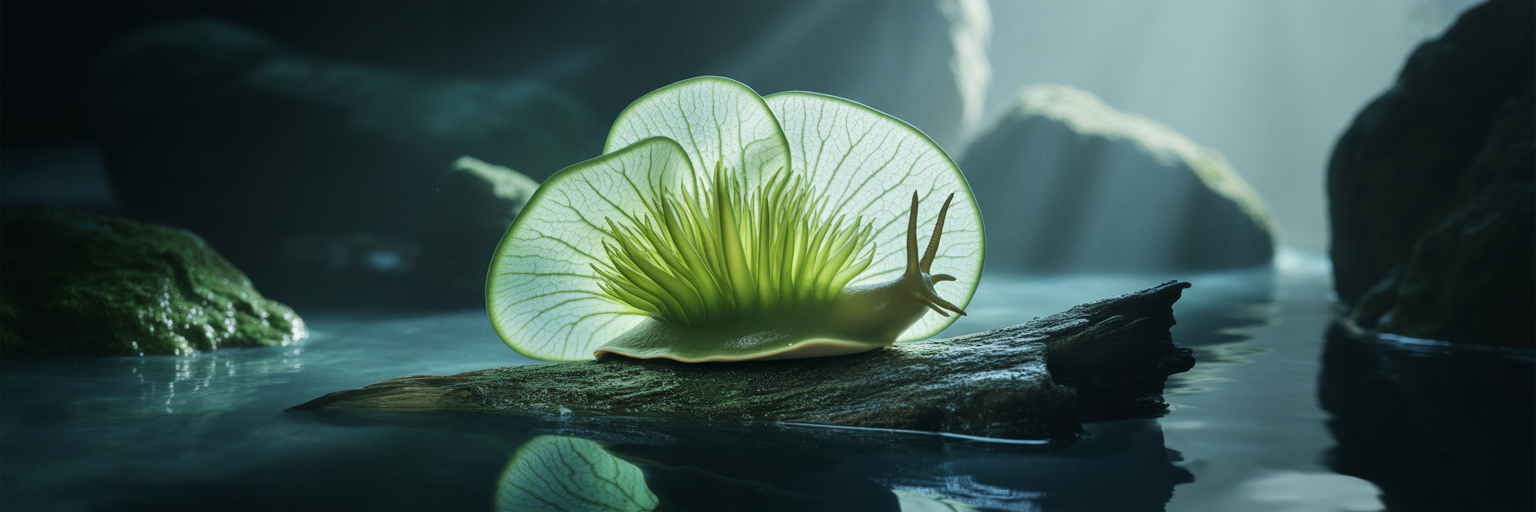
Meet the Slimy Green Leaf That Crawls
Imagine wading through a salt marsh along the U.S. East Coast, somewhere between Nova Scotia and Florida. You spot a bright green leaf floating in a shallow tidal creek. It’s shaped perfectly, complete with delicate veins branching out from a central stem. Then, it moves. It doesn’t drift with the current; it crawls with a slow, deliberate ooze. What you’re seeing isn’t a piece of discarded plant life. It’s an animal, and it’s one of the strangest things you could ever hope to find.
This creature is the sea slug Elysia chlorotica, a master of disguise that has taken its camouflage to a cellular level. At first glance, it’s just a slimy, leaf-shaped blob. But its appearance is no accident. This slug has achieved something that sounds like it belongs in a comic book: it has stolen the power of photosynthesis. It literally turns sunlight into food, a trick that should be exclusive to the plant kingdom. This ability makes it one of nature’s unsettling creations that defy belief, a creature that blurs fundamental biological lines.
How does a slug, a simple mollusk, manage to harness the sun? The question itself seems absurd. Animals eat things; plants make their own food. That’s the rule. Yet this slug breaks it spectacularly. It belongs to a group of mollusks known as sacoglossans, or “sap-sucking” sea slugs. While many of its relatives have peculiar habits, Elysia chlorotica is in a league of its own. It doesn’t just eat algae; it mugs it for its internal machinery and then becomes a living, crawling solar farm. These incredible green sea slug facts set the stage for a story of biological theft and evolutionary genius. The slug’s entire existence is a paradox, an animal that decided it would rather be a plant.
A Grand Theft of Solar Power
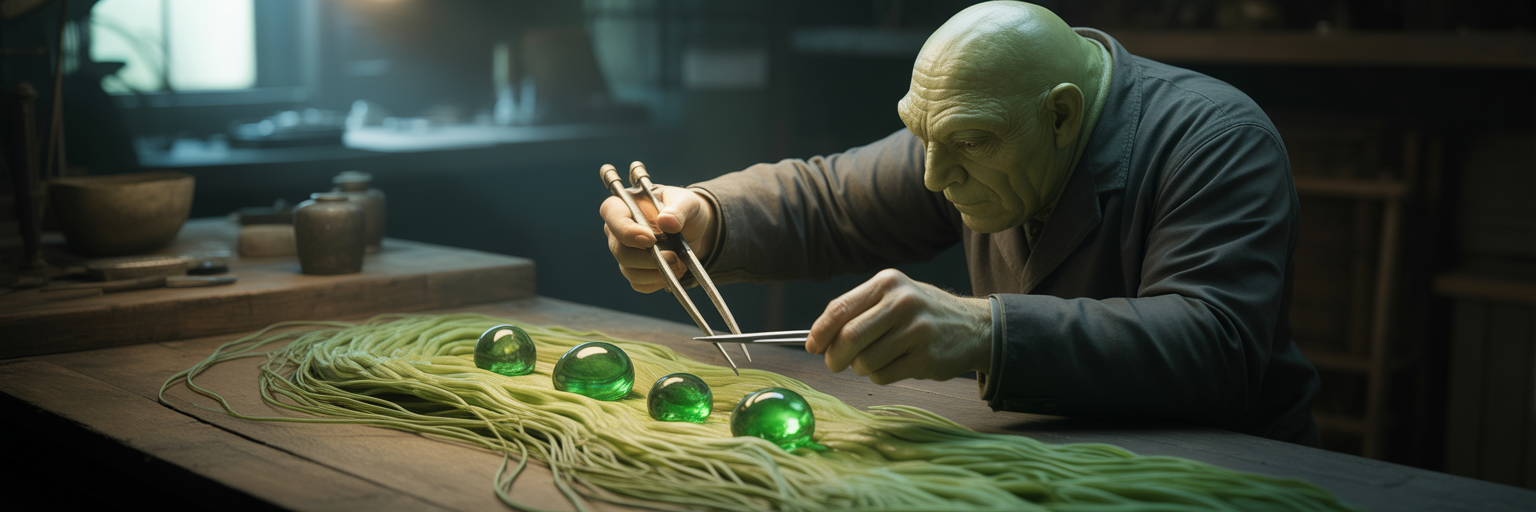
The journey to becoming a photosynthesizing animal begins with a highly specific crime. Elysia chlorotica doesn’t just steal from any plant. It has a single target, a very specific victim that holds the key to its sun-powered lifestyle. This entire process is a masterclass in biological larceny, a process known as kleptoplasty in sea slugs.
The Target: A Specific Algal Toolkit
The slug’s entire operation depends on a single species of algae: Vaucheria litorea. It doesn’t view this alga as a simple meal. Instead, it sees it as a living toolkit, a collection of biological machinery ready for the taking. This alga contains the precious chloroplasts, the tiny green organelles inside plant cells that perform photosynthesis. The slug needs these chloroplasts intact and functional, so it has developed a method of extraction that is both brutal and incredibly precise.
The Heist: A Cellular Slurp
To get what it wants, the slug acts like a microscopic vampire. It uses its radula, a sharp, tooth-like structure in its mouth, to puncture the wall of an algal cell. But instead of just chewing and swallowing, it does something far more sophisticated. It sucks out the cell’s contents, carefully separating the chloroplasts from the rest of the cellular goo. This process, as detailed by National Geographic, is a precise act of cellular theft rather than simple consumption. The slug is performing kleptoplasty (from the Greek kleptes, meaning thief), literally stealing the plastids, or chloroplasts, from its victim.
The Loot: Living Solar Factories
Here’s where it gets even weirder. The stolen chloroplasts are not digested. Instead, they are transported into the slug’s own digestive system, which is highly branched and spreads throughout its entire body. These branches are so fine and extensive that they resemble the veins of a leaf. The slug carefully embeds the living chloroplasts into the lining of these digestive tubes. The process is a stunning feat of biological engineering:
- Puncture: The slug pierces the algal cell wall with its radula.
- Siphon: It sucks out the cell’s cytoplasm, chloroplasts included.
- Sort: It separates the chloroplasts from other materials.
- Integrate: It embeds the chloroplasts into its own digestive cells, where they remain alive and functional.
Once this heist is complete, the slug is no longer just an animal. It has become a chimera, a hybrid creature powered by stolen solar factories.
Becoming a Living Solar Panel
After successfully pulling off its cellular heist, the solar-powered sea slug begins a new life. It has transformed itself from a simple herbivore into a self-sustaining, sun-powered organism. This transformation isn’t just internal; the slug’s entire body is designed to make the most of its stolen goods. Its flat, leaf-like shape isn’t just for camouflage. It’s a functional adaptation that maximizes the surface area exposed to sunlight, effectively turning its whole body into a single, efficient solar panel.
The slug can now be found basking in shallow waters, not for warmth, but to fuel the process of Elysia chlorotica photosynthesis. The stolen chloroplasts, now embedded in its tissues, get to work, converting sunlight, water, and carbon dioxide into sugars. The slug is literally feeding itself by sunbathing. But this raises a profound biological puzzle. Chloroplasts are not self-sufficient. In their native algal cells, they rely on hundreds of proteins produced by the alga’s own DNA to function and repair themselves. Without this constant maintenance, they should break down in a matter of days.
Yet, in the slug, they can last for up to a year. How is this possible? The leading theory is as incredible as the slug itself: horizontal gene transfer. Scientists believe the slug has somehow incorporated genes from the alga into its own DNA. This is like a car thief who not only steals a high-performance engine but also swipes the factory blueprints to manufacture its specific, proprietary replacement parts. If true, the slug is producing the necessary algal proteins itself to keep its stolen solar panels running. It has hacked the very code of life, taking genes from another kingdom to sustain its bizarre lifestyle. This ability to host foreign organelles without an immune response is a biological marvel, reminiscent of other fascinating symbiotic relationships where organisms can live inside other living creatures without harm.
The Ultimate Lazy Lifestyle
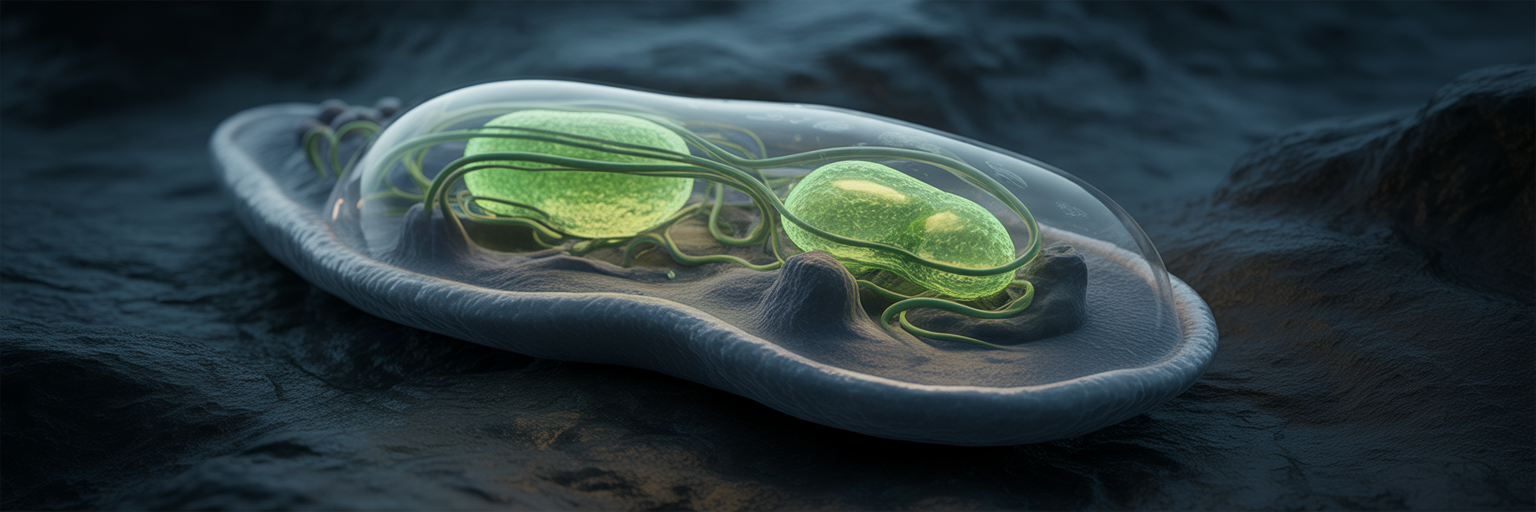
So why go through all this trouble? Why evolve such a complex and bizarre method of stealing and maintaining solar panels? The answer is simple: it allows for the ultimate lazy lifestyle. After a single, hearty meal of Vaucheria litorea as a juvenile, Elysia chlorotica may not need to eat again for the rest of its life, which can be up to a year. It has achieved freedom from the daily grind of foraging. Imagine eating one enormous salad and then surviving for the next nine months just by lying in the sun. That’s the life this slug has made for itself.
This adaptation provides a massive energetic advantage. Foraging, hunting, and digesting all consume a tremendous amount of energy. By eliminating these activities, the slug can dedicate its resources to survival and reproduction. This is particularly useful in its salt marsh environment, where food availability can be unpredictable. While other animals might starve during lean times, the solar-powered slug just needs a bit of sunshine. It carries its own perpetual lunchbox inside its body. This makes it one of the most resilient and strangest of all weird ocean animals.
The difference between its lifestyle and that of a typical herbivore is profound. It represents a complete shift in survival strategy, from active consumption to passive energy generation.
| Factor | Traditional Herbivorous Slug | Elysia chlorotica (The Solar-Powered Slug) |
|---|---|---|
| Primary Energy Source | Constant foraging for plants/algae | Initial algal meal, then months of sunlight |
| Daily Energy Expenditure | High (searching for food, digestion, evasion) | Low (basking, minimal movement) |
| Vulnerability to Food Scarcity | High; survival depends on food availability | Extremely low; can outlast long periods of scarcity |
| Daily Activity | Active foraging required | Largely sedentary; sunbathing to generate energy |
| Survival Strategy | Eat or starve | Eat once, then become a self-sustaining factory |
Blurring the Lines Between Animal and Plant
The story of Elysia chlorotica is more than just a biological curiosity; it fundamentally challenges our neat and tidy classification of life. We are taught a simple rule in school: plants produce, and animals consume. Plants are autotrophs, making their own food through photosynthesis. Animals are heterotrophs, getting their energy by eating other organisms. This slug takes that rulebook and shreds it. It is a true animal that photosynthesizes, a living contradiction that forces us to question the very definitions of what it means to be an animal or a plant.
This isn’t the same as the symbiosis seen in corals. Corals host entire, independent algal cells (zooxanthellae) within their tissues in a mutually beneficial partnership. It’s a landlord-tenant relationship. Elysia chlorotica, on the other hand, performs a hostile takeover. It doesn’t want the whole algal cell. It rips out only the machinery it needs, the chloroplasts, and discards the rest. It’s not a partnership; it’s piracy.
The most mind-bending aspect is the genetic implication. The theory of horizontal gene transfer, where genes move between unrelated species, sounds like something from science fiction. Yet this slug appears to have done just that, taking essential DNA from a plant and integrating it into its own animal genome. It has stolen a piece of the alga’s soul to make it its own. This makes the slug a true chimera, a single organism built from the parts of two different kingdoms of life. It’s a creepy, beautiful, and profound example of how messy and creative evolution can be. The natural world is full of such oddities, and you can explore more of them by visiting our homepage at NatureIsCrazy.com.
The Lingering Scientific Puzzles
For all that we know about this incredible slug, it still holds many secrets. The story is not as settled as it might seem, and the creature remains a subject of intense scientific debate. While the idea of horizontal gene transfer is the most compelling explanation for how the slug maintains its stolen chloroplasts, it is not definitively proven. In fact, some recent studies have failed to find the algal genes in the slug’s DNA, suggesting an even stranger, unknown mechanism might be at play.
This uncertainty adds another layer of mystery to an already bizarre animal. As noted in publications like Smithsonian Magazine, researchers are still grappling with the complexity of this relationship. Several key questions remain unanswered:
- How does the slug’s immune system not attack the foreign chloroplasts? Any other animal would immediately identify these organelles as invaders and destroy them.
- How are the chloroplasts maintained for so long? If not by genes from the slug, what prevents them from degrading? Do they have some unknown, hyper-robust quality?
- Is the photosynthesis truly stable? Does the energy output remain constant over many months, or does it slowly decline as the machinery wears out?
These puzzles make Elysia chlorotica more than just a weird animal. It is a frontier of biological research. Understanding its secrets could have implications for fields like bioengineering, energy production, and medicine. The slug is not just a curiosity; it’s a living laboratory that demonstrates that science is a continuous process of discovery, not just a collection of established facts.
Nature’s Clever, Creepy Masterpiece
The story of Elysia chlorotica is a journey into the bizarre possibilities of evolution. It begins with a simple act of eating, escalates to grand theft auto on a cellular level, and ends with a creature that becomes a living, breathing solar panel. The slug’s life is a testament to nature’s creativity, a perfect blend of brilliance and grotesquerie. It’s a thief, a genetic engineer, and a master of sustainable living all rolled into one slimy, green package.
This creature reminds us that the rules of biology are often more like suggestions. It exists in the blurry space between animal and plant, a walking, crawling paradox powered by stolen sunlight. Its ability to survive in such an extreme and inventive way is a hallmark of life’s tenacity, though it’s not entirely unique; nature has produced other marvels, including animals that can survive being swallowed and escape alive.
So the next time you find yourself near a coastal marsh, take a closer look at that stray green leaf in the water. Watch it for a moment. If it starts to ooze away, you’ll know you’ve found it: a masterpiece of evolution that is equal parts clever, creepy, and utterly fascinating.