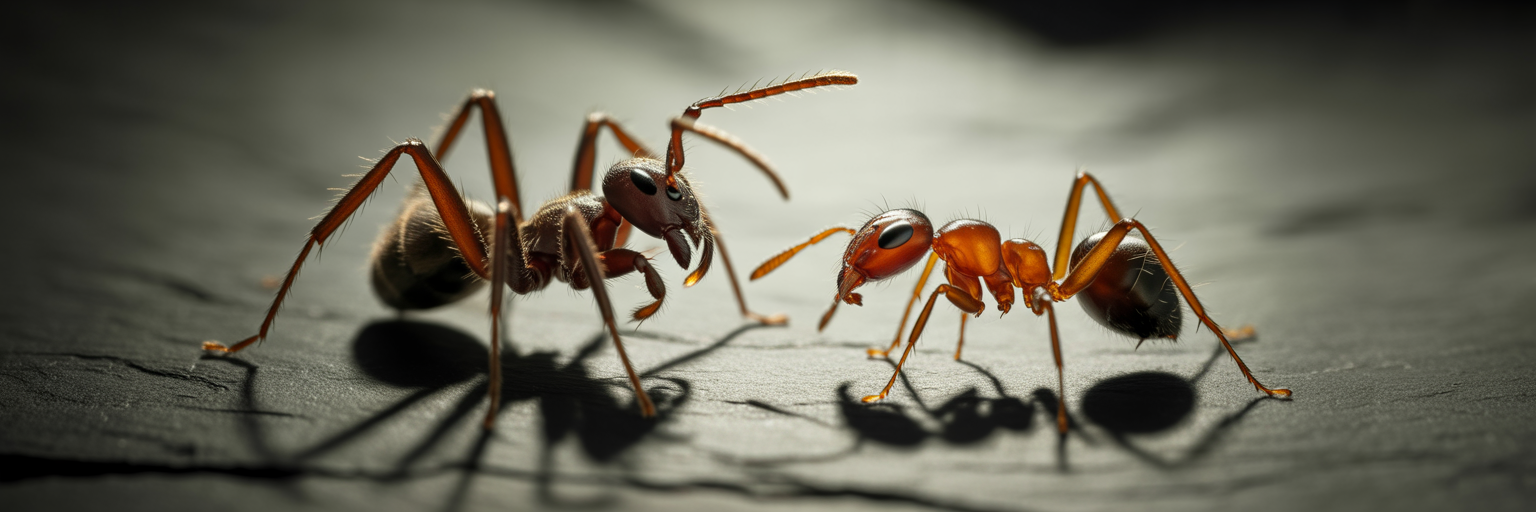
The Unsettling Impostors in Your Backyard
We’ve all done it. You’re sitting on a patio or staring at a patch of pavement, watching a line of ants march with purpose. There’s a certain mindless comfort in their predictable, frantic little parade. But look closer. Keep watching. One of them seems… off. It moves with a strange, stuttering gait, not quite in sync with the others. Its antennae wave with a little too much drama, a little too much flair. It feels like a glitch in the matrix, a tiny error in the code of the natural world that makes the hairs on your arm stand up.
Your brain tells you it’s an ant, but your gut screams that something is profoundly wrong. That’s when you lean in, and the horrible truth reveals itself. Those aren’t antennae. They’re legs. And that isn’t an ant. It’s a spider.
The immediate reaction is a full-body cringe. It’s a visceral, deep-seated “nope.” This tiny, eight-legged con artist has been hiding in plain sight, wearing the skin of a completely different creature. It’s a master of disguise, a walking lie that exploits our brain’s pattern recognition. This unsettling performance is known in scientific circles as myrmecomorphy, which is just a fancy way of saying “ant-shaped.” But this is no simple costume party. It’s a high-stakes evolutionary act involving a complete overhaul of the spider’s body, movement, and behavior.
This raises the obvious and slightly terrifying question: why do spiders pretend to be ants? The answer is a chilling mix of fear and hunger. These spiders have perfected their disguise for two primary reasons. The first is to wear a biological “Do Not Eat” sign, borrowing the fearsome reputation of an ant to stay off the menu. The second, and far more sinister reason, is to become a stealthy, terrifying predator, using its costume to get dangerously close to its unsuspecting victims. This is not just mimicry; it’s a masterclass in deception, played out on a miniature scale all around us.
Anatomy of an Eight-Legged Forgery
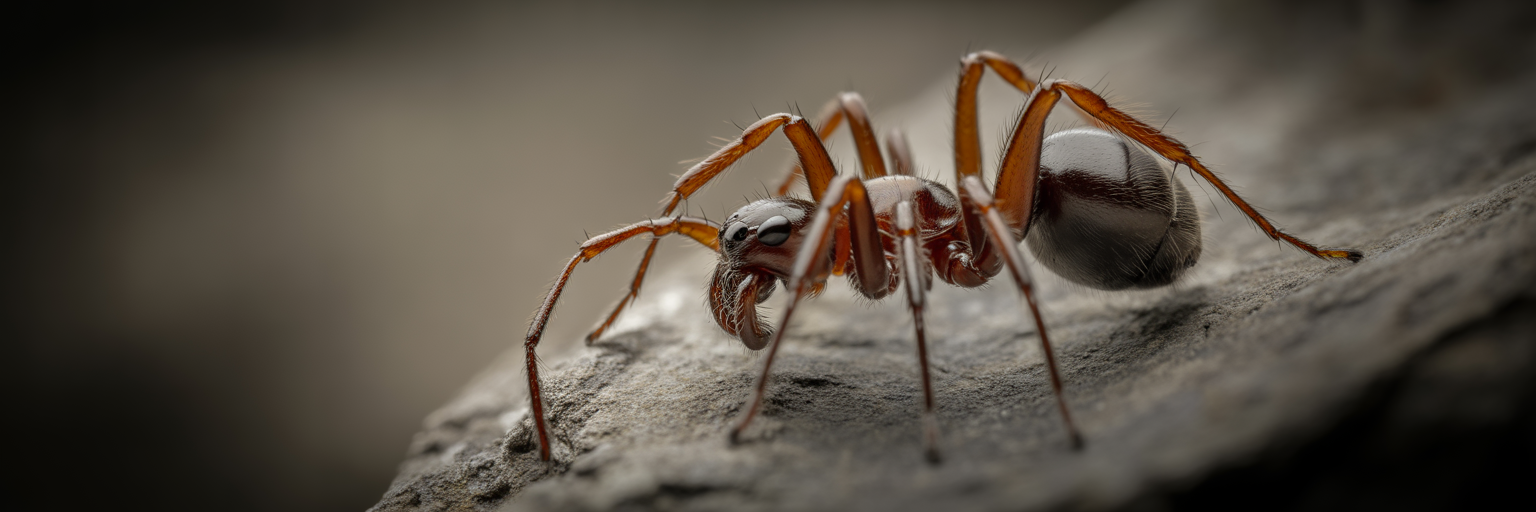
To pull off a convincing lie, you have to get the details right. For ant mimicking spiders, this means overcoming a fundamental biological problem and committing to a full-body transformation. The result is a creature that looks like it was assembled from a kit of mismatched parts, a perfect but grotesque forgery that fools predators and prey alike. Examining its anatomy is like studying a brilliant, but deeply creepy, movie prop.
The Two-Part Body Problem
The biggest hurdle for any spider trying to pass as an ant is its basic body plan. Spiders have two main body parts: a fused head and thorax called a cephalothorax, and an abdomen. Ants, like most insects, have three distinct parts: a head, a thorax, and an abdomen. An aspiring mimic can’t just walk around with the wrong number of segments. It would be like a person trying to impersonate a dog while standing upright. The disguise would fail immediately.
Creating a ‘False Waist’
The solution is both simple and ingenious. Spiders in the genus Myrmarachne have evolved a clever workaround. Their bodies feature deep constrictions, or indentations, that create the illusion of a third segment. Some species have a cephalothorax that is cinched in the middle, making it look like a separate head and thorax. Others have a pinched abdomen, creating the appearance of an ant’s narrow waist, known as a petiole. This anatomical trick is central to their Myrmarachne spider behavior and physical form, creating a silhouette that screams “ant” at a glance.
A Face Only a Predator Could Mistake
The deception continues with the face. Many ants have prominent, forward-facing mandibles used for biting, carrying, and fighting. Spiders, on the other hand, have chelicerae, or fangs, that are typically pointed downward. To complete the costume, some male ant mimics have developed bizarrely elongated chelicerae that they hold out in front of their faces. It’s the arachnid equivalent of wearing a grotesque mask, one that perfectly imitates the facial profile of an ant and hides the spider’s true identity.
The Perfect Paint Job
Finally, there’s the paint job. These spiders that look like ants don’t just mimic a generic ant. They often copy the exact color and texture of the specific ant species they live among. Whether it’s the shiny, jet-black armor of a carpenter ant or the reddish-brown hue of a fire ant, the spider’s exoskeleton is a perfect match. Some even have patterns of light-reflecting hairs that mimic the glossy or matte finish of their chosen model. This level of detail ensures the disguise holds up under close inspection, making the spider a nearly invisible impostor within the very colony it imitates.
| Feature | Real Ant Anatomy | Spider’s Forgery | The Deceptive Effect |
|---|---|---|---|
| Body Segments | Three (Head, Thorax, Abdomen) | Two (Cephalothorax, Abdomen) | Constrictions create a ‘false waist,’ giving the illusion of three segments. |
| Waist | A narrow petiole connecting thorax and abdomen. | A deep indentation in the cephalothorax or abdomen. | Mimics the ant’s slender, segmented silhouette. |
| Antennae | Two long, elbowed sensory antennae on the head. | No real antennae; uses its front two legs. | Front legs are held up and waved to imitate antennae movement. |
| Legs | Six legs attached to the thorax. | Eight legs attached to the cephalothorax. | Walks on the back six legs, using the front two for the ‘antennae’ act. |
| Jaws | Prominent, forward-facing mandibles. | Elongated chelicerae in some species. | Creates a facial profile that looks more ant-like and less spider-like. |
The Method Acting of the Arthropod World
A perfect costume is useless without the right performance. An ant-mimicking spider can have the body of an ant, but if it moves like a spider, the gig is up. This is where the true genius of the deception lies. These spiders are the method actors of the arthropod world, committing fully to their role with a behavioral performance that is as convincing as it is creepy. They don’t just look like ants; they act like them, down to the smallest detail.
The most critical part of the act is the “false antennae.” Spiders don’t have antennae, which ants use constantly to navigate, communicate, and sense their environment. To solve this, the spider holds its front two legs aloft, waving them in a frantic, tapping motion that perfectly imitates an ant’s sensory appendages. As researchers have observed, and as reported by Phys.org, this isn’t just a lazy wave; the spiders replicate the specific, jerky searching motions of an ant’s antennae, making the performance incredibly convincing.
This brings up the “eight-legged problem.” How does a spider hide two of its legs? By dedicating them to the antennae act, the spider walks exclusively on its back six legs. This behavioral choice is crucial. It not only sells the antennae illusion but also maintains the six-legged silhouette of an insect, a dead giveaway for any predator that bothers to count. The spider essentially sacrifices a quarter of its walking power for the sake of its disguise.
Then there’s the signature “ant walk.” Most jumping spiders move with a smooth, deliberate scuttle, often pausing to orient themselves before a big leap. Ants, on the other hand, follow invisible pheromone trails, resulting in a chaotic, zig-zagging path. Ant-mimicking spiders replicate this erratic movement perfectly. They stop and go, turn at sharp angles, and move with a nervous energy that is completely different from their non-mimicking cousins. This makes them appear non-threatening, just another worker ant going about its business.
The entire performance can be broken down into a few key steps:
- The Antennae Pose: Front two legs are raised and held forward, away from the body.
- The Antennae Wave: The raised legs tap the ground and wave in the air, mimicking sensory movements.
- The Six-Legged Gait: The spider walks and runs using only its rear six legs.
- The Erratic Path: It moves in a jerky, zig-zag pattern, not a straight line, to imitate an ant following a trail.
Some of these spiders even take their act a step further by mimicking social behaviors. They have been observed gathering in small groups, which enhances the illusion of being part of a colony. After all, a lone “ant” might seem suspicious, but a small cluster of them reinforces the disguise, making predators even less likely to take a second look.
Wearing a ‘Do Not Eat’ Sign
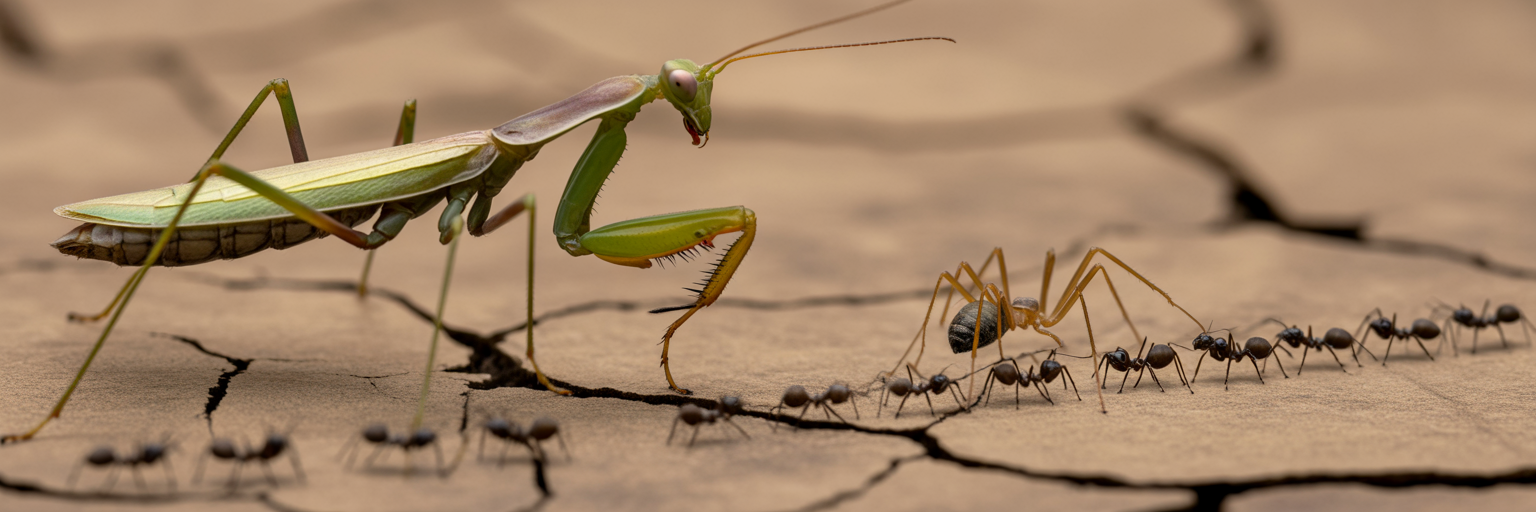
So, why go to all this trouble? The first and most common reason is simple: survival. In the brutal world of insects and arachnids, ants are the undisputed thugs. They are aggressive, well-armed, and travel in gangs. Most possess painful bites, powerful stings, or the ability to spray noxious chemicals like formic acid. More importantly, they attack in overwhelming swarms. Most predators, from birds to wasps to other spiders, learn a valuable lesson early in life: don’t mess with ants. The potential meal is simply not worth the risk of a painful, coordinated counterattack.
The ant-mimicking spider exploits this fearsome reputation. This is a textbook case of Batesian mimicry in spiders, a strategy where a harmless species evolves to look like a dangerous one to trick predators. The spider is essentially wearing the ant’s reputation like a suit of armor. A hunting wasp or a hungry bird that would normally snatch up a juicy spider in a heartbeat will see the disguise, register “ant,” and immediately back off. The mimicry is a biological “get out of jail free” card.
This defensive costume grants these spiders a freedom that most of their arachnid relatives can only dream of. While many spiders must live cryptic lives, hiding in webs, burrows, or under leaves, ant mimics can often forage and hunt brazenly in broad daylight. Their disguise is a mobile shield, allowing them to move through open, dangerous territories that would otherwise be a death trap. This defensive costume allows them a freedom other spiders don’t have, a survival hack as impressive in its own way as the tactics used by animals that can survive being swallowed and escape alive.
At its core, this is a game of psychological warfare. The disguise doesn’t even need to be flawless. It just needs to be good enough to create a moment of hesitation in a predator’s mind. That split-second of doubt, the “Is that an ant or a spider?” question, is often all the mimic needs to make its escape. The predator, programmed for self-preservation, will almost always choose to err on the side of caution and let the potential meal go. In a world where being eaten is a constant threat, the spider’s lie is a lifesaver.
A Killer in a Clever Costume
If wearing an ant costume for defense is clever, using it for offense is downright sinister. For some ant-mimicking spiders, the disguise is not just a shield; it’s a weapon. The deception turns from a brilliant survival tactic into a chilling hunting tool, allowing the spider to become a killer hiding in plain sight. This is where the mimicry moves from being a clever trick to being the premise of a tiny horror movie.
The disguise is a Trojan horse, allowing the spider to infiltrate spaces where it would normally be attacked on sight. Some mimics use their ant-like appearance to get dangerously close to actual ant colonies. This is a high-risk, high-reward strategy. Once inside the enemy’s stronghold, the spider can prey on unsuspecting ant larvae or pick off isolated adult workers. It becomes a spy and assassin, operating deep within the very society it imitates. Unlike the many organisms that can live inside other living creatures without harm, the ant-mimicking spider’s infiltration is purely for sinister purposes.
However, the more common and arguably creepier hunting method involves preying on other spiders. Many spiders are cannibalistic, but they are also wary of each other. An ant-mimicking spider, on the other hand, can approach another spider’s web or burrow without triggering any alarm bells. The victim spider sees what it assumes is a harmless ant wandering by and lets its guard down. That’s when the mimic strikes, ambushing a fellow arachnid that never saw the betrayal coming. As an article in The Conversation highlights, spiders disguise themselves as ants to both hide from things that want to eat them and to hunt their own prey, making it a ruthlessly efficient two-for-one strategy.
This aggressive mimicry opens up a whole new menu of hunting opportunities:
- Infiltrating Nests: The spider can sneak past the defenses of an ant colony, a feat that would be impossible for any other spider, to steal vulnerable larvae.
- Ambushing Spiders: It uses its ant disguise to get within striking distance of other spiders, turning their lack of concern into a fatal mistake.
- Raiding Egg Sacs: In a particularly macabre form of predation, the mimic can act as a “home invader,” sneaking past a mother spider guarding her eggs and making off with them.
In this context, the ant costume is not about avoiding a fight. It’s about starting one on the spider’s own terms. It allows the mimic to be the aggressor, the ambusher, and the infiltrator, all while looking like the most harmless thing in the vicinity.
The Uncanny Evolution of a Perfect Lie
The ant-mimicking spider is an evolutionary masterpiece. This isn’t a single, simple trick but a complex suite of traits—physical, behavioral, and possibly even chemical—that have been meticulously fine-tuned over millions of years of life-or-death pressure. It is a perfect lie, honed by the relentless forces of natural selection until it became so convincing that it fools some of the sharpest eyes in the animal kingdom.
This incredible adaptation is the result of an “evolutionary arms race.” As predators and prey get better at spotting the fakes, there is immense selective pressure on the mimicking spiders to perfect their disguise. A slightly more convincing waist constriction, a more accurate antennae wave, or a better color match could mean the difference between life and death. This creates a continuous cycle of adaptation and counter-adaptation, where the spider’s costume must constantly improve just to remain effective.
But does this perfect lie come at a cost? Does having a body cinched into an unnatural shape affect the spider’s agility or its ability to produce silk? Does dedicating two of its legs to a theatrical performance make it a less efficient hunter in some ways? These are the trade-offs of evolution. Such a highly specialized adaptation likely has downsides, reminding us that every evolutionary strategy involves a complex balance of benefits and limitations.
Ultimately, the creepy feeling this mimicry evokes in us is deeply revealing. The spider is so close to being an ant, yet so fundamentally *not*, that it triggers a sense of deep weirdness in our brains—a biological “uncanny valley.” That feeling of unease is a human echo of the same confusion that saves the spider from a bird or allows it to ambush its prey. This intricate performance is a powerful reminder that evolution can produce complex behaviors without a complex mind, much like how some plants that can detect touch without any nervous system have found ways to react to their environment.
So the next time you see a line of ants marching on the pavement, watch them for a moment. See if one of them moves just a little too strangely, if its “antennae” wave with a bit too much drama. You might be looking at an eight-legged impostor, a master of deception playing out a tiny, terrifying drama right at your feet.