Nature’s Most Unsettling Neurosurgeon
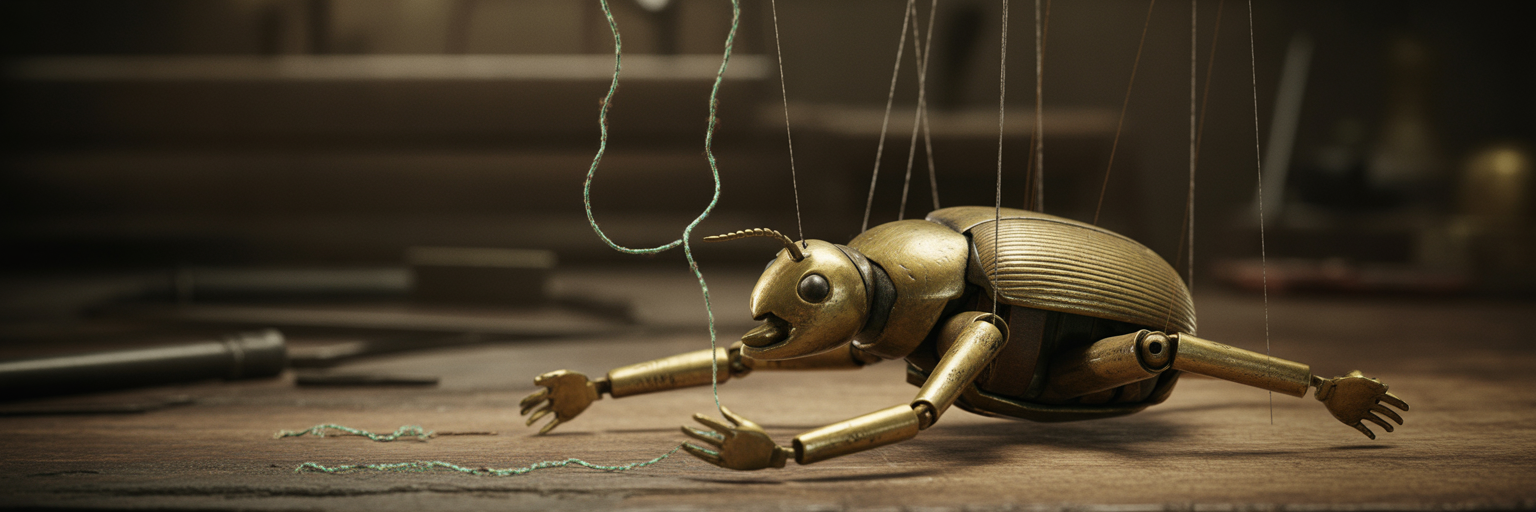
In the natural world, parasitism is a common strategy. But some creatures have refined it into something far more sinister than a simple host-guest relationship. It’s a form of biological warfare, executed with a level of precision that feels unnervingly intelligent. Imagine for a moment that your own will is no longer yours. You can still move your limbs, your body is perfectly functional, but the desire to run, to fight, to save yourself has been chemically scrubbed from your mind. You are a puppet, and something else is pulling the strings.
This isn’t the plot of a horror movie. This is a Tuesday for a cockroach that has the misfortune of crossing paths with its own personal neurosurgeon. The concept of zombification is a very real evolutionary strategy, and it’s one of those weird nature facts that proves reality is often more terrifying than fiction. The process turns a living creature into a docile, walking nursery for the predator’s young. The emerald jewel wasp is far from the only example, joining a gallery of nature’s unsettling creations that defy belief.
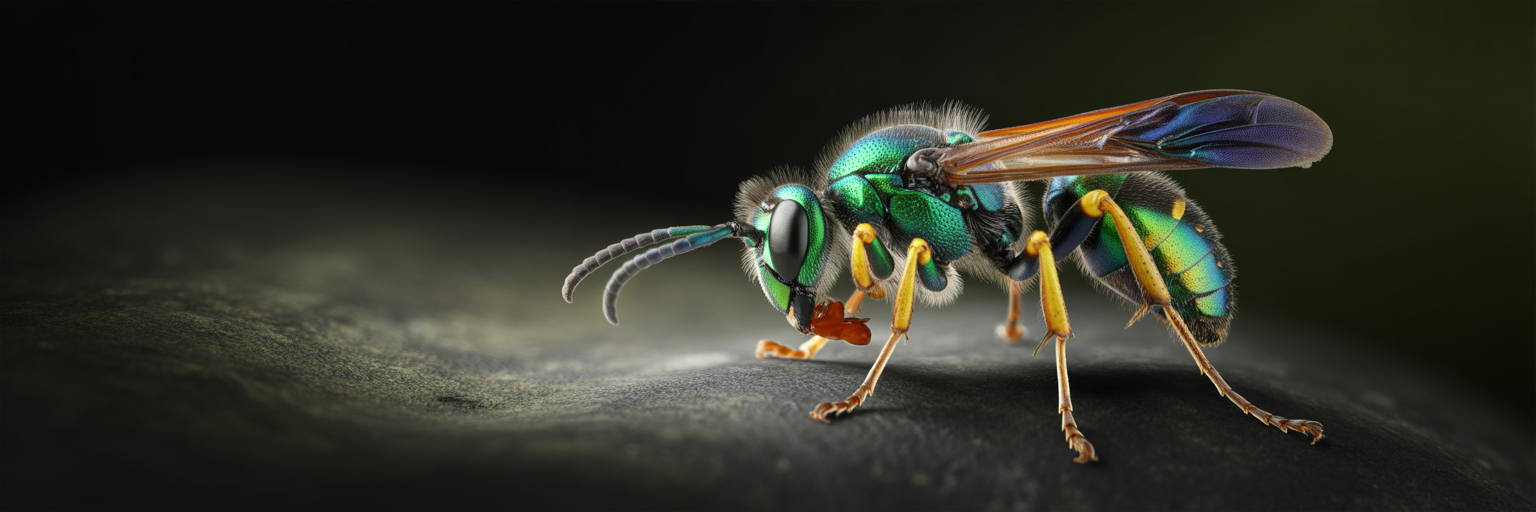
The architect of this nightmare is the emerald jewel wasp, or Ampulex compressa. At first glance, it’s beautiful. Its body shimmers with an iridescent, metallic blue-green sheen, a jewel-toned marvel of the insect kingdom. But this beauty is a grotesque mask for one of the most horrifyingly sophisticated life cycles on the planet. This tiny, glittering creature doesn’t just kill its prey. It dismantles its mind, piece by piece, with the cold, calculated precision of a surgeon. What follows is a real-life nightmare, a step-by-step guide to how a wasp performs brain surgery to create a willing, living slave.
Profile of a Microscopic Puppet Master
To understand the horror, you must first understand the artist. The emerald jewel wasp is not some hulking monster. It is a small, delicate insect, native to the tropical regions of South Asia, Africa, and the Pacific islands. Its dazzling appearance is the first layer of its terrifyingly effective design, a beautiful distraction from its true purpose.
The Hunter’s Exquisite Disguise
The wasp’s metallic carapace isn’t just for show. It’s a hard, durable exterior for a creature that engages in close-quarters combat with prey much larger than itself. Its size is a key part of its strategy. It is small enough to be agile and fast, but large enough to overpower its chosen victim. This combination of beauty and function makes it a perfectly evolved predator, hiding its sinister capabilities behind a veneer of natural art.
A Life Cycle Forged in Horror
The entire gruesome process is carried out by the female wasp. The male’s role in this drama is brief and unremarkable: he mates and dies. The female, however, is a hunter, a chemist, and a neurosurgeon. She alone is responsible for finding a host, subduing it, and preparing it as a living incubator for her single offspring. Her entire existence is dedicated to the perfection of this one macabre task, a cycle she will repeat multiple times in her short life.
The Perfect Victim
The wasp’s preferred target is a common cockroach, such as the American cockroach. Why this specific victim? The cockroach is the perfect size. It’s large enough to provide a substantial meal for a growing wasp larva but not so large that the female wasp cannot manipulate it. More importantly, the cockroach’s nervous system is the specific lock for which the wasp’s venom is the key. Its brain contains the precise neural pathways the wasp has evolved to exploit, making it the ideal, pre-packaged nursery.
The female wasp’s skillset is a chilling testament to evolutionary specialization:
- Target Identification: Locating a suitable cockroach of the right species and size.
- Immobilization: Delivering a precise preliminary sting to disable the host’s defenses.
- Neurological Manipulation: Performing a second, more complex sting directly into the brain to seize control of its behavior.
- Host Transportation: Leading the zombified host back to her burrow.
The Cockroach’s Very Bad Day Begins
For the cockroach, the day begins like any other. It skitters through the dark, damp corners of its world, foraging for scraps, its antennae twitching, constantly sensing for danger. It is a creature of pure instinct, driven by an ancient and powerful urge to survive, to flee from light, and to avoid the crushing weight of a shoe. But today, its instincts will fail it. Today, it meets the shimmering green wasp.
An Unwanted Encounter
The encounter is sudden and violent. The wasp, a flash of metallic green, is not just a predator; it is an assassin. It doesn’t attack randomly. It targets the cockroach with an unnerving focus, a tiny, guided missile of predatory intent. The cockroach’s initial reaction is to flee, a powerful, hardwired response that has served its species for millions of years. But the wasp is faster and far more determined. It quickly closes the distance, initiating the first phase of its horrifying procedure.
The First Sting: A Calculated Strike
The wasp latches onto the cockroach and delivers its first sting. This is not the mind-control injection. This is a tactical strike, aimed with incredible precision at the thoracic ganglion, a nerve cluster in the cockroach’s chest that controls its front legs. The venom is a fast-acting paralytic, but a highly specialized one. It doesn’t cause full-body paralysis. Instead, it temporarily disables the front legs, making it impossible for the cockroach to run away effectively.
The struggle is brief and futile. The cockroach may thrash and try to defend itself, but its primary means of escape has been neutralized. It is now a prisoner in its own body, immobilized just enough for the wasp to proceed with the main event. This first sting is a masterpiece of calculation. It doesn’t kill the host or even render it completely helpless. It simply holds it still for the delicate brain surgery that is about to begin, setting the stage for the creation of the zombie cockroach.
The Delicate Art of Mind Control
With the cockroach temporarily immobilized, the wasp begins the most incredible and disturbing part of its attack. This is where the process shifts from a physical assault to a neurological hijacking. The second sting is not an act of brute force. It is a feat of microsurgery, performed with a living needle that can feel its way to the very control center of the cockroach’s mind.
The Search for the Mind’s Control Panel
The wasp repositions itself and aims its stinger at the cockroach’s head. This isn’t guesswork. As detailed in a study in PLOS One, the wasp’s stinger is equipped with sensory organs that allow it to feel for the precise location of the cockroach’s subesophageal and supraesophageal ganglia before injection. It probes the soft tissue of the roach’s neck, feeling for the texture and shape of the brain. While there are animals that can navigate without a brain entirely, the jewel wasp’s strategy relies on the very complexity of the cockroach’s neural network to achieve its goals.
A Precisely Formulated Cocktail
Once the target is located, the wasp injects its venom. The Ampulex compressa venom is not a simple toxin. It is a complex neurochemical cocktail, a precisely formulated potion designed for one purpose: insect brain manipulation. The key to how wasps control brains lies in this venom’s ability to specifically block receptors for a neurotransmitter called octopamine. In insects, octopamine is crucial for initiating complex movements, like walking or fleeing from danger. By blocking it, the wasp doesn’t paralyze the cockroach. It simply removes its motivation to move on its own.
The Zombie Switch is Flipped
The effect is immediate and profound. The cockroach’s escape reflex is completely erased. It is physically capable of running away, but the will to do so is gone. It has been turned into a biological robot, awaiting commands. The venom is a masterclass in efficiency, achieving several goals at once:
- Blocks octopamine: This specifically targets the initiation of movement, leaving all other motor functions intact.
- Eliminates escape response: The cockroach will no longer react to threats or attempt to save itself.
- Preserves motor function: The host must be able to walk to its own tomb, so full paralysis would defeat the purpose.
The cockroach is now a perfect slave. It is alive, mobile, and completely, utterly compliant. The zombie switch has been flipped.
The Long Walk of the Living Dead

What happens next is perhaps the most surreal and unsettling part of the entire process. The violence of the attack is over, replaced by an eerie, quiet obedience. The wasp, too small to carry its much larger victim, doesn’t even try. It doesn’t need to. It has the cockroach’s mind on a leash.
The wasp gently tugs on one of the cockroach’s antennae and begins to walk. And the zombie cockroach follows. It walks placidly behind its captor, led like a dog into the wasp’s burrow. This is a place a healthy cockroach would instinctively avoid at all costs, a dark, confined deathtrap. Yet, the zombified host enters without a hint of resistance. Its survival instincts have been chemically overwritten.
Before this grim procession begins, an even stranger behavior occurs. The venom induces a period of intense, compulsive grooming. The cockroach, just moments away from being entombed, will stop and meticulously clean itself for up to 30 minutes. The exact reason for this is still debated by scientists, but it adds a layer of bizarre, ritualistic horror to the scene. It’s as if the wasp is forcing its victim to prepare itself for the sacrifice to come. The behavioral shift is absolute and terrifyingly specific.
| Behavioral Trait | Normal Cockroach | Zombified Cockroach |
|---|---|---|
| Response to Threat | Immediately flees or feigns death | Passive and unresponsive |
| Initiation of Movement | Spontaneous and constant | Will not move unless led by the wasp |
| Navigation | Avoids open spaces and light | Calmly walks into the wasp’s burrow |
| Grooming | Normal, functional cleaning | Intense, prolonged, compulsive grooming |
| Antennae Use | Used for sensing environment and danger | Becomes a leash for the wasp to pull |
This table starkly illustrates the venom’s power. It doesn’t just subdue the cockroach; it rewrites its very nature, turning a self-preserving organism into a docile vehicle for the wasp’s offspring.
A Living Pantry for a Ravenous Heir
Once the cockroach has been obediently led into the burrow, the final act of this macabre play begins. The wasp’s goal was never to kill the cockroach, but to preserve it as a fresh, living food source for its young. The burrow now becomes both a nursery and a tomb.
Sealing the Tomb
Inside the dark, cramped space, the wasp performs its final task. It lays a single, white egg, carefully gluing it to the underside of the cockroach’s abdomen. The placement is precise, ensuring the larva will have easy access to its meal when it hatches. With the egg secured, the female wasp crawls out of the burrow. She then gathers small pebbles and debris, using them to barricade the entrance, sealing the still-living cockroach inside. The roach, fully capable of digging its way out, does nothing. It simply stands there in the darkness, waiting.
The Slow Feast Begins
A few days later, the wasp egg hatches. The larva emerges and, in a final act of evolutionary horror, chews its way into the cockroach’s abdomen. But this is no frenzied feast. The larva eats its host’s organs in a specific, calculated order, deliberately avoiding the vital ones to keep the cockroach alive for as long as possible. This ensures the “meat” stays fresh. The cockroach will remain alive for up to a week as it is slowly consumed from the inside out. While nature has examples of organisms that can live inside other living creatures without harm, the jewel wasp larva’s relationship with its host is anything but symbiotic. It is a slow, methodical destruction. Once the larva has eaten its fill, it forms a cocoon inside the hollowed-out shell of its first meal, emerging later as a new, fully-formed emerald jewel wasp, ready to continue the cycle.
The Evolutionary Perfection of a Nightmare
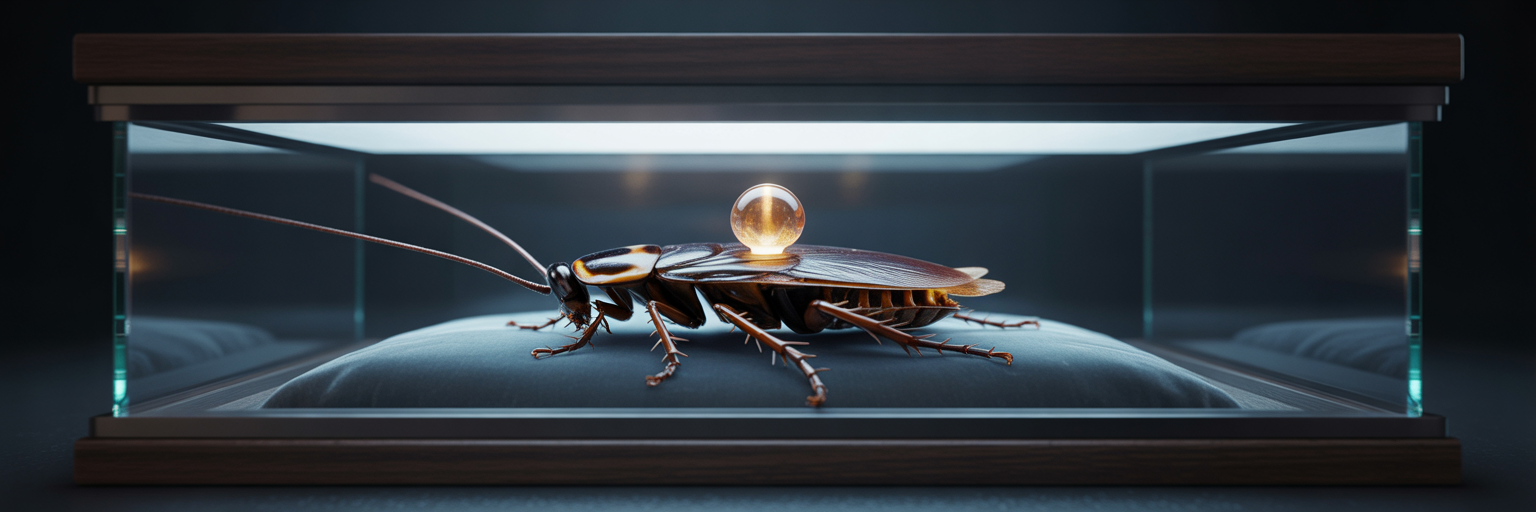
The life cycle of the emerald jewel wasp is a chilling masterpiece of evolutionary design. From the initial hunt to the final, slow consumption, every step is perfectly optimized for a single purpose: ensuring the survival of the next generation. The hunt, the two precise stings, the zombie walk, and the entombment all serve a brutally efficient logic. This strategy provides immense advantages. It eliminates the need for the wasp to transport a heavy, struggling victim. It guarantees a perfectly fresh food supply that won’t rot or spoil. And it provides a secure, protected nursery, safe from other predators.
This behavior places the jewel wasp among the most sophisticated parasitoids on Earth. It’s a powerful reminder that parasitism is a major driver of specialized adaptations, pushing creatures to develop abilities that seem to come straight from science fiction. The story of the emerald jewel wasp is a chilling reminder that the real world is filled with creatures and plants that can trigger chemical hallucinations in animals, survive being dried out for years, and perform feats that defy our imagination.
So, the next time you see a beautiful, shimmering green insect, maybe take a respectful step back. It might not be interested in you, but it’s a living, breathing testament to the fact that nature’s most terrifying monsters are often the most beautiful. And they are very, very real.