
The Most Extreme Item On The Family Menu
Every parent in the United States knows the quiet desperation of dinnertime. You present a lovingly prepared meal, perhaps with a vegetable that isn’t beige, only to be met with the cold, hard stare of a child who would rather perish than eat a single pea. The negotiations begin. The pleas are made. Eventually, you cave and heat up the chicken nuggets for the tenth time that week. It’s a universal struggle, a nightly test of wills that leaves you exhausted.
But what if the solution wasn’t another trip to the grocery store, but offering yourself up as the main course? This isn’t a twisted fantasy. It’s a biological reality known as matriphagy, or maternal cannibalism. In some corners of the animal kingdom, a mother’s final act of devotion is to become her children’s first, and most important, meal. This is not a gruesome accident or a random act of violence. It is a highly evolved, deliberate reproductive strategy, one of the most extreme parental care examples nature has ever devised.
This behavior forces us to confront a deeply unsettling question. Why would any creature evolve to become its own children’s first meal? It seems to defy every instinct we associate with motherhood and survival. Yet, for these species, it is the key to their continued existence. The mother’s body is not just a source of life but also the ultimate inheritance, a final, all-encompassing provision for the next generation. This journey into matriphagy reveals the cold, hard logic of survival, where sentimentality has no place and the continuation of the genetic line is the only thing that matters. What does this brutal form of parental devotion tell us about the unforgiving calculus of life itself?
A Step-by-Step Guide to Becoming Dinner
The process of matriphagy is not a chaotic frenzy but a chillingly methodical affair. It’s a programmed sequence of events where the mother’s body transitions from caregiver to sustenance. To understand the mechanics, we need only look to the desert spider, Stegodyphus lineatus, a master of this unsettling practice.
The Appetizer: A Mother’s Gift
It begins gently enough. After her spiderlings hatch, the mother spider dedicates herself to their care. For the first few weeks, she provides for them by regurgitating a nutrient-rich liquid, a sort of arachnid baby formula, directly into their waiting mouths. She diligently feeds them from her own dwindling reserves, ensuring they have the strength for what comes next. This initial phase looks like a recognizable form of parental care, a mother sacrificing her own energy for her young. But it is merely the prelude to a much darker commitment.
The Main Course: The Ultimate Sacrifice
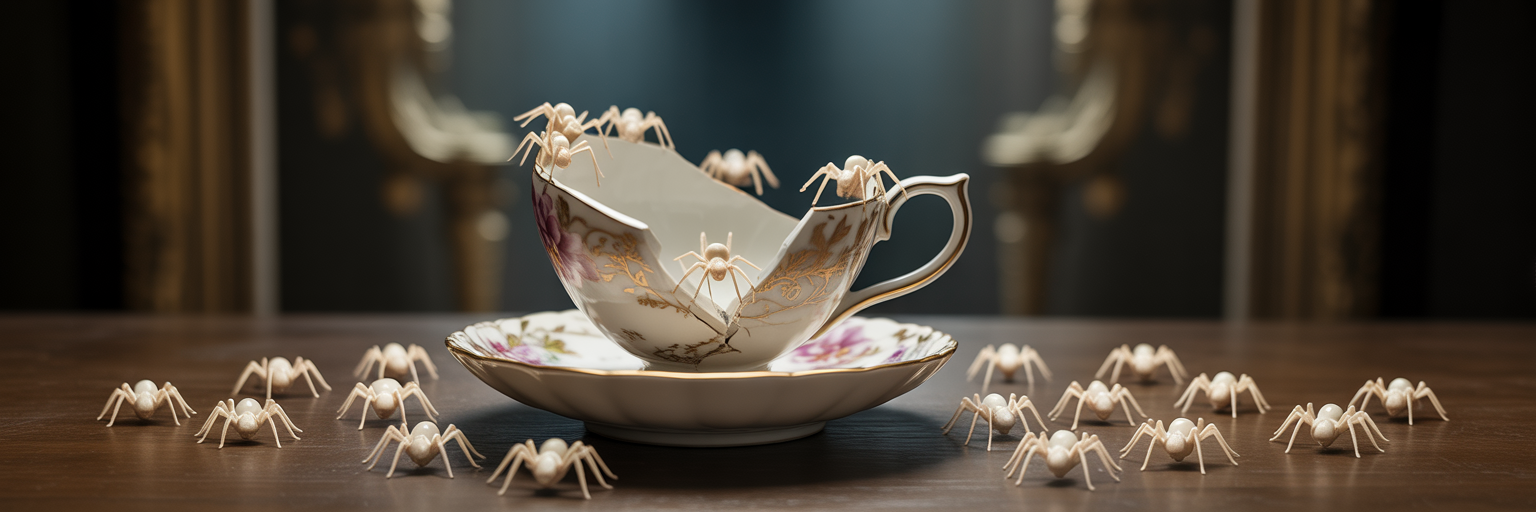
Then, a switch flips. The spiderlings, now stronger, begin to swarm their mother. This is the turning point where the meal plan changes dramatically. The practice of matriphagy in spiders is a masterclass in biological efficiency. The young use their tiny fangs not to attack, but to inject digestive enzymes into their mother’s joints and abdomen. They begin to consume her from the inside out, liquefying her tissues and drinking the resulting nutrient slurry. According to a report in Entomology Today, the process for the Stegodyphus lineatus mother takes about two weeks, after which her young have consumed her entirely. Other species, like certain pseudoscorpions, have their own variations where the young simply bite and suck the mother to death. This methodical self-destruction is just one of nature’s unsettling creations that defy belief, showcasing how far evolution will go to ensure survival.
A Methodical Transfer, Not a Violent Struggle
Perhaps the most disturbing part of this entire process is the mother’s complete passivity. She does not struggle, flee, or fight back. She remains still, allowing her children to consume her. Her calmness transforms the act from a violent struggle into a programmed, biological transfer of resources. It is her final, calculated gift. The key stages are as follows:
- Initial nourishment through regurgitation: The mother provides a liquid food source from her own body.
- The offspring begin probing and biting: The spiderlings start to swarm the mother, testing her body.
- Injection of digestive enzymes: The young inject fluids to liquefy her internal tissues.
- The young collectively consume her: Over several days, the spiderlings drink their mother’s liquefied insides.
- Only the empty exoskeleton is left behind: The spiderlings emerge from the nest, leaving behind the hollow shell of their first home and first meal.
The Rogues’ Gallery of Cannibalistic Kids
While the desert spider provides a particularly graphic example, it is far from the only creature on this bizarre family menu. Matriphagy has evolved independently across the animal kingdom, a recurring theme that proves its brutal effectiveness. This is the “who’s who” of animals that eat their mothers.
Arachnids and Insects: The Original Practitioners
Spiders and their relatives seem to have a particular flair for this behavior. Beyond Stegodyphus, other species like the black-lace-weaver spider engage in matriphagy. In some pseudoscorpions, the mother’s sacrifice is the final act after she has already depleted her resources producing “trophic” or non-viable eggs for her young to eat. Once that runs out, she offers herself as the final, guaranteed food source, ensuring her offspring have the energy to disperse and find their own territories.
Amphibians and Worms: A Different Flavor of Sacrifice
The strategy is not limited to arthropods. The burrowing caecilian, a legless amphibian that looks like a giant worm, has a uniquely dermatological take on matriphagy. The mother develops a special, nutrient-rich outer layer of skin. Her young, equipped with specialized teeth, peel off and eat this skin in a behavior known as dermatotrophy. She continuously regenerates it until they are large enough to fend for themselves. While the caecilian mother sacrifices her skin, other animals that can regrow skin stronger than before demonstrate nature’s varied solutions to survival. Similarly, some nematodes, like Caenorhabditis elegans, practice a form called endotokia matricida, or “death by internal hatching.” The larvae hatch inside the mother and consume her from within before breaking free.
When the Tables are Turned: Filial Cannibalism
To understand the cold logic of these behaviors, it helps to look at the inverse. In some species, it is the parent who eats the young. This is known as filial cannibalism. The mouthbrooding cichlid, for example, protects its young by holding them in its mouth. However, if the mother is under extreme stress or starvation, she may swallow her own brood. This isn’t malice; it’s a calculated decision to cut her losses, reabsorb the nutrients, and try again when conditions are better. It shows that these extreme parenting behaviors are flexible, brutal responses to environmental pressures.
| Species | Method of Matriphagy | Primary Environmental Driver |
|---|---|---|
| Desert Spider (Stegodyphus lineatus) | Offspring inject enzymes and consume mother’s liquefied insides. | Harsh, arid environment with scarce and unpredictable food sources. |
| Burrowing Caecilian (Boulengerula taitana) | Young use specialized teeth to peel and eat the mother’s nutrient-rich outer skin layer. | Underground habitat where foraging for tiny young is impossible. |
| Pseudoscorpion (Paratemnoides nidificator) | Mother offers her body to be consumed after her resources are depleted from producing trophic eggs. | Resource-limited habitat where the mother’s body is the final, guaranteed food source. |
| Nematode (Caenorhabditis elegans) | Larvae hatch internally and consume the mother from the inside (endotokia matricida). | Short lifespan and need for rapid generational turnover in ephemeral habitats. |
The Cold, Hard Math of Eating Your Mother
To us, matriphagy is the stuff of nightmares. To evolution, it is simply good accounting. The behavior persists because, in certain environments, the benefits overwhelmingly outweigh the costs. Understanding the “why” requires setting aside our human emotions and looking at the situation from the perspective of a gene trying to make copies of itself.
The Ultimate Genetic Investment
The core concept here is kin selection. An individual’s evolutionary success isn’t just about its own survival, but the survival of its genetic code. A mother shares roughly 50% of her genes with each of her offspring. If sacrificing herself ensures that dozens of her children survive to reproduce, it is a massive net gain for her genetic lineage. The evolution of animal self sacrifice is driven by this ruthless mathematics. Her individual life ends, but her genetic legacy proliferates. She is not dying; she is investing.
Survival Advantages in a Brutal World
For the offspring, the benefits are immediate and profound. Consuming their mother provides a perfectly tailored nutritional package that gives them a critical head start in a dangerous world.
- A Guaranteed First Meal: In environments where food is scarce or unpredictable, the mother’s body eliminates the risk of starvation during the most vulnerable stage of life.
- A Nutritional Head Start: This perfectly balanced meal allows for faster growth, larger body size, and increased resilience. Bigger, stronger babies are better equipped to evade predators and outcompete rivals.
- A Safe Haven: By consuming their mother within the safety of the nest, the young avoid the perils of foraging for their first meal in the open, where predators lurk.
The Environmental Trigger
Matriphagy is not a universal strategy because it is only “profitable” under specific, usually harsh, conditions. It is an adaptation born of desperation, a response to resource-poor environments where the odds are stacked against newborns. This strategy is a testament to the lengths life will go to persist, much like life forms that can survive being completely dried out for years. A comprehensive review in the Biological Reviews of the Cambridge Philosophical Society confirms that parent-offspring cannibalism is often a calculated response to ecological pressures. In nature, resource scarcity forces extreme strategies. This mirrors the human world, where economic pressures dictate survival. For instance, in the hyper-competitive food industry, securing capital through options like small business loans for restaurants can mean the difference between success and failure. For these animals, the mother’s body is the ultimate, non-negotiable loan to ensure the family business continues.
The Biology of a Doomed Mom

The evolutionary “why” is clear, but the physiological “how” is just as fascinating and unsettling. A mother doesn’t just passively wait to be eaten; her body actively prepares for its own deconstruction. This is a deep dive into the biology of a mother programmed to become a meal, a prime example of weird animal reproduction.
Programmed to Deconstruct
The mother’s body undergoes a profound transformation, shifting from a life-sustaining organism to a life-giving resource. This process may involve apoptosis, or programmed cell death, on a massive scale. Her own cells begin to break down her tissues, essentially pre-digesting herself to make consumption easier for her underdeveloped young. Her body is no longer focused on its own maintenance but on becoming the most efficient and accessible nutrient source possible. This internal preparation is as remarkable as animals that can change their internal organs seasonally to adapt to new conditions. She is, in essence, a biological vessel that is systematically preparing for its own disassembly.
The Chemistry of Surrender
The mother’s placidity during her consumption is not a sign of weakness or defeat; it is a state of chemically induced surrender. While the exact mechanisms are still being studied, it is likely that a cocktail of hormones or pheromones suppresses her survival instincts. Her neurological system may be rewired to inhibit flight or fight responses, ensuring she remains calm and accessible to her offspring. This chemical override is crucial. Any struggle on her part could injure her young or disrupt the delicate transfer of nutrients. Her biology compels her to participate in her own demise, dismantling any notion of sentimentality and replacing it with the chilling reality of biological determinism. At what point does the mother cease to be a creature and become, simply, a life-support system transitioning into a meal?
A Final, Indigestible Thought
Matriphagy forces us to stare into the abyss of what “parenting” can mean. From our warm, human perspective, it is an act of supreme horror. But in the cold, impartial world of natural selection, it is a masterpiece of efficiency. It is a brutally logical and terrifyingly effective survival strategy that demonstrates evolution’s single-minded focus on one thing: genetic continuation. The process is completely indifferent to our concepts of love, cruelty, or sacrifice. It simply works.
So the next time you feel drained by parenthood, the next time you are on your hands and knees cleaning up spilled juice while a tiny human demands more snacks, take a moment. Be grateful that your kids are asking for a snack and not for you to be the snack. Matriphagy is a powerful reminder that the natural world operates on an alien logic, one that is often as beautiful as it is terrifying. It forces us to reconsider our definitions of nature and survival, revealing a world far stranger than we could ever imagine. Matriphagy is just one of countless bizarre strategies found on our planet, a world where nature is crazy and survival is everything.