The Secret Life of Extremely Petty Polyps
Picture a coral reef. You’re probably imagining a serene, colorful underwater garden, swaying gently in the current. It’s a beautiful, peaceful image. It is also completely wrong. That tranquil scene is a lie. What you’re actually witnessing is a battlefield, a site of perpetual conflict where the combatants are so slow you can’t see the carnage. This is a war fought over millennia by some of the planet’s oldest and grumpiest landlords.
The masterminds behind this endless struggle are tiny, squishy animals called coral polyps. Think of them not as pretty flowers, but as ancient, territorial warriors who have perfected the art of the neighborhood dispute. Each polyp builds its own little limestone apartment, and together, millions of them form a sprawling, stony metropolis. And like in any crowded city, real estate is everything. They are locked in a constant, brutal war for survival, and their neighbors are their sworn enemies.
This isn’t a war for glory or honor. It’s a desperate, never-ending fight for a good spot. Every inch of the reef is prime property, determining who gets access to the two things that matter most: sunlight and food. Sunlight is their power source, and floating plankton is their daily bread. To be overshadowed by a neighbor is to starve in the dark. To be in a spot with poor water flow is to miss out on the all-you-can-eat buffet drifting by. This makes their aggressive coral behavior a simple matter of life and death.
To defend their turf, these seemingly passive creatures have developed a bizarre and horrifying arsenal. They deploy weapons straight out of a sci-fi horror film. We’re talking about specialized “sweeper tentacles” designed for nothing but combat, insidious forms of coral chemical warfare that poison the water, and, in the most gruesome cases, the act of literally digesting their neighbors alive. These aren’t random acts of violence; they are sophisticated combat strategies honed over millions of years. Before we get into the gory details of how they do it, you first need to understand why they’re so incredibly angry all the time.
Real Estate is Murder on the Reef

The sheer pettiness of coral polyps makes a little more sense when you realize their entire existence revolves around a ruthless competition for resources. The vibrant beauty of a reef masks a brutal reality where every neighbor is a potential threat to your survival. This isn’t just a minor squabble; this is a full-blown coral warfare driven by the fundamental needs of life. The motivations are primal, and the stakes couldn’t be higher.
The War for Sunlight
Most reef-building corals are solar-powered. They have a crucial roommate living inside their tissues: a type of algae called zooxanthellae. In this symbiotic relationship, the coral provides a safe home, and the algae photosynthesize, producing up to 90% of the coral’s food. It’s a brilliant setup, until your neighbor starts building a bigger house that casts a shadow over your own. For a coral, being overshadowed isn’t just an inconvenience; it’s a slow-motion starvation sentence. It’s the reef equivalent of your neighbor building a hideous extension that completely blocks your solar panels, slowly draining your power until the lights go out for good. This constant battle for sunlight is a primary driver of how corals fight, forcing them to grow upwards and outwards, often directly into a rival’s territory.
Fighting for a Floating Buffet
While sunlight provides most of their energy, corals are also predators. At night, these seemingly inanimate objects become hunters, extending their tiny tentacles to snatch plankton and other tasty morsels from the water. A prime location with good water flow is like owning a popular restaurant on a busy street corner, with a constant stream of customers delivered right to your doorstep. A spot with stagnant water is like being stuck in a deserted alleyway, waiting for scraps. This creates another intense layer of conflict. Corals will actively fight to secure and defend these high-flow zones, ensuring they get first dibs on the floating buffet. The competition is fierce, and losing your spot means going hungry.
The Natural Bullies of the Block
Not all corals are created equal. The reef is a complex society with a clear pecking order. Some species are natural bullies, genetically programmed for aggression and rapid growth. They are the thugs of the neighborhood, expanding quickly and attacking any coral that gets in their way. Others are sneaky opportunists, waiting for a dominant neighbor to get sick or damaged before making their move. And then there are the defenders, slow-growing but heavily armed, like living fortresses. This dynamic creates a tense environment where every interaction is a strategic calculation. This complex web of relationships is just one example of the many ways life adapts to survive, much like some of nature’s unsettling creations that defy belief. Understanding these motivations is key to appreciating the sheer ingenuity behind their weapons.
Meet the Sweeper Tentacles of Doom
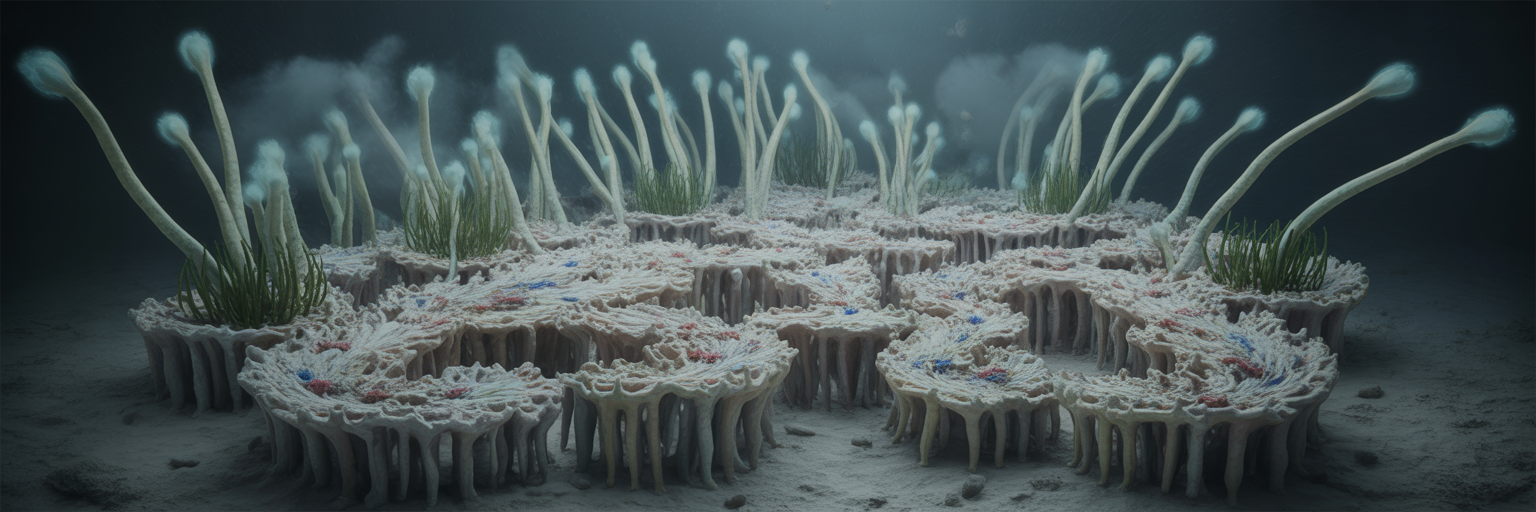
Now that you understand why corals are so perpetually furious, let’s look at their first line of offense: the sweeper tentacles coral use to keep their neighbors in check. These are not the cute, stubby tentacles they use for feeding. These are specialized weapons of war. Imagine a ghostly white whip, several times longer than a normal tentacle, extending slowly and deliberately from the coral’s body. It’s a sentient lash, a biological probe designed for one purpose: to seek and destroy. When a rival coral gets too close, these tentacles emerge, ready to deliver a devastating chemical burn.
Not Your Average Tentacle
At a glance, a sweeper tentacle might look like just a longer version of a feeding tentacle, but biologically, they are worlds apart. They are purpose-built for combat. Feeding tentacles are covered in tiny hairs called cilia, which they use to move captured food towards the polyp’s mouth. Sweeper tentacles have no cilia. They have no interest in eating; their only job is to inflict damage. Instead, they are packed with mucocytes, cells that produce a thick, toxic mucus. This isn’t just a weapon; it’s a declaration of intent, a clear signal that the coral is shifting from feeding to fighting.
The Genetic Toolkit for War
The specialization runs deep, right down to the genetic level. Research has shown that sweeper tentacles and feeding tentacles express entirely different sets of genes. It’s the biological equivalent of having a separate toolbox for hunting and for warfare. According to a 2020 study by Yosef et al. published in BMC Genomics, feeding tentacles are loaded with genes that produce neurotoxins, perfect for paralyzing tiny prey. Sweeper tentacles, on the other hand, express genes for tissue-damaging enzymes like phospholipases A2. These enzymes are designed to literally melt an opponent’s flesh, breaking down cell membranes and causing necrosis. Uncovering these intricate biological systems is a monumental task, and such breakthroughs are often powered by advanced data analytics techniques that allow researchers to map complex gene expression patterns and decode the genetic blueprint for war.
The Galaxy Coral: A Master of Personal Space
Perhaps the most notorious user of these weapons is the Galaxy Coral, *Galaxea fascicularis*. This species is a true master of personal space. It can extend its sweeper tentacles many inches from its body, creating a deadly “no-coral’s-land” around itself. Any unfortunate coral that tries to encroach on its territory will be met with a relentless barrage of these stinging whips. The Galaxy Coral will patiently lash its rival day and night, slowly burning away its tissue until the competitor either dies or retreats. It’s a chillingly effective demonstration of how corals fight for every millimeter of reef real estate, using these medium-range weapons to maintain a perimeter of death.
A Toxic Relationship: Coral Chemical Warfare

If sweeper tentacles are the coral equivalent of a medieval flail, then coral chemical warfare is a far more insidious strategy. This is the world of allelopathy, where corals engage in long-range combat by releasing potent toxins into the water. It’s a subtle and sinister approach, like poisoning the neighbor’s well instead of engaging in a fistfight on the lawn. Some corals have evolved the ability to produce and secrete water-soluble chemical compounds designed to stunt the growth of, bleach, or even kill their rivals without ever making physical contact.
This method is particularly common among soft corals, which lack the hard skeletons of their reef-building cousins and often can’t compete in a direct physical brawl. So, they resort to chemistry. These toxins create an invisible zone of death around the attacker, preventing other corals from settling nearby and giving the soft coral a competitive edge. It’s a clever tactic, but it comes with a terrifying trade-off. As reported by Phys.org in 2014, the very same compounds that make a coral a deadly neighbor also make it a delicious-smelling meal for predators.
It’s a dark, cosmic joke. The chemical weapons that harm other corals act as a beacon for coral-eating fish, like butterflyfish. The attacker essentially puts up a giant, flashing neon sign that says, “Free lunch here!” It’s like setting a booby trap for your rival that also makes your own house smell like a perfectly cooked steak to a pack of hungry wolves. This highlights the complex risk-reward calculations that govern survival on the reef. Weaponizing chemistry is a powerful but dangerous game, not unlike the strange abilities of certain plants that can trigger chemical hallucinations in animals. The process is a brutal four-step gamble:
- Release of Toxins: The coral releases its chemical weapons into the surrounding water to suppress its competitors.
- Competitor is Harmed: Nearby rivals are stressed, their growth is stunted, or they are killed outright, clearing space for the attacker.
- Toxins Attract Predators: The chemical signature of the toxins alerts coral-eating predators to the attacker’s location.
- The Attacker is Eaten: The coral that launched the attack is more likely to be preyed upon, paying the ultimate price for its aggression.
When Corals Get Personal: The Sting and Digest
When long-range chemical attacks and medium-range tentacle whips aren’t enough, coral warfare gets up close and personal. This is the most direct and gruesome form of combat, reserved for when two corals have grown so close that their tissues are literally touching. At this range, the fight becomes a brutal, to-the-death struggle involving microscopic harpoons and the deployment of a coral’s most horrifying weapon: its own stomach.
The first layer of this close-quarters defense is the nematocyst. These are microscopic, spring-loaded cells that act like tiny, venom-injecting harpoons. The surface of a coral is a minefield of millions of these things, each ready to fire upon contact with a foreign object, especially the tissue of a rival coral. When two corals touch, they unleash a barrage of nematocyst stings, injecting toxins designed to kill the other’s cells. But this is often just the opening salvo.
If the stinging match doesn’t settle the dispute, the aggressor unleashes its ultimate weapon: mesenterial filaments. In a move of pure body horror, the coral extrudes its own digestive organs out of its body and spreads them over its rival. These filaments are packed with powerful digestive enzymes that begin to break down the competitor’s tissue on contact. The aggressor is literally digesting its neighbor alive, absorbing the dissolved nutrients for its own use. It is an act of aggression, execution, and cannibalism all rolled into one. It’s a shocking reminder of the extreme pressures of survival, where even the most bizarre tactics are on the table, much like the incredible stories of animals that can survive being swallowed and escape alive. This aggressive coral behavior is the final, brutal answer to a border dispute.
With this final piece of the puzzle, we can see a clear, tiered strategy in how corals fight:
- Chemical Warfare: Long-range, area-denial attacks used to suppress rivals from a distance and prevent them from settling nearby.
- Sweeper Tentacles: Medium-range, targeted strikes designed to clear a perimeter and maintain personal space without direct body contact.
- Mesenterial Filaments: Close-quarters, fight-to-the-death finishing moves used to eliminate an immediate threat by digesting it on the spot.
The Pecking Order of the Polyps

All these different combat methods—overgrowth, chemical attacks, tentacle whips, and gut-punching—are not deployed randomly. They fit into a complex ecological framework known as a competitive hierarchy. On any given reef, there is a pecking order. Some coral species are known aggressors, while others are masters of defense or sneaky opportunists. This hierarchy determines who wins and who loses in the endless battle for space. This isn’t a simple ladder where one species dominates all others; it’s more like a chaotic game of rock-paper-scissors, but with thousands of players and a lot more stinging.
The strategy a coral employs is often tied to its morphology, or its physical shape. Fast-growing, branching corals, like many *Acropora* species, often use an “overgrow and overshadow” strategy. They grow incredibly quickly, branching out like trees to monopolize sunlight and shade out their slower-growing competitors below. Their motto is “grow fast and break things.” On the other end of the spectrum are the slow-growing, massive corals, like brain corals. These species act as heavily armed fortresses. They can’t outgrow anyone, so they invest their energy in building dense skeletons and developing extremely potent defenses, like powerful nematocysts and deadly mesenterial filaments. They are the immovable objects of the reef, daring anyone to touch them.
This diversity of strategies shows how different organisms evolve unique traits for survival, much like the fascinating cases of animals that can regrow skin stronger than before. The constant pressure of coral warfare has driven an incredible diversification of life and death strategies. However, this delicate balance is fragile. External factors, especially rising ocean temperatures from climate change, can completely disrupt the pecking order. When the water gets too warm, dominant species can become weakened and stressed, making them vulnerable. This can allow previously subordinate or opportunistic species to gain a foothold and take over, completely reshaping the reef community. The tiny wars between polyps have consequences that ripple across the entire ecosystem.
| Strategy | Primary Weapon | Example Coral Type | Advantage | Disadvantage |
|---|---|---|---|---|
| Overgrowth Strategy | Rapid Growth Rate | Branching Corals (e.g., Acropora) | Quickly monopolizes sunlight by growing over competitors. | Structurally weaker and more vulnerable to storms and disease. |
| Direct Assault | Sweeper Tentacles & Mesenterial Filaments | Massive Corals (e.g., Galaxy Coral) | Highly effective at killing and clearing immediate neighbors. | Energetically expensive and only works at close to medium range. |
| Chemical Warfare | Allelopathic Toxins | Soft Corals (e.g., Sinularia) | Can suppress rivals from a distance without physical contact. | Toxins can attract predators, leading to higher rates of being eaten. |
| Defensive Fortification | Dense Skeleton & Potent Nematocysts | Brain Corals (e.g., Diploria) | Extremely durable and well-defended against most aggressors. | Very slow growth rate, can be easily overshadowed by faster growers. |
A Newfound Respect for the Stationary Warriors
So, the next time you see a beautiful photograph of a coral reef, hopefully you’ll see it for what it really is: a silent, slow-motion war zone populated by ancient, territorial animals armed to the teeth. The serene image of a peaceful underwater garden is gone, replaced by the reality of a brutal and constant struggle for existence. These are not passive, colorful rocks. They are sophisticated creatures engaged in a high-stakes game of survival, and they have the weapons to prove it.
We’ve seen their horrifying and fascinating arsenal, a toolkit of aggression honed over millions of years. This is coral warfare in all its glory:
- The long-reach sweeper tentacles coral deploy to create a perimeter of death.
- The insidious coral chemical warfare that poisons the water for their rivals.
- The gruesome “gut-punch” of mesenterial filaments, the ultimate close-quarters finishing move.
This aggression isn’t just a destructive force; it is the very engine of creation on the reef. The breathtakingly complex and diverse structures we admire are the direct result of this brutal, ongoing conflict. The competition for space drives corals to grow into incredible shapes and forms, creating the three-dimensional habitat that supports thousands of other species. The beauty we see is a monument built by a billion tiny wars, fought in slow motion over eons.
So, let this new perspective permanently change how you view a reef. It’s not just a pretty ecosystem; it’s a living testament to the relentless drive of life. Look at it with new eyes and a newfound respect for its inhabitants. And as you admire the vibrant colors and intricate patterns, remember the unsettling truth: every single one of those beautiful corals is armed, dangerous, and very likely plotting the demise of its neighbor. If you found this hidden world fascinating, you can discover more incredible stories from the natural world at Nature is Crazy.