An Introduction to Earth’s Ultimate Survivor
When we think of ancient life, dinosaurs and trilobites often come to mind. Yet, a creature that witnessed the dawn of the Cambrian explosion over 500 million years ago still roams the Earth today. This is the tardigrade, or water bear, a microscopic animal that is not an extinct oddity but a living fossil. Their lineage is one of the planet’s greatest success stories, a testament to a design so effective it has barely changed in half a billion years. These eight-legged survivors are the definition of a polyextremophile, capable of withstanding conditions that would be instantly fatal to nearly all other complex animals. They can endure the vacuum of space, temperatures from near absolute zero to well above boiling, and doses of radiation that would liquefy a human.
How do they achieve this near-invincibility? The answer lies in a remarkable state of suspended animation called cryptobiosis. This is not hibernation or sleep but a profound shutdown where metabolic activity slows to less than 0.01% of normal, effectively pausing life itself. The most critical of these cryptobiosis mechanisms is anhydrobiosis, a process of extreme dehydration. When faced with a lethal environment, a tardigrade can shed over 95% of its body’s water, curling into a desiccated, lifeless-looking ball called a tun. In this state, it can wait for decades, sometimes even centuries, for conditions to improve.
This state of extreme dehydration, or anhydrobiosis, is one of nature’s most fascinating survival tricks, a strategy shared by other life forms that can survive being completely dried out for years. For the tardigrade, this tun state is the gateway to its other resistances. By removing the water from its cells, it sidesteps the dangers of freezing and boiling. This raises profound scientific questions. What are the precise molecular tools that grant this resilience? How do these strategies compare to other extremophiles that brave Earth’s harshest corners? And ultimately, what can these microscopic survivors teach us about the absolute boundaries of life and its potential to exist beyond our world?
Molecular Fortitude Against Extreme Temperatures
The tardigrade’s ability to survive temperature extremes is a masterclass in cellular engineering. While many organisms have adaptations for heat or cold, the tardigrade possesses a biochemical toolkit that protects it from both. This dual capability stems directly from the processes initiated during its transition into the cryptobiotic tun state. It doesn’t simply tolerate heat or cold; it fundamentally reconfigures its internal structure to make temperature irrelevant.
The Role of Molecular Chaperones in Heat Tolerance
Imagine trying to cook an egg on a scorching sidewalk. The heat causes the egg’s proteins to denature, changing from a clear liquid to a solid white. The same thing happens to the essential proteins inside a living cell when exposed to extreme heat, leading to catastrophic failure. Tardigrades, however, can withstand temperatures above 150°C (300°F). They achieve this by producing specialized heat shock proteins (HSPs). These act as molecular chaperones, identifying and binding to other proteins that are beginning to lose their shape due to thermal stress. By holding them in place and helping them refold correctly, HSPs prevent the irreversible damage that would otherwise destroy cellular machinery.
Vitrification: The ‘Bioglass’ State of Protection
As a tardigrade enters anhydrobiosis, it begins producing large quantities of unique molecules, including a sugar called trehalose and a set of intrinsically disordered proteins (TDPs). These molecules are key to a process called vitrification. Instead of water, the tardigrade’s cells become filled with a mixture of these protective substances. As the last traces of water depart, this mixture doesn’t crystallize but instead solidifies into an amorphous, glass-like state. This “bioglass” physically immobilizes and encases delicate structures like DNA, proteins, and cell membranes, locking them in place and shielding them from thermal and mechanical stress. The cell effectively becomes a tiny, perfectly preserved biological fossil, waiting to be reanimated.
Surviving Cryogenic Conditions
This same vitrified state is what allows tardigrades to survive cryogenic temperatures approaching absolute zero. The greatest danger of freezing for most organisms is not the cold itself, but the formation of sharp ice crystals that puncture cell membranes like microscopic needles. Because the tardigrade has already replaced most of its cellular water with the bioglass mixture, there is little left to form these damaging crystals. The vitrified state ensures that the cell’s internal architecture remains intact, whether it’s being baked or flash-frozen. While tardigrades enter a dormant state, their ability to manage cellular integrity at temperature extremes is a profound adaptation, distinct from the metabolic adjustments seen in creatures that can switch between warmblooded and coldblooded states.
Decoding Unparalleled Radiation Tolerance

Perhaps the most astonishing of the tardigrade’s abilities is its profound resistance to radiation. To put this in perspective, a dose of 5 to 10 Gray (Gy) of radiation is lethal to a human. A tardigrade can withstand over 5,000 Gy, a level of exposure that would sterilize soil, shatter glass, and obliterate the DNA of almost any other animal on the planet. This incredible tardigrade radiation resistance is not a fluke but the result of a sophisticated, two-part defense system that combines proactive protection with hyper-efficient repair.
The Dsup Protein: A Protective DNA Shield
The first line of defense is a protein unique to tardigrades: the Damage suppressor, or Dsup protein. When a cell is bombarded with radiation, highly reactive hydroxyl radicals are produced, which act like molecular sandblasters, shredding DNA. The Dsup protein functions as a physical shield against this assault. It physically binds to chromatin, the structure that packages DNA, forming a protective cloud around the genetic code. This shield physically blocks the hydroxyl radicals from reaching the DNA molecule, preventing damage before it can even occur. Remarkably, it does this without interfering with normal DNA functions like transcription, meaning the cell can continue its processes while being shielded.
Hyper-Efficient DNA Repair Mechanisms
While the Dsup shield is incredibly effective, some radiation damage is inevitable. This is where the second part of the strategy comes into play: reactive repair. Tardigrades possess an arsenal of DNA repair pathways that are far more efficient than those found in most other animals. As soon as the tardigrade rehydrates from its tun state and its metabolism restarts, it kicks its repair machinery into high gear. Genes involved in fixing broken DNA strands and excising damaged bases are rapidly activated, allowing for a swift and comprehensive tardigrade DNA repair process. This dual strategy is the key to their resilience:
- Proactive Shielding: The Dsup protein prevents the majority of radiation damage from ever happening.
- Reactive Repair: Enhanced repair pathways quickly fix any damage that does get through the shield.
This remarkable ability to withstand radiation doses that would obliterate most other forms of life has made the tardigrade a subject of intense study. As noted in research from Pfizer, these microscopic animals possess a mammoth adaptability for surviving extremes, including deadly radiation, offering clues for protecting biological systems.
A Comparative Analysis with Fellow Extremophiles
To truly appreciate the tardigrade’s unique place in the natural world, it helps to compare its abilities with other champions of survival. While the water bear is a master of endurance, it is not alone in the realm of extremophiles. However, a closer look at their different approaches reveals why the tardigrade is in a class of its own. These comparisons highlight the diverse extremophile survival strategies that life has evolved to cope with seemingly impossible conditions.
Consider the bacterium Deinococcus radiodurans, another organism famous for its radiation resistance. Like the tardigrade, it can survive immense doses of radiation. But its strategy is entirely different. D. radiodurans lacks a protective shield like the Dsup protein. Instead, its DNA is shattered into hundreds of fragments by radiation, and it survives by possessing an incredibly robust and rapid DNA repair system that stitches its genome back together. The tardigrade, by contrast, employs a dual strategy of prevention first and repair second. It is the difference between wearing a suit of armor and having a team of medics on standby.
Now, let’s look at heat tolerance. Hyperthermophilic archaea like Thermococcus gammatolerans thrive in the crushing pressures and boiling temperatures of deep-sea hydrothermal vents. Their enzymes and proteins are intrinsically stable at temperatures that would instantly cook a tardigrade. The crucial difference is that these archaea are metabolically active in the heat; they live and grow in it. The tardigrade does not. It survives by entering a dormant, vitrified state, effectively waiting out the heat rather than functioning within it. This contrast between active and dormant survival highlights the incredible diversity of life at the extremes, a world that also includes the organisms that breathe metal instead of air.
This brings us to the tardigrade’s defining feature: it is a polyextremophile. While it may not hold the absolute record for resistance to any single stress, its ability to tolerate a whole suite of them—heat, cold, radiation, vacuum, and dehydration—is what makes it so extraordinary. The table below clarifies these distinct evolutionary paths.
| Organism | Primary Resistance | Core Mechanism | Metabolic State During Stress | Key Evolutionary Trade-Off |
|---|---|---|---|---|
| Tardigrade | Poly-extremophile (Radiation, Heat, Cold, Vacuum) | Cryptobiosis (Vitrification, Dsup Protein Shield) | Dormant (Suspended Animation) | Complete inactivity and vulnerability while in tun state. |
| Deinococcus radiodurans | Radiation | Hyper-efficient DNA Repair Pathways | Active | High energy cost to maintain extensive repair machinery. |
| Thermococcus gammatolerans | Heat & Radiation | Enzyme Stability & DNA Repair | Active | Specialized for a narrow range of extreme conditions (e.g., hydrothermal vents). |
The evolutionary trade-off for the tardigrade’s cryptobiotic strategy is clear. While in its tun state, it is completely inert and vulnerable, unable to react, move, or reproduce. It is a strategy of ultimate patience, a bet that conditions will eventually improve.
The Fossil Record and Evolutionary Persistence
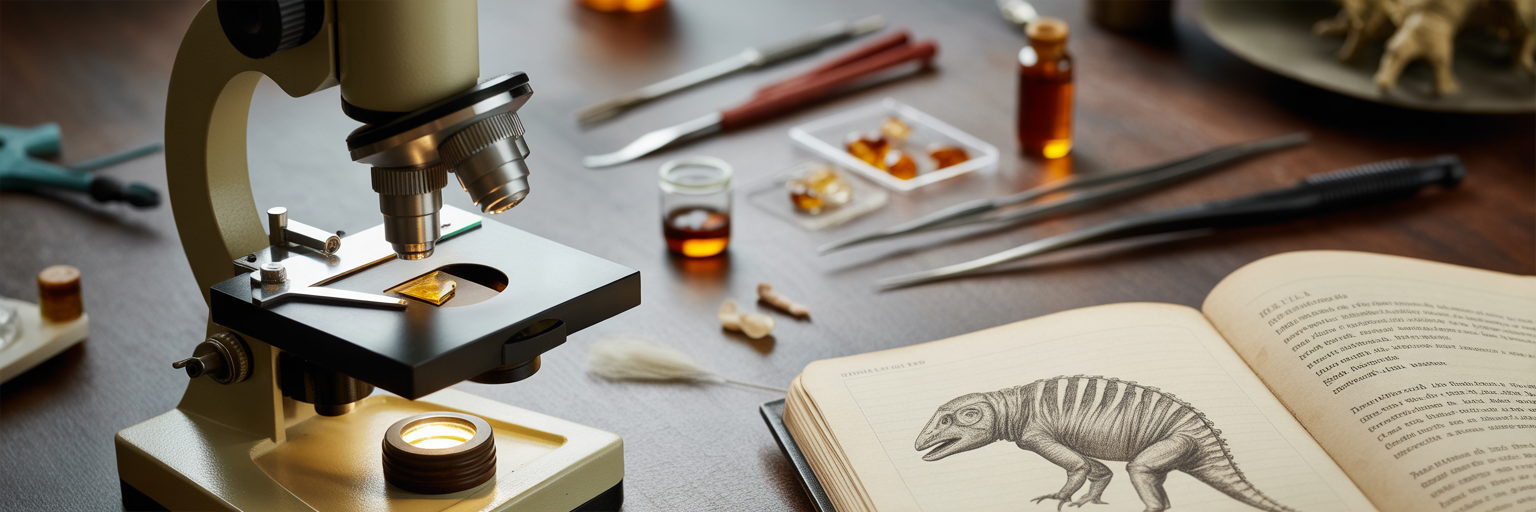
Shifting from biochemistry to paleontology, the story of the tardigrade becomes one of deep time and incredible persistence. Their evolutionary success is not a recent development. As Wikipedia‘s compilation of fossil evidence confirms, tardigrades have been present on Earth for over 500 million years, with their basic morphology remaining consistent since the Cambrian period, making them one of the most resilient animal phyla known. Fossils from this ancient era show that the fundamental eight-legged, segmented body plan was already in place, a design so effective it has required little modification over vast geological timescales.
Studying tardigrade fossils, however, presents significant challenges. Their microscopic size and soft bodies mean they rarely fossilize. Most of what we know comes from exceptional circumstances of preservation. The most scientifically valuable discoveries have been specimens trapped in Cretaceous amber, dating back around 90 million years. Like insects caught in tree sap, these amber fossils preserve tardigrades in stunning three-dimensional detail, providing an unparalleled window into their ancient anatomy and confirming their remarkable evolutionary stability.
What does this fossil evidence tell us about their history? The presence of tardigrade fossils in ancient marine, freshwater, and terrestrial sediments reveals that they have been colonizing Earth’s most challenging niches since the dawn of complex animal life. They were not driven to these harsh environments; they evolved to master them from the very beginning. This raises a compelling question: what evolutionary pressures drove the development of such extreme resilience?
The most likely answer is that their cryptobiotic abilities served as an evolutionary get-out-of-jail-free card. This state of suspended animation would have allowed them to survive multiple mass extinction events that wiped out countless other species, including the dinosaurs. While other life forms perished from asteroid impacts, volcanic activity, or drastic climate shifts, tardigrades could simply dry out and wait. For them, a global catastrophe was just an inconveniently long drought. Cryptobiosis was their ultimate survival tool, an evolutionary reset button that ensured their persistence through Earth’s most violent chapters.
Broader Implications for Science and Technology
The study of tardigrades is more than just an academic curiosity; it pushes the boundaries of what we believe is possible for life and offers tangible solutions to human challenges. Understanding how this tiny creature achieves its resilience has profound implications for fields ranging from medicine to space exploration. The “so what?” of tardigrade research is a roadmap to future innovations inspired by half a billion years of evolutionary problem-solving.
Astrobiology and the Search for Extraterrestrial Life
For astrobiologists, the tardigrade is a game-changer. Its proven ability to survive the vacuum and radiation of open space makes it a key model organism for testing the limits of life. It provides a proof of concept for panspermia, the theory that life could be transferred between planets aboard meteorites. If a complex animal can survive such a journey, it dramatically expands the possibilities for life’s distribution across the cosmos. This research directly informs our understanding of astrobiology life limits and broadens the search for habitable zones, suggesting that life might persist in the harsh radiation environments of Mars or within the subsurface oceans of icy moons like Europa.
Applications in Medicine and Biotechnology
The molecular secrets of the tardigrade hold immense promise for medicine. Imagine being able to protect a cancer patient’s healthy cells from the damaging effects of radiation therapy. Studying the Dsup protein could lead to novel treatments that do just that. Furthermore, understanding anhydrobiosis could revolutionize the storage and transport of biologics. Vaccines, blood products, and complex medicines that currently require constant refrigeration could be rendered shelf-stable, making them accessible in remote or low-resource settings. The tardigrade’s ability to pause life without damage could one day allow us to do the same for life-saving medical supplies.
Engineering Tardigrade-Inspired Resilience
Looking further ahead, scientists are exploring how to transfer tardigrade resilience to other organisms. This concept of bioengineering for environmental cleanup is a growing field, paralleling research into life forms that can feed on plastic waste. By inserting genes like the one for the Dsup protein, we could potentially create crops that are resistant to radiation or microbes capable of bioremediating radioactive waste sites. This drive to create robust systems is not limited to biology; it is a core tenet of modern engineering, where durable design principles in everyday technology are constantly being refined to protect valuable components from environmental stress. Nature’s solutions often provide the best blueprints.
In the end, the humble tardigrade forces us to expand our definition of what it means to be alive and resilient. It is a powerful reminder that some of the most profound biological solutions are not found in the largest or strongest creatures, but in the microscopic survivors who have quietly mastered the art of persistence.