The Silent Engineer Beneath Your Feet
Take a walk in the woods. It feels peaceful, doesn’t it? The gentle rustle of leaves, the quiet dignity of fallen trees. It all seems so passive, so serene. But that tranquility is a carefully constructed illusion. Beneath the surface, a massive, clandestine construction project is underway, managed by an engineer that has been shaping this planet for over a billion years. This engineer is silent, brilliant, and just a little bit creepy.
It works tirelessly, without blueprints or a single complaint to HR. It operates in near total darkness, weaving a living infrastructure through soil and stone. What if that fallen log you just stepped over isn’t merely rotting? What if it’s being meticulously dismantled, its raw materials repurposed to build a subterranean freeway that connects the entire forest? The truth is, the forest floor ecosystem is far more organized and alive than it appears.
Everywhere you step, you are walking on the roof of a hidden city, a sprawling network of tunnels and transit lines. This isn’t the work of insects or roots alone. It is the grand design of a single, sprawling entity that has mastered the art of deconstruction and connection. It is an ancient biological superhighway, an infrastructure project so vast it makes our own humble highways look like temporary dirt tracks. This is the secret work of fungus, the planet’s original and most ambitious civil engineer.
Anatomy of the Underground Mastermind

Most of us think we know what a fungus is. We see a mushroom pop up after a rainstorm and think, “There it is.” That’s like pointing at an apple on a tree and calling it the entire orchard. The mushroom is just the fruit, a temporary, flashy billboard designed for one purpose: reproduction. The real mastermind, the true entity, is hidden from sight.
The Fruit vs. The Factory
The mushroom is the fleeting, visible part, but the factory is the fungal mycelial network, a sprawling, permanent web of living threads hidden in the soil or wood. This is the engineer itself. It is the brain, the stomach, and the circulatory system all rolled into one. While the mushroom is busy trying to spread its spores to the wind, the mycelium is down below, managing logistics, running supply lines, and planning its next expansion.
The Unstoppable Weaving Threads
This network is built from countless microscopic filaments called hyphae. Think of them as self-assembling, self-replicating wires that grow with a quiet, relentless determination. These living threads weave through soil, slip between grains of sand, and invade the microscopic cracks in a piece of wood. They don’t just grow randomly. They navigate using chemical signals, sniffing out food sources and avoiding obstacles with an intelligence that feels almost deliberate. They are the workers, the road pavers, and the communication lines of this vast operation.
The Largest Organism You’ve Never Seen
The sheer scale of these underground fungal networks is difficult to comprehend. A single network can span thousands of acres, making it one of the largest and oldest organisms on Earth. Its immense size places it firmly among some of nature’s unsettling creations that defy belief. You could walk for days across a forest and be standing on the same individual organism the entire time. It’s a humbling, slightly unnerving thought. This is not just a collection of threads; it is a single, unified entity working as one.
- Mushroom: The temporary reproductive structure, like a flower that appears briefly to spread spores.
- Mycelium: The main body of the fungus, the sprawling, permanent network of threads hidden in the soil or wood. This is the ‘factory’ or the ‘engineer’ itself.
- Hyphae: The individual, microscopic threads that make up the mycelium. These are the workers, the road pavers, and the communication lines.
The Ultimate Demolition and Construction Crew
A fallen tree in the forest is not a grave. It is a construction site. For our silent engineer, a dead log represents a treasure trove of resources, a skyscraper of raw materials waiting to be repurposed. The central question of how fungi decompose wood is best answered by thinking of the fungus as both a demolition crew and a construction team, working in perfect synchrony.
First, the demolition. Wood is incredibly tough, built from complex polymers called lignin and cellulose. You can think of lignin as the concrete and cellulose as the steel rebar that gives wood its strength. To break it down, the fungus deploys a specialized chemical toolkit. It excretes a cocktail of powerful enzymes, molecular saws that get to work dismantling the wood from the inside out. This process is a reminder that nature has produced all sorts of specialists, including the organisms that breathe metal instead of air.
But this is not destruction for its own sake. As the enzymes dissolve the wood, the fungus absorbs the resulting sugars and nutrients. The demolition is directly fueling the construction. The very same log that is being taken apart is providing the energy and building blocks for the mycelial network to expand. The dead wood literally becomes the bricks and mortar for the growing subterranean highway, extending the fungus’s reach further into the forest.
| Wood Component (The Building Material) | Fungal Tool (The Enzyme) | Result (Repurposed for the Highway) |
|---|---|---|
| Lignin (‘Concrete’) | Peroxidases & Laccases | Broken down to access cellulose; frees up structural compounds. |
| Cellulose (‘Rebar’) | Cellulases | Converted into simple sugars, the primary fuel for mycelial growth. |
| Hemicellulose (‘Mortar’) | Hemicellulases | Digested into various sugars, providing supplementary energy. |
Running the Subterranean Transit Authority
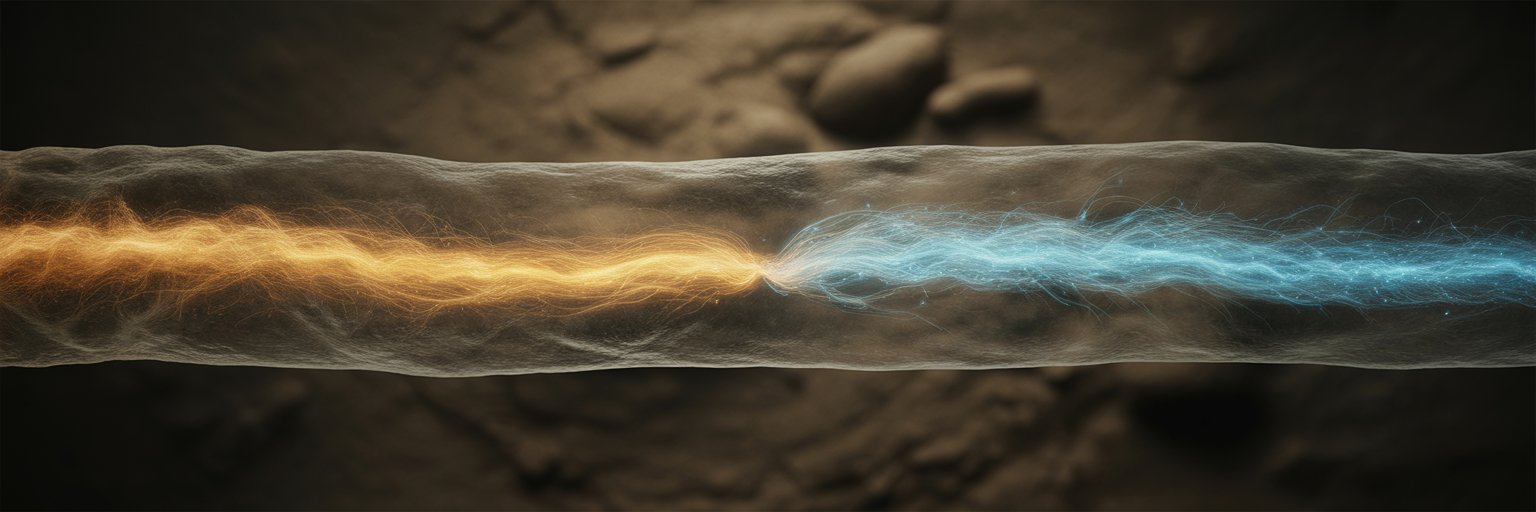
Once the highway is built, it needs to be managed. The fungus doesn’t just build a network for itself; it becomes the operator of the entire forest’s logistics system. It is the Subterranean Transit Authority, and its sprawling network is the answer to the question, what is the wood wide web? It is a living, intelligent grid that moves resources, information, and life itself.
The Original Information Superhighway
Long before humans invented the internet, fungi were running a far more sophisticated network. This web connects the roots of individual trees, sometimes dozens of different species, into a single, cohesive community. It acts as a massive circulatory system for the forest, a biological marketplace where resources are traded and shared for the collective good.
A Two-Lane Nutrient Expressway
The process of mycelium nutrient transport is astonishingly efficient. Scientists have discovered that resources can flow in opposite directions within the same fungal filament, creating a true two-lane expressway. A towering, sun-drenched oak tree can send excess sugars down through the network to feed a shaded sapling struggling for light. In return, that sapling might help the larger tree access a pocket of water or nitrogen its own roots can’t reach. As detailed in research highlighted by National Geographic, these fungal conduits operate like a sophisticated circulatory system, moving resources where they are most needed.
The Forest’s Emergency Broadcast System
Perhaps most unsettling is the network’s role as an information broker. When one tree is attacked by pests, it can send chemical warning signals through the fungal network. Other trees connected to the web receive this “emergency broadcast” and can ramp up their own chemical defenses before the threat even arrives. This interconnectedness is part of a larger world of plant intelligence, where we see phenomena like plants that can control the growth of nearby roots to manage their environment. The fungus isn’t just a passive conduit; it’s the dispatcher, managing the flow of critical intelligence across its vast domain.
Hitchhiker’s Guide to the Fungal Expressway
A highway this extensive is bound to attract some traffic. The fungal network is not just a road; it’s a public transit system with millions of passengers. The fungus itself may be the engineer, but it also plays the role of an unwitting bus driver for a hidden world of microscopic hitchhikers.
The primary passengers are bacteria. For a single-celled organism, navigating the dense, clumpy terrain of soil is like trying to swim through a gravel pit. But the fungal hyphae offer a perfect solution: a smooth, continuous pathway. This isn’t just a colorful metaphor; as documented by Scientific American, scientists have observed bacteria “riding the fungal expressway,” using the thin film of water around hyphae to travel at speeds they could never achieve alone.
This relationship is often mutually beneficial. The bacteria get a free ride to new food sources, and in return, some of them help the fungus by breaking down minerals or defending it from other microbes. The fungal expressway is a bustling corridor of activity, home to a complex and unseen civilization. The different types of “hitchhikers” play various roles in this subterranean society.
- The Commuters (Bacteria): These are the most common passengers, using the hyphae as a superhighway to move through the soil, colonize new territories, and find food.
- The Cargo (Nutrients): Tiny particles of nitrogen, phosphorus, and other essential minerals are transported along the network, sometimes with the help of bacterial partners, feeding both the fungus and its connected plants.
- The Saboteurs (Viruses and Pathogens): Not all passengers are friendly. Some viruses and pathogenic microbes can also use the network to travel, turning the highway into a route for infection to spread through the plant community.
The Architect of an Entire Ecosystem
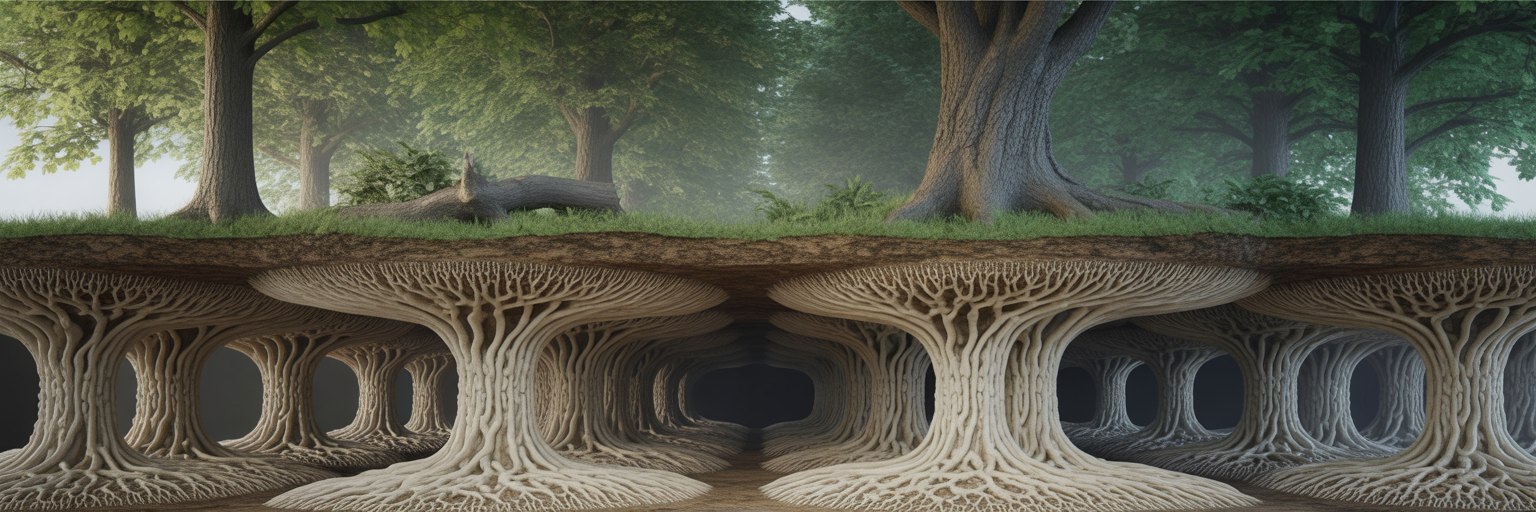
Zooming out, the fungus is more than just an engineer or a transit operator. It is the keystone architect of the entire forest floor ecosystem. Its silent, underground work dictates the health, resilience, and very structure of the world above. The network is not just a part of the ecosystem; in many ways, it designs it.
The Planet’s Carbon Storage Unit
One of its most critical roles is as a planetary climate regulator. As the mycelium grows, it produces compounds that bind soil particles together, creating stable structures that trap enormous amounts of carbon. The fungal network effectively locks carbon deep within the soil, preventing it from being released into the atmosphere. This makes these underground systems one of the most important and overlooked carbon sinks on the planet.
Building a Resilient Community
The interconnectedness created by the what is the wood wide web also builds a more resilient forest. During a drought, trees with deep roots can share water with their shallower neighbors through the fungal network. This community-wide insurance policy helps the entire forest withstand environmental stress. This resilience is reminiscent of other incredible survival mechanisms, like the life forms that can survive being completely dried out for years, showcasing nature’s diverse strategies for endurance.
The Silent Project Manager
Ultimately, the fungus acts as the forest’s project manager. It oversees infrastructure by building and maintaining the network. It manages logistics by controlling the flow of nutrients and water. It handles communications by transmitting warning signals. It orchestrates a complex, collaborative model where the whole is far greater than the sum of its parts, ensuring the long-term stability and productivity of its domain.
The Silent Kingdom Beneath Your Feet
The story of the fungal engineer is mostly one of collaboration and brilliant design. But this silent kingdom has its darker side. Not all fungi are benevolent architects. Some are parasitic, tapping into the network not to share, but to steal. These sinister operators use the highway to drain resources from healthy trees, turning the community grid into a weapon. It adds a chilling twist to the engineer’s persona, a reminder that this powerful system can be used for both creation and destruction.
This hidden world of underground fungal networks is only now being fully appreciated by human science. We are just beginning to learn from this master engineer. Researchers are exploring how to use fungi to clean up pollution in a process called mycoremediation, harnessing their enzymatic toolkit to break down toxins. This approach shows we are learning from nature’s problem-solvers, like the life forms that can feed on plastic waste. Others are growing mycelium into sustainable materials for packaging, textiles, and even building construction.
The fungus is an engineer, an architect, a traffic controller, and a city planner all in one. It is the invisible force that holds the forest together, a testament to an ancient, alien intelligence operating on a timescale we can barely imagine. So the next time you are in the woods, take a moment. Look at a fallen log or a humble mushroom. Understand that you are not looking at decay or something insignificant. You are looking at a gateway, a construction site, a single node in a vast, living system that is silently and ceaselessly engineering the world beneath your feet.