A History of Uncanny Animal Warnings
In 373 B.C., the ancient Greek city of Helice was about to be erased from history. Days before a devastating earthquake and tsunami struck, historical accounts say the city’s rats, snakes, and weasels packed up and fled for safety. This story, passed down for millennia, is one of the earliest records of unusual animal behavior before an earthquake. It’s a pattern that has been observed ever since.
Fast forward to today, and you’ll hear similar stories from pet owners in places like California and the Pacific Northwest. They talk about dogs barking uncontrollably, cats suddenly hiding, or birds falling silent just moments before the ground starts to shake. We’ve all heard these anecdotes. But are they just coincidences we notice after the fact, or do animals possess a genuine early warning system?
For a long time, these observations were dismissed as folklore. Now, science is beginning to provide concrete answers, moving the question from the realm of mystery to one of measurable phenomena. The stories of these animal sentinels are just a few of the fascinating natural events we explore on our blog.
The Seismic Clues Humans Miss
To understand how animals might sense an impending earthquake, we first need to understand the earthquake itself. Think of it like a thunderstorm. You see the lightning flash before you hear the thunder, because light travels faster than sound. Earthquakes work in a similar way, sending out two main types of waves from their epicenter.
The first to arrive are P-waves, or primary waves. They are the “lightning.” These are fast moving, low intensity compression waves that ripple through the ground. Most humans don’t feel them at all. Following them are the S-waves, or secondary waves. They are the “thunder.” Slower but much more powerful, these are the waves that cause the violent shaking we associate with an earthquake.
This time gap between the P-wave and the S-wave is the critical window. While we remain oblivious, many animals can detect that initial, subtle P-wave. The question of can dogs sense earthquakes finds a partial answer here. With their paws on the ground, they are far more sensitive to faint vibrations than we are. But it’s not just about feeling. Shifting tectonic plates also generate infrasound, a low frequency noise below the range of human hearing. Animals like elephants and pigeons, which use these frequencies to communicate, are naturally tuned in to these seismic whispers. Some creatures possess truly extraordinary acoustic abilities, like the lyrebirds we’ve written about that can mimic chainsaws and camera shutters.
| Seismic Wave Type | Characteristics | What Animals Detect | What Humans Typically Feel |
|---|---|---|---|
| P-Wave (Primary) | Fast-moving, compressional, low-intensity | Subtle ground vibrations, low-frequency sounds (infrasound) | Usually nothing, or a slight jolt if very close to the epicenter |
| S-Wave (Secondary) | Slower, high-amplitude, shear wave | The same intense shaking humans feel | The strong, rolling, or jolting motion of the earthquake |
| Surface Waves | Slowest, travels along the surface | The same intense shaking humans feel | The most destructive and prolonged shaking |
Note: This table illustrates the sequence of seismic waves and highlights the P-wave as the key early warning signal that sensitive animals can perceive before the more destructive S-waves and surface waves arrive.
Sensing Changes in the Air and Water
Beyond the ground vibrations discussed earlier, the science of animal earthquake warnings points to other, even more subtle environmental changes. The immense stress on rocks deep within the Earth’s crust before a quake can trigger a cascade of chemical and electrical shifts that many animals are equipped to notice.
One leading theory involves electromagnetic fields. The intense pressure on quartz-bearing rocks can generate localized electrical currents, altering the Earth’s magnetic field in the immediate area. For animals that rely on this field for navigation, like migratory birds and even some insects, such a disturbance could be profoundly disorienting, causing them to act erratically.
Tectonic stress also forces gases trapped underground to escape. This can lead to a variety of subtle environmental signals that sensitive animals might detect:
- Electromagnetic Fluctuations: Changes in the local magnetic field caused by rock stress.
- Radon Gas Release: Increased concentrations of radon gas in the air near fault lines.
- Groundwater Chemistry: Alterations in the chemical composition of ponds and wells.
- Air Ionization: A positive charge in the air that can cause mild physical symptoms.
Animals with a superior sense of smell could easily detect the release of gases like radon. Similarly, aquatic life might react to sudden changes in water chemistry. This could explain a famous 2009 incident in L’Aquila, Italy, where a colony of toads abandoned their pond days before a major earthquake. This sensitivity is an incredible biological adaptation, much like the frog that can freeze solid and thaw back to life.
What Modern Research Reveals

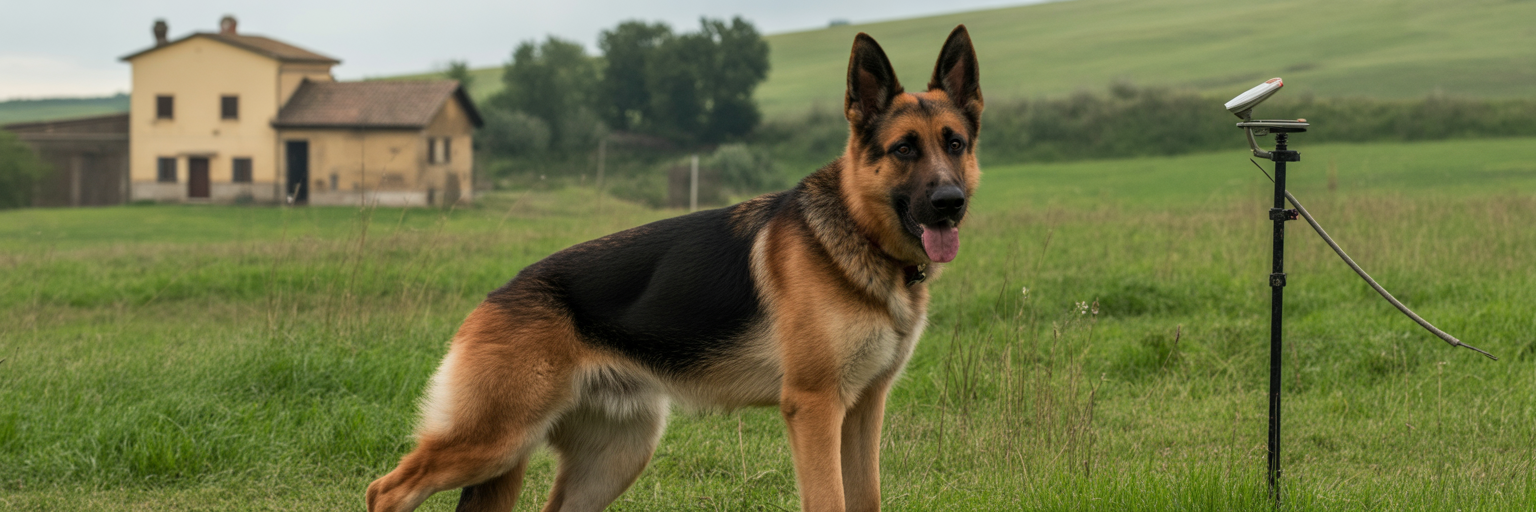
While theories about P-waves and chemical changes are compelling, scientists have been working to gather concrete data on earthquake animal behavior. A landmark study by researchers at the Max Planck Institute of Animal Behavior moved the conversation forward significantly. In an earthquake-prone region of Italy, they attached bio-loggers, essentially sophisticated activity trackers, to a group of cows, sheep, and dogs on a farm.
The results were remarkable. As Phys.org reported on the study, the data showed the animals became unusually hyperactive for extended periods, sometimes up to 20 hours before an earthquake struck. This behavior was statistically significant and more pronounced the closer the animals were to the epicenter of the impending quake. For the first time, there was a clear, measurable pattern linking animal activity to a future seismic event.
However, it’s important to maintain a balanced perspective. Scientists are quick to point out that correlation does not equal causation. An animal might become agitated for countless reasons, from a nearby predator to a change in the weather. The primary challenge is filtering out this “behavioral noise” to isolate a true pre-seismic signal. Can we definitively say an animal is reacting to an earthquake precursor and not something else? Until researchers can develop a model that reliably distinguishes between these triggers, a dependable animal-based forecasting system remains just out of reach.
The Future of Earthquake Forecasting
So, where does this leave us? The scientific consensus is clear: animals can and do sense earthquake precursors that are completely imperceptible to humans. Their behavior, however, is currently too variable and poorly understood to serve as a standalone prediction tool. You shouldn’t pack an emergency kit just because your cat is hiding under the bed.
The future of how animals predict earthquakes likely lies in a collaboration between biology and technology. Imagine integrated early warning systems that combine data from traditional seismographs with large-scale animal behavior monitoring. The goal isn’t to rely on a single pet’s strange behavior, but to use technology to detect collective, anomalous patterns across thousands of animals, both wild and domestic, in a given region. Such a system could flag a high probability event with more lead time than ever before.
For now, your pet will not replace official warnings from agencies like the USGS. But their heightened senses are a powerful reminder of nature’s incredible intricacies. This growing understanding is what drives innovation, pushing us toward creating faster, more effective warning systems for everyone. If you’re fascinated by these abilities, you can explore more incredible stories about the natural world right here on Nature is Crazy.