The Frontiers of Biological Repair
The human brain is a marvel of complexity, capable of rewiring itself through a process called neuroplasticity. This allows us to learn new skills and form memories by creating new connections between neurons. However, when it comes to significant physical damage from trauma or disease, our brains have a very limited ability to repair themselves. We cannot regrow entire sections of lost tissue. This limitation makes the study of animals that can grow new brains a profound area of scientific inquiry.
In stark contrast to mammals, a select few species possess the extraordinary ability to regenerate parts of their central nervous system, including the brain itself. This raises fundamental questions: Which animals hold this biological secret? What are the cellular mechanisms that permit such a feat? And perhaps most intriguingly, does a regenerated brain retain its original functions and memories? Exploring the science of brain regeneration in animals offers a window into one of nature’s most remarkable repair systems.
The Axolotl’s Remarkable Neural Blueprint
Among vertebrates, the axolotl stands out for its unparalleled regenerative capabilities. This aquatic salamander can regrow entire limbs, portions of its heart, and even large sections of its brain with near perfect precision. This ability is not just a fascinating biological curiosity; it represents one of the many innovations of modern science that researchers are studying to understand the fundamentals of tissue repair.
A Vertebrate with Unmatched Regenerative Skill
When an axolotl’s brain is injured, it can regenerate complex regions like the telencephalon, which is functionally analogous to the human cerebrum. This part of the brain is responsible for processing sensory information and coordinating complex behaviors. Unlike mammals, where such an injury would lead to permanent functional loss and scarring, the axolotl initiates a process of complete reconstruction. This remarkable example of axolotl brain regeneration demonstrates a biological blueprint that has been largely lost in mammalian evolution.
The Cellular Machinery of Reconstruction
The axolotl’s secret lies in a population of neural stem cells that remain active throughout its life. When the brain sustains damage, these cells are triggered to rebuild what was lost. This process is not a haphazard patch job but a highly orchestrated sequence of events that restores the original architecture.
- Injury Detection and Signaling: The initial injury triggers a cascade of molecular signals that alert resident stem cells to the damage.
- Activation and Proliferation: These stem cells begin to multiply rapidly, creating a pool of new cells ready for deployment.
- Differentiation: The new cells then differentiate into the specific types of neurons that were lost, ensuring the correct cellular diversity is restored.
- Integration: Finally, these new neurons migrate to their correct locations and form functional connections, or synapses, with existing cells, seamlessly integrating into the neural network.
Restoring Function and Recovering Memories

Regrowing tissue is one thing, but ensuring it functions correctly is another challenge entirely. Scientific studies on how animals regrow brain tissue have shown that the newly generated neurons in an axolotl’s brain successfully integrate into existing circuits. They form synapses and communicate effectively, restoring lost neurological function over time. This functional recovery is the true hallmark of successful regeneration.
The most compelling question is whether memories can survive this process. Research published in eLife has shown that adult axolotls can regenerate the original diversity of neurons in the pallium, a region analogous to parts of the mammalian cortex, after mechanical injury. Experiments have demonstrated that axolotls can retain learned behaviors even after significant portions of their brains are removed and allowed to regrow. This suggests that memories are either stored in a distributed manner across different brain regions or that the new tissue is somehow able to re-encode or access these stored memories. The process is a testament to a system that prioritizes not just structural but also functional restoration.
| Recovery Stage | Structural Process | Observed Functional Outcome |
|---|---|---|
| Immediate Post-Injury (Days 1-7) | Inflammatory response and activation of neural stem cells. | Initial loss of specific functions related to the damaged area. |
| Mid-Regeneration (Weeks 2-5) | Proliferation and migration of new neurons. | Gradual return of basic motor and sensory responses. |
| Late Regeneration (Weeks 5-12) | Differentiation and integration of neurons into circuits. | Re-establishment of complex learned behaviors. |
| Full Recovery (3+ Months) | Maturation of new neural circuits and pruning of connections. | Complete restoration of function, including retained memories. |
This table outlines the timeline of structural and functional recovery post-injury, based on observations in scientific studies of axolotl brain regeneration. The timeline can vary based on the extent of the injury and the age of the animal.
Beyond Amphibians: Other Masters of Regeneration
The axolotl is not alone in its regenerative prowess. Other animals, from fish to simple flatworms, also possess remarkable abilities to repair their nervous systems. Scientists use these organisms as models to understand the diverse strategies nature has developed for reconstruction, providing a wealth of information for our category page about technological and scientific innovations.
The Zebrafish Model
The zebrafish is another powerful vertebrate model for studying brain repair. Unlike the axolotl, which relies on a persistent population of stem cells, the zebrafish brain uses a different strategy. It reactivates dormant developmental pathways to generate new neurons, a process that is largely silenced in adult mammals. This capacity for zebrafish brain repair persists throughout its life, allowing it to recover from various types of brain injury. This model helps researchers understand how latent regenerative programs might be reawakened.
Simpler Systems, Total Reconstruction
Moving to simpler organisms, the planarian flatworm displays one of the most extreme forms of regeneration. These small invertebrates can regrow their entire body, including a simple brain and central nervous system, from just a tiny fragment of tissue. While their nervous system is far less complex than a vertebrate’s, their ability to reconstruct a functional brain from scratch provides fundamental insights into the genetic blueprints that guide body and organ formation.
- Axolotl: Regenerates specific, complex brain regions (e.g., telencephalon) using a persistent population of neural stem cells.
- Zebrafish: Repairs brain damage throughout its life by reactivating dormant neurogenic pathways typically used only during development.
- Planarian Flatworm: Exhibits whole-body regeneration, capable of regrowing its entire simple brain (cephalic ganglia) from a small tissue fragment.
Lessons for Human Neuroscience
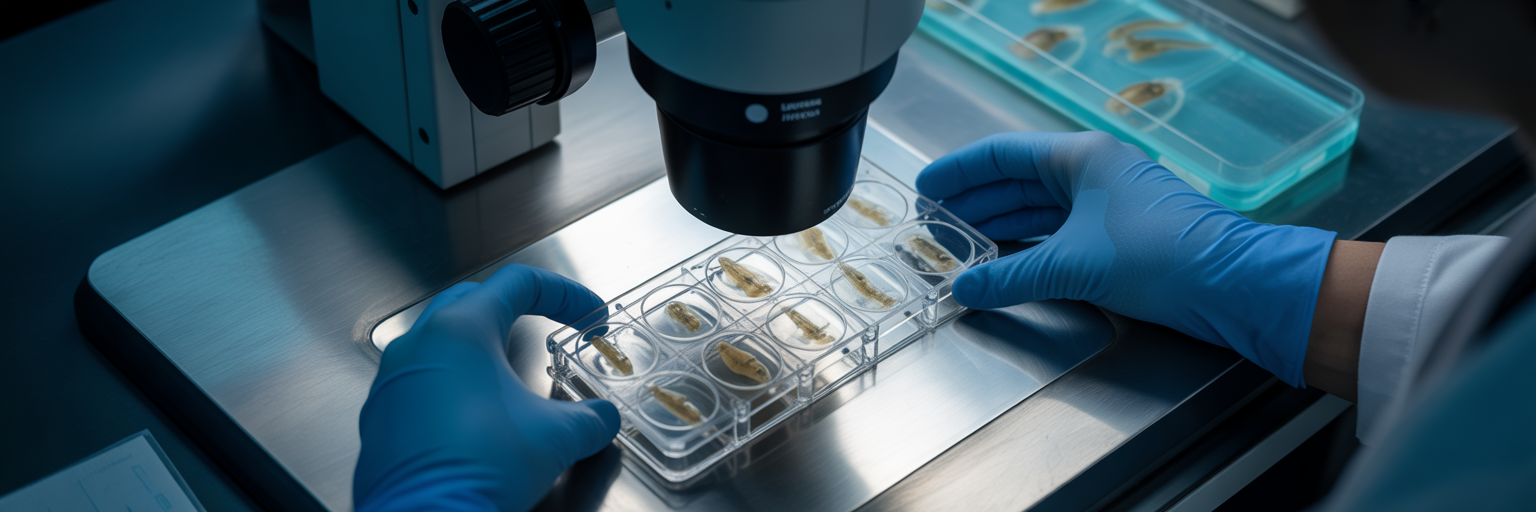
So, why do humans lack this incredible ability? The answer likely lies in an evolutionary trade-off. Mammalian brains evolved for stability to support complex cognition, long-term memory, and consciousness. Our immune response to injury prioritizes quickly sealing off damage by forming a glial scar. While this prevents infection and further damage, it also creates a physical and chemical barrier that inhibits neuronal regrowth.
The goal of neural regeneration science is not to find a way to regrow entire human brains. Instead, researchers aim to understand the genetic and molecular triggers these animals use to initiate repair. As researchers at Columbia University’s Zuckerman Institute have explored, understanding the dormant mechanisms in humans that are active in zebrafish could one day help repair our own brains. The long-term vision is to translate this knowledge into therapies that could, for example, stimulate neuron replacement in patients with neurodegenerative diseases like Parkinson’s or help restore function after a stroke or traumatic brain injury. By studying these masters of regeneration, we may one day learn to better heal ourselves. To discover more stories like this, you can explore everything Nature Is Crazy has to offer.