Beyond Healing: Nature’s Blueprint for Superior Skin
Most of us have a scar. It might be from a childhood fall or a minor surgery, but it serves as a permanent reminder that our body’s repair work is functional, not perfect. Human skin patches itself up, leaving behind a mark that is weaker and less complex than the original tissue. But what if healing didn’t just fix the damage? What if it resulted in tissue that was identical, or even superior, to what was lost?
This isn’t science fiction. It’s a reality for a select group of animals that regenerate skin with incredible fidelity. The African spiny mouse, for example, can shed large patches of its skin to escape a predator and regrow it completely, without a single scar. This remarkable ability challenges our understanding of what healing can be. In this article, we will identify these amazing creatures, explore the science behind their perfect regeneration, and consider what it could mean for human health. For a broader look at nature’s incredible feats, you can explore more stories on our blog.
A Mammal That Sheds and Rebuilds Its Skin
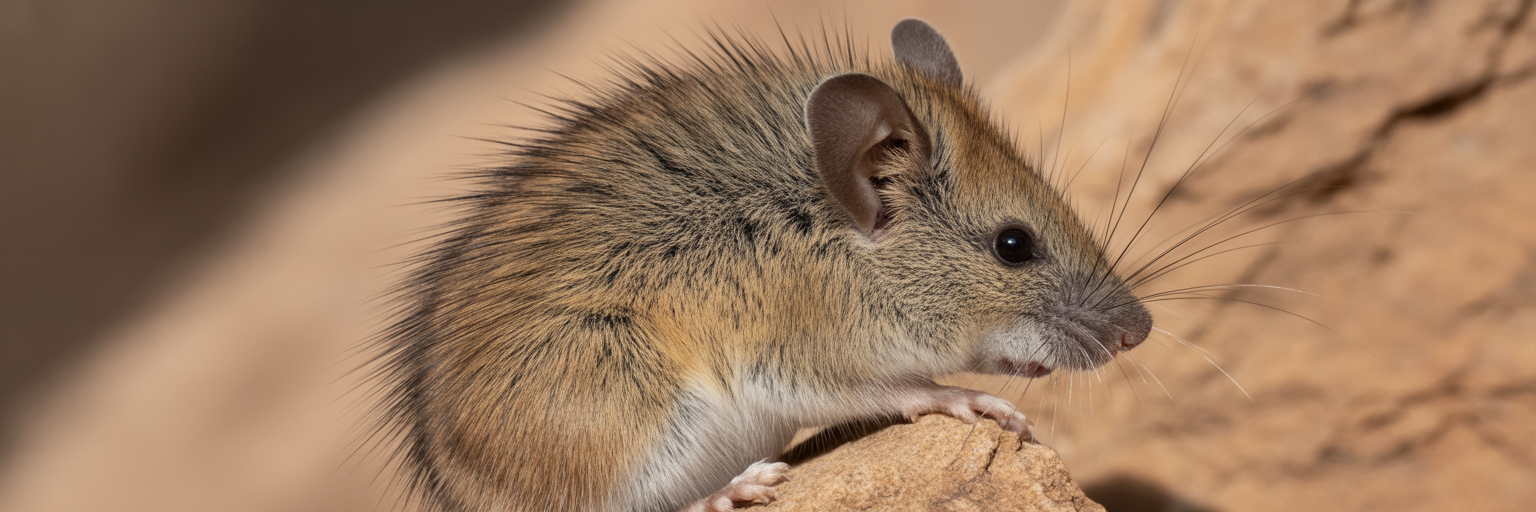
When we think of regeneration, salamanders and starfish often come to mind. But the African spiny mouse (*Acomys*) brings this phenomenon much closer to home. This small rodent possesses a startling defense mechanism known as autotomy, or self-amputation. When caught by a predator, it can release huge portions of its skin, literally slipping away and leaving the attacker with nothing but a handful of fur and flesh.
What happens next is the truly astonishing part. Instead of forming a tight, puckered scar, the spiny mouse’s body initiates a complete rebuilding process. The spiny mouse skin regeneration is not a simple patch job. It methodically reconstructs every layer of the lost tissue, including new hair follicles, sweat glands, fur, and even cartilage. The new skin is indistinguishable from the original, restoring full function and appearance.
The fact that this occurs in a mammal is what makes it so significant. Our genetic makeup is far more similar to a mouse than to a lizard. This creature’s ability to heal perfectly suggests that the genetic toolkit for advanced regeneration might not be entirely lost in mammals, just dormant. This incredible survival strategy is one of many in the animal kingdom, much like the frog that can freeze solid and return to life.
The Molecular Toolkit for Perfect Regeneration
The difference between a scar and perfect regeneration comes down to a conversation happening between cells at the wound site. In humans, the conversation is a panicked shout. In regenerative animals, it’s a calm, coordinated effort. Understanding this difference is the key to unlocking the science of scarless healing.
The Human Response: A Rush to Scar
When you get a cut, your body’s main priority is to close the gap as quickly as possible to prevent infection. Fibroblast cells rush to the scene like frantic construction workers. They sense the physical tension of the wound, a process called mechanotransduction, and respond by rapidly spinning a dense, disorganized web of collagen. This quick patch is what we know as a scar. It’s strong enough to hold things together, but it lacks the sophisticated architecture of healthy skin.
The Regenerative Alternative: Rebuilding the Blueprint
Regenerative animals manage this process differently. Their fibroblasts operate in a low-tension environment, allowing them to behave more like architects than emergency patchers. A key molecular switch in this process is a protein called Focal Adhesion Kinase (FAK). By down-regulating FAK, these animals reduce the mechanical stress signals that fibroblasts receive. As a 2021 study in Nature Communications highlights, disrupting these cellular force sensors can guide cells away from scarring and toward regeneration.
This changes the entire behavior of the fibroblasts:
- Scar-forming fibroblasts: Act under high tension, rapidly depositing disorganized collagen to form a patch.
- Regenerative fibroblasts: Operate in a low-tension environment, methodically rebuilding the tissue’s original matrix.
Other animals, like the axolotl, use different molecular tools such as the regulator SALL4 to precisely control collagen production, ensuring a perfect rebuild every time. These cellular-level wonders are a common theme in nature, much like the jellyfish that can reverse its own aging process.
The Evolutionary Trade-Off in Human Healing

If some animals can heal perfectly, why are humans stuck with scars? The answer lies in an evolutionary trade-off where our ancestors prioritized speed over perfection. For early humans living in environments teeming with pathogens, an open wound was a death sentence. The body’s primary directive became to seal any breach immediately to prevent blood loss and lethal infection. A scar was simply the price paid for survival.
The spiny mouse, in contrast, faced a different set of evolutionary pressures. Its ability to shed skin was a direct response to predation. The risk of a lingering infection was secondary to the immediate threat of being eaten. This fundamental difference in survival strategy shaped two very different healing pathways. This deep-seated programming is why figuring out how to improve skin regeneration in humans is so challenging. We are working against a system hardwired for rapid, imperfect repairs. Such evolutionary pressures can create truly bizarre outcomes, much like the parasite that effectively zombifies snails for its own benefit.
| Factor | Human Healing (Fibrotic) | Animal Healing (Regenerative) |
|---|---|---|
| Primary Goal | Speed and Survival | Perfection and Function |
| Process Priority | Rapidly seal the wound to prevent infection | Methodically rebuild original tissue structure |
| Cellular Behavior | Fibroblasts create a dense collagen scar | Fibroblasts and stem cells coordinate to recreate tissue |
| Final Outcome | Functional but inferior scar tissue | Complete restoration of original tissue |
| Evolutionary Driver | High risk of infection and predation | Specific environmental pressures (e.g., predator escape) |
This table summarizes the fundamental differences in evolutionary priorities that led to two distinct healing pathways in nature.
Harnessing Regeneration for Future Therapies
The remarkable healing abilities of animals like the spiny mouse are more than just a biological curiosity. They provide a biological roadmap that could transform human medicine. By understanding the molecular signals that guide scarless healing, scientists can develop therapies that encourage our own bodies to rebuild rather than just repair. This is the promising future of regenerative medicine.
Imagine a gel or a bandage that, when applied to a wound, temporarily inhibits FAK activity. This could instruct fibroblasts to slow down and reconstruct the tissue correctly, dramatically reducing scarring. The potential applications are vast and could address significant medical challenges.
Potential therapeutic goals include:
- Minimizing scar formation after surgery, improving both cosmetic outcomes and tissue flexibility.
- Regenerating functional skin for burn victims, complete with glands and nerve endings.
- Treating chronic wounds, such as diabetic ulcers, that currently fail to heal properly.
The ultimate objective is not just cosmetic but deeply functional. Restoring skin with all its complex components would mean restoring a patient’s quality of life. While we are not on the verge of regrowing limbs, this research represents a critical step toward helping the human body heal itself more completely. The entire field of biology is full of such wonders, and you can explore more at NatureIsCrazy.com.