The Body’s Hidden Memory Banks
Most of us learned that the hippocampus is the brain’s memory hub, a seahorse-shaped structure responsible for logging our experiences. But what if that’s not the entire story? What if our bodies have other ways of holding on to information, completely independent of the brain?
Scientists are exploring a concept called extracerebral memory, which refers to information stored in our body’s tissues and molecules, not just within its network of neurons. This isn’t about muscle memory from practicing a golf swing. It’s about the possibility that our cells themselves can retain learned information. This idea suggests an alternative memory storage system that could fundamentally change how we view biology.
While it sounds like science fiction, clues are emerging from some of the simplest organisms on Earth. These creatures are challenging the long-held belief that memory is exclusive to the brain, opening a fascinating new chapter in our understanding of life itself.
The Regenerating Memories of Flatworms
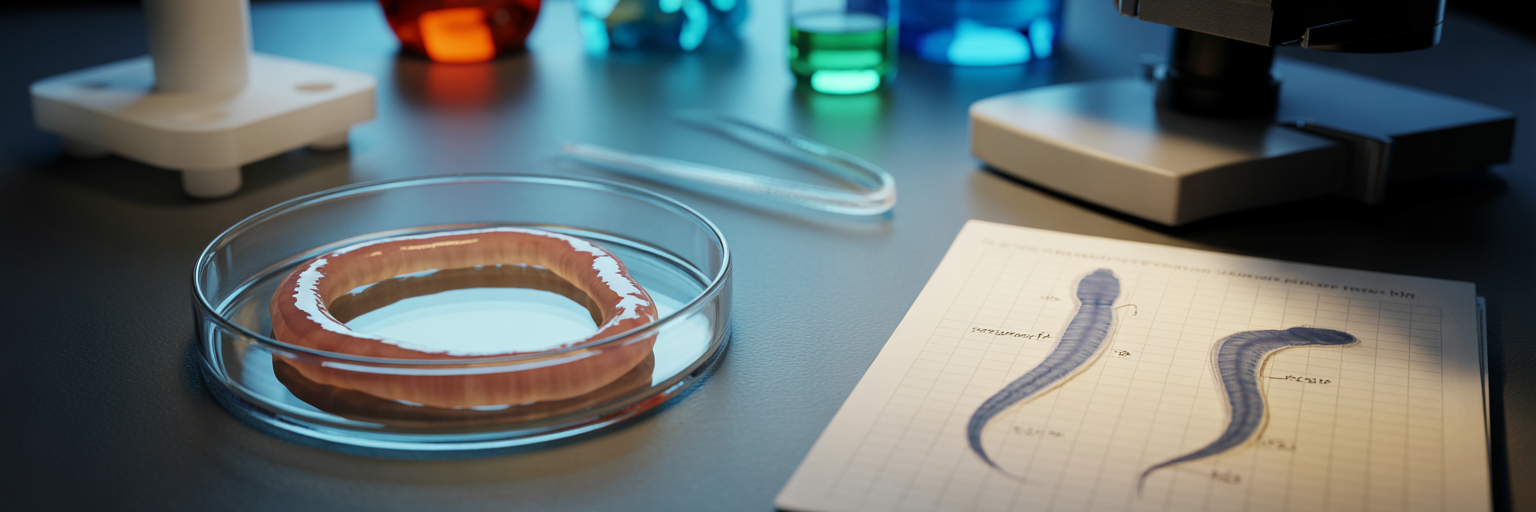
The first startling piece of evidence for memory outside the brain comes from a humble creature: the planarian flatworm. These worms have an incredible ability to regenerate, and scientists used this trait to conduct a mind-bending experiment.
- First, they trained the flatworms, conditioning them to associate a bright light with an unpleasant stimulus, causing them to recoil.
- Next came the critical step: they decapitated the trained worms, which then regenerated entirely new heads and brains over a couple of weeks.
- Here is the astonishing part. When the regenerated worms were exposed to the light again, they recoiled, remembering the training despite having brand-new brains.
This demonstration of planarian memory regeneration strongly implies that the memory wasn’t just in the original brain. It must have been stored elsewhere in the body’s tissues and was then imprinted onto the newly formed brain. This discovery shows that nature is full of surprises, much like other incredible creatures such as the frog that freezes solid and thaws back to life.
Transferring Memories with Snail RNA
Building on the flatworm findings, a landmark experiment with sea snails at UCLA introduced a different mechanism for non-neural memory: molecular transfer. Researchers sensitized one group of snails by giving them mild electric shocks, training them to have a longer defensive withdrawal reflex.
Then, they extracted RNA, a type of molecular messenger that carries instructions from DNA, from the nervous systems of these trained snails. This RNA was injected into a second group of snails that had never been shocked. Incredibly, the recipient snails began behaving as if they, too, had been sensitized, exhibiting the same prolonged defensive reflex. This was a clear case of snail memory transfer RNA at work. According to a report in Scientific American, this experiment directly challenges the standard theory of how memory works. This finding is as bizarre as other phenomena in the invertebrate world, such as the parasite that turns snails into zombies.
Comparing Memory Storage Models
| Aspect | Traditional Synaptic Model | Emerging Molecular Model |
|---|---|---|
| Storage Location | Strength of connections between neurons (synapses) | Molecules like RNA within cells |
| Mechanism | Changes in synaptic plasticity and neural circuits | Epigenetic changes or encoding in molecules |
| Persistence | Dependent on stable neural structures | Can potentially survive tissue regeneration or be transferred |
| Example Organism | Humans, mammals | Planarians, sea snails |
This table contrasts the established brain-centric model of memory with the molecular theory suggested by the snail and flatworm research. It highlights the fundamental differences in where and how information might be stored.
The Distributed Intelligence of Slime Molds
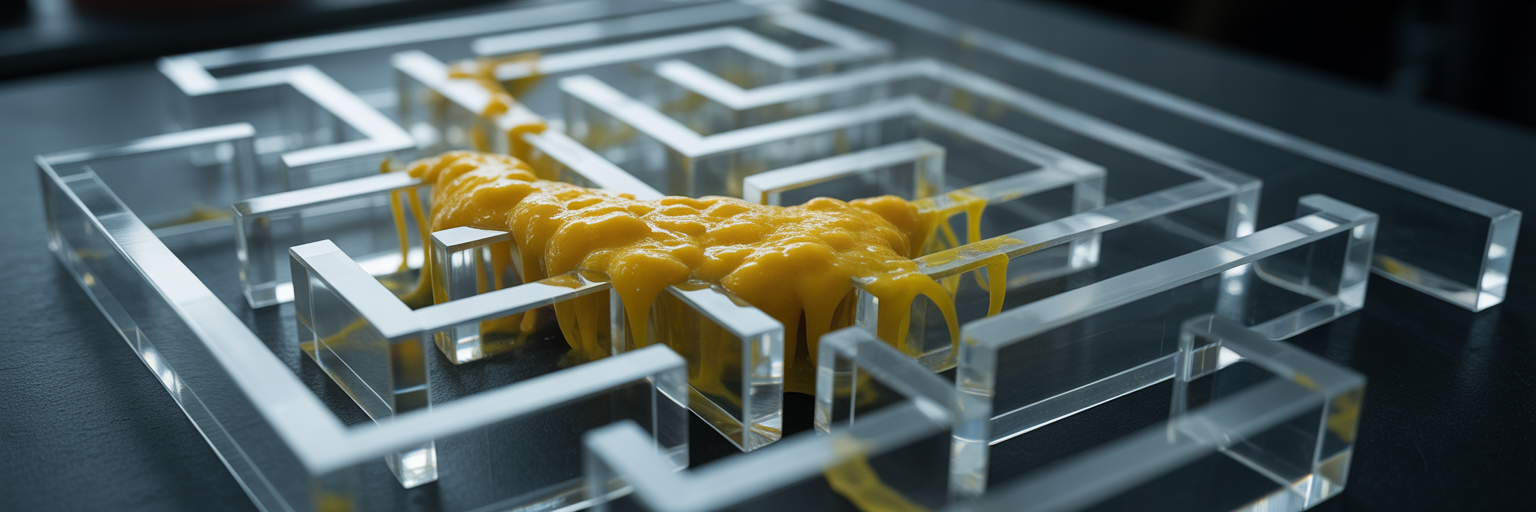
The previous examples showed memory stored inside the body. But what if memory could exist outside the organism entirely? Enter the slime mold, a single-celled organism with no brain or nervous system. Despite its simplicity, it displays a remarkable ability to solve complex problems, like navigating a maze to find food.
How does it do it? The slime mold leaves a trail of non-living slime as it explores. This trail acts as an external memory. When the organism encounters its own slime, it knows it has been there before and avoids that path, preventing it from getting stuck in dead ends. This allows it to find the most efficient route. This form of problem-solving is sometimes called an “extended mind,” where cognitive tasks are offloaded onto the environment. The slime mold intelligence shows that memory doesn’t even have to be internal. This is another example of how the natural world constantly pushes the boundaries of what we think is possible, a theme explored across our blog.
Proteins as the Architects of Memory
So, if memories can exist in tissues and molecules, how are they physically recorded? The answer may lie with a surprising candidate: amyloid proteins. When you hear “amyloid,” you probably think of Alzheimer’s disease, where amyloid plaques are associated with cognitive decline. However, that’s only part of the story.
It turns out that some forms of these proteins can create incredibly stable, self-perpetuating structures, similar to prions. Scientists now propose that these functional amyloids could act as the “ink” for writing long-term memories into our tissues. These protein-based structures could provide a durable physical format for memory outside the brain, explaining how information could survive decapitation in a flatworm or be encoded in molecules like RNA. This research reframes these proteins from being purely destructive agents to potentially essential components of a biological memory system that we are only just beginning to understand. It’s a powerful reminder that in biology, context is everything.
New Frontiers for Human Memory and Health
This research into non-neural memory systems is more than just a biological curiosity. It has profound implications for human health, particularly for treating neurodegenerative diseases like Alzheimer’s. If memory is not exclusively confined to the brain’s synapses, it opens up entirely new avenues for therapy that were once unimaginable.
Imagine a future where we could combat memory loss with treatments that target the entire body, not just the brain. As noted in an Aeon article, studying these complex memory systems in animals could help us find new ways to address Alzheimer’s. Potential future applications might include:
- RNA-based therapies designed to deliver or replenish memory-encoding molecules that have been lost to disease.
- Treatments that stimulate the body’s own tissue-based memory storage mechanisms to compensate for failing cognitive functions.
- New diagnostic tools that can detect memory-related molecular markers in the blood or other tissues, allowing for much earlier diagnosis.
The humble flatworm, snail, and slime mold are not just oddities. They are pioneers, providing a revolutionary roadmap for understanding, and perhaps one day healing, the human mind. For more amazing stories from the natural world, visit Nature Is Crazy.