In the relentless calculus of survival, most organisms fight to preserve their own life at all costs. Every instinct, from the faintest chemical signal to the most complex neural pathway, is fine tuned for self preservation. Yet, evolution has also produced a far more unsettling strategy, where self destruction becomes the ultimate act of preservation. This is the world of animals that explode on purpose, a realm where the individual body is weaponized in a final, desperate act to protect the greater whole.
An Introduction to Autothysis
The scientific term for this phenomenon is autothysis, which translates literally to “self sacrifice.” It is the biological process of an animal deliberately rupturing its own body to release a defensive substance. This is not an accident or a system failure. It is a pre programmed, suicidal defense mechanism, a biological last resort hardwired into the organism’s DNA. These are animals that explode on purpose, deploying their own bodies as living ordnance when a threat becomes insurmountable.
This behavior is a prime example of what biologists call suicidal altruism. In this grim strategy, an individual sacrifices its life to protect its relatives, thereby ensuring the survival of their shared genes. This concept is most common in eusocial insects like ants and termites, where the colony functions as a single superorganism. Individual workers are often sterile and share a high degree of genetic material with their nestmates and, most importantly, their queen. From a genetic perspective, the death of one worker is a small price to pay for the survival of the entire colony, which is the true reproductive entity.
Autothysis in insects is a form of biological warfare, a grim but effective strategy honed over millions of years. The animal’s body becomes a delivery system for chemical agents, sticky traps, or corrosive compounds designed to neutralize a threat far larger than itself. It is a testament to the cold, mathematical logic of natural selection, where the survival of the gene pool is paramount, even if it requires the individual to become a bomb.
Case Study: The Exploding Ants of Borneo
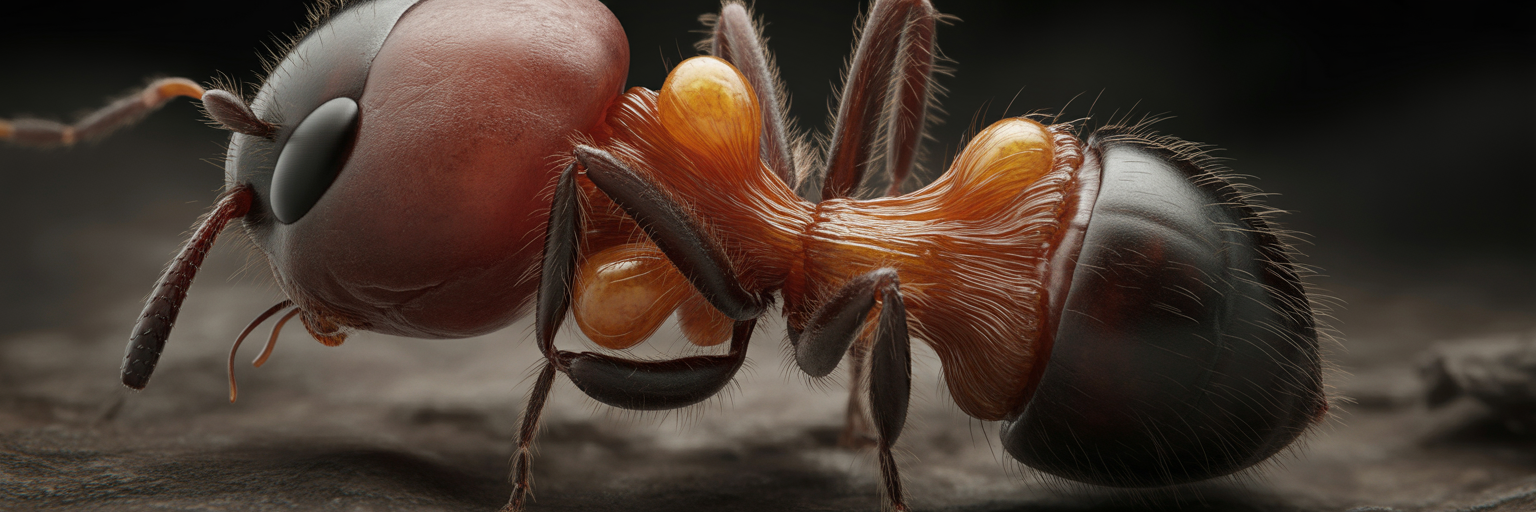
Deep in the rainforests of Borneo lives a species of ant that embodies this extreme defense. Officially named in 2018, Colobopsis explodens carries a name that perfectly describes its signature move. As a National Geographic report highlighted, its discovery brought the bizarre world of exploding ants into sharp focus. These ants are a chilling example of a highly specialized, suicidal defense mechanism.
The Anatomy of a Living Bomb
The key to this ant’s explosive capability lies within its anatomy. A specialized caste of minor workers possesses a pair of enormously oversized mandibular glands. Unlike the small glands found in most ants, these run the entire length of the ant’s body, from its head to the tip of its abdomen. These glands are filled with a toxic, sticky secretion. When faced with an inescapable threat, such as a predatory spider or a rival ant colony, the worker ant initiates a violent, final act. It angles its abdomen toward the enemy and contracts its abdominal muscles with such force that its own body wall tears apart. This internal pressure ruptures the massive glands, causing the ant to explode and spray its toxic payload in all directions.
The Toxic Payload
The substance released during this suicidal act is a bright yellow goo that is both a chemical weapon and a physical trap. It has a distinct, pungent odor sometimes described as spice like or curry like. The primary purpose of this secretion is to incapacitate the attacker immediately. Its effects are multifaceted and devastating to other insects.
- Entanglement: The goo is incredibly sticky, instantly trapping the predator’s limbs, antennae, and mouthparts. An attacking spider can become hopelessly ensnared, unable to move or continue its assault.
- Chemical Irritant: Beyond its stickiness, the secretion is a powerful irritant. It causes pain and discomfort, often forcing a predator to abandon its attack and focus on trying to clean the noxious substance off itself.
- Corrosive Properties: The chemical cocktail can also have corrosive properties, capable of chemically burning the attacker’s exoskeleton or delicate sensory organs.
This remarkable ability is reserved for the sterile worker ants. Their sacrifice is a direct expression of suicidal altruism. By dying in such a spectacular fashion, a single ant can neutralize a threat that might otherwise harm the nest, protecting the queen and the next generation of its sisters. It is a clear example of how, in a superorganism, the individual is truly disposable for the good of the colony.
Termites with Explosive Backpacks
While exploding ants rely on internal pressure, some termite species have evolved a different, yet equally fatal, form of autothysis. The termite *Neocapritermes taracua*, found in the rainforests of French Guiana, showcases a defense mechanism that combines external chemistry with a chillingly efficient, age based division of labor.
An External Chemical Reaction
Older workers of this species develop what can only be described as explosive backpacks. As they age, they grow blue copper containing protein crystals on the outer surface of their abdomens. These crystals are stored in two external pouches. This is only one half of the weapon. The other half is a reactive secretion produced in their salivary glands. When the termite is attacked, typically by another termite, its body is ruptured. This rupture mixes the external blue crystals with the internal salivary secretions. The result is a new, highly toxic substance that quickly paralyzes and kills the enemy. This two part chemical system is distinct from the exploding ant’s strategy, which deploys a pre mixed toxin. The termite becomes a living chemical munitions factory, mixing its lethal payload only at the moment of its death.
The Age-Based Division of Labor
What makes this termite defense mechanism particularly unsettling is that only the older termites develop these crystals. As termites age, their mandibles become worn down from a lifetime of chewing wood. Their ability to forage and contribute to the colony’s daily work diminishes. Instead of becoming a drain on resources, evolution has repurposed them. They become the colony’s designated suicide bombers. This age based caste system is brutally efficient. The colony weaponizes its least productive members, turning the elderly into a first line of defense. It is a perfect example of resource management within a superorganism, where the value of an individual is measured solely by its utility to the colony, even in death.
Controlled Detonations of the Bombardier Beetle
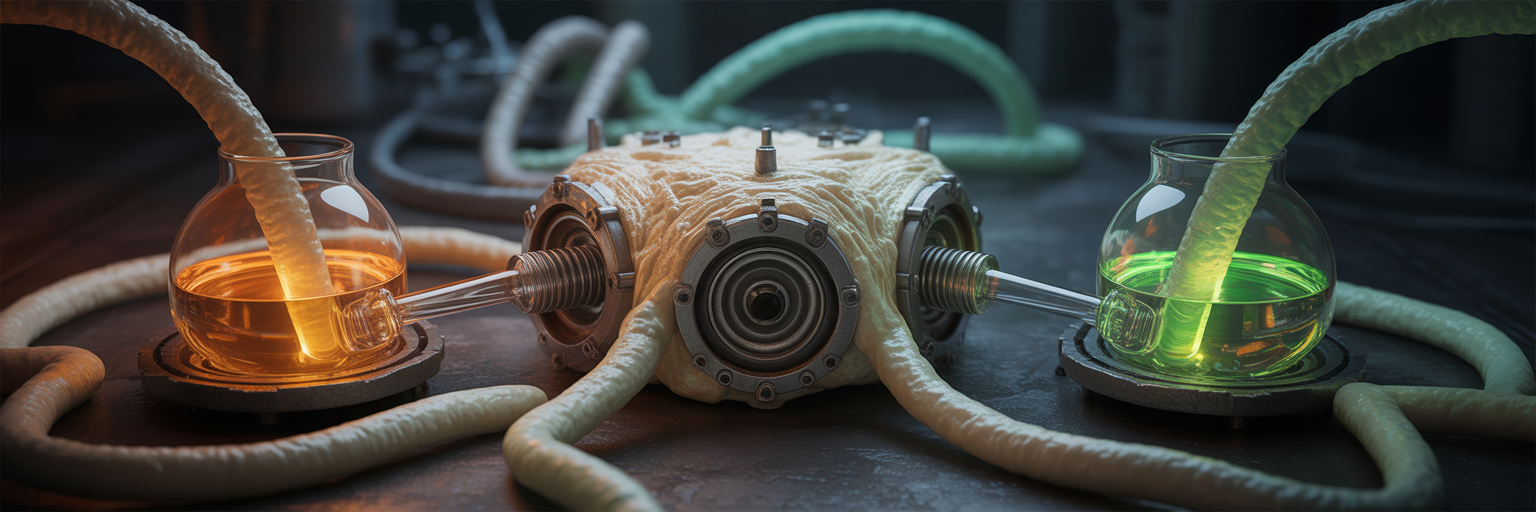
Not all explosive defenses are suicidal. The Bombardier Beetle offers a stunning example of a highly evolved, reusable chemical weapon that sets it apart from the self sacrificing social insects. This creature has mastered a controlled detonation that is one of the most sophisticated defenses in the animal kingdom.
The beetle’s abdomen houses a complex chemical cannon. It has two separate internal reservoirs that store different chemicals: hydroquinone and hydrogen peroxide. When threatened, the beetle does not rupture its body. Instead, it releases these chemicals into a thick walled, reinforced reaction chamber lined with enzymes. This triggers a violent, explosive chemical reaction.
- Mixing: The beetle contracts specific muscles to move the two chemicals from their storage sacs into the reaction chamber.
- Catalysis: Enzymes in the chamber, catalase and peroxidase, act as catalysts. They rapidly break down the hydrogen peroxide and oxidize the hydroquinone.
- Explosion: The reaction is exothermic, generating immense heat and pressure in a fraction of a second. The mixture heats to nearly 100°C, the boiling point of water.
- Ejection: This pressure violently expels a hot, caustic spray from its abdomen with an audible “pop.”
This weapon is remarkable for its control and precision. The beetle can aim the turret at the tip of its abdomen in a 270 degree arc, firing on predators like frogs, birds, and ants with incredible accuracy. As the Natural History Museum describes, this bombardier beetle chemical defense is a “caustic chemical cannon” that can be fired in rapid pulses. This reusable, highly effective weapon demonstrates a different evolutionary path. For a solitary insect, its own life is too valuable to sacrifice, so its defense must be powerful but non lethal to itself.
The Evolutionary Logic of Self-Destruction
This brings us to the central question: why is self destruction a successful survival strategy? The answer lies in the concept of inclusive fitness. An organism’s evolutionary success is not measured solely by its own survival and reproduction, but by the survival of its genes, which are also carried by its relatives. For social insects, this principle is everything.
In an ant or termite colony, sterile workers share most of their DNA with the queen and their sisters. Sacrificing one’s own body to save the colony is the most effective way to ensure that those shared genes are passed on to the next generation. For these animals that explode on purpose, the individual is merely a disposable cell in the larger superorganism. The colony is what matters. The bombardier beetle, living a solitary life, operates under different rules. Its own survival is paramount, so its explosive defense evolved to be reusable.
| Animal | Mechanism | Outcome for Individual | Defensive Payload |
|---|---|---|---|
| Exploding Ant (Colobopsis explodens) | Internal muscular rupture of glands | Suicidal (Autothysis) | Sticky, corrosive toxin |
| Termite (Neocapritermes taracua) | External chemical reaction upon body rupture | Suicidal (Autothysis) | Toxic liquid from mixed compounds |
| Bombardier Beetle | Controlled internal chemical reaction | Non-suicidal, reusable | Boiling, caustic chemical spray |
Note: This table highlights the different evolutionary paths to an explosive defense, from suicidal, single use mechanisms in social insects to a reusable, controlled weapon in a solitary insect.
Ultimately, autothysis and other explosive defenses are not evolutionary failures or bizarre quirks. They are a testament to the brutal efficiency of natural selection. In a world defined by the struggle for survival, the life of the individual can be secondary to the survival of the group. Self destruction, in these specific contexts, becomes one of nature’s most extreme and successful strategies for preserving a genetic legacy.