The Challenge of Low-Oxygen Environments
A Cuvier’s beaked whale can hold its breath and dive for nearly four hours, plunging into depths where the pressure is immense and the light is nonexistent. This incredible feat raises a fundamental question: how do animals survive where oxygen is scarce? Scientists refer to these conditions as hypoxia, meaning low oxygen, and anoxia, a complete absence of oxygen. These are critical challenges for life.
These extreme environments are more common than you might think. They exist in the crushing darkness of the deep ocean, the thin air at high altitudes where mountains pierce the sky, and even in the sealed-off world of an underground burrow during a long winter. For most animals, including us, survival depends on aerobic respiration, a process that requires a constant, uninterrupted supply of oxygen.
This dependency creates a fascinating biological puzzle. When the environment cannot provide enough oxygen, life must find another way. The pressure to survive these conditions has driven the evolution of some of the most ingenious hypoxia survival adaptations in the animal kingdom, forcing us to reconsider the very limits of biological possibility.
Debunking the Myth in Marine Mammals
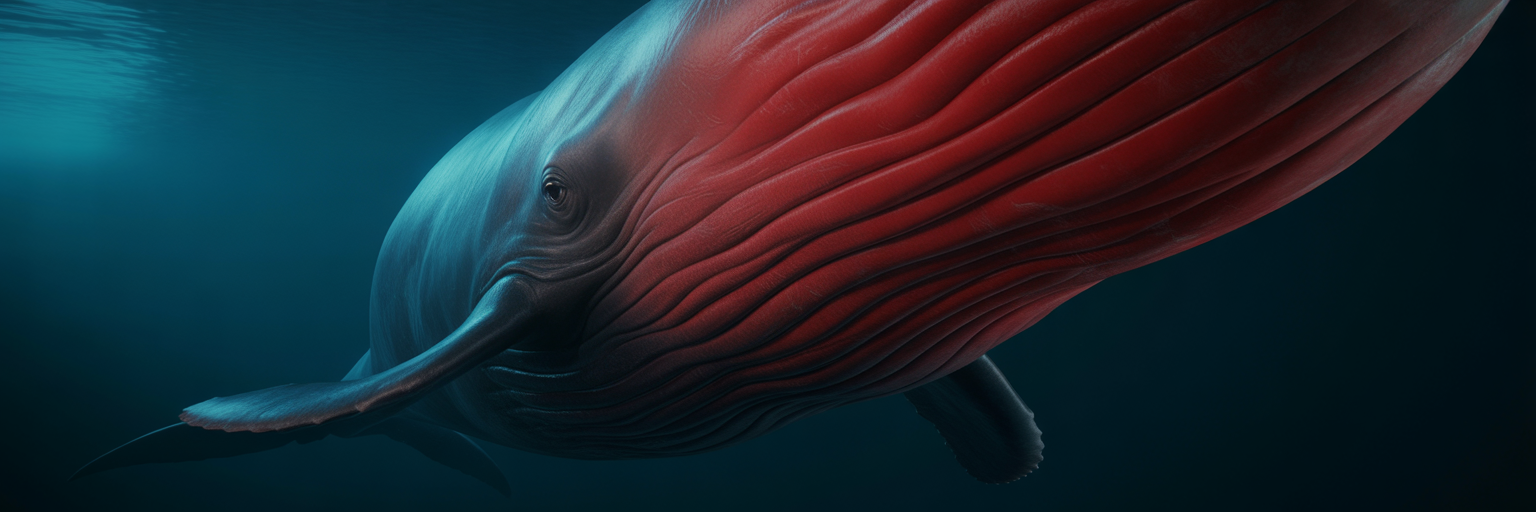
When we think about how do whales hold breath for so long, a popular idea often surfaces: they must store oxygen in their bones. It seems plausible, but this is a widespread myth. The reality of their animal oxygen storage is far more efficient and is written in their blood and muscles, not their skeletons.
Deep-diving mammals like whales and seals have evolved to carry enormous oxygen reserves. Their blood is packed with hemoglobin, but the real secret lies in their muscles, which are saturated with a protein called myoglobin. Myoglobin is so effective at binding and storing oxygen that the muscles of these animals are often a deep, dark red, appearing almost black. Think of these muscles as individual, localized scuba tanks, each one holding a supply of oxygen that can be released precisely where it is needed during a long dive.
This system allows them to perform incredible feats of endurance. As research from the Journal of Experimental Biology on emperor penguins highlights, these animals can tolerate extreme depletion of oxygen in their blood, pushing their bodies to the absolute edge. Their skeletons are indeed remarkable, built to withstand the crushing pressure of the deep sea, but they are not hollow air tanks. The true adaptation is a circulatory and muscular system fine-tuned for hoarding every last molecule of oxygen.
Reptilian Strategies for Oxygen Deprivation
While marine mammals solve the oxygen problem by packing more of it, some reptiles take a completely different approach. Turtles, for instance, are masters of surviving anoxia, but their strategy is not about storage. Instead of preparing for a long journey with extra supplies, they simply shut everything down and wait out the storm.
When a turtle hibernates in the oxygen-free mud at the bottom of a pond, it employs two key tactics. First, it enters a state of profound metabolic depression, slowing its heart rate and metabolism to a near standstill. Second, it switches to anaerobic respiration, a way of producing energy without oxygen. This process, however, comes with a dangerous side effect: the buildup of lactic acid.
This is where the turtle’s skeleton and shell play a surprising role. They are not oxygen tanks, but they act as chemical buffers. They release carbonates into the bloodstream to neutralize the toxic acid, preventing it from causing damage. It is an incredible survival feat, similar in its extremity to how some amphibians have adapted to freezing solid and thawing back to life. The turtle’s main oxygen reserves remain in its blood and tissues, but its true genius lies in its ability to almost stop needing it at all.
| Animal Group | Primary Challenge | Main Adaptation | Key Biological Component |
|---|---|---|---|
| Marine Mammals (e.g., Whales) | Long dives with no access to air | Massive oxygen storage | High concentrations of myoglobin and hemoglobin |
| Reptiles (e.g., Turtles) | Prolonged periods of anoxia (e.g., hibernation in mud) | Metabolic depression and anaerobic respiration | Ability to slow metabolism and buffer acid byproducts |
| Bone Worms (Osedax) | Living inside bones in a low-oxygen deep-sea environment | Directly extracting resources from bone | Acid-secreting enzymes (e.g., carbonic anhydrase) |
Note: This table highlights the primary adaptations for each group. Many animals use a combination of strategies, but this comparison illustrates the dominant mechanism each has evolved to survive low-oxygen conditions.
Where Bone Breathing Becomes Reality

Just when it seems the idea of using bones for oxygen is settled as a myth, nature introduces an exception that is stranger than fiction. Meet the Osedax bone worms, bizarre creatures that live on the skeletons of whales that have fallen to the deep-sea floor. In this dark, cold, and low-oxygen environment, these “zombie worms” have made the myth a reality.
The feeding mechanism of these worms is one of the most unusual animal breathing adaptations ever discovered. Here is how they do it:
- No Mouth, No Gut: These worms lack a conventional digestive system. They do not eat in any way we would recognize.
- Acid-Secreting ‘Roots’: Instead of a mouth, Osedax worms have root-like structures that burrow directly into bone. These roots secrete a powerful acid that dissolves the mineral matrix of the skeleton.
- Nutrient and Oxygen Extraction: By melting the bone, the worms access the fats and proteins locked inside the marrow. But scientists now believe they may be doing something more. A study published by NCBI suggests that enzymes like carbonic anhydrase help them liberate and absorb oxygen that was trapped within the bone itself.
This is not a primary breathing method but a highly specialized adaptation for a very specific and macabre niche. The Osedax worms have found a way to tap into a resource that is completely inaccessible to almost every other form of life. Their existence is a reminder of nature’s endless creativity, producing organisms as strange as parasites that can take over their host’s mind. Research is ongoing, but these worms prove that on our planet, even the wildest biological ideas can sometimes come true.
The Science of How Bones Could Hold Oxygen
So how could a bone possibly hold oxygen? The answer lies in its structure. If you look closely at bone tissue, particularly the spongy cancellous bone found inside, you will see it is not a solid block. It is a porous, honeycomb-like matrix filled with countless microscopic voids.
Theoretically, oxygen could be stored here in two ways: either physically trapped in these tiny spaces or chemically bound to the minerals that make up the bone itself. For most animals, this potential reservoir is permanently locked away. They simply lack the biological tools to access it. This is what makes the Osedax bone worms so remarkable. Their acid-secreting ability is the key that unlocks these otherwise inaccessible stores.
In the end, the idea of animals storing oxygen in their bones is a fascinating concept that is mostly a myth for the famous survivors we know, like whales and turtles. Yet, the deep sea has shown us that in biology, you should never say never. The zombie worm proves that nature’s rulebook has some very strange exceptions, reminding us how much is still left to discover. If you find these stories of survival fascinating, you can explore more of them on our blog.