
The Hidden Puppeteers of the Insect World
The struggle for survival in nature often unfolds at a microscopic level, where some organisms have evolved strategies far stranger than fiction. Among the most fascinating are fungi that do not just kill their hosts but seize control of their minds and bodies. This phenomenon gives rise to the popular concept of a zombie insect fungus, a real and documented survival strategy that turns unsuspecting insects into unwilling accomplices.
These are not simple pathogens causing sickness. Instead, they are sophisticated manipulators that hijack an insect’s nervous system for a single purpose: reproduction. By compelling their hosts to perform specific, often bizarre, actions, these fungi ensure their spores are spread as widely as possible. This form of mind control is a chillingly effective example of how evolution can produce highly specialized and intricate relationships between species, blurring the line between predator and prey.
The Chemical Toolkit for Mind Control
The secret to this manipulation lies in a form of biochemical warfare. The process of how fungi infect insects begins when a microscopic spore lands on an insect’s body. It germinates, penetrates the exoskeleton, and begins to grow within the host, consuming it from the inside out. But the most remarkable part is the chemical takeover that follows. The fungus deploys a precise cocktail of compounds to orchestrate a sophisticated form of insect behavioral manipulation.
These chemical strategies include:
- Pheromone Mimicry: Some fungi synthesize compounds that perfectly imitate the host’s natural sex pheromones. This creates an irresistible but false signal that lures healthy insects into a fatal trap.
- Cuticular Alteration: The fungus can alter the chemical makeup of the insect’s waxy outer layer, or cuticle. This change makes the infected host, even after death, chemically attractive to others of its species.
- Volatile Organic Compounds (VOCs): In some cases, the fungus releases airborne chemicals that act as long-distance lures. These VOCs draw unsuspecting insects toward the infected host, much like the scent of a flower attracts a bee.
Ultimately, the host is transformed into a dispersal vehicle, a tool to carry the next generation of fungal spores to new victims. The world of biology is filled with such intricate systems, and you can explore more of these incredible natural strategies on platforms like Nature Is Crazy.
A Fatal Attraction for Houseflies
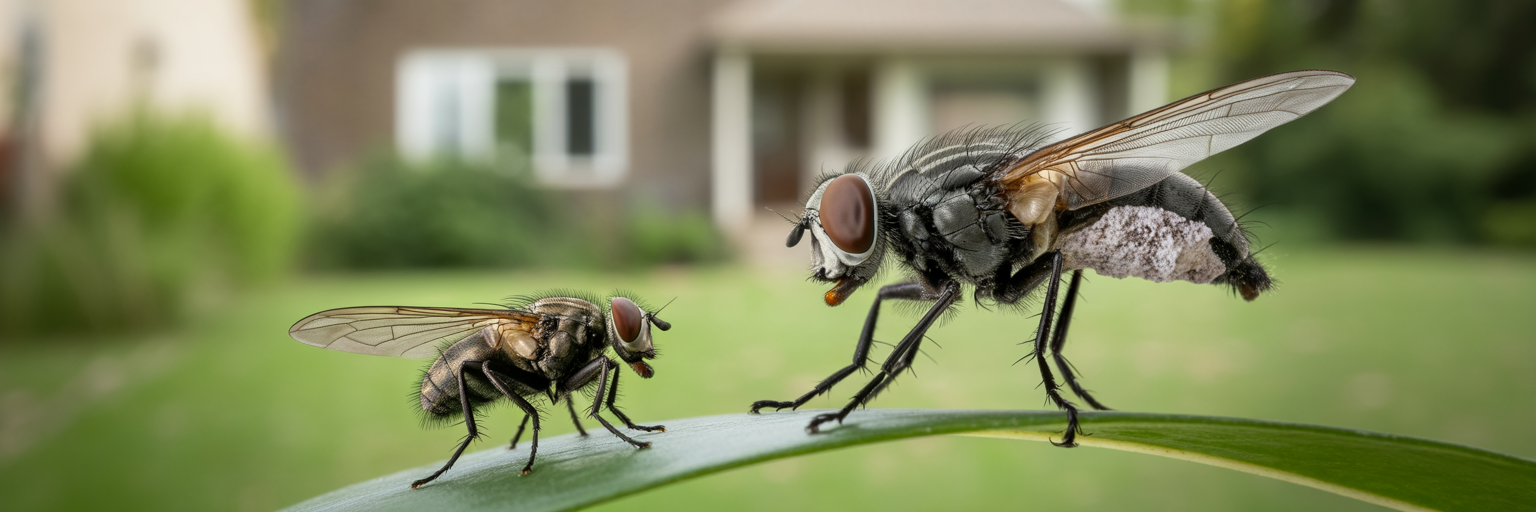
A particularly grim example of this is the relationship between the Entomophthora muscae housefly fungus and its host. Once a female housefly is infected, the fungus begins its methodical takeover. In its final hours, the fly is compelled to perform an act known as “summit disease.” It abandons its normal behavior and climbs to a high point, whether it is the top of a plant stem or a window frame. There, it positions itself with its wings spread, firmly attached to the surface as it dies.
This is where the manipulation becomes truly macabre. After the fly’s death, the fungus continues its work, producing a specific blend of chemicals. A 2022 study published in The ISME Journal identified these compounds as volatile sesquiterpenes that act as a powerful aphrodisiac for healthy male houseflies. Unsuspecting males are drawn to the female cadaver, which now emits a scent more alluring than any living female.
They are driven to mate with the corpse, a behavior known as necrophilia. During this futile act, the male becomes thoroughly coated in a fresh batch of fungal spores that have erupted from the dead female’s body. He then flies off, now a carrier himself, destined to spread the infection and continue the fungus’s deadly life cycle. This strategy of post-mortem manipulation ensures the fungus can reproduce even after its host has perished.
The Zombie Cicadas of North America
In the forests of North America, a different kind of horror story unfolds with periodical cicadas. Here, the Massospora cicadina fungus employs a strategy of “active host transmission,” meaning it keeps its host alive and mobile to maximize spore dispersal. The physical transformation is shocking. The fungus consumes the cicada’s abdomen, genitalia, and rear end, replacing them with a chalky, white plug of fungal spores. Despite this grotesque injury, the cicada continues to fly and interact with others.
The behavioral manipulation is just as specific. The fungus causes infected males to flick their wings in a pattern that mimics the mating signal of a receptive female. This false signal lures in healthy males who, attempting to mate, come into direct contact with the spore plug. According to a study in Scientific Reports, this hijacking of sexual signals is a key strategy for the fungus. Researchers have even found psychoactive compounds like cathinone, a stimulant, in infected cicadas, which may explain their hyper-sexual and erratic behavior. The cicada effectively becomes a flying “salt shaker of death,” actively spreading spores while it is still alive. The unique biology of these insects is a testament to the diverse adaptations found in nature, a core theme in the field of technology and natural science.
| Feature | Entomophthora muscae (Housefly) | Massospora cicadina (Cicada) |
|---|---|---|
| Host State During Transmission | Dead (Post-mortem) | Alive and Active |
| Primary Manipulation Tactic | Post-mortem chemical lure (aphrodisiac) | Behavioral mimicry (imitating female mating signals) |
| Spore Dispersal Method | Necrophilia: Healthy males mate with infected cadavers | Active transmission through social/mating interactions |
| Notable Chemical Agent | Sesquiterpenes | Cathinone (a psychoactive stimulant) |
Note: This table contrasts two distinct evolutionary pathways fungi have developed to exploit host behavior for reproduction. The data is based on findings from multiple peer-reviewed studies on entomopathogenic fungi.
An Evolutionary Advantage in a Microscopic War

Why do these elaborate and gruesome strategies exist? The answer lies in the intense pressure of the evolutionary arms race between pathogen and host. For fungi that control insects, this complex manipulation provides a significant reproductive advantage, making it a highly successful, albeit specialized, evolutionary path.
These intricate interactions highlight several key points:
- Reproductive Success: By hijacking host behavior, the fungus dramatically increases its ability to spread to new hosts. It is a direct and effective method for ensuring the survival of its lineage.
- Evolutionary Rarity: Evolving the precise chemical “keys” to rewire an insect’s brain and mating instincts is an incredibly difficult feat. This is why such specific examples of manipulation are not more common in the natural world.
- Future Discoveries: Studying these interactions offers profound insights into behavioral ecology, neurobiology, and chemical communication. The bioactive compounds these fungi produce could one day lead to new discoveries in medicine or sustainable agriculture.