Beyond the Simple Warm and Cold Divide
Most of us remember the biology lesson that neatly sorted the animal kingdom into two distinct boxes. On one side, you have the warm-blooded animals, and on the other, the cold-blooded ones. While this is a useful starting point, nature is rarely that simple. The proper terms for these categories are endothermy and ectothermy. Endotherms, like us and other mammals, generate their own heat internally. Ectotherms, like a typical lizard or fish, rely on external sources like the sun to warm up. These are classic endotherm vs ectotherm examples.
But what about creatures that refuse to pick a side? Some animals have developed the remarkable ability to switch between these two states. This isn’t a biological quirk; it’s a sophisticated survival tool honed by millions of years of evolution. This is just one of many examples where the natural world operates in ways that challenge our expectations, a theme we explore across our blog.
This metabolic flexibility allows them to thrive in environments where others might struggle. They can conserve energy like a reptile yet become active and warm like a mammal when the situation demands it. So, what advantage does this metabolic flexibility offer, and which creatures have mastered it?
Heterothermy: A Thermostat for Survival
The ability to strategically switch between warm and cold states has a scientific name: heterothermy. This ability, known scientifically as heterothermy, allows an animal to switch between states of variable and stable body temperature, a concept detailed further in scientific literature. In essence, these animals possess a biological thermostat that they can adjust based on their needs. One specific form of this is what is facultative endothermy, where an animal that is normally cold-blooded can temporarily “turn on” its internal furnace to generate heat.
To understand how heterothermy works, think of a hybrid car. It uses its efficient electric mode (like ectothermy) for cruising along and saving fuel. But when it needs a burst of power to climb a hill, it fires up the gas engine (like endothermy). Heterothermic animals do something similar with their metabolism, gaining two primary benefits:
First, they achieve massive energy conservation. Maintaining a constant high body temperature is incredibly expensive, metabolically speaking. By allowing their temperature to drop when resting or when food is scarce, these animals save huge amounts of energy that would otherwise be spent on just staying warm.
Second, it gives them the ability to be active in cold conditions when their purely ectothermic competitors are sluggish and vulnerable. By generating their own heat, they can hunt, mate, or defend territory when other animals are forced into inactivity by the cold. This dual-mode system provides a powerful advantage for survival.
The Tegu Lizard: A Reptile with a Warm-Blooded Secret
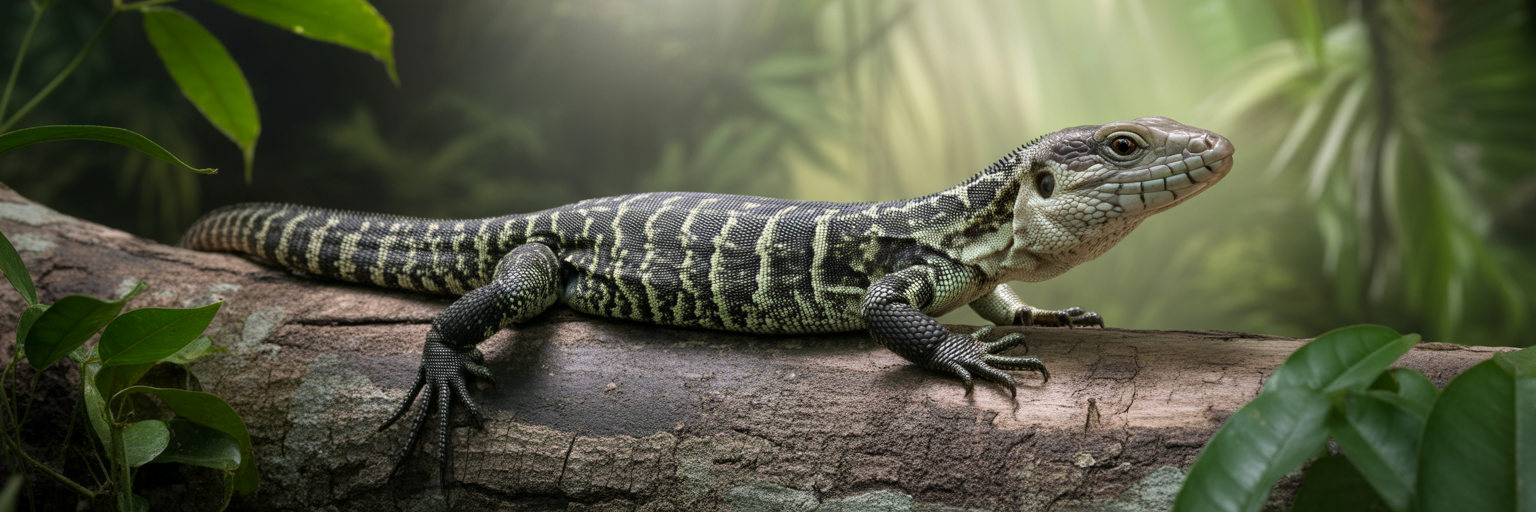
For a long time, the ability to generate significant body heat was considered exclusive to mammals and birds. The Argentine black and white tegu lizard completely shattered that assumption. This reptile provides a stunning real-world example of facultative endothermy. While it spends most of the year as a typical cold-blooded lizard, its physiology changes dramatically during its reproductive season.
A groundbreaking study published in Science Advances revealed that during their reproductive season, tegus can elevate their body temperature far above the ambient air, behaving more like a warm-blooded animal. Researchers found the tegu lizard body heat can be maintained up to 10°C (18°F) warmer than its surroundings, even through the cool of the night. This warmth is not from basking in the sun; it is generated internally by a temporary, massive spike in the lizard’s metabolic rate.
This adaptation provides a critical evolutionary edge. The self-generated heat helps the parent tegu incubate its eggs, ensuring they develop at an optimal temperature. Furthermore, a warm and active parent is far better equipped to defend its nest from predators, especially during cooler periods when other reptiles would be slow and lethargic. The tegu demonstrates that the line between warm-blooded and cold-blooded is more of a spectrum than a sharp divide. While the tegu masters heat, other creatures have evolved equally astonishing ways to survive extreme cold, like the wood frog that can freeze solid and thaw back to life.
Other Masters of Temperature Control
The tegu lizard is not alone in its mastery of temperature. Heterothermy is a surprisingly widespread strategy, and there are many animals that change body temperature to suit their needs. This is a fantastic example of convergent evolution, where different species independently develop similar solutions to life’s challenges.
Here are a few other masters of temperature control:
- Hibernating Mammals: Animals like American black bears and groundhogs are classic examples of temporal heterothermy. To survive the long, cold winters when food is scarce, they enter a state of torpor, drastically lowering their metabolism, heart rate, and body temperature for months at a time. They are warm-blooded, but not all the time.
- Hummingbirds and Bats: With their incredibly high metabolisms, staying warm through the night would burn a fatal amount of energy. Instead, many hummingbirds and bats enter a short-term, hibernation-like state called daily torpor. Their body temperature plummets overnight, allowing them to conserve precious calories until they can feed again at dawn.
- Certain Moths: Some large moths, like the sphinx moth, need to be warm to fly but are active on cool nights. To solve this, they “shiver” their powerful flight muscles before takeoff. These rapid contractions generate enough heat to warm their bodies, allowing them to fly when other insects are grounded by the cold.
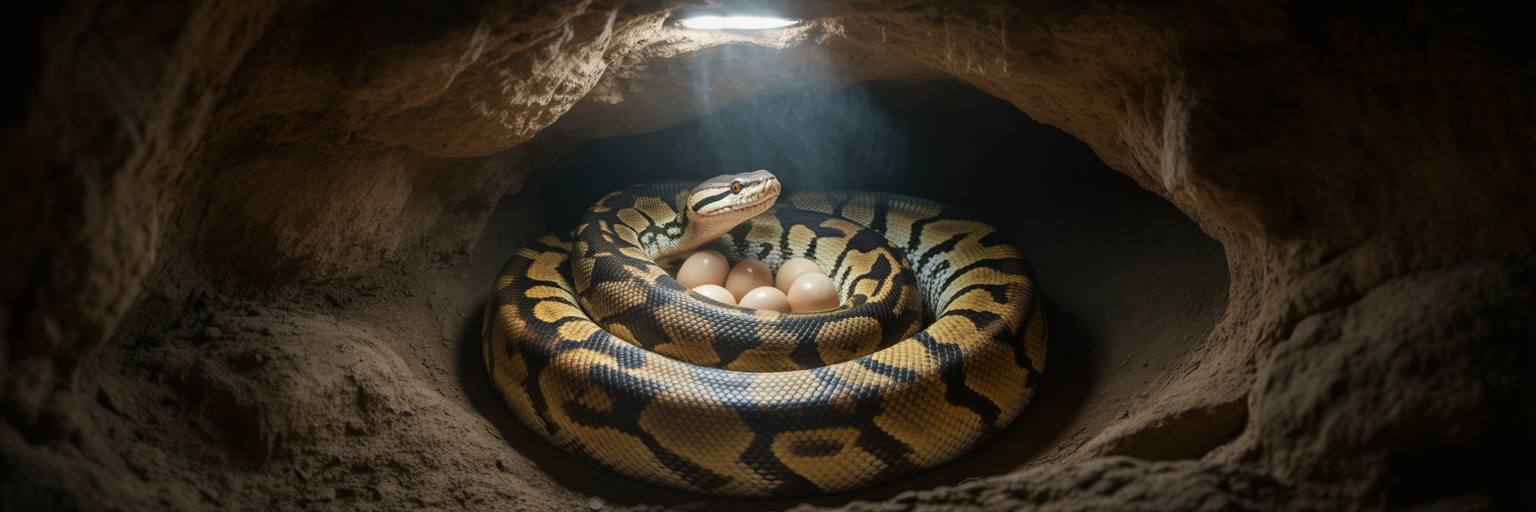
- Brooding Pythons: After laying a clutch of eggs, a female python will coil around them. If the temperature drops, she will begin to rhythmically contract her muscles, essentially shivering to generate heat. This behavioral thermogenesis keeps her eggs warm and viable.
These masters of temperature are in good company when it comes to bizarre survival skills; some birds, for instance, have become expert mimics of man-made sounds.
| Animal | Type of Heterothermy | Trigger/Context | Primary Benefit |
|---|---|---|---|
| Argentine Tegu Lizard | Facultative Endothermy | Reproductive Season | Egg incubation & nest defense |
| American Black Bear | Hibernation (Temporal) | Winter/Food Scarcity | Long-term energy conservation |
| Hummingbird | Daily Torpor | Nightly Rest | Surviving high metabolic cost overnight |
| Brooding Python | Behavioral Thermogenesis | Egg Incubation | Ensuring offspring viability |
| Sphinx Moth | Muscular Thermogenesis | Pre-Flight | Enabling activity in cool temperatures |
This table illustrates how different species have adapted heterothermy for specific survival challenges, from reproduction to daily energy management.
The Evolutionary Edge of Being Flexible
So, what does this all mean in the grand scheme of evolution? The ability to be metabolically flexible provides a profound advantage. It is a key strategy for animal survival in changing climates, allowing species to colonize habitats with fluctuating temperatures that would be inhospitable to animals with rigid thermal requirements. A creature that can thrive in both the heat of the day and the cool of the night has more opportunities to find food and avoid predators.
Beyond geographic expansion, the immense energy savings are a game-changer. In the natural world, calories are currency. An animal that can “turn off” its expensive metabolic engine when it’s not needed has a critical competitive edge, especially when food is scarce. This saved energy can be redirected toward growth, healing, and reproduction.
Some scientists even speculate that facultative endothermy might represent an evolutionary stepping stone. It could be a glimpse into the pathway some ancient lineages took to transition from being fully cold-blooded to fully warm-blooded. This flexibility highlights the complexity of homeostatic processes for thermoregulation, which are fundamental to an organism’s ability to survive and reproduce. These animals prove that in the high-stakes game of evolution, being adaptable is often more valuable than being consistently powerful. The flexibility of heterotherms is a testament to evolution’s creativity, a force that has also produced parasites that turn snails into zombies to complete their life cycle.