A Startling Phenomenon of Injury-Induced Light
In the crushing darkness of the deep sea, where sunlight never reaches, light is a language. Over 75% of its inhabitants are thought to produce their own light, using it to hunt, attract mates, or camouflage themselves. But there is another, more desperate reason for a creature to illuminate the abyss: as a direct response to being attacked. This is the unsettling world of injury-induced bioluminescence, a phenomenon where a wound triggers an involuntary burst of light. In environments where survival depends on staying hidden, these organisms become brilliant beacons at their most vulnerable moment. These are the creatures that glow when injured, turning a moment of trauma into a final, defiant spectacle. We will explore the chemical alarms, defensive strategies, and specific organisms that have mastered this haunting survival mechanism.
The Chemical Alarm System Within

So, why do animals glow when they are hurt? The answer lies in a simple but elegant biochemical reaction, much like snapping a glow stick. Inside the creature’s tissues, two key components are kept in separate compartments: a light-producing molecule called luciferin and an enzyme catalyst called luciferase. They remain inert, waiting for a trigger. That trigger is physical damage. When a predator bites, crushes, or tears an organism’s cells, these internal barriers rupture. This violent mixing allows luciferin and luciferase to combine with oxygen, setting off an instantaneous chemical reaction that releases energy in the form of cold, eerie light. This is not a conscious decision but an automatic, built-in alarm system.
The process is incredibly efficient, converting chemical energy directly into light with almost no heat loss. The specific color of the glow, whether an ethereal blue or a startling green, depends on the unique molecular structure of the luciferin, which varies from species to species. This elegant chemical defense is a marvel of natural engineering, a process that expands our understanding of the world much like the innovations of modern science we often report on. It is a silent scream, broadcast not with sound, but with an explosion of light.
A Predator’s Luminous Nightmare
Once the chemical alarm is triggered, the resulting light becomes a powerful weapon. This flash of brilliance is a high-stakes evolutionary gamble, a last-ditch effort when camouflage has failed. These defensive bioluminescence examples reveal several key strategies that turn a predator’s attack into a potential nightmare.
- The Startle Effect: In the pitch-black deep, a sudden, intense flash of light can momentarily blind or disorient an attacker. This split second of confusion is often all the prey needs to escape the predator’s grasp and vanish back into the darkness.
- The ‘Burglar Alarm’ Theory: This is perhaps the most cunning strategy. The light acts as a desperate beacon, illuminating the attacker for an even larger predator lurking nearby. This strategy, often called the ‘burglar alarm’ theory, is well-documented in marine biology, where the sudden light can attract a bigger fish to prey on the initial attacker, a phenomenon detailed by sources like National Geographic. The hunter suddenly becomes the hunted. This life-or-death gamble is a stark reminder of the raw dynamics at play when exploring the wild.
- Aposematic Warning or Misdirection: The glow can also function as a warning signal, suggesting the creature is toxic or unpalatable. For a predator, a glowing meal might not be worth the risk. The light can also create an illusion, making the prey appear larger or more threatening than it actually is, causing a predator to hesitate before committing to the attack.
Glowing Life Forms of the Deep and Beyond
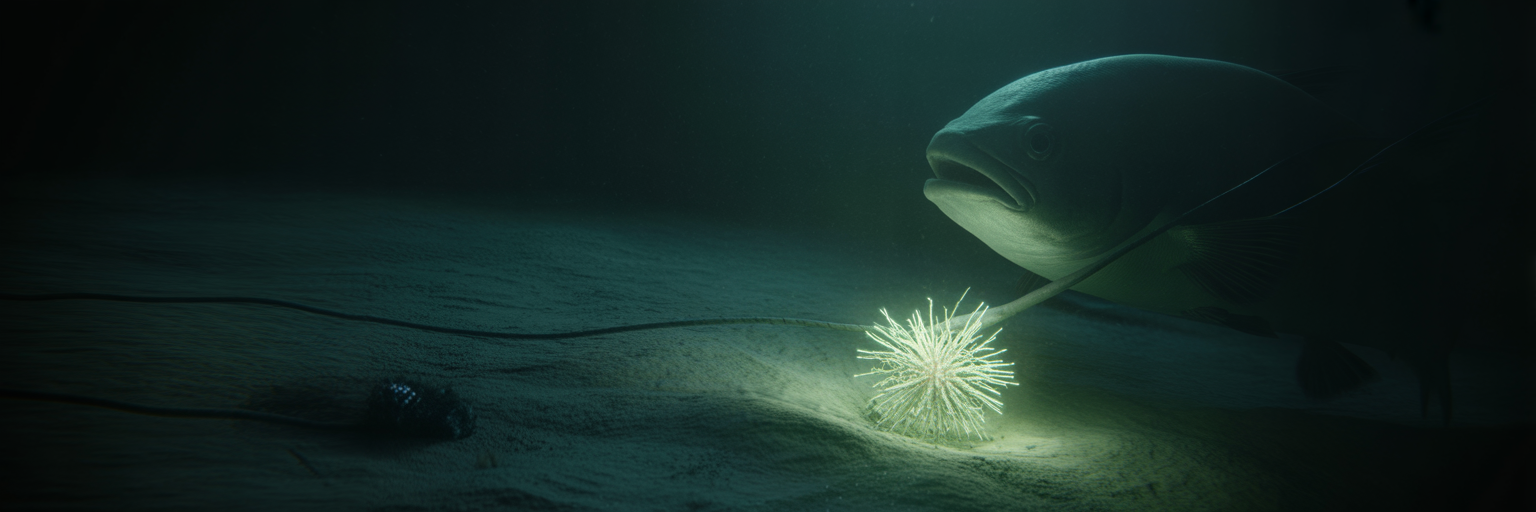
This strange and beautiful phenomenon is not limited to a single type of organism. It appears across different branches of the tree of life, a testament to its effectiveness as a survival tool. The following table highlights some of the most notable animals that light up when hurt, as well as other life forms that use a similar mechanism.
| Organism | Environment | Glow Description & Trigger |
|---|---|---|
| Deep-Sea Brittle Stars | Abyssal Plain | Emit bright green or blue flashes from arms when grabbed or broken. |
| Tomopteris (Planktonic Worms) | Open Ocean | Release a shower of glowing yellow sparks when attacked. |
| Dinoflagellates | Marine Surface Waters | Microscopic plankton that glow blue when mechanically disturbed (e.g., by waves or a ship’s wake). |
| Foxfire Fungi (e.g., Armillaria) | Forest Floor | Glows brighter when the decaying wood it inhabits is disturbed or damaged. |
The response of dinoflagellates can be seen on a massive scale, creating the famous “milky seas” or glowing tides where every ripple and splash ignites the water with blue light. On land, foxfire fungi demonstrate convergent evolution, where the same trait evolves independently. A footstep on a decaying log in a dark forest can cause the mycelium to glow brighter, a silent protest against the disturbance. In these pitch-black environments, light is an incredibly powerful signal. The efficiency of this biological light production is a marvel, inspiring scientists and engineers in ways that parallel other tech innovations defining our future.
The Eerie Brilliance of a Glowing Defense
Glowing when injured is far more than a strange quirk of nature. It is a sophisticated evolutionary adaptation, a brilliant solution for survival in low-light, high-threat environments. By startling attackers, activating a “burglar alarm,” or serving as a stark warning signal, these organisms turn their moment of greatest peril into a potential escape. This phenomenon reminds us that even in the deepest, darkest corners of our world, life has found a way to fight back. The flash of light born from trauma is a final, defiant act of survival, an eerie and beautiful testament to the will to live. This glowing defense is just one of countless strange and beautiful phenomena waiting to be discovered. To continue exploring the stories that shape our world, visit Nature Is Crazy.