
The Spark of Life: An Introduction to Bioelectricity
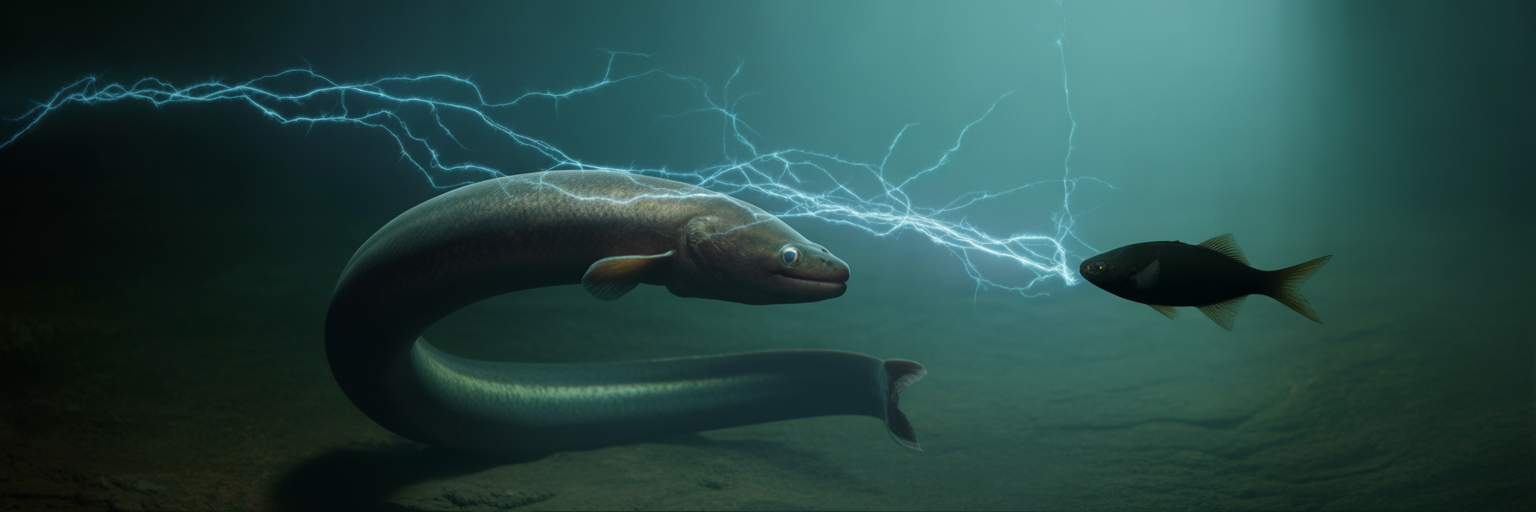
In the 18th century, scientists were captivated by what they called “animal electricity.” Early experiments with electric fish revealed a startling truth: the crackle of lightning in the sky and the spark of life within a creature were connected. This discovery showed that electricity was not just an external force of nature but a fundamental component of biology itself. This is the world of bioelectricity in nature, a hidden language spoken by some of the planet’s most fascinating animals.
At the heart of this phenomenon are two distinct but related abilities. The first is electrogenesis, the power to generate an electric field. Think of it as broadcasting a signal into the surrounding environment. The second is electroreception, the ability to sense these electric fields. This is like having a built-in receiver, perfectly tuned to the right frequency. Together, these senses open up a world that is completely invisible to us.
Not all electric signals are created equal. The applications of this power are split into two main camps, almost like adjusting the volume on a speaker. Some animals, the high-voltage predators, turn the volume all the way up. They unleash powerful shocks to stun prey or defend against threats. In contrast, other creatures use a much quieter, low-voltage hum. This subtle field is not for attack but for navigating complex environments and communicating with others.
Why would such a sense evolve? Imagine trying to find your way through a dark, muddy river where visibility is zero. For fish in these murky, structurally complex aquatic habitats, sight is often useless. An electric sense, however, cuts through the darkness. It allows an animal to “see” obstacles, find hidden food, and talk to its neighbors when its eyes and ears fail. This ability provides a profound advantage, turning a challenging environment into a place of opportunity.
The Cellular Powerhouse: How Animals Generate Electric Fields

The ability to generate a powerful shock doesn’t come from magic; it comes from a remarkable biological specialization. The process of electrogenesis in animals is a masterclass in cellular engineering, where ordinary cells are transformed into living batteries. It all begins with a unique type of cell that powers this incredible ability.
The Electrocytes: Nature’s Specialized Batteries
The building blocks of an electric organ are cells called electrocytes. These are essentially modified muscle or nerve cells that have evolved for a single purpose. Over time, they lost their ability to contract and instead became experts at moving ions across their membranes. In its resting state, an electrocyte maintains a negative charge on the inside and a positive charge on the outside, just like a tiny battery. When triggered by a nerve signal, channels in the cell membrane fly open, allowing positive ions to rush in. This rapid shift, known as depolarization, flips the cell’s polarity and creates a small electric potential. A single electrocyte produces only a tiny spark, but nature has a clever way to amplify this power.
Stacking for Power: Series and Parallel Circuits
To go from a tiny cellular spark to a paralyzing jolt, animals use the same principles found in a flashlight. If you want a brighter beam, you stack batteries end-to-end. Electric fish do the same with their electrocytes. By stacking thousands of these cells in long columns, or in series, they add up the voltage of each cell. This is how an electric eel can generate hundreds of volts from cells that individually produce only a fraction of a volt.
But voltage isn’t the whole story. To deliver a truly effective shock, you also need enough current, or amperage. To achieve this, the columns of electrocytes are arranged side-by-side, or in parallel. This parallel arrangement increases the total surface area, allowing a larger amount of charge to be discharged at once. This combination of series and parallel circuits allows an animal to fine-tune its electrical output for maximum impact.
The Brain’s Command: Achieving Perfect Synchronicity
Having thousands of tiny batteries is useless unless they all discharge at the exact same moment. This is where the nervous system comes in. The animal’s brain sends a command through a network of specialized nerves that connect to every single electrocyte. These nerves are precisely calibrated to ensure the signal arrives at all cells simultaneously. When the command is given, thousands of electrocytes fire in perfect synchronicity. Their individual small charges sum up into one massive, instantaneous external discharge. It is this incredible timing and coordination that transforms a collection of cells into a formidable biological weapon.
High-Voltage Hunters of the Aquatic World
While many animals use electricity for subtle purposes, a select few have weaponized it, becoming the high-voltage hunters of the aquatic world. These predators use powerful electric discharges not just for defense, but as a primary tool for ambush and capture. Their methods are as varied as they are effective, showcasing different evolutionary paths to the same shocking conclusion.
The Electric Eel: Master of the High-Voltage Ambush
The electric eel is perhaps the most famous electric animal, and for good reason. It is a master of controlled electrocution. The strategy behind electric eel hunting is remarkably sophisticated. First, the eel emits a low-voltage, two-pulse signal called a doublet. This weak shock is just enough to cause any hidden prey to twitch involuntarily, revealing its location without the eel ever seeing it. Once the target is located, the eel unleashes a high-voltage volley. As noted in publications like Scientific American, these shocks can exceed 860 volts, more than enough to paralyze the prey’s nervous system and allow the eel to swallow it whole. This two-step process of detection and incapacitation makes the electric eel an incredibly efficient predator.
Electric Rays: The Shocking Blanket of the Seafloor
Unlike the long-bodied eel, the electric ray employs a different tactic. These flattened, bottom-dwelling fish are ambush predators that rely on surprise. They possess two large, kidney-shaped electric organs on either side of their head, which can generate a shock of up to 220 volts. When an unsuspecting fish or crustacean swims overhead, the ray lunges upward, enveloping the prey with its broad pectoral fins. This “blanket” traps the victim while the ray delivers a powerful shock, stunning it instantly. The ray then maneuvers the immobilized meal into its mouth. This strategy is perfectly suited for the seafloor, where hiding and waiting is key.
The Electric Catfish: An Electrified Cloak of Defense
Found in the rivers of Africa, the electric catfish has a unique anatomical adaptation. Its electric organ is not concentrated in one area but is derived from skin muscle that forms a gelatinous sheath around most of its body. This “electric cloak” is used primarily for defense. When threatened, the catfish can discharge up to 350 volts, delivering a painful warning to any would-be predator. While it can also use its shock to stun smaller fish, its primary use is as a powerful, full-body deterrent, making it a well-protected inhabitant of its freshwater home.
| Creature | Maximum Voltage | Electric Organ Location | Primary Use | Unique Hunting/Defense Strategy |
|---|---|---|---|---|
| Electric Eel | ~860 Volts | Three pairs along the body | Predation & Defense | Uses a low-voltage pulse to locate prey and a high-voltage volley to stun. |
| Electric Ray (Torpedo) | ~50-220 Volts | Large, kidney-shaped organs on each side of the head | Predation & Defense | Ambushes prey from above, wrapping its pectoral fins to deliver a stunning shock. |
| Electric Catfish | ~350 Volts | A gelatinous sheath derived from skin muscle, covering most of the body | Primarily Defense | Acts as an electrified cloak, delivering a powerful defensive shock to any threat. |
Whispers in the Dark: Weakly Electric Fish and Their Social Signals

Away from the high-voltage drama of predators, another group of fish uses electricity for a much more nuanced purpose: communication. Weakly electric fish, such as the elephantnose fish of Africa and the glass knifefish of South America, generate gentle electric fields measured in millivolts. These signals are far too weak to stun anything, but they are perfect for sending and receiving messages in dark or murky waters. This world of electric animals communication is a complex social network built on invisible signals.
The Electric Organ Discharge (EOD) as a Personal Signature
Every weakly electric fish produces a continuous signal known as an Electric Organ Discharge (EOD). This isn’t just a random pulse; it’s a personal signature. The specific waveform and frequency of the EOD are unique to each species and can even vary between individuals. This electric fingerprint communicates a wealth of information, including the fish’s species, its sex, and its social status. When one fish encounters another, it’s not just seeing a shape in the water; it’s reading a detailed bio-electric profile that says, “I am a male elephantnose fish, and I am ready to mate,” or “This is my territory, stay away.”
The Jamming Avoidance Response (JAR): A Lesson in Politeness
What happens when two fish with similar EOD frequencies get too close? Their signals could interfere with each other, creating sensory “noise” that makes it hard to communicate or navigate. To solve this, many species have evolved a remarkable behavior called the Jamming Avoidance Response (JAR). If two fish’s signals start to overlap, they will both shift their frequencies away from each other, one slightly up and the other slightly down. This cooperative adjustment ensures that both individuals can maintain a clear channel for communication. It’s a beautiful example of natural signal processing, a form of electric politeness that prevents them from talking over each other.
An Electric Social Life: Courtship, Dominance, and Territory
With these signals, weakly electric fish manage their entire social lives. During courtship, males may alter the frequency or pattern of their EOD to attract females. In territorial disputes, rival males will engage in electric “shouting matches,” modulating their signals to display aggression and establish dominance without physical combat. These electric whispers govern everything from finding a mate to defending a home, all in environments where vision would be completely useless. The intricate world of electric signaling, where fish communicate using invisible fields, is just one example of the strange and wonderful adaptations found in the animal kingdom. These abilities often seem like something out of science fiction, much like some of nature’s other unsettling creations that defy belief.
Sensing the Unseen: The World of Electroreception
Generating an electric field is only half the story. To make use of this power, an animal must also be able to detect electricity. This ability, known as electroreception, is a sensory superpower that allows animals to perceive a world hidden from us. It comes in two main forms. Passive electroreception is the ability to detect electric fields generated by other organisms, like the faint bioelectric signals from a prey’s muscles. Active electroreception, used by weakly electric fish, involves detecting distortions in the animal’s own electric field. Here, we focus on the passive listeners of the aquatic world.
Sharks and Rays: The Ampullae of Lorenzini
Sharks are often called perfect predators, and their mastery of electroreception in sharks is a key reason why. Their secret lies in a network of sensory organs called the Ampullae of Lorenzini. These appear as small pores scattered around the shark’s head and snout. Each pore is connected to a long, jelly-filled canal that ends at a nerve cell. This jelly is highly conductive, acting like a wire that transmits tiny voltage differences from the surrounding water directly to the shark’s nervous system. This system is so sensitive it can detect the minute bioelectric fields produced by the muscle contractions of a flounder buried in the sand or the heartbeat of a hidden fish. It allows a shark to find prey with its eyes closed.
The key features of the Ampullae of Lorenzini include:
- A network of small pores concentrated around the head and snout.
- Each pore connects to a long, jelly-filled canal.
- The jelly is highly conductive, transmitting electrical potential from the water to nerve cells at the base of the canal.
- Can detect voltage gradients as small as 5 nanovolts per centimeter, sensitive enough to detect a prey’s heartbeat.
The Platypus: A Mammal’s Electric Sense
Electroreception is not just for fish. The platypus, a semi-aquatic mammal from Australia, provides a stunning example of convergent evolution. Its distinctive duck-like bill is covered with tens of thousands of sensory receptors. Among them are about 40,000 electroreceptors that allow it to hunt underwater with its eyes, ears, and nostrils completely shut. As it sweeps its bill back and forth along the riverbed, it detects the weak electric fields generated by the muscle movements of its invertebrate prey, such as shrimp and insect larvae. This electric sense, combined with mechanoreceptors that detect pressure waves, gives the platypus a detailed 3D map of its surroundings, allowing it to pinpoint food in total darkness. As noted by sources like Britannica, electroreception is not limited to fish but is also found in amphibians and even some mammals, demonstrating its adaptive value in aquatic environments.
An Evolutionary Shock: The Origins of Electric Organs

The existence of electric organs in such a diverse range of animals raises a fundamental question: how did this incredible ability evolve? The story is not one of a single invention but of nature stumbling upon the same brilliant solution multiple times. The evolutionary history of electric organs is a powerful testament to the pressures of the environment and the remarkable adaptability of life.
Convergent Evolution: Nature’s Repeated Invention
One of the most striking facts about electric organs is that they evolved independently at least six different times in separate lineages of fish. This phenomenon, known as convergent evolution, occurs when unrelated species develop similar traits because they face similar environmental challenges. Electric organs are found in South American knifefish and African elephantnose fish, two groups that are very distantly related. The fact that this complex system arose again and again underscores the immense adaptive advantage it provides, particularly in habitats where vision is limited. It was simply too good an idea for evolution to invent only once.
From Muscle to Machine: The Genetic Pathway
So how does a muscle cell become a biological battery? The answer lies in the genetic toolkit that all vertebrates share. Scientists have discovered that the same genes responsible for controlling the development of skeletal muscles were repurposed to create electric organs. Through a series of mutations, a key gene that tells a muscle cell to contract was switched off. While the cell lost its ability to move, other genes that control the flow of ions across its membrane were enhanced. This genetic tweak transformed the cell from a motor into a generator. The result was the electrocyte, a cell optimized not for contraction but for producing an electric potential. This evolutionary repurposing of muscle cells into biological batteries is a testament to nature’s efficiency. It’s a process that mirrors other incredible regenerative and adaptive abilities, such as in animals that can regrow skin stronger than before after an injury.
Environmental Drivers: Why Murky Waters Breed Electric Fish
The repeated evolution of electric organs points to strong environmental pressures. These abilities are most common in animals living in tropical freshwater rivers like the Amazon and the Congo. These environments are often murky with sediment, stained dark by tannins from decaying vegetation, and filled with complex structures like roots and logs. In such conditions, vision is severely handicapped. An electric sense provides a way to navigate, hunt, and communicate when sight fails. It’s likely that weakly electric organs used for sensing and navigation evolved first. In some lineages, this system was later scaled up, amplifying the voltage and current to create the high-power weapons used for predation and defense. The dark, cluttered waters of the world were the perfect incubator for this shocking evolutionary innovation.
Navigating by Feel: Electrolocation in Murky Waters
For weakly electric fish, their gentle electric field is more than just a communication tool; it’s a sixth sense that allows them to “see” their surroundings in complete darkness. This ability, known as active electrolocation, is a key example of how animals use electricity to build a detailed picture of their world. It is fundamentally different from passive electroreception, as the fish is not just listening but actively probing its environment.
Creating an Electrical Bubble: The Basis of Electrolocation
The process begins with the fish generating a stable, continuous electric field that envelops its body like an invisible bubble. The electric organ, typically located in the tail, acts as the positive pole, while the head acts as the negative pole. This creates a dipole field with lines of current flowing from the tail to the head. The fish’s skin is covered with hundreds, sometimes thousands, of electroreceptor organs that constantly monitor the voltage at every point on its body. In empty, open water, this field is smooth and uniform.
Interpreting Distortions: Building a 3D Electrical Image
The magic happens when an object enters this electric field. Any object with a different conductivity than the surrounding water will distort the field lines. A non-conductive object, like a rock, will “cast an electric shadow” by forcing the current to flow around it. A conductive object, like another fish or a metal object, will “shine” by concentrating the current lines. The fish’s brain processes the information from its array of skin receptors, interpreting these patterns of distortion. It’s like having a sense of touch at a distance. By analyzing how this “electric image” changes, the fish can determine the object’s size, shape, distance, and material properties, building a detailed, 3D map of its surroundings in real time.
The Advantages of an Electric Worldview
This electric sense offers several profound advantages over vision. It works perfectly in complete darkness, murky water, or even when the fish is burrowed in the substrate. It can “see” into crevices and through vegetation that would block light. Furthermore, it can distinguish between living and non-living objects. A plant root and a small prey item might look similar, but their electrical properties are very different, allowing the fish to tell them apart instantly. This is not a passive sense; the fish actively explores its environment by bending its body and moving around objects to get a better “feel” for them, much like a person using their hands to navigate a dark room.
From Nature to Lab: Bioelectric Inspiration for Modern Technology
The remarkable abilities of electric animals have not gone unnoticed by scientists and engineers. For centuries, these creatures have been objects of fascination, and today they are a source of inspiration for cutting-edge technology. By studying how nature solved the challenges of navigation, sensing, and power generation, researchers are developing new tools that could change our world.
Robotics: Navigating Where Cameras and Sonar Fail
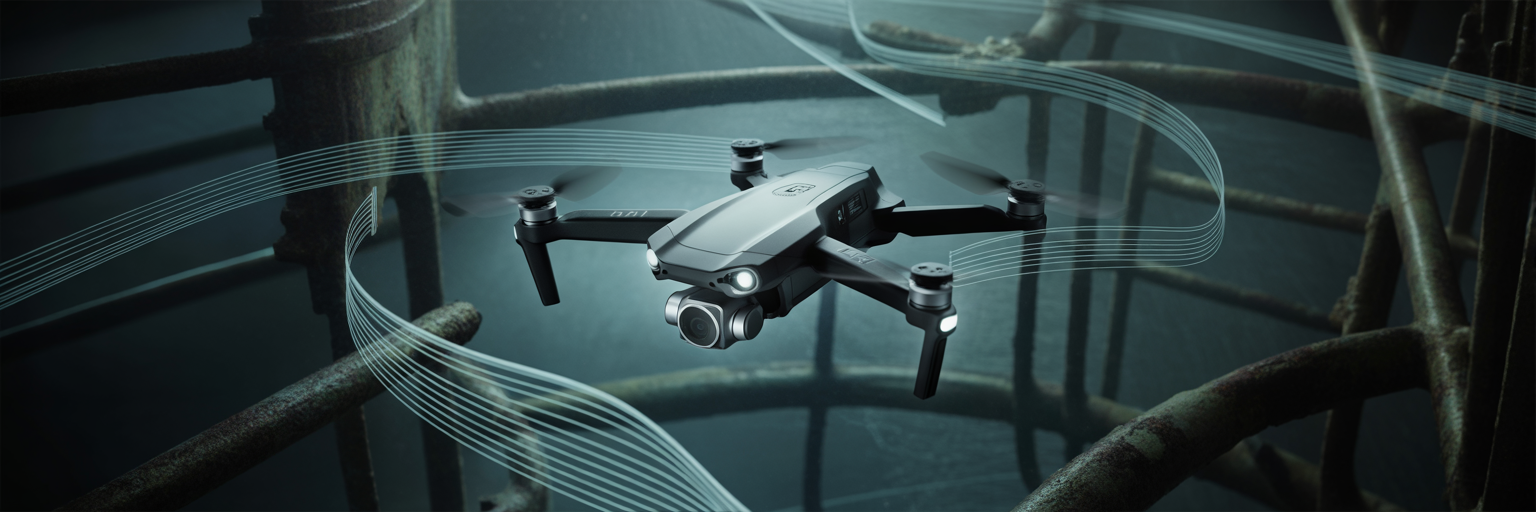
One of the most promising applications is in the field of robotics. Autonomous underwater vehicles (AUVs) traditionally rely on sonar and cameras to navigate. However, these sensors struggle in cluttered, murky environments like shipwrecks, underwater caves, or dense aquatic vegetation. Researchers are now building robots that use active electrolocation, mimicking weakly electric fish. These robots generate their own electric field and use an array of sensors to detect distortions, allowing them to map their surroundings with high precision in conditions where other sensors would fail. This could revolutionize underwater exploration and maintenance.
Bio-Inspired Sensors: Mimicking Nature’s Sensitivity
The incredible sensitivity of organs like the Ampullae of Lorenzini in sharks serves as a blueprint for a new generation of bioelectric sensors. Scientists are working to create devices that can detect the same minute electrical fields that sharks use to find prey. Such sensors could have a wide range of applications, from medical diagnostics that detect the faint bioelectric signals of cancer cells to geological surveying tools that monitor subtle electrical changes in the earth’s crust to predict volcanic activity. The goal is to replicate nature’s ability to pick out a tiny signal from a noisy background.
Medical Frontiers: The Quest for Biological Batteries
The electric organ itself is a marvel of biological engineering. It is an efficient, self-repairing, and perfectly biocompatible power source. This has inspired research into creating “biological batteries” for medical implants. Imagine a pacemaker or a neural stimulator powered by a device that uses the body’s own glucose to generate electricity, much like an electric organ. Such a power source could last a lifetime, eliminating the need for surgeries to replace batteries. While replicating the complexity of an electric organ is a monumental challenge, the principles it demonstrates offer a tantalizing glimpse into the future of medical technology. Just as scientists look to electric fish for inspiration in robotics and medicine, they are also exploring other organisms for solutions to pressing global issues, including the discovery of life forms that can feed on plastic waste.
- Autonomous Underwater Navigation: Developing robots that use active electrolocation to map cluttered underwater environments like shipwrecks or pipelines where vision and sonar fail.
- Ultra-Sensitive Medical and Environmental Sensors: Creating devices inspired by the Ampullae of Lorenzini to detect faint bioelectric signals for early disease diagnosis or to monitor geological activity.
- Biocompatible Power Sources: Researching the structure of electric organs to design efficient, self-repairing, and long-lasting biological batteries for medical implants like pacemakers and neural stimulators.
Redefining Biology: The Scientific Legacy of Electric Animals
Beyond their fascinating abilities and technological inspiration, electric animals hold a special place in the history of science. Their study has not only revealed a hidden sensory world but has also been instrumental in shaping our fundamental understanding of life itself. From the earliest days of modern biology to the frontiers of neuroscience, these creatures have repeatedly challenged our assumptions and opened up new fields of inquiry.
The Spark of Electrophysiology: Galvani, Volta, and the Electric Fish
The scientific journey into bioelectricity began in earnest in the late 18th century. The Italian physician Luigi Galvani conducted his famous experiments showing that a frog’s leg would twitch when touched with metal, leading him to propose the existence of “animal electricity.” His contemporary, Alessandro Volta, was skeptical and believed the electricity came from the metals. To prove his point, he studied the electric ray, a creature known since antiquity for its powerful shock. By analyzing its anatomy, Volta correctly deduced that its electric organs were stacks of dissimilar materials, which inspired him to create the first artificial battery, the voltaic pile. This debate, fueled by the study of electric fish, launched the entire field of electrophysiology and gave us the very words we use today: volt, voltage, and galvanism.
Challenging the Divide Between Life and Physics
Before these discoveries, electricity was seen as a force of the inanimate world, a property of lightning, amber, and metals. The existence of animals that could generate and control it was profoundly challenging. Electric fish provided living, breathing proof that the principles of physics were not separate from the processes of life but were deeply integrated within them. They blurred the line between biology and physics, demonstrating that life operates on the same fundamental laws that govern the rest of the universe. This conceptual shift was a critical step in moving biology from a purely descriptive science to one grounded in chemistry and physics.
Modern Neuroscience’s Unlikely Hero: The Electric Organ as a Model System
Even today, electric animals continue to be invaluable to science. The electric organ has become a premier model system for neuroscientists. Why? Because it is a greatly simplified and amplified version of a normal neuromuscular junction, the connection point between a nerve and a muscle. The neurons controlling the electric organ are huge and neatly organized, and the electrocytes are far easier to study than tiny muscle fibers. This has allowed researchers to investigate the fundamental mechanisms of synaptic transmission, the process by which nerve cells communicate, with a clarity and precision that would be impossible in more complex systems like the mammalian brain. Much of what we know about how our own nerves work was first learned from an electric fish. The story of electric animals, from objects of ancient wonder to key players in modern neuroscience, is a powerful testament to the endless surprises the natural world holds. To continue exploring the incredible and often bizarre adaptations that push the boundaries of life, visit Nature Is Crazy.