The Perils of Life in Icy Waters
For most living things, freezing is a death sentence. When water inside a cell turns to ice, it forms crystals with sharp, jagged edges. Think of them as microscopic shards of glass, shredding cell membranes from the inside and causing irreversible damage. This fundamental threat forces organisms in cold climates to adopt sophisticated survival strategies. These polar fish adaptations generally fall into two categories.
Some organisms practice freeze tolerance, a strategy where they allow ice to form in the spaces outside their cells. They endure being partially frozen solid, protecting their vital cellular machinery while their extracellular fluids turn to ice. It’s a high-stakes gamble on surviving a partial freeze.
Others, however, pursue a more ambitious goal: freeze avoidance. These organisms prevent ice from forming anywhere in their bodies. The polar fish at the center of our story are masters of this technique. Their challenge is immense. Polar seawater can plummet to -1.9°C (28.6°F), a temperature well below the typical freezing point of a fish’s blood, which is around -0.9°C (30.4°F). This one-degree difference represents a constant, lethal threat. How do they swim in water that should, by all rights, turn them into solid blocks of ice?
A Biological Solution to Freezing
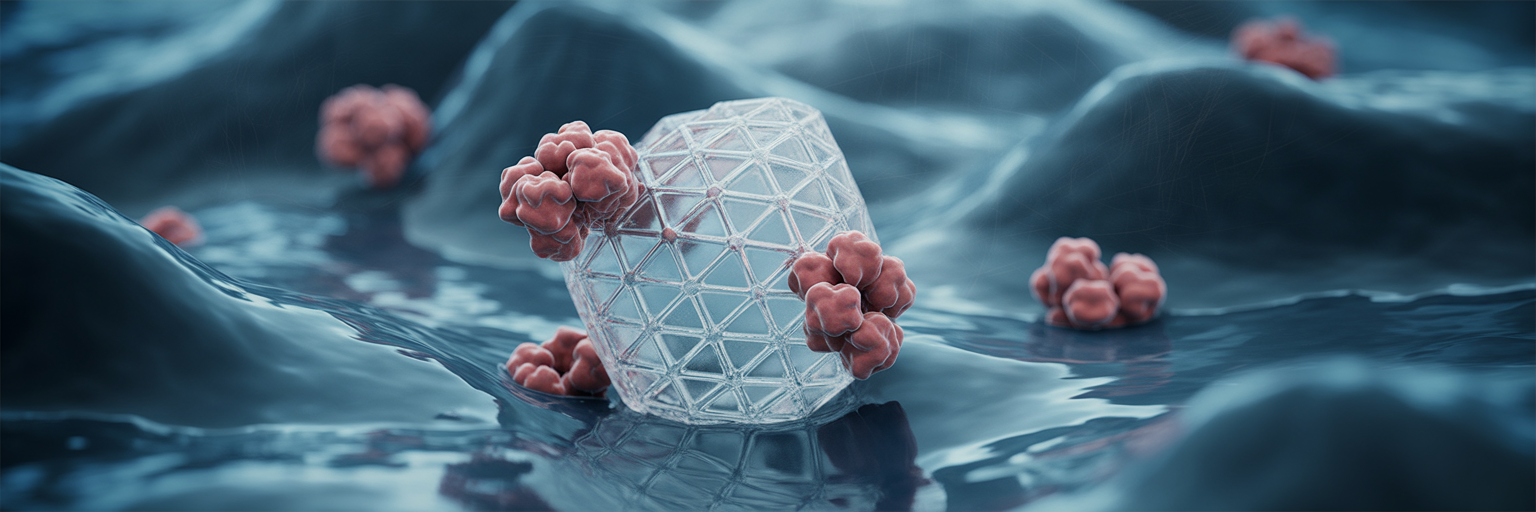
The answer to how these fish that survive freezing manage this feat lies in a remarkable biological invention: Antifreeze Proteins (AFPs). These are not your car’s antifreeze. Instead, they are highly specialized molecules that function with incredible precision. Their primary mechanism is known as adsorption-inhibition. In simple terms, AFPs act like molecular guards, patrolling the fish’s bloodstream. The moment a minuscule ice crystal begins to form, these proteins find it and bind directly to its surface. This binding action physically blocks other water molecules from joining the crystal, stopping its growth before it can become dangerous.
This approach is fundamentally different from conventional antifreezes like salt or ethylene glycol. Those substances work “colligatively,” meaning they must be present in very high concentrations to lower the freezing point of the entire liquid. AFPs, on the other hand, work “non-colligatively” by targeting the ice itself. This makes them astonishingly efficient. To put their power into perspective, research highlighted by the National Science Foundation has shown that AFPs can be up to 300 times more effective than chemical antifreezes at the same concentration. This efficiency is key to understanding how do antifreeze proteins work without poisoning the organism.
| Feature | Antifreeze Proteins (AFPs) | Conventional Antifreeze (e.g., Salt, Glycol) |
|---|---|---|
| Mechanism | Binds directly to ice crystals (Non-colligative) | Lowers the freezing point of the entire liquid (Colligative) |
| Concentration Needed | Extremely low | Very high |
| Efficiency | Up to 300x more effective | Standard, concentration-dependent |
| Biological Impact | Non-toxic, works within living cells | Often toxic at high concentrations |
The Molecular Mechanics of Ice Prevention
The targeted efficiency of Antifreeze Proteins comes from their unique molecular structure. Many AFPs have a remarkably flat, repetitive surface. This surface isn’t random; it acts like a molecular key, perfectly matching the geometric lattice of an ice crystal. This concept, known as structural complementarity, allows the protein to bind tightly and specifically to the ice, almost like a piece of Velcro designed for a single surface. It’s this perfect fit that enables the protein to halt ice growth so effectively.
This binding action produces a critical phenomenon called thermal hysteresis. In simple terms, AFPs create a buffer zone between the melting point and the freezing point of the fish’s body fluids. For example, while the fluid might melt at a normal 0°C (32°F), the presence of AFPs means it won’t actually freeze until the temperature drops much lower, perhaps to -1°C (30.2°F). This gap, or hysteresis, is what allows the fish to remain liquid and fully functional in subzero water. The study of thermal hysteresis in fish reveals just how finely tuned this adaptation is.
What’s even more fascinating is that this solution evolved more than once. Fish in the geographically isolated Arctic and Antarctic independently developed different types of AFPs to solve the exact same environmental problem. This is a classic example of convergent evolution, where nature arrives at a similar solution through different evolutionary paths, underscoring just how powerful and effective this molecular strategy is.
The Unexpected Superheating Paradox

Just when scientists thought they understood how these proteins worked, a counterintuitive discovery complicated the picture. The same powerful bond that stops ice from growing also makes it incredibly difficult to melt. The AFP, by clinging so tightly to the ice crystal, stabilizes it. This means the ice may not melt at its normal 0°C (32°F) point. Instead, it requires temperatures significantly above freezing to thaw, a phenomenon known as “superheating.”
This creates a physiological puzzle. What happens to a polar fish that accumulates these ultra-stable, protein-bound ice crystals in its body over a long, cold winter? If summer arrives and the water warms up, but these internal ice crystals refuse to melt, the fish could face a chronic internal problem. This surprising “superheating” effect was a significant discovery in the study of Antarctic notothenioid fishes, as documented in research published by the Proceedings of the National Academy of Sciences (PNAS). It challenged the assumption that AFPs were simply a winter-only defense.
This paradox reveals that the interaction between antifreeze proteins and ice is far more complex than a simple on/off switch. It reminds us that science is not a collection of settled facts but a dynamic process of discovery. The more we learn about these remarkable fish, the more questions we find, pushing the boundaries of biology and chemistry.
Harnessing Nature’s Antifreeze for Technology
The study of polar fish is more than just a biological curiosity; it offers a blueprint for human innovation. Understanding how nature solves the problem of freezing opens the door to a wide range of antifreeze protein applications that could transform multiple industries. The potential is enormous, moving from the Antarctic Ocean into our daily lives.
Scientists are actively exploring how to harness the power of AFPs for groundbreaking technologies. Some of the most promising areas include:
- Medicine and Cryopreservation: One of the biggest challenges in organ transplantation is the damage caused by ice crystals during freezing. AFPs could revolutionize the preservation of organs, tissues, and blood, allowing them to be stored longer and more safely, ultimately saving more lives.
- The Food Industry: Have you ever noticed the gritty texture of ice cream that has been in the freezer too long? That’s from large ice crystals. AFPs could be used to create smoother ice cream and frozen yogurt. They could also maintain the texture and quality of frozen fish, fruits, and vegetables, reducing food waste and improving consumer products.
- Industrial and Agricultural Uses: The applications extend even further. Imagine developing highly effective, biodegradable de-icing sprays for aircraft that work better than current chemical solutions. In agriculture, scientists are working on engineering frost-resistant crops by incorporating AFP genes, helping protect harvests from sudden cold snaps.
By studying these extreme survivalists, we are learning to build more resilient technologies. The fish that conquered the cold may soon help us improve everything from life-saving medical procedures to the food on our tables.