The Foundation of Biological Weaponry
Many nature enthusiasts use the words poisonous and venomous interchangeably, but in biology, the distinction is critical. It comes down to delivery. Venomous creatures are active aggressors, injecting their toxins with fangs, stingers, or spines. Think of a rattlesnake’s bite. Poisonous creatures, however, are passive defenders. Their danger lies in being touched or eaten, as their toxins are stored in their tissues. This article focuses on these masters of passive defense.
Instead of viewing their toxins merely as weapons, it’s more accurate to see them as integral building materials. These creatures construct their very survival from deadly molecules. Understanding how animals use toxins this way reveals two primary methods. Some synthesize their own poisons from scratch, an endogenous process. Others, more ingeniously, acquire them from their diet in an exogenous process. We will explore this fascinating strategy of repurposing toxins from the environment, turning a meal into a shield.
| Basis of Comparison | Poisonous Animals | Venomous Animals |
|---|---|---|
| Delivery Method | Passive (ingested, inhaled, or absorbed) | Active (injected via bite or sting) |
| Primary Function | Defense (to deter predators) | Offense (to subdue prey) or Defense |
| Example | Poison Dart Frog | Rattlesnake |
| Human Interaction | Harmful if touched or eaten | Harmful if bitten or stung |
Note: This table clarifies the fundamental mechanisms of toxicity, which is essential for understanding the defensive strategies discussed throughout the article.
Acquiring the Raw Materials for Poison
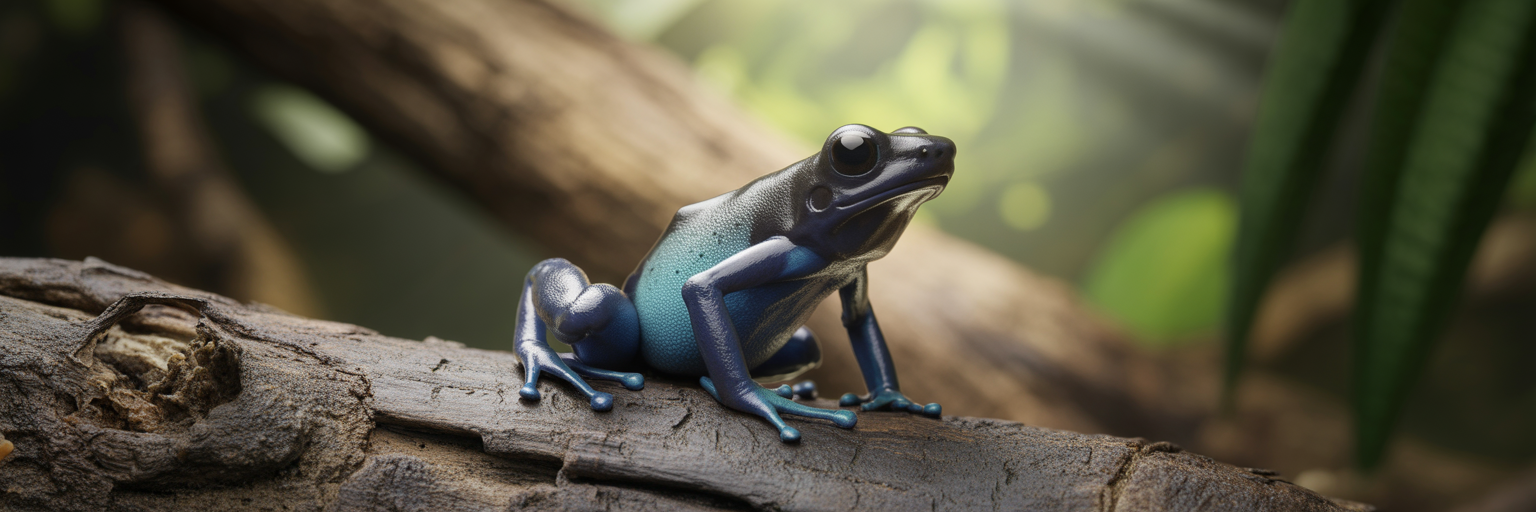
The idea that an animal can eat something deadly and use it for its own protection is a remarkable feat of evolution. This process, known as dietary toxin sequestration, is a cornerstone of chemical defense for many species. It’s a strategy that perfectly illustrates the old saying, “you are what you eat,” but with a lethal twist.
Dietary Sequestration: You Are What You Eat
The poison dart frog is the poster child for this strategy. Despite their reputation, these vibrant amphibians don’t produce their potent toxins themselves. Instead, they accumulate them from their diet of toxic arthropods, such as mites, ants, and beetles. The specific alkaloids found in their skin glands directly match the chemical compounds present in these tiny invertebrates. In captivity, when fed a non-toxic diet of fruit flies or crickets, poison dart frogs lose their toxicity completely. This proves their poison isn’t innate but carefully collected. The variety and potency of poison dart frog toxins depend entirely on the local menu, making some populations far more dangerous than others.
Safe Transport and Storage
So, if these frogs are eating poison, how do they avoid dying themselves? The journey from meal to defense is a masterpiece of biochemical engineering. After the frog digests a toxic mite, the alkaloids are absorbed from its gut into the bloodstream. From there, they are transported and deposited into specialized glands in the skin, turning the frog’s entire body into a toxic shield. The key to survival during this transport lies in preventing the toxins from interacting with the frog’s own sensitive systems. A study highlighted by eLife Sciences identified a specific protein that allows these frogs to safely accumulate toxins. This protein acts as a “toxin sponge,” binding to poisons like batrachotoxin and keeping them locked away and harmless during transport. This process of one organism co-opting another’s biology for its own survival is a recurring theme in nature, much like the strange case of the parasite that turns snails into zombies.
The Internal Blueprint for Self-Immunity
Acquiring toxins is only half the battle. To wield such a dangerous arsenal, an animal must also be completely immune to its own poison. This animal toxin resistance is not an accident but a deeply integrated co-evolutionary trait. It’s one thing to carry a weapon, but another entirely to be bulletproof. These creatures have evolved sophisticated internal blueprints that grant them total self-immunity, primarily through two key mechanisms.
1. Genetic Modification: At the most fundamental level, many poisonous animals have evolved genetic mutations that make their bodies inherently resistant. Their cellular machinery is built differently. For instance, the potent batrachotoxin carried by some poison dart frogs works by forcing sodium channels in nerves and muscles to open, causing paralysis and heart failure. However, the frog’s own sodium channels have a slightly different shape due to a genetic mutation. This subtle change prevents the toxin from binding to them. The poison is present, but it has no target to attack. Their bodies are effectively immune at a molecular level, rendering the toxin inert within their own systems.
2. Toxin-Sequestering Proteins: Building on the transport mechanism, the “sponge” proteins serve a dual purpose as a crucial internal defense system. These proteins act like molecular cages, actively locking up free-floating toxin molecules and keeping them safely away from sensitive physiological pathways. This ensures the animal’s own metabolism, nerve function, and muscle contractions can proceed without interference. While this system provides incredible protection, it comes at a cost. Maintaining these specialized proteins requires a significant amount of energy. It’s a biological trade-off: invest energy in defense to guarantee survival. This level of internal adaptation is one of nature’s most impressive feats, rivaling other survival marvels like the frog that freezes solid and thaws back to life.
An Evolutionary Arms Race of Toxin and Resistance
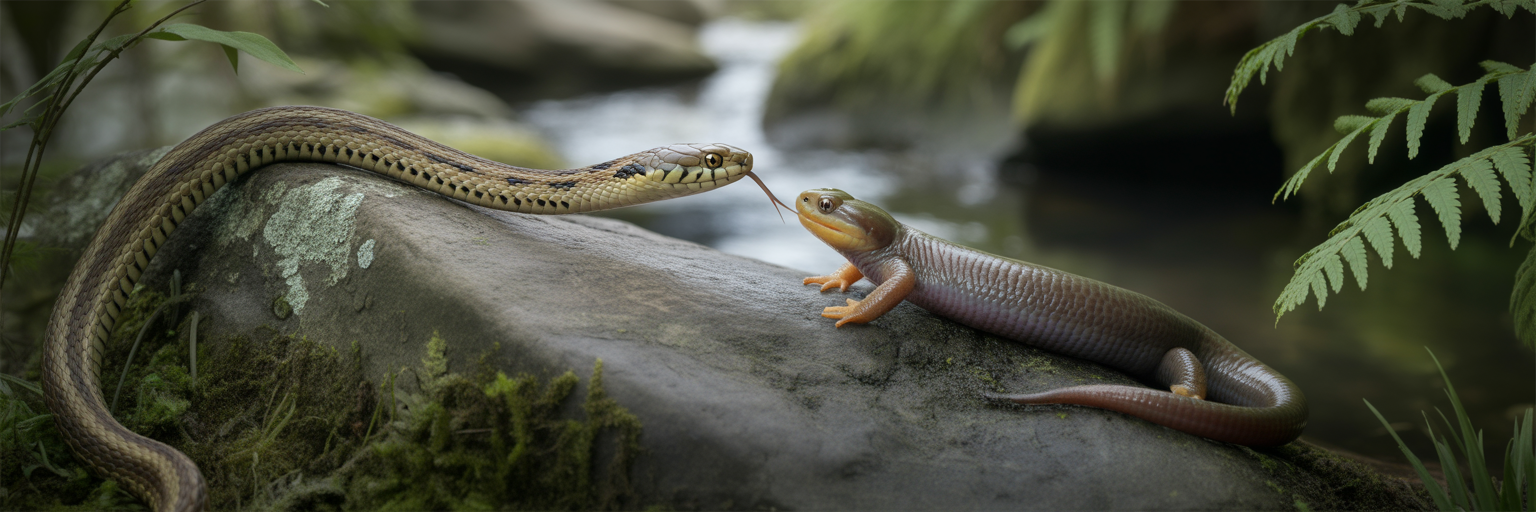
The development of poison is not a story that happens in isolation. It is one half of a dynamic, decades-long conflict known as a co-evolutionary arms race. As prey species develop more potent chemical defenses, their predators face immense pressure to evolve countermeasures. This back-and-forth escalation drives the evolution of animal poison and resistance in a relentless cycle of adaptation.
A classic example of this plays out in the American Pacific Northwest between the rough-skinned newt and the common garter snake. The newt produces a powerful neurotoxin called tetrodotoxin, potent enough to kill most predators that try to eat it. However, certain populations of garter snakes have evolved a high degree of genetic resistance to this specific toxin, allowing them to prey on the newts without harm. In areas with resistant snakes, the newts have, in turn, evolved to be even more toxic. In other locations where the snakes are not resistant, the newts are far less poisonous. This geographic mosaic shows a direct physiological counter-adaptation in action.
Beyond internal resistance, predators also develop clever behavioral adaptations. This isn’t limited to newts; as ZME Science reports, some snakes have developed strategies to consume highly toxic poison dart frogs. Observers have noted snakes rubbing the frogs against surfaces like logs or leaves before eating them, possibly to wipe off some of the skin secretions and reduce the toxic dose. This predator pressure creates a constant feedback loop, pushing prey to refine their chemical defenses while predators innovate new ways to overcome them. This dynamic is just one of many incredible stories of adaptation you can find by exploring our blog.
The Ecological Role of Built-in Defenses
When an animal repurposes deadly molecules for its own protection, it does more than just save itself from being eaten. This strategy has ripple effects that shape the entire ecosystem. Incorporating toxins is a highly energy-efficient survival method, especially when paired with aposematism. The bright warning colors of a poison dart frog or a monarch butterfly act as a universal “do not eat” sign, teaching predators to avoid them without the need for a physical fight.
The presence of these walking chemical weapons profoundly influences the behavior, diet, and even the geographic distribution of other species. Predators learn to avoid certain colors or patterns, which can open up ecological niches for non-toxic mimics that copy the same warning signals. The toxicity of a single species can dictate the foraging routes of predators, influencing the entire local food web. Returning to our initial metaphor, these toxins are far more than just a weapon. They are the foundational building materials for survival. Evolution’s ingenuity has turned a lethal threat into a sophisticated, life-sustaining advantage, allowing these creatures to thrive in competitive environments. The ingenuity of turning poison into protection is a testament to the endless creativity of the natural world, and there are countless more wonders to discover at Nature is Crazy.