
The Ocean’s Intelligent Anomaly
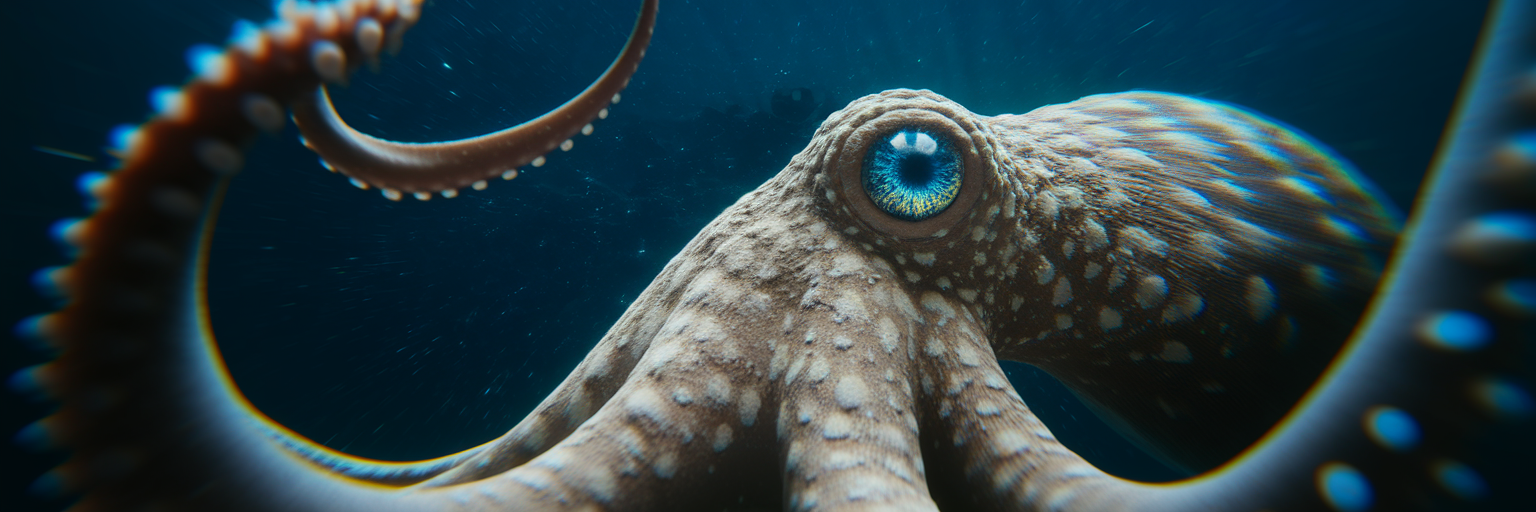
Scientists have long been fascinated by the octopus, an animal whose intelligence feels almost alien. We have seen them solve complex puzzles, use tools, and escape from seemingly impossible enclosures. This cognitive prowess has been well documented, but it only scratches the surface of a deeper biological mystery. Beyond their clever behaviors, octopuses and their cephalopod relatives possess a rare and powerful ability: they can edit their own genetic instructions on the fly.
This process, known as RNA editing, offers a dynamic alternative to the more permanent nature of DNA. Think of DNA as the master blueprint for a building, stored safely in an architect’s office. It contains the fundamental design and is not meant to be altered. RNA, on the other hand, is like a daily work order taken to the construction site. It’s a working copy that can be modified to address immediate needs, like a sudden change in weather or material availability.
This remarkable capability for cephalopod genetic adaptation gives these creatures a significant survival advantage. Instead of waiting generations for DNA mutations to take hold, an octopus can adjust its own biology within its lifetime to acclimate to environmental shifts. It’s a form of biological improvisation that sets them apart from nearly every other complex animal on the planet.
A Look Inside the Genetic Editing Process
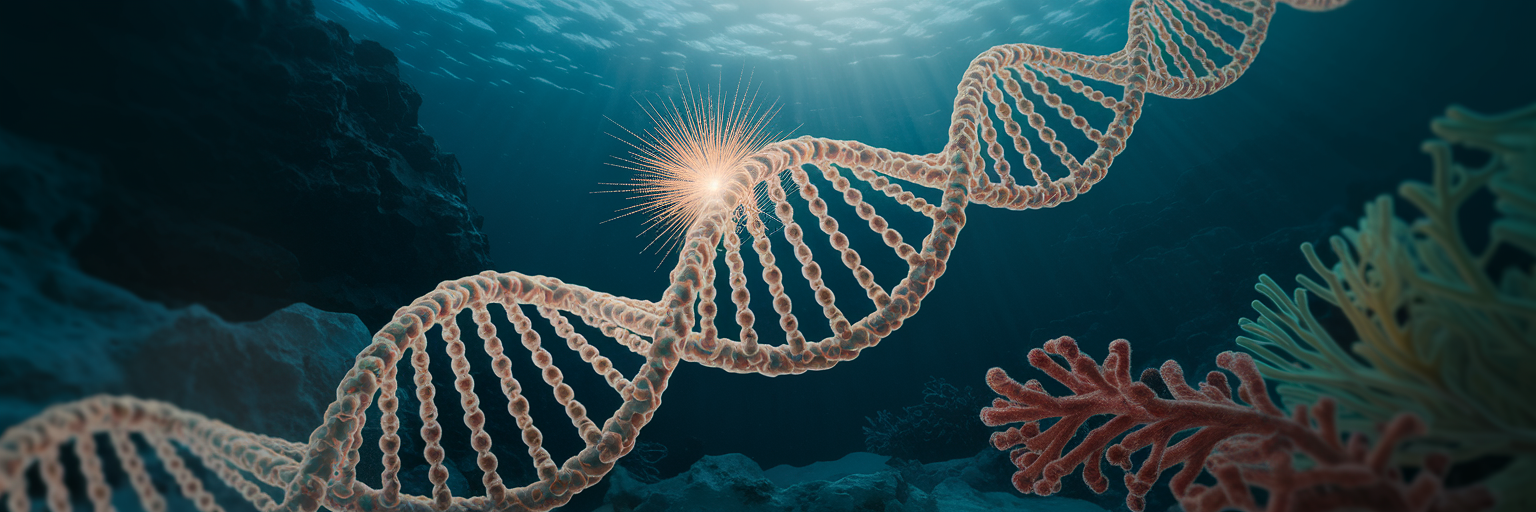
So how do these creatures perform such a sophisticated biological feat? The answer lies in a specific biochemical process that allows for precise, single letter changes to their genetic code. This mechanism, central to octopus RNA editing, focuses on a process called adenosine to inosine (A-to-I) editing. It is a subtle but powerful tool for biological fine tuning.
The key player in this operation is an enzyme named ADAR. This enzyme patrols newly created RNA strands, searching for a specific nucleotide, adenine (A). When it finds one, it chemically converts it into a different molecule called inosine (I). This is where the magic happens. The cell’s protein making machinery, the ribosome, does not recognize inosine. Instead, it interprets it as if it were another nucleotide, guanine (G). This single letter swap effectively rewrites the genetic message.
The consequence of this change is profound. Altering the RNA code leads to a different amino acid being inserted into a protein, which in turn changes that protein’s final shape and function. It’s like a chef modifying a recipe. The RNA is the original recipe, and the ADAR enzyme is the chef who decides to substitute lemon juice with vinegar. The resulting dish, the protein, is slightly different but perhaps better suited for the occasion, which in this case is the surrounding environment. This editing is especially widespread in the nervous system, allowing for incredibly precise adjustments to proteins that control neural activity.
Adapting to a Changing Marine World
This genetic editing process is not just a biological curiosity. It is a practical survival tool that directly addresses environmental challenges. One of the clearest examples of this is how octopuses adapt to cold water. As temperatures drop, maintaining nervous system function becomes a critical challenge for many marine animals. For the octopus, RNA editing provides an elegant solution.
A study supported by the National Science Foundation (NSF) revealed that octopuses massively ramp up RNA editing in colder waters to maintain nervous system function. This is not a random series of changes but a targeted, systemic response involving thousands of sites across their neural RNA. The editing specifically alters key proteins to ensure they continue to work efficiently despite the cold. Two critical proteins affected are:
- Kinesin-1: This protein acts as a molecular motor, a tiny cargo truck that transports essential materials along pathways inside neurons. Editing helps this motor run smoothly when the temperature drops, preventing cellular traffic jams.
- Synaptotagmin: This protein is a key sensor in nerve communication, triggering the release of neurotransmitters that allow neurons to talk to each other. Editing ensures that nerve signals continue to fire quickly and accurately in the cold.
By fine tuning these and other proteins, the octopus maintains physiological stability. This dynamic toolkit allows them to thrive in a wide range of ocean temperatures, from the frigid Pacific Northwest to warm tropical seas. It is a powerful example of how biological systems can be as complex and responsive.
A Unique Strategy in the Animal Kingdom

The octopus’s reliance on RNA editing places it in a class of its own. While the editing machinery exists in other complex animals, including humans, its use is fundamentally different. In humans, RNA editing that recodes a protein is exceptionally rare. In cephalopods, it is a widespread and essential biological strategy. In some squid, for instance, researchers have found that over 60% of the RNA transcripts in their nervous system are edited. This is a staggering figure that highlights a completely different evolutionary approach.
This has led scientists to propose a fascinating theory of an “evolutionary trade-off.” The heavy reliance on RNA editing for adaptation appears to have come at a cost: the underlying DNA genomes of cephalopods evolve very slowly. They have effectively prioritized flexible, short term acclimation through RNA editing over the permanent, generational changes driven by DNA mutation. It is one of the most compelling recent evolutionary biology discoveries, showing there is more than one successful path to survival.
| Factor | Cephalopods (Octopus, Squid) | Humans & Other Vertebrates |
|---|---|---|
| Frequency of Recoding | Extremely high; affects majority of neural proteins | Extremely rare; affects a tiny fraction of proteins |
| Primary Function | Systemic adaptation to environment (e.g., temperature) | Fine-tuning of a few specific proteins |
| Impact on Proteome | Creates massive protein diversity from a static genome | Minimal impact on overall protein diversity |
| Evolutionary Strategy | Prioritizes rapid, reversible acclimation within a lifetime | Prioritizes slow, permanent adaptation via DNA mutation over generations |
This unique strategy demonstrates that evolution is not a linear march toward a single solution.
New Frontiers in Biology and Medicine
The octopus’s biological strategy does more than just expand our understanding of life in the ocean. It challenges the traditional, DNA centric view of evolution by revealing a powerful mechanism for adaptation at the RNA level. This insight is already opening new doors in biotechnology and medicine, where the prospect of RNA editing in medicine is a major focus of research.
The ability to precisely and safely edit RNA could lead to novel therapies for a range of human conditions. Researchers are particularly interested in learning from how octopuses regulate their neural proteins with such accuracy. This could inspire new, non addictive treatments for chronic pain or more targeted therapies for neurological disorders. This level of neural protein recoding, confirmed in a 2023 study published in PubMed, is what makes the process so interesting for medical research.