The Two Worlds of Reproduction
We often think of reproduction as a simple choice between two distinct paths. In nature, however, some of the most successful organisms are those that refuse to pick a side. They have mastered the ability to toggle between strategies, giving them a remarkable advantage for survival. This reproductive flexibility is just one of many incredible adaptations found in the natural world, which are explored throughout our blog.
To understand their strategy, we first need to clarify the two fundamental modes of life in the ongoing discussion of sexual vs asexual reproduction.
- Sexual Reproduction: This involves combining genetic material from two parents. Its primary benefit is creating genetically diverse offspring. This variety is the raw material for evolution, allowing a species to adapt to changing environments and develop resistance to new diseases.
- Asexual Reproduction: This method involves a single parent producing genetically identical offspring, or clones. The main advantage here is speed. When conditions are stable and resources are abundant, it allows for explosive population growth.
The most fascinating part is not the existence of these two methods, but the existence of organisms that switch reproduction modes. This ability is a sophisticated evolutionary tool, allowing them to get the best of both worlds. But why and how do they make this critical decision?
Environmental Triggers for the Reproductive Switch
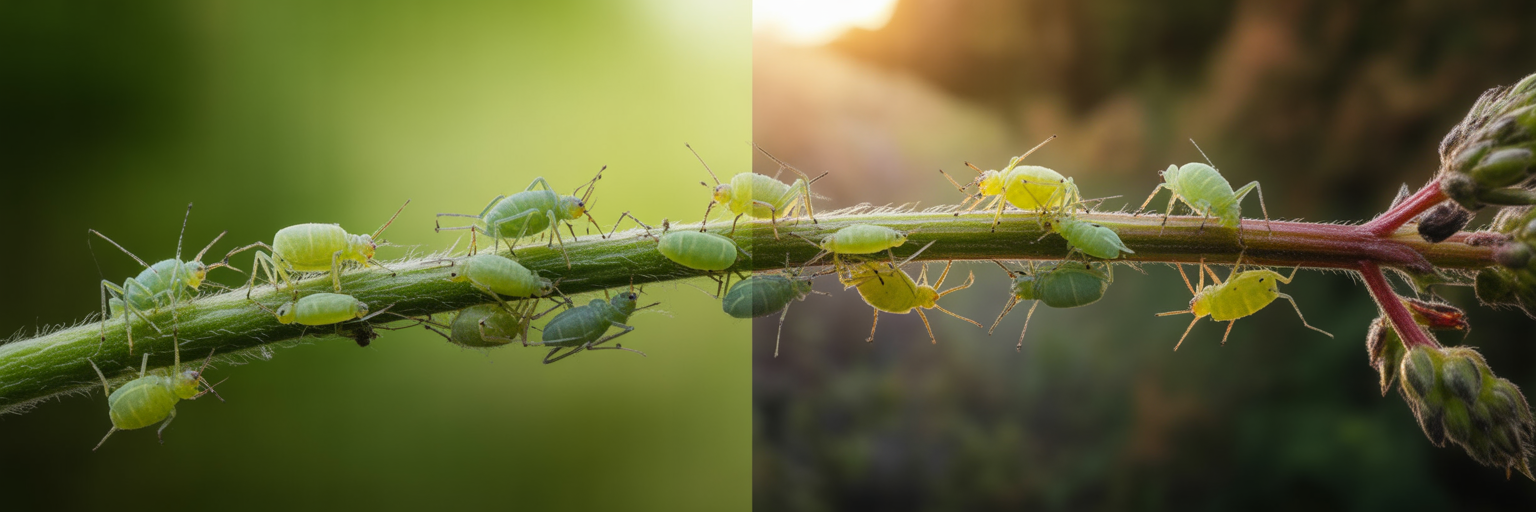
For many species, the decision to switch reproductive methods is not random. It is a calculated response to clear signals from their surroundings that forecast future conditions. The humble aphid provides a perfect example of these environmental triggers for reproduction in action. Throughout the long, warm days of a North American summer, female aphids reproduce asexually, giving birth to live, genetically identical daughters. This strategy capitalizes on the advantages of asexual reproduction, allowing their population to explode and consume plentiful plant resources.
But as summer fades into autumn, the environment sends a different message. Shorter days and dropping temperatures signal the approach of winter. This is the cue for a dramatic shift in the aphid reproduction cycle. The new generation includes both males and females, which mate and lay durable, genetically diverse eggs. These eggs are tough enough to survive the harsh winter, hatching in the spring to start the cycle anew. According to research published on ScienceDirect, this reproductive polyphenism allows a single genotype to produce different offspring based on external cues. It is a brilliant strategy: maximize numbers when times are good, and invest in genetic resilience when the future is uncertain.
| Factor | Asexual Phase (Spring/Summer) | Sexual Phase (Autumn/Winter) |
|---|---|---|
| Environmental Cue | Long days, warm temperatures, abundant food | Shortening days, dropping temperatures |
| Reproductive Goal | Rapid population expansion | Genetic diversity and overwinter survival |
| Offspring Type | Genetically identical female clones (live birth) | Genetically diverse, durable eggs |
| Population Outcome | Explosive growth to exploit resources | Ensures lineage survives harsh conditions |
The Genetic Toolkit for Reproductive Flexibility
While environmental cues pull the trigger, the ability to switch is ultimately written in an organism’s DNA. This flexibility is not just a behavior but a deeply programmed biological function, controlled by a sophisticated genetic toolkit. This genetic flexibility is a testament to evolution’s creativity, rivaling other biological wonders like the jellyfish that learned to reverse its own aging.
Ploidy and Spontaneous Switching
In some organisms, the switch is linked to fundamental changes at the chromosomal level. Planarian flatworms, for instance, can shift from asexual fission to sexual reproduction based on their ploidy, which is the number of chromosome sets in a cell. A bioRxiv preprint describes how a cyclical switch in reproductive pathways in hybrid planarians depends on their ploidy level. This internal mechanism can spontaneously activate the machinery for sexual reproduction, demonstrating a direct link between an organism’s genetic state and its reproductive strategy.
Hybridization as a Catalyst
Sometimes, the genetic instructions for this dual strategy arise from an unexpected source: the mixing of genes from different species. Hybridization can create novel genetic combinations that unlock or enable reproductive flexibility. It shows that nature is full of surprising interactions between species, some far more bizarre, like the parasite that turns snails into zombies. Specific genes and linked loci act like a biological control panel, activating the pathways for making eggs and sperm or deactivating them in favor of cloning. This internal wiring gives these organisms the power to adapt their entire life cycle on the fly.
When Asexuality Becomes a One-Way Street

The ability to reproduce asexually seems like a superpower, but abandoning sex entirely carries immense risk. The true advantage lies not in asexuality itself, but in retaining the option to switch back. For lineages that lose this ability, asexuality can become an evolutionary dead end. Unlike the brown algae’s evolutionary dead end, other species have found remarkable ways to endure, such as the frog that freezes solid and thaws back to life each winter.
A recent study in Nature documented how some populations of brown algae have permanently lost the capacity for sexual reproduction. While they may thrive in the short term, they are now trapped on a terminal branch of the evolutionary tree. This is because permanent asexuality comes with several long-term dangers:
- Mutation Accumulation: Without the genetic shuffling of sexual reproduction, harmful mutations build up over generations. This process, known as Muller’s Ratchet, slowly degrades the genome.
- Lack of Adaptability: A genetically uniform population is extremely vulnerable. A single new disease or a shift in climate could wipe out the entire lineage.
- Reduced Evolutionary Potential: The lineage cannot generate novel gene combinations, severely limiting its ability to adapt to future challenges.
This fate highlights why the switching strategy is so powerful. It allows organisms to reap the short-term benefits of rapid cloning while keeping the genetic toolkit for sexual reproduction in reserve as the ultimate insurance policy.
A Blueprint for Resilience in a Changing World
The organisms that have mastered the reproductive switch offer a profound lesson in survival. Their strategy is a perfect balance of opportunism and foresight. Asexual reproduction allows for rapid colonization and resource exploitation when conditions are favorable. Sexual reproduction provides the genetic novelty needed to face adversity, from harsh winters to new pathogens.
This reproductive flexibility is a powerful blueprint for resilience, especially as our planet faces increasing environmental instability and climate change. Species locked into a single, rigid reproductive strategy lack this adaptive capacity. The ability to switch between sexual vs asexual reproduction is not just a biological curiosity; it is a dynamic solution to the fundamental challenge of persistence in an unpredictable world.
These organisms are a profound reminder of the endless ingenuity of life, and you can discover more of nature’s craziest stories right here. They challenge our simple binary definitions and reveal that in nature, flexibility is often the ultimate key to survival.