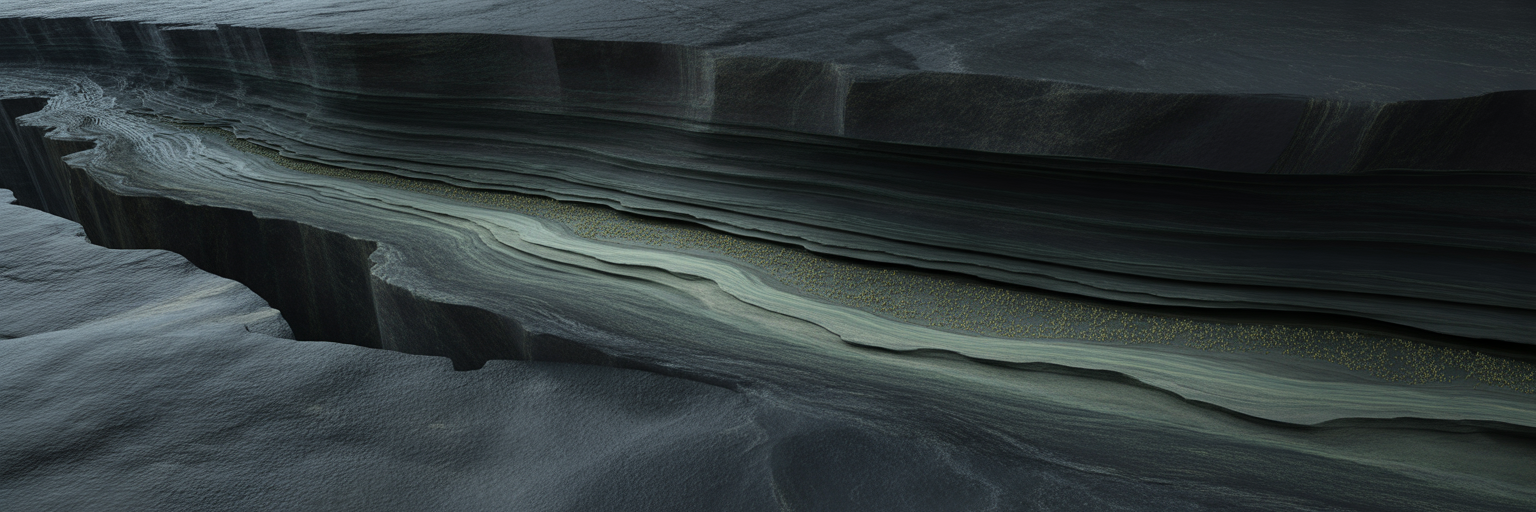
A Record-Breaking Discovery in Ancient Stone
Geological records have long served as Earth’s diary, but finding a living author still writing in its pages after two billion years was thought impossible. A recent discovery in South Africa has turned that assumption on its head. Deep within the Bushveld Igneous Complex, scientists have found living microbes sealed inside rock fractures that are two billion years old. To put that into perspective, the previous record for microbial survival was around 100 million years. This finding is not just a small step forward; it is a monumental leap in our understanding of life’s endurance.
These organisms are the ultimate extremophiles, a term for lifeforms that thrive in conditions we would consider uninhabitable. Think of them not just as survivalists, but as masters of a completely different way of existing. These particular microbes are a prime example of astrobiology extremophiles, organisms that show us the absolute limits of where life can persist.
They are living relics from a time when life on early Earth was fundamentally different. Two billion years ago, our planet had a low-oxygen atmosphere and oceans with a unique chemical makeup. Life had to be tough, resourceful, and incredibly patient. This discovery gives us a direct window into that ancient world, showing us the kind of resilience that was necessary to survive on a planet that was still finding its footing.
Verifying Life from a Bygone Era

Finding these microbes was one thing, but proving they were genuinely ancient was another challenge entirely. The immediate question for scientists was straightforward: how can we be sure these are not just modern bacteria that somehow contaminated the samples? The first clue was their location. The microbes found in rocks were trapped in fluid-filled fractures deep underground, completely sealed off from the surface world for a geological age. This isolation was a strong indicator that they were not recent arrivals.
To build an undeniable case, researchers employed a combination of advanced analytical methods to rule out any possibility of contamination. The process was a meticulous exercise in scientific validation.
- Scanning Electron Microscopy was used to get a direct look at the microbes. This provided visual confirmation of their physical structures, showing they were indeed cellular organisms.
- Infrared and Fluorescent Microscopy went a step further. These techniques helped identify the organic nature of the cells and, crucially, confirmed they were metabolically active. They were not just preserved husks but were, in a very real sense, alive.
- Geochemical Analysis of the surrounding rock and fluid proved the organisms were indigenous to their environment. The chemistry of the water and minerals matched what would be expected from a system sealed away for billions of years.
This multi-pronged approach was essential. According to a study published by the University of Tokyo, these methods confirmed the organisms were native to the two-billion-year-old rock. By combining visual, chemical, and geological evidence, the scientific community established with confidence that these lifeforms are authentic survivors from a long-lost era of Earth’s history.
The Secrets of Billion-Year Survival
The confirmation of their age leads to an even more profound question: how can anything survive for two billion years? The answer redefines what it means to be “alive.” These are not the oldest living organisms in the active sense we are familiar with. Instead, they exist in a state of extremely slow metabolism, almost like a form of suspended animation. Their entire existence is geared toward one thing: persistence.
Since they are miles from sunlight, photosynthesis is impossible. Their energy source is chemosynthesis, a process where they essentially “eat” the rocks and trapped water around them. They derive just enough energy to maintain their cellular integrity from chemical reactions involving minerals, hydrogen, and sulfates. Their survival strategies are a masterclass in minimalism:
- Minimal Energy Use: They operate in a state of near-stasis. Their metabolic rate is so slow that they barely use any energy, allowing them to subsist on the faintest chemical whispers from their environment.
- Chemical Fuel Source: Instead of sunlight, they harness energy from inorganic chemical reactions. This ancient metabolic pathway was likely common on early Earth before photosynthesis became widespread.
- Total Isolation: Being shielded deep within the rock protects them from surface radiation, temperature fluctuations, and other environmental changes that would have wiped out less-protected life.
This discovery challenges our very definition of life. It suggests that life can persist on geological timescales with almost no energy input, waiting patiently in the dark. These microbes are not just surviving; they are living relics of an ancient metabolic system, offering a glimpse into a form of life that has been hidden from sight for eons.
Rewriting the Timeline of Early Life
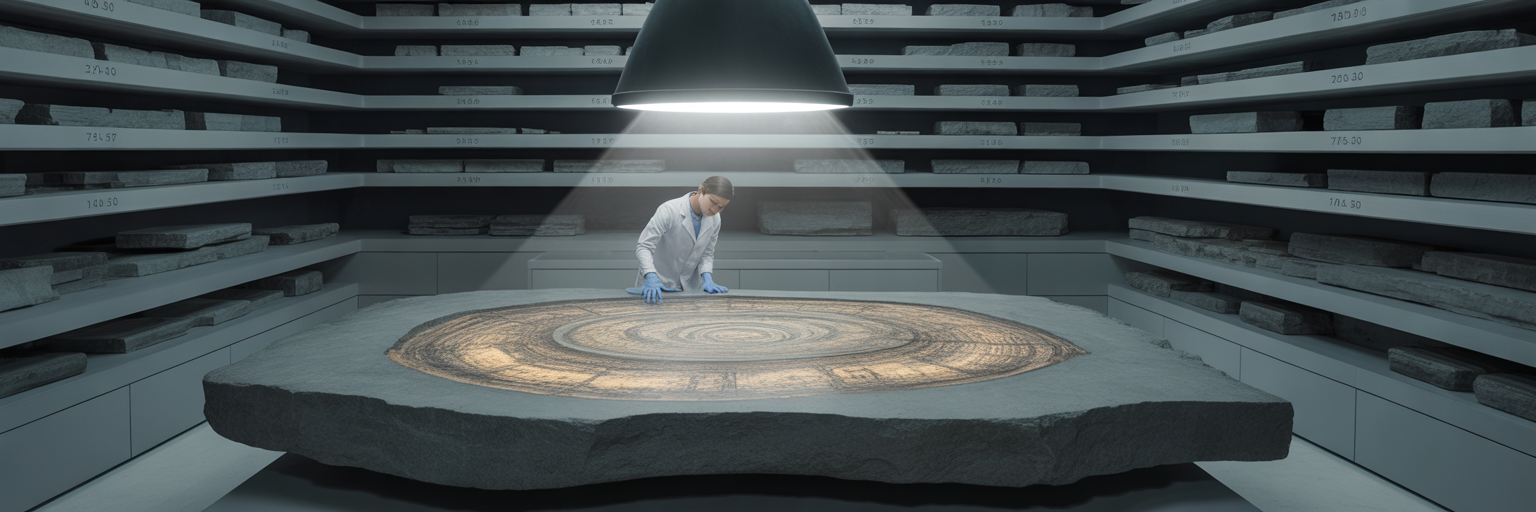
This remarkable discovery does not stand alone. It is part of a wave of recent findings that are collectively pushing back the timeline of life on Earth and adding incredible detail to the story. While the living microbes show us life’s endurance, other discoveries reveal different parts of the puzzle. Scientists are now assembling a more complete picture by studying various types of ancient lifeforms in rocks, each offering a unique perspective.
For example, the discovery of 1.5-billion-year-old 3D microfossils in Australia gives us a look at the physical form of primordial organisms. As reported by Phys.org, this breakthrough allows scientists to study the actual shape and complexity of these ancient cells. Meanwhile, chemical biosignatures found in 3.3-billion-year-old rocks in South Africa provide indirect evidence of metabolic processes, like early forms of photosynthesis. Each piece of evidence, whether a living cell, a fossil, or a chemical trace, adds another layer to our understanding.
| Type of Evidence | Approximate Age | What It Reveals | Example |
|---|---|---|---|
| Living Microbes | 2 Billion Years | Life’s ability to survive in a near-dormant state for geological eras. | Bushveld Complex, South Africa |
| 3D Microfossils | 1.5 Billion Years | The physical shape and structure of ancient microorganisms. | Barney Creek Formation, Australia |
| Chemical Biosignatures | 3.3 Billion Years | Indirect evidence of metabolic processes, like photosynthesis. | Barberton Greenstone Belt, South Africa |
This table compares different forms of evidence for ancient life, each providing a unique window into Earth’s biological history. The data is based on major paleontological and geological discoveries reported in recent years.
Together, these findings are revolutionizing our view of early life. They show that life was not only present but was also complex, resilient, and widespread far earlier than we once thought.
Clues for the Search for Life Beyond Earth
The implications of this discovery extend far beyond our own planet. Finding life that can survive for two billion years in a dark, isolated, and resource-scarce environment on Earth provides a powerful template for the search for life elsewhere. The field of astrobiology is directly impacted by this finding, as it offers a tangible “proof of concept” for where and how to look for extraterrestrial organisms.
There is a direct and compelling parallel between the habitat of these microbes and potential habitats on Mars. The Martian subsurface, shielded from the harsh radiation that bombards its surface, is considered a prime target in the search for life. It may contain trapped water and the same kinds of minerals that these terrestrial microbes use for energy. The discovery of these astrobiology extremophiles strengthens the hypothesis that if life ever arose on Mars, it could still persist deep underground.
Studying Earth’s deep time and its hidden biospheres is no longer just about understanding our past. It is about creating a roadmap for future exploration. By learning how life survives in the most extreme corners of our own world, we gain crucial insights that will guide our search for life in the cosmos.