The Unsettling Stare of the Wild
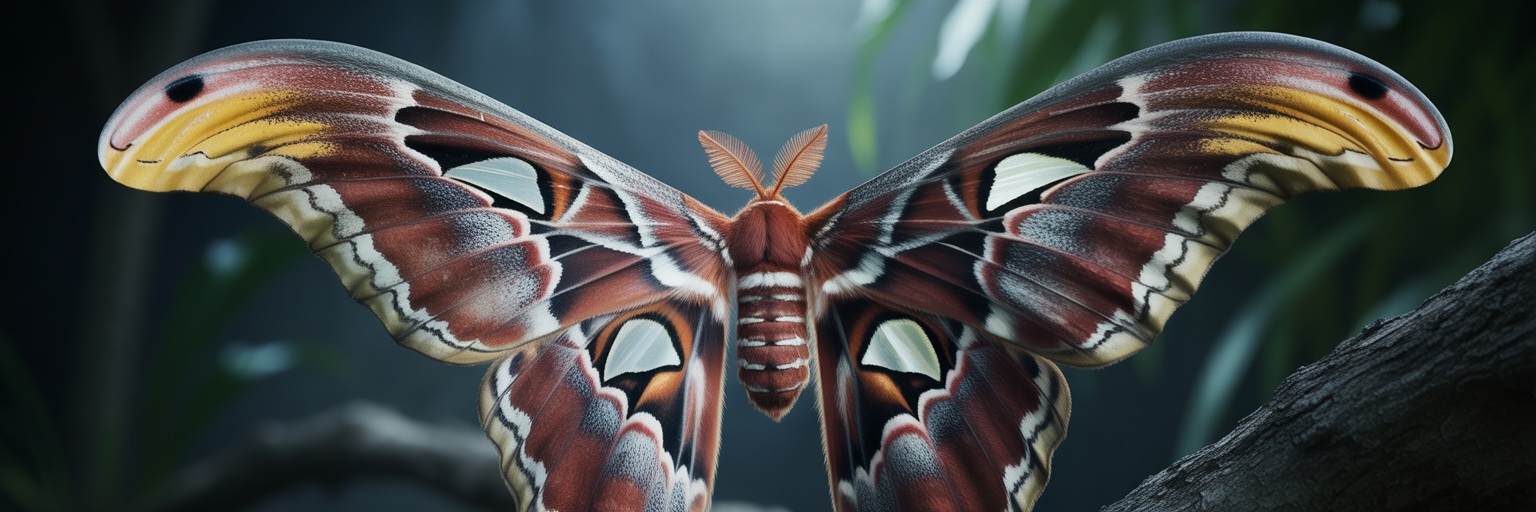
Imagine you are a hungry bird, soaring high above the forest floor. You spot it: a plump moth, perfectly camouflaged against the bark of an old oak tree. It’s an easy meal, a quick dive away. You tuck your wings and plummet, beak ready. But just as you’re about to strike, the moth’s wings snap open. Suddenly, you are no longer looking at a moth. You are staring into the enormous, unblinking eyes of an owl, a creature that hunts things exactly like you. Your instincts scream. You pull up, confused and terrified, and fly away empty-handed.
What just happened was not magic. It was psychological warfare, executed with nothing more than a few spots of pigment. These are not real eyes, of course. They are eyespots, one of nature’s most brilliant and unsettling bluffs. This simple trick, a pair of painted-on peepers, is a masterclass in deception, turning a helpless snack into a terrifying phantom. It’s a visual lie so effective that it has been adopted by creatures across the animal kingdom, from the tiniest insects to fish swimming in coral reefs.
This is a world where looking scary is more important than being scary. We will explore the anatomy of these fake eyes, understanding how they are designed to manipulate the deepest fears of a predator. We will examine the predator psychology they exploit and meet the diverse cast of animals with fake eyes that use this illusion to survive. This simple trick is one of the most effective predator defense mechanisms, proving that in the wild, a creepy stare can be the difference between life and death.
Anatomy of a Deceptive Gaze
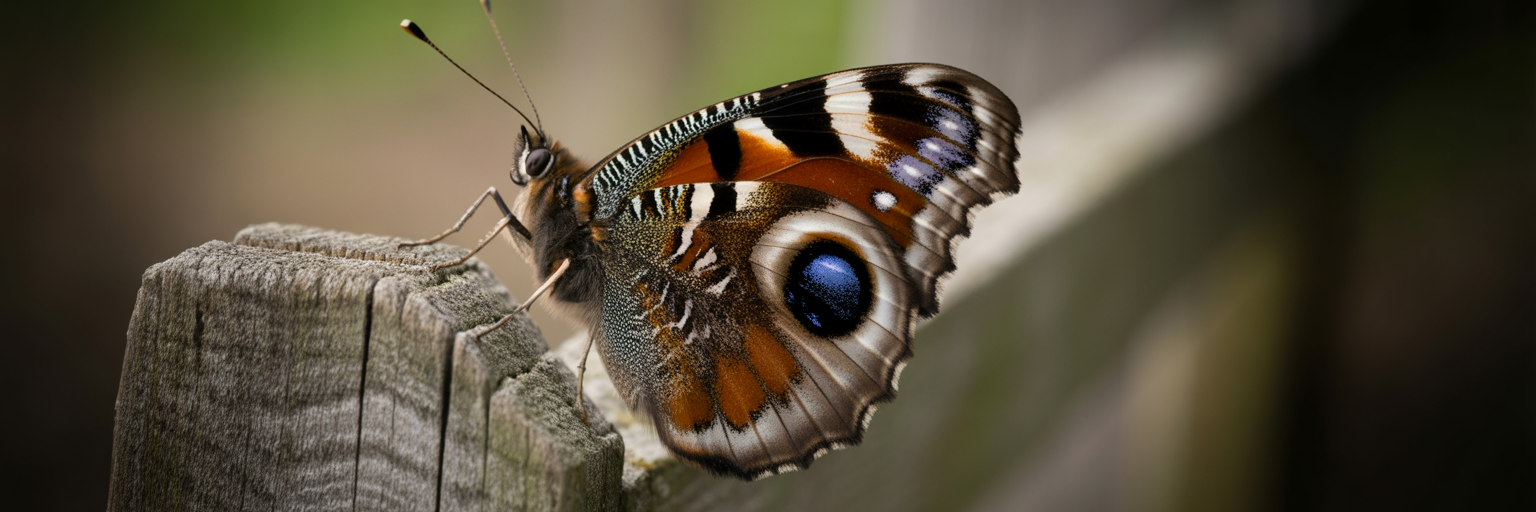
Moving beyond the initial shock of the encounter, we can look at the mechanics behind this creepy illusion. These markings are not just random splotches of color. They are meticulously designed biological structures, honed by millennia of evolution to be as convincing as possible. The intricate patterns, like the famous butterfly wing eye markings, are a testament to nature’s ingenuity.
What Exactly Are Eyespots?
So, what are eyespots on animals? At their core, eyespots are pigmented markings on an animal’s body that mimic the appearance of vertebrate eyes. They are typically composed of concentric circles of high-contrast colors, often with a dark center resembling a pupil and a lighter ring mimicking an iris. Their power lies in their conspicuousness. While the rest of the animal might be camouflaged, the eyespots are designed to be seen, but only at the perfect moment. They are a hidden threat, revealed in a flash to startle and disorient an attacker.
The Genetic Blueprint for a Fake Eye
These elaborate designs are not happy accidents. They are the result of a precise genetic blueprint. Specific genes control the placement, size, and coloration of each circle within the eyespot, ensuring the final product is a convincing replica of a real eye. This level of detail shows that eyespots are a deliberate evolutionary strategy, a tool so successful that nature has encoded it directly into the DNA of countless species. These markings are just one example of the many strange survival tools found in the wild, like those seen in some of nature’s other unsettling creations that defy belief.
A Spectrum of Deception: Intimidation vs. Deflection
Not all eyespots serve the same purpose. Their function often depends on their size, location, and the type of predator they are meant to fool. They generally fall into a few key categories:
- Intimidation Eyespots: These are the big ones. Large, prominent, and centrally located markings designed to startle a predator by mimicking a larger, more dangerous animal. Think of the moth suddenly looking like an owl.
- Deflection Eyespots: Smaller and often placed on less vital body parts like wingtips or tails. Their goal is to misdirect a predator’s attack, causing it to strike a non-lethal area.
- Mimicry Eyespots: These are highly specialized, designed to imitate the eyes of a particular predator’s own enemy. A classic example is a caterpillar mimicking the head of a snake to scare away birds.
The Psychology of a Predator’s Fear
Understanding the anatomy of the eyespot is only half the story. To truly appreciate their genius, we need to step inside the mind of the predator. The effectiveness of this defense mechanism has less to do with the prey’s appearance and more to do with exploiting the hardwired instincts of the attacker. The question of how do eyespots work is answered not by biology, but by psychology.
The Primal Fear of Being Watched
For nearly every animal, the sight of two forward-facing eyes means one thing: danger. It signals that they have been spotted by a predator. This triggers an immediate, instinctual hesitation. That split-second pause is critical. The predator must stop to assess the threat. Is this new creature a bigger threat than I am? Am I about to become the hunted? As research from the Natural History Museum highlights, this pause provides a crucial window for the prey to escape. The eyespots create the illusion of being seen, short-circuiting the predator’s attack sequence.
The Bluff: ‘I’m Bigger and Scarier Than You’
The most dramatic eyespots work by running a simple but effective bluff. They make the small, vulnerable prey appear to be a part of a much larger, more dangerous animal. A moth’s wings become an owl’s face. A caterpillar’s back becomes a snake’s head. The predator isn’t just startled by the sudden pattern; it is tricked into believing it has picked a fight with the wrong animal. This form of mimicry is incredibly efficient, borrowing the fearsome reputation of another creature without needing any of its actual defenses.
Sensory Overload: When Confusion Is a Weapon
An alternative theory suggests it is not just the “eye” shape but the sudden appearance of any large, high-contrast pattern that does the trick. This is known as a deimatic display. The abrupt flash of color and complex shapes can overload the predator’s sensory system, causing confusion and breaking its concentration. The predator is not necessarily scared, but it is disoriented enough to abandon the hunt. In this scenario, the eyespots act like a biological flashbang grenade, creating chaos to cover an escape.
A Gallery of Nature’s Impostors
The use of fake eyes is a strategy employed by a surprisingly diverse cast of characters across the globe. From insects to fish, these masters of deceit have perfected the art of the intimidating stare. Here are just a few of the most impressive animal mimicry examples.
The Winged Wonders: Butterflies and Moths
Butterflies and moths are the undisputed champions of the eyespot. The Peacock Butterfly rests with its wings closed, looking like a dead leaf. But when threatened, it flashes its four large, vibrant eyespots, creating a startling display that sends birds fleeing. Similarly, the Emperor Moth has two huge eyespots on its hindwings that make it look uncannily like an owl. These insects are living proof that a dramatic reveal can be a powerful weapon.
The Serpent Mimics: Caterpillars
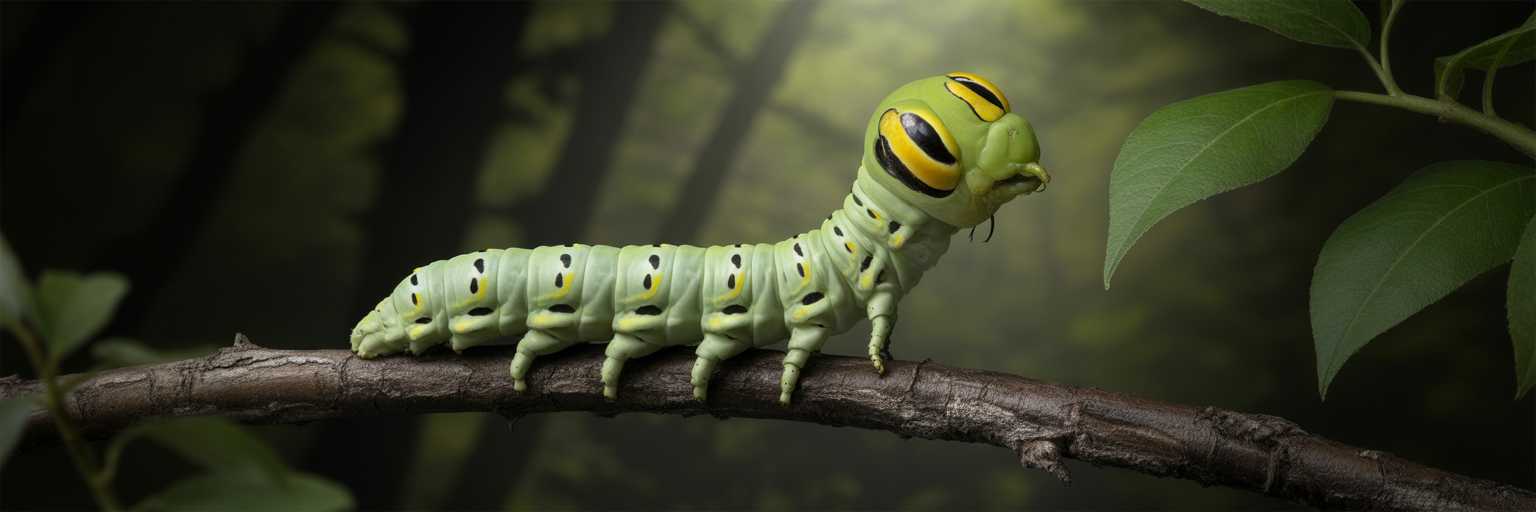
Perhaps one of the most unsettling examples comes from the Spicebush Swallowtail caterpillar. When threatened, this small, green larva inflates the front part of its body, revealing two enormous yellow and black eyespots. It suddenly transforms from a juicy grub into the head of a small green snake, even swaying back and forth to complete the illusion. For a bird looking for a meal, this is a terrifying sight. This tactic is a reminder that some animals can survive seemingly impossible situations, even escaping after being swallowed alive.
Aquatic Illusions: The Fish with a False Eye
Deception is not limited to land. The Four-eyed Butterflyfish has a large, dark spot near its tail fin that looks exactly like an eye. Its actual eye is cleverly hidden by a vertical black stripe. Predators, aiming for what they think is the head, are tricked into striking the fish’s tail. This gives the butterflyfish a crucial advantage, allowing it to dart away in the opposite direction while the predator is left with a mouthful of fin.
Unexpected Phantoms: Other Masters of Deceit
The list goes on. Some species of frogs have eyespots on their rumps, which they flash at predators when they leap away. The Sunbittern, a bird from Central and South America, spreads its wings to reveal a stunning pair of eyespots to ward off potential nest raiders. Each of these creatures has independently arrived at the same creepy, effective solution.
| Animal | Eyespot Location | Primary Function | Mimics | Common Predator |
|---|---|---|---|---|
| Peacock Butterfly | Hindwings | Startle / Intimidation | Owl or small mammal eyes | Small birds (e.g., Blue Tits) |
| Spicebush Swallowtail Caterpillar | Thorax (upper body) | Mimicry / Intimidation | Green snake head | Birds |
| Four-eyed Butterflyfish | Near the tail fin | Deflection / Confusion | A false head | Larger predatory fish |
| Eyed Hawkmoth | Hindwings | Startle / Intimidation | Vertebrate eyes | Birds |
| Sunbittern (Bird) | Wings (displayed during threat) | Startle / Intimidation | Large animal’s eyes | Potential nest predators |
More Than Just a Spooky Face
While the startle effect is the most dramatic function of eyespots, these markings are far more versatile than they first appear. They are a multitool of survival, offering a range of defensive benefits beyond a simple scare. Their cleverness lies in their ability to serve multiple purposes, making them an incredibly efficient evolutionary investment.
The Deflection Strategy: ‘Hit Me Here Instead!’
As we saw with the butterflyfish, not all eyespots are meant to intimidate. Many are designed for misdirection. By placing a small, eye-like marking on a non-vital body part, such as a wingtip or tail, the animal encourages a predator to strike there. A bird that pecks a butterfly’s wing will get a piece of membrane, but the butterfly will live to fly another day. This sacrificial strategy is a brilliant trade-off, sacrificing a small, often repairable part of the body to protect the head and vital organs. This ability to lose a part to survive is a common theme in nature, though few can match creatures with extreme regenerative abilities, like animals that can regrow skin stronger than before.
A Warning Sign: ‘I Taste Terrible’
In some cases, eyespots may also function as a form of aposematism, or warning coloration. Just as the bright colors of a poison dart frog signal its toxicity, prominent eyespots might serve as an honest warning that the prey is unpalatable or poisonous. A predator that tries to eat a foul-tasting insect with distinct markings will quickly learn to associate that pattern with a bad experience. In this context, the eyespots become a memorable “do not eat” sign, protecting not only the individual but its relatives as well.
The Ultimate Multitool of Survival
The true genius of eyespots is their multifunctionality. A single set of markings can operate in different ways depending on the situation:
- From a distance, they can help with camouflage, breaking up the animal’s outline.
- At medium range, they can be flashed to startle or intimidate an approaching predator.
- During an attack, they can deflect a strike to a non-lethal area.
- They can also serve as a lasting visual reminder to predators that the prey is not worth the trouble.
This adaptability makes eyespots one of the most successful predator defense mechanisms in the natural world.
When the Illusion Shatters
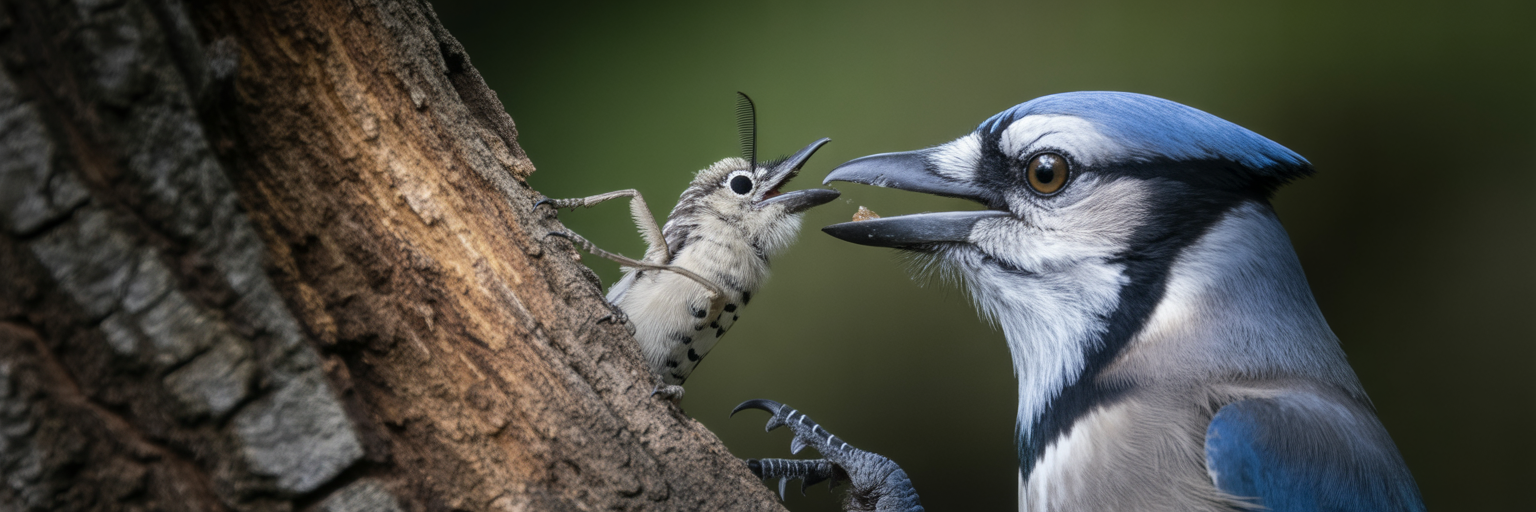
Despite their brilliance, eyespots are not an infallible defense. The natural world is a constant theater of adaptation, and for every clever trick the prey develops, the predator is working on a way to see through it. The spooky face does not always work, and understanding its limitations reveals the dynamic nature of survival.
The Savvy Predator: Learning the Trick
Predators are not fools. An experienced bird that has encountered dozens of Peacock Butterflies may eventually learn to call the bluff. After a few encounters that do not result in a counter-attack from a real owl, the predator may realize the display is harmless. Younger, more naive predators are most susceptible to the trick, while older, wiser ones may learn to ignore the display and press their attack. Intelligence and experience can shatter the illusion.
When the Environment Betrays the Bluff
The effectiveness of a visual display depends entirely on it being seen. In low light, dense fog, or thick foliage, even the most vibrant eyespots can be rendered useless. The element of surprise is lost if the predator cannot clearly see the pattern. Furthermore, a predator’s motivation plays a huge role. A truly starving animal may be willing to risk the potential threat posed by the eyespots because the need for food outweighs the fear of a potential confrontation. Desperation can be a powerful antidote to fear.
The Unceasing Evolutionary Arms Race
The relationship between predator and prey is often described as an evolutionary arms race. As prey evolve more convincing eyespots and more dramatic displays, predators co-evolve sharper senses and better cognitive abilities to distinguish between a real threat and a fake one. This back-and-forth pressure ensures that no single strategy remains perfect forever. Survival is not a static game of tricks but a continuous, dynamic struggle where both sides are constantly adapting. The eyespot is just one move in this ancient and ongoing contest.
Applying Nature’s Deception to Modern Problems
The bizarre and creepy strategy of using fake eyes is not just a fascinating quirk of the natural world. It turns out this ancient trick has found a surprising application in the modern world, helping to solve a serious conflict between humans and wildlife.
From Moths to Cows: A Wild Idea
In Botswana, farmers frequently lose cattle to lion attacks. This creates a dangerous situation for both the farmers’ livelihoods and the endangered lion population, which often faces retaliatory killings. Researchers, inspired by the principle of eyespots, came up with a brilliantly simple idea: what if they could trick the lions into thinking they had been seen? Lions are ambush predators, and their hunting strategy relies on the element of surprise. If they believe their prey has spotted them, they typically abandon the hunt.
The Science of Painted Rumps
The solution was to paint eyes on the rumps of the cattle. This low-tech, non-lethal method creates the illusion that the cow is always watching, even when it is facing away. As documented in studies on the topic, which are summarized on platforms like Wikipedia, the results have been remarkable. Herds with eye-painted cattle suffered significantly fewer lion attacks than unpainted herds. The lions, fooled by the same basic trick that works on birds, were successfully deterred.
Conservation Through Illusion
This project, known as the iMfolozi Project, is a powerful example of how studying nature’s strange solutions can lead to innovative answers for modern problems. By applying a predator defense mechanism borrowed from a moth, conservationists are helping to reduce human-wildlife conflict, protecting both livestock and a vulnerable predator species. It proves that the unsettling stare of a fake eye is more than just a creepy curiosity. It is a testament to the power of illusion and a reminder that the wild still has plenty of bizarre and brilliant lessons to teach us. If you are hooked on these kinds of stories, you can find more at Nature Is Crazy.