The Hidden Puppeteers of the Natural World
For every animal you can imagine, from the smallest ant to the largest whale, there are likely several species of parasites that have evolved specifically to exploit it. We tend to think of this exploitation in physical terms, as a simple theft of nutrients or resources. But some parasites have developed far more intricate strategies. They don’t just feed on their hosts; they seize control of their minds, turning them into unwilling vehicles for their own survival. This is not the stuff of science fiction. It is a well documented and deeply unsettling reality of the natural world.
The formal study of this phenomenon is known as behavioral parasitology. It explores how parasites manipulate the behavior, decision making, and even the core personality of their hosts to serve their own complex life cycles. This manipulation is not a random side effect of being sick. It is a targeted, adaptive strategy honed by millions of years of evolution. The changes are often incredibly specific, pushing the host to do things it would never do otherwise, actions that almost always lead to the parasite’s ultimate goal: transmission to a new host or successful reproduction.
Think of it as an invisible hand guiding the host’s actions. A parasite might need to move from a snail to a bird to complete its life cycle. How does it bridge that gap? It might force the snail to climb to the top of a leaf in broad daylight, making it an easy and obvious target for a passing bird. The host’s self preservation instincts are overwritten by the parasite’s agenda. These manipulations are some of nature’s most unsettling creations that defy belief, revealing a level of control that challenges our understanding of autonomy. The sheer variety of these manipulators, from single celled protozoa to complex fungi, provides a rich field of study. The following behavioral parasitology examples reveal just how profoundly an external organism can rewrite the very essence of another’s being.
The Fearless Rodent and the Feline Predator
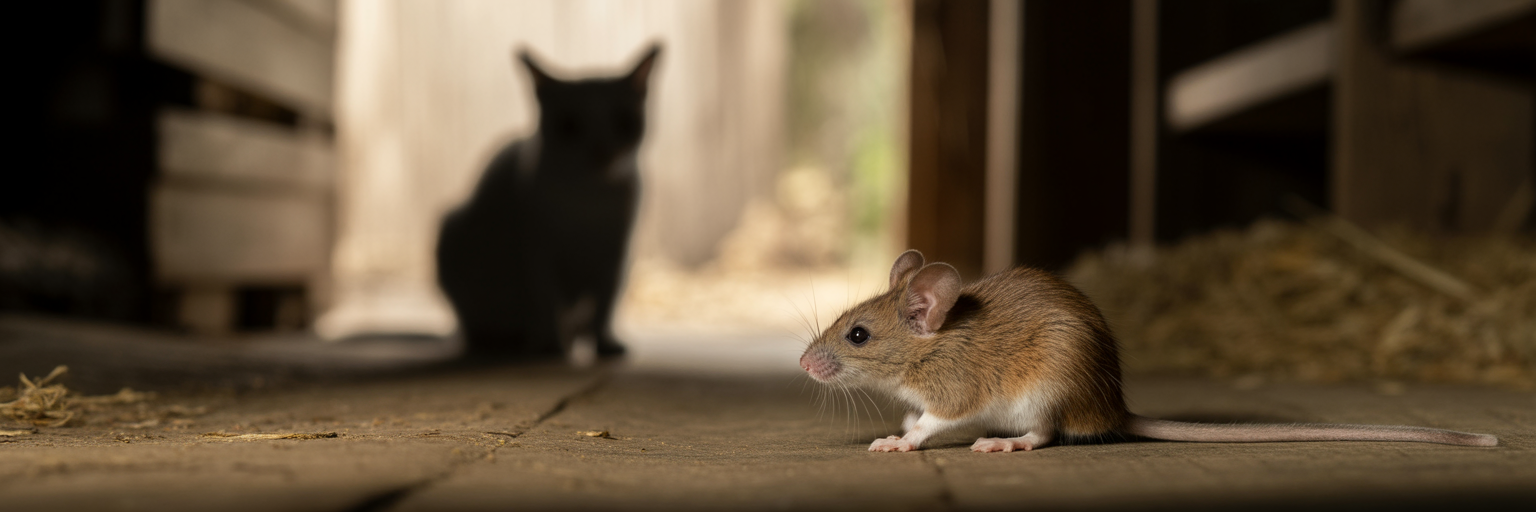
Among the most studied and subtle manipulators is a single celled parasite called Toxoplasma gondii. Its life story is a classic tale of predator and prey, with a sinister twist. The parasite’s definitive host, where it can sexually reproduce, is the domestic cat and its relatives. Cats shed the parasite’s eggs in their feces, which can then be ingested by a wide range of warm blooded animals, including rodents. For the parasite, a rodent is just a stepping stone, an intermediate host that must be delivered back to a feline predator to complete the cycle.
This is where the manipulation begins. Normally, a mouse or rat has an innate, hardwired fear of cats. The scent of cat urine alone is enough to trigger a powerful flight response, a crucial survival instinct. But when a rodent is infected with T. gondii, something remarkable happens. This fear vanishes. The phenomenon, often called “fatal feline attraction,” is not just a dulling of the senses. Infected rodents lose their aversion to the smell of cat urine and, in some cases, may even seem drawn to it. They become bolder, more active, and less cautious, effectively turning into easier targets for a hunting cat.
This behavioral shift provides a clear answer to the question of how parasites change personality. They do so by targeting the very neural circuits that govern fundamental emotions like fear. T. gondii achieves this by forming microscopic cysts directly within the host’s brain. It shows a particular preference for the amygdala, a region that acts as the brain’s fear processing center. By setting up camp in this critical hub, the parasite can interfere with the signals that would normally scream “danger” when a cat is near. The rodent is no longer afraid because the biological alarm system has been disabled from the inside.
The exact mechanism is still being unraveled, but a leading theory points to the neurotransmitter dopamine. Dopamine is associated with pleasure, reward, and motivation, and it plays a key role in modulating risk taking behavior. Research published in Nature Communications suggests the parasite may directly influence dopamine production, essentially chemically rewiring the rodent’s response to threats. By hijacking the brain’s reward system, the parasite makes a once terrifying scent seem neutral or even interesting. The rodent’s personality is altered not through force, but through a subtle chemical persuasion that ultimately leads it into the jaws of its predator, ensuring the parasite’s life cycle can continue.
The Rage Virus and Its Aggressive Agenda
If Toxoplasma gondii is a subtle persuader, the rabies virus is a violent tyrant. It is perhaps the most infamous of all behavioral manipulators, transforming its host into a vessel of pure aggression for a single, horrifying purpose: to spread itself. Rabies is a neurotropic virus, which means it has a specific affinity for the nervous system. Once it enters a host’s body, typically through a bite, it embarks on a slow but relentless journey along the nerve pathways, making its way to the brain.
Its primary target is the limbic system, the ancient part of the brain that governs emotion, memory, and fundamental behaviors. Once the virus infiltrates this control center, it begins to systematically dismantle the host’s personality, replacing it with what is known as the “furious” stage of the disease. The infected animal becomes intensely agitated, hypersensitive to stimuli, and overwhelmingly aggressive. This is not a random symptom of a body in distress. The rabies virus aggression mechanism is a calculated evolutionary strategy. The virus concentrates in the salivary glands, and the unprovoked, violent urge to bite is the perfect delivery system to transmit that virus-laden saliva into a new host.
The manipulation extends beyond just inducing rage. One of the most recognized symptoms of rabies is hydrophobia, or the fear of water. This too is a diabolical feature of the virus’s strategy. The infection causes intensely painful spasms in the throat muscles when the host attempts to swallow. This makes drinking excruciating, which serves two purposes for the virus. First, it prevents the host from washing away the saliva that has pooled in its mouth. Second, it ensures the saliva remains concentrated and thick, maximizing the viral load delivered with each bite. The host is effectively turned into a biological weapon, driven by a viral agenda that has completely overwritten its own will to survive.
The virus’s brutal efficiency in ensuring its own propagation is a chilling example of evolutionary adaptation. This aggressive takeover stands in stark contrast to the survival strategies of other animals that can survive being swallowed and escape alive, highlighting the different paths evolution can take. While some organisms evolve to escape, the rabies virus evolves to make its host the ultimate predator, a mindless vehicle for its own replication, until the host’s nervous system finally collapses under the strain.
Mind-Controlling Wasps and Their Living Nurseries
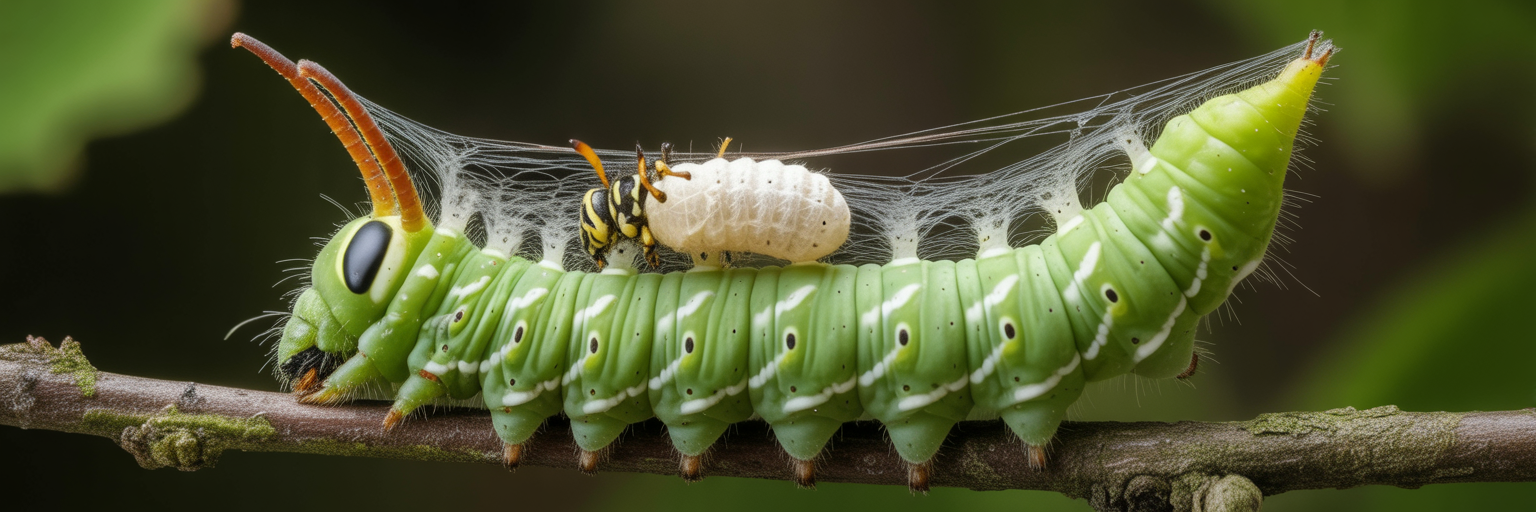
The world of insects is home to some of the most bizarre and specific forms of behavioral manipulation, particularly among a group known as parasitoid wasps. It is important to first understand the distinction between a parasite and a parasitoid. A parasite lives on or in its host, but a parasitoid’s life cycle always ends with the host’s death. These wasps are masters of turning other insects into living incubators for their young, and their methods are as precise as they are macabre.
A classic example is the jewel wasp and its unfortunate victim, the cockroach. When a female jewel wasp is ready to lay her egg, she seeks out a cockroach and delivers two separate stings. The first is a quick jab to the body that delivers a venom to temporarily paralyze the front legs. This allows her to administer the second, far more delicate sting. She carefully guides her stinger directly into the cockroach’s brain, targeting specific ganglia that control the motivation to walk. The venom she injects is not a simple paralytic; it is a complex neurotoxin cocktail that effectively disables the cockroach’s ability to initiate its own movement. The cockroach can still walk, but it will not do so unless guided.
The result is a zombified servant. The wasp, now in complete control, grabs the cockroach by its antenna and leads it back to a burrow, much like a person walking a dog on a leash. Once inside, she lays a single egg on the cockroach’s abdomen and seals the burrow. The cockroach remains alive but completely passive, a fresh food supply for the wasp larva that will soon hatch and consume it from the inside out, carefully eating non-essential organs first to keep its nursery alive for as long as possible. These are truly parasites that control behavior in its most direct form.
This level of control is not limited to simple zombification. Some species of parasitoid wasps demonstrate an even more astonishing ability to induce complex, novel behaviors. For instance, certain wasps that target spiders will allow the spider to live for a time while the wasp larva feeds on it. Just before the larva is ready to pupate, it chemically signals the spider to stop building its normal, intricate web. Instead, the dying spider is compelled to build a completely different structure: a heavily reinforced, cocoon-like web. This special web serves no purpose for the spider but provides the perfect, protected shelter for the wasp pupa. Once this final task is complete, the larva delivers a final, fatal bite and spins its cocoon in the safety of the web its host was forced to build.
The Fungal Overlords of the Insect Kingdom
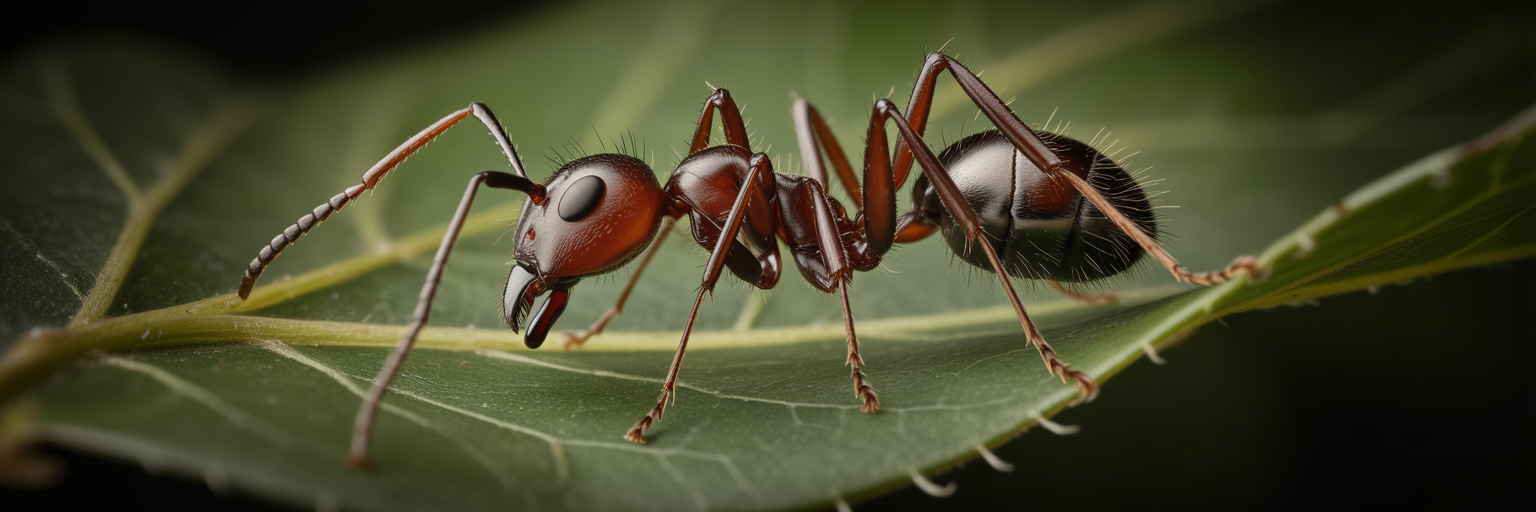
Perhaps no example of parasitic manipulation is more visually striking or widely known than that of the “zombie-ant fungus,” a species from the genus Ophiocordyceps. This fungal parasite has perfected a method of control that is both brutally effective and biologically fascinating, as it largely bypasses the host’s brain to achieve its goals through direct physical manipulation.
The process begins when a microscopic fungal spore lands on an unsuspecting ant foraging on the forest floor. The spore penetrates the ant’s tough exoskeleton and begins to grow inside its body, spreading a network of fungal cells called mycelium. This network infiltrates the ant’s tissues and muscles, effectively taking over its body from within. Unlike organisms that can live inside other living creatures without harm, the Cordyceps fungus’s internal presence is a death sentence. As the fungus proliferates, it begins to release chemical compounds that hijack the ant’s motor control.
This is where the zombie ant fungus explained becomes truly strange. The infected ant is driven to abandon its colony and its normal duties. It begins to move erratically, eventually compelled to climb up the stem of a plant. The fungus forces the ant to ascend to a very specific height, usually around 25 centimeters, where the temperature and humidity are perfect for fungal growth. Once it reaches this ideal location, the ant is forced to perform its final act. It locks its powerful mandibles onto the underside of a leaf or stem in a “death grip” so strong that the ant’s body will remain fixed in place even after it dies. The fungus has effectively turned the ant into an anchor.
With the ant secured, the fungus delivers its final blow, consuming the rest of the ant’s internal tissues and killing it. Then, in a final, dramatic flourish, a fruiting stalk erupts from the back of the ant’s head. This stalk grows over several days before releasing a shower of new spores down onto the forest floor below, right over the trails where other unsuspecting ants are foraging. The cycle is ready to begin again. Recent research has shown that the fungus achieves this without directly infecting the brain. Instead, it forms a 3D network around the muscles, directly controlling the ant’s limbs like a puppeteer pulling strings, leaving the brain an isolated prisoner in a body that is no longer its own.
Rewiring the Brain from Within
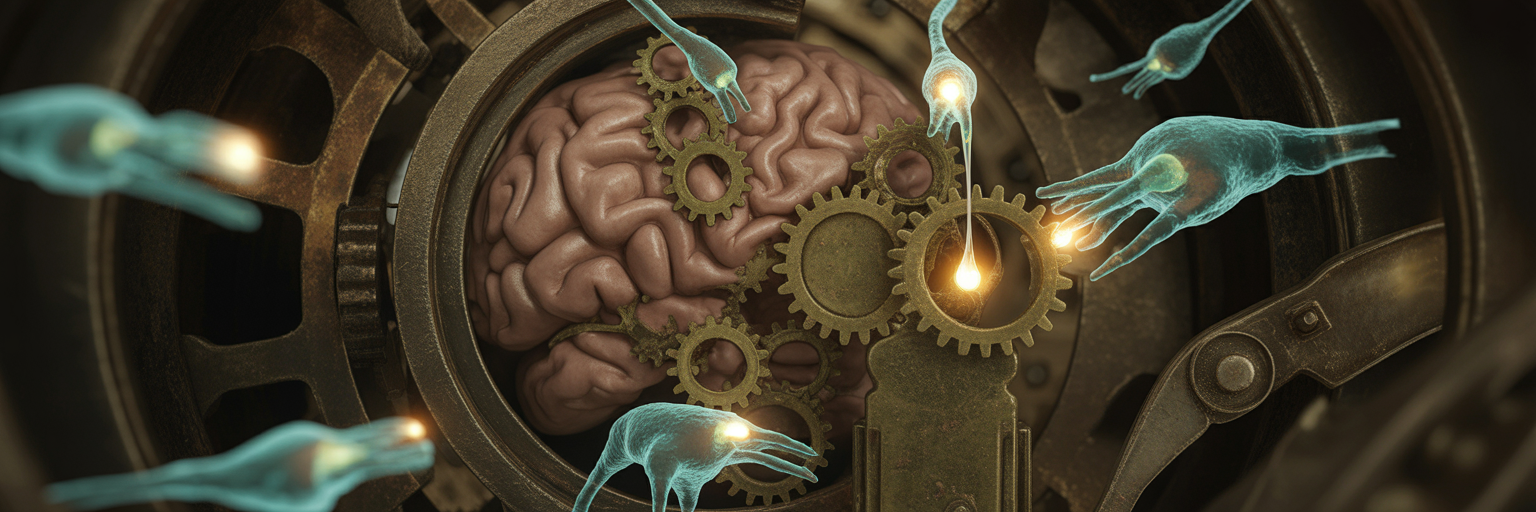
The diverse and often dramatic behavioral changes forced upon hosts are not magic. They are the result of precise biochemical warfare waged within the host’s nervous system. Parasites do not invent new behaviors from scratch. Instead, they have evolved to manipulate the host’s existing neurochemical machinery, turning the very systems that regulate mood, fear, and motivation against it. By understanding these mechanisms, we gain a clearer picture of how personality and behavior are biologically controlled.
The Dopamine Switch: Modulating Risk and Reward
Dopamine is a powerful neurotransmitter central to the brain’s reward and motivation circuits. It is released when we engage in pleasurable or rewarding activities, encouraging us to repeat them. Some parasites, like Toxoplasma gondii, have learned to flip this switch to their advantage. By increasing dopamine production in key brain regions like the nucleus accumbens, the parasite can make normally dangerous behaviors feel less threatening or even rewarding. For an infected rodent, the scent of a predator no longer triggers a fear response but instead a sense of curiosity, a fatal change driven by a hijacked reward system.
The Serotonin System: Altering Mood and Social Cues
Serotonin is another critical neurotransmitter that plays a major role in regulating mood, social behavior, and aggression. Imbalances in serotonin are linked to depression and anxiety in humans. The rabies virus appears to cause massive dysregulation of the serotonin system in the limbic system of its host. This chemical disruption is believed to be a primary driver of the extreme, unprovoked aggression that is the virus’s signature symptom. By throwing the host’s mood regulating chemistry into chaos, the virus creates a state of perpetual agitation and hostility, perfectly suited for its transmission.
Beyond Neurotransmitters: Inflammation and Hormonal Hijacking
Parasitic manipulation is not limited to just dopamine and serotonin. Some parasites achieve their goals through other means. They can induce localized inflammation in specific brain regions, disrupting normal neural function. For example, inflammation in the amygdala can impair fear processing. Others can hijack the host’s endocrine system, altering the balance of hormones like cortisol (the stress hormone) or testosterone. By manipulating these chemical messengers, a parasite can change a host’s stress response, social standing, or willingness to engage in risky behavior.
The primary tactics parasites use to rewire the brain can be summarized as follows:
- Increasing or decreasing production of specific neurotransmitters to alter mood and motivation.
- Blocking neurotransmitter receptors to prevent normal signaling between neurons.
- Inducing localized inflammation in key brain regions to disrupt their function.
- Altering the host’s hormonal balance to change stress, social, or reproductive responses.
These strategies highlight the incredible specificity that has evolved in these host parasite relationships, as shown in the table below.
| Parasite | Primary Neurological Target | Key Neurotransmitter/System Affected | Resulting Host Behavior |
|---|---|---|---|
| Toxoplasma gondii | Amygdala, Nucleus Accumbens | Dopamine (Increased) | Reduced fear, increased risk-taking (‘fatal feline attraction’) |
| Rabies Virus | Limbic System, Hippocampus | Serotonin (Dysregulated) | Extreme aggression, agitation, compulsion to bite |
| Parasitoid Wasp (e.g., Jewel Wasp) | Sub-esophageal Ganglion (Brain) | Dopamine, Octopamine (Blocked) | Suppression of self-initiated movement (‘zombification’) |
| Ophiocordyceps Fungus | Neuromuscular Junctions | Direct muscular control (bypasses brain) | Compulsive climbing, ‘death grip’ on vegetation |
This table provides a comparative overview of how different types of parasites exploit distinct neurological or physiological pathways to achieve their manipulative goals, highlighting the diversity of these evolutionary strategies.
The Parasite’s Evolutionary Endgame
The strange and often horrifying behaviors induced by parasites are not random acts of biological chaos. They are the finely tuned products of a long-standing evolutionary arms race between parasite and host. From the parasite’s perspective, behavioral manipulation is a powerful tool that provides a clear and direct advantage for survival and reproduction. Each bizarre action forced upon a host can be traced back to a specific benefit for the parasite’s life cycle.
For parasites like the rabies virus and Toxoplasma gondii, the advantage is increased transmission. Rabies turns its host into an aggressive biting machine to spread to new hosts, while T. gondii makes its rodent host reckless to ensure it gets eaten by a cat. For parasitoid wasps, the goal is offspring protection and provision. Zombifying a cockroach provides a fresh, living meal for its larva in a safe, sealed burrow. For the Ophiocordyceps fungus, the endgame is optimal spore dispersal. Forcing an ant to die in a specific, elevated location maximizes the chances that its spores will rain down on a new generation of victims.
The biologist Richard Dawkins proposed a concept that perfectly captures this phenomenon: the “extended phenotype.” The idea is that an organism’s genes do not just build its own body; their effects can extend beyond the individual to influence the environment and even other organisms. In this view, the ant’s compulsive death grip is not a behavior of the ant. It is a phenotypic trait of the fungus, expressed through the ant’s body. The parasite’s genes are literally controlling the host’s actions. This level of specialized control is a testament to evolutionary pressure, rivaling the ingenuity of animals that can navigate without a brain.
However, this manipulation must be precise. There is a delicate cost benefit balance at play. A parasite that kills its host too quickly, or makes it so obviously sick that it is avoided by predators, will fail to be transmitted. The manipulation must be subtle enough, and timed correctly, to achieve its goal without disrupting the process. This is why the behaviors are so specific. The jewel wasp doesn’t kill the cockroach, it just removes its will to escape. T. gondii doesn’t make a rat sick, it just makes it brave. These behavioral parasitology examples are masterpieces of evolutionary engineering, demonstrating how natural selection can produce strategies of incredible complexity and precision.
Are We Also Under Their Influence?

After exploring these dramatic examples of mind control in the animal kingdom, an unsettling question naturally arises: could parasites be influencing human behavior as well? The idea that our personalities, decisions, and mental health could be subtly shaped by microscopic organisms is both fascinating and disturbing. The primary candidate for such an influence is a familiar one: Toxoplasma gondii.
This parasite is incredibly common, with estimates suggesting that up to a third of the global human population is infected with it, mostly without any acute symptoms. We can acquire it from contact with cat feces or by eating undercooked meat. Once in our bodies, just as in rodents, it forms dormant cysts in our brains and muscles. For decades, this latent infection was considered harmless in people with healthy immune systems. But a growing body of research is challenging that assumption, suggesting a link between latent toxoplasmosis and a range of behavioral changes.
The evidence comes from numerous correlational studies, which have identified intriguing patterns in infected individuals. It is crucial to remember that correlation does not equal causation; these studies show a link, not definitive proof that the parasite causes these effects. However, the findings are consistent and compelling:
- Increased risk-taking: Several studies have found that people with latent toxoplasmosis are more likely to be involved in traffic accidents. This has been linked to slower reaction times and a greater willingness to take risks. Other research has even found a correlation between infection and entrepreneurial activity, another form of risk-taking.
- Shifts in personality traits: Infected individuals, particularly men, have been observed to be more impulsive, suspicious, and prone to jealousy. Infected women, on the other hand, have been described as more outgoing and conscientious. Both sexes tend to show lower levels of conscientiousness and higher levels of neuroticism on personality tests.
- Links to mental health conditions: There is a well-documented correlation between T. gondii infection and an increased risk of developing schizophrenia. Some studies have also suggested links to other conditions like bipolar disorder, obsessive compulsive disorder, and intermittent rage disorder.
The idea that a single celled organism could be involved in such complex outcomes seems far fetched, but it is biologically plausible. As research summarized in the Annual Review of Animal Biosciences suggests that toxoplasmosis can influence human behavior by modulating key neurotransmitter levels. Our brains are governed by the same dopamine and serotonin systems that the parasite manipulates in rodents. It is conceivable that the presence of T. gondii cysts in the human brain could cause subtle, long term changes in our neurochemistry, nudging our personalities in certain directions. The science on Toxoplasma gondii effects on humans is still developing, and it is a field where much more research is needed. But the evidence we have so far opens a provocative window into the hidden biological forces that may be shaping who we are.
What Parasites Teach Us About Ourselves
The study of behavioral manipulation by parasites does more than just provide a collection of bizarre nature stories. It offers a unique and powerful window into the fundamental biology that governs all behavior, including our own. These tiny puppeteers, in their quest for survival, inadvertently conduct experiments that neuroscientists could never perform. By observing how a parasite systematically “breaks” a specific behavior like fear or aggression, we can learn a great deal about how the neural circuits for those behaviors are normally constructed and controlled.
These examples force us to confront the biological basis of personality. We like to think of ourselves as rational beings with complete free will, but the actions of a zombified ant or a fearless mouse demonstrate just how profoundly our behavior is rooted in a delicate neurochemical balance. When an outside agent can hijack that chemistry, it can rewrite the very essence of an organism’s identity. This challenges our deeply held notions of selfhood and autonomy, reminding us that our actions and emotions are products of a biological machine that can be influenced.
Ultimately, studying how parasites change personality is a lesson in humility. It reveals the intricate and often invisible connections that bind all living things. These tiny manipulators remind us that we are not separate from our ecosystem but are deeply embedded within it, subject to the same evolutionary pressures and biological vulnerabilities as any other creature. The line between “self” and “other” is often far blurrier than we imagine, and sometimes, the one pulling the strings is a passenger we never knew we had.