
The Uncanny Weather Forecaster in Your Backyard
It’s a beautiful, sun-drenched afternoon. The sky is a perfect, uninterrupted blue. Yet, the dog is whining at the back door, refusing to go out. A column of ants marches with unnerving purpose up the side of the house. The birds, just moments ago chirping away, have fallen completely silent. It feels like they know something you don’t. A secret has been passed through the neighborhood, a memo delivered on a channel you can’t access.
This scene is familiar to many of us. We see our pets acting strangely and dismiss it as simple anxiety or a random quirk. But what if it’s something more? What if it’s a form of intelligence we’ve just failed to recognize? This raises a fascinating question about how animals predict weather. They seem to possess a sixth sense, an internal barometer that gives them a heads-up about approaching storms long before our sophisticated weather apps send a notification.
The answer, it turns out, is not magic. It’s something far more primal and powerful. It’s their sense of smell. While we might catch a faint whiff of damp earth after a downpour, many animals are picking up on a complex bouquet of scents that act as a detailed weather map. They can smell the rain coming, sometimes days before it arrives, because the air itself is broadcasting a clear and urgent message.
This isn’t just one animal’s clever trick. It’s a phenomenon observed across the entire animal kingdom, from the tiniest insects to the largest ocean predators. They are all tuned into a network of environmental cues that we have largely forgotten how to read. This article will explore the specific scents and signals that turn the animal world into a massive, interconnected weather forecasting system.
A Superpowered Sense of Smell
To understand how animals can smell a storm, we first need to appreciate the sheer power of their olfactory equipment. The difference between an animal’s nose and a human’s is not just a matter of degree. It’s a fundamental difference in perception. Imagine the entire surface area of a dog’s olfactory receptors spread out. It would cover a handkerchief. Now imagine a human’s. It would barely cover a postage stamp. This isn’t just about smelling things more strongly. It’s about detecting a world of chemical information that is completely invisible to us.
This superior sense allows them to detect chemical compounds at concentrations of parts per trillion. That number is hard to grasp, so think of it this way. It’s the equivalent of detecting a single drop of perfume in a massive sports stadium. When an animal sniffs the air, it’s not just smelling. It’s performing a high-resolution chemical analysis of its surroundings, picking up on trace molecules that carry vital information.
Many animals also possess a piece of biological hardware that seems almost unfair. It’s called the vomeronasal organ, or Jacobson’s organ. You can think of it as a “second nose,” a specialized sensor located in the roof of the mouth. Its primary job is to detect specific, mission-critical chemical cues like pheromones. But it’s suspiciously well-suited to picking up on other environmental signals too, acting as a dedicated channel for weather-related data. This specialized organ is just one example of nature’s incredible engineering, much like the unique survival tools found in creatures that can shut down pain signals at will.
So, an animal’s nose is far more than a simple sniffer. It’s a sophisticated, high-tech sensor array. It’s constantly scanning the air for the scent of food, predators, mates, and, most importantly for our purposes, incoming weather bulletins. This incredible biological toolkit is the key to understanding how they receive advance notice of a storm, long before the sky turns gray.
Decoding the Earth’s Pre-Rain Perfume

You know that pleasant, earthy scent that fills the air just after a summer shower begins? That smell has a name: petrichor. It’s one of the most universally loved aromas. But here’s the eerie part. While we only notice it after the rain starts, many animals can smell this exact scent long before the first drop falls. This is the first major clue in the mystery of their predictive abilities. So, what is petrichor?
At its core, petrichor is a cocktail of compounds, primarily a mix of plant oils and a chemical called geosmin. Geosmin is the real star of the show. It’s a byproduct of soil-dwelling bacteria called Streptomyces. You can think of these bacteria as tiny, underground messengers. When the soil is dry for a long time, they get to work, producing this distinctively earthy compound. The geosmin smell of rain is essentially the scent of a thirsty planet.
The mechanism that turns this into a pre-rain signal is beautifully simple. As a storm system approaches, two things happen. The humidity in the air rises, and the barometric pressure drops. This change in atmospheric conditions causes the dry soil to release tiny amounts of geosmin into the air. The wind from the approaching storm front then carries these molecules for miles. This is how animals can animals smell rain. Their superpowered noses, which we’ve already established are ridiculously sensitive, pick up this “scent of thirsty earth” hours or even days before the storm arrives.
What’s truly fascinating is that the human nose is also surprisingly sensitive to geosmin. We can detect it at concentrations as low as five parts per trillion. But for us, it’s a faint, pleasant smell. For an animal, it’s an urgent bulletin from the planet itself. As explained by Scientific American, the process involves airborne molecules from decomposing organic matter attaching to mineral surfaces, ready to be released by the moisture of an approaching storm. It’s the Earth’s way of broadcasting a clear message: “Brace yourselves, a big drink is on its way.”
The Sharp Scent of an Approaching Storm
While the earthy aroma of geosmin signals incoming rain, there’s another, more alarming scent that announces a different kind of weather event. This is the sharp, clean, almost metallic smell of ozone. If geosmin is a gentle memo about moisture, ozone is a blaring siren warning of raw power. It’s the smell of electricity itself.
The connection between ozone and thunderstorms is direct and dramatic. A thunderstorm is a massive electrical generator. The powerful electrical charges from lightning, even lightning that is occurring high in the atmosphere of a distant, approaching storm, are strong enough to split normal oxygen molecules (O2) in the air. Some of these fractured molecules then reform into the less stable, three-atom version of oxygen: ozone (O3). This process creates a distinct chemical signature for high-energy weather.
Here is where the “suspiciously gifted” part comes back into play. Strong downdrafts from the storm front can push this ozone-rich air down to ground level, carrying it far ahead of the actual rain, wind, and thunder. A human might notice a faint “clean” smell in the air and think nothing of it, perhaps assuming a neighbor is doing laundry. But an animal’s highly tuned nose registers it as a high-priority alert. It’s not just a signal for rain. It’s a signal for a thunderstorm, a much more dangerous event.
This specific scent explains some of the more intense pre-storm behaviors we see in animals. The smell of ozone is an unambiguous warning of dangers beyond just getting wet, such as lightning strikes and destructive high winds. This triggers urgent survival responses. It’s the reason an animal might suddenly become agitated, refuse to be in an open field, or desperately seek deep, enclosed shelter. The smell of ozone tells them this isn’t just a shower. It’s a serious threat.
Beyond Smell: The Full Sensory Toolkit

While the sense of smell is the star of this show, it doesn’t work in isolation. The olfactory clues are part of a larger sensory ensemble, confirmed and amplified by other physical sensations. One of the most important of these is the change in barometric pressure. Think of it as the “weight of the air.” A rapid drop in this pressure is a classic, textbook sign of an impending storm, and it’s one of the key animal senses before storm activity.
Animals don’t need a barometer on the wall to detect this change. They physically feel it. Their inner ears, sinuses, and even their joints are incredibly sensitive to shifts in atmospheric pressure. For an animal, a drop in pressure isn’t an abstract number. It’s a tangible physical discomfort, a feeling that something is fundamentally “off” with their environment. This explains behaviors like a dog shaking its head, whining, or a horse becoming restless in its stall.
Next, we add the sense of hearing, specifically infrasound. Large storm systems, crashing ocean waves, and even distant thunder generate powerful, low-frequency sound waves. These sound waves are far below the range of human hearing, but for many animals, they are as clear as a bell. Creatures like elephants, cattle, and many species of birds can detect these deep rumbles from hundreds of miles away. This gives them an astonishingly long-range forecast. This ability is another of nature’s marvels, comparable to other incredible navigational feats like those seen in animals that can navigate without a brain.
When you put it all together, you see a multi-layered, cross-verified alert system. The smell of geosmin says, “Rain is coming.” The uncomfortable feeling in their ears from the pressure drop confirms, “The storm front is moving in.” And the sharp scent of ozone warns, “This one has lightning.” It’s a full sensory toolkit that gives them a complete and detailed picture of the approaching weather.
Your Dog’s Secret Weather Reports
For anyone who lives with a dog, this topic becomes deeply personal. You’ve seen the signs. You just might not have known how to interpret them. The seemingly bizarre pre-storm rituals of our canine companions are a perfect case study in this sensory phenomenon. So, why dogs act weird before storms? It’s because their internal weather station is going haywire with alerts.
Many of these behaviors will be instantly recognizable:
- Excessive panting or drooling, even when it’s not hot.
- Whining, pacing, or a general inability to settle down.
- Hiding in unusual, enclosed spaces like a closet, a bathtub, or under a desk.
- Becoming a “velcro dog,” seeking constant physical contact and reassurance.
- Refusing to go outside to do their business, even when they clearly need to.
These aren’t random acts of canine craziness. They are logical reactions to the sensory data their bodies are collecting. The whining and head-shaking are often due to the discomfort from barometric pressure changes in their sensitive ears. The frantic search for a hiding spot is a direct, instinctual response to the smell of ozone, which signals lightning, and the low, unheard rumbles of infrasound. Your dog isn’t being irrational. Its internal alert system is just far more advanced than yours. According to experts at Weather.com, it’s a perfect storm of sensory data, from the pressure drop to the static electricity they feel in their fur.
Now that you understand the “why,” you can provide better comfort. The solution isn’t to tell them they’re being silly. It’s to acknowledge their distress and help them feel secure. This could mean creating a safe, quiet “den” for them, like a crate covered with a heavy blanket. Some owners find success with pressure wraps or thunder shirts, which provide a calming, constant pressure. Playing calming music or white noise can also help mask the unsettling low-frequency sounds. Understanding their secret weather report is the first step to helping them ride out the storm.
Nature’s Widespread Warning System
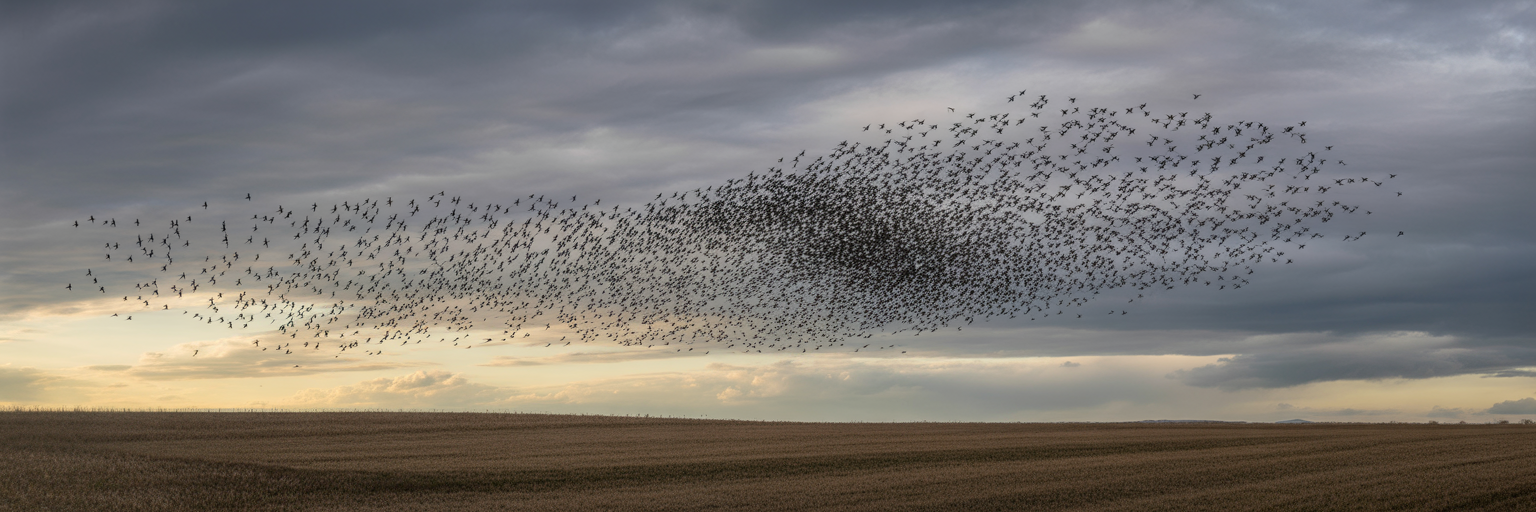
This incredible ability to anticipate weather is not limited to our household pets. It’s a global network of awareness, a deeply embedded system that operates across countless species. From the sky to the sea, animals are constantly reading the environment and adjusting their behavior accordingly. The following table offers a glimpse into this widespread warning system, showcasing the variety of cues and reactions found in the animal kingdom.
| Animal Group | Primary Cues Detected | Instinctive Behavior |
|---|---|---|
| Birds (e.g., Swallows, Starlings) | Drop in barometric pressure, infrasound from distant storms | Fly lower to the ground where air is denser; may suddenly migrate en masse to evade a large storm system. |
| Insects (e.g., Bees, Ants) | Changes in humidity, electrostatic charges in the air | Bees make a frantic, collective return to the hive. Ants work to seal the entrances to their mounds or build them higher. |
| Farm Animals (e.g., Cows, Sheep) | Barometric pressure changes, humidity, infrasound | Often lie down in a field to keep a patch of ground dry; may huddle together or become restless. |
| Sharks | Extreme drops in barometric pressure associated with hurricanes | Flee shallow coastal waters for the safety of deeper, calmer seas days before a hurricane makes landfall. |
| Frogs & Toads | High humidity, smell of geosmin | Become more vocal and active, as rain signals ideal conditions for breeding and finding food. |
Note: This table summarizes common observations and scientific hypotheses regarding animal behavior before storms. The exact mechanisms can vary by species.
These are not just isolated party tricks. They are examples of a deeply interconnected system of environmental awareness. This system operates on a level that most modern humans have lost touch with, a constant stream of information flowing through the natural world. It’s a reminder that there are entire conversations happening around us that we are not privy to. To explore more of nature’s fascinating phenomena, you can visit our main page at NatureIsCrazy.com.
Survival’s Sixth Sense
This brings us to the ultimate question: why? Why would evolution go to the trouble of creating such a sophisticated and sensitive weather detection system? The answer is simple and brutal: survival. This collection of sensory skills is not a curiosity. It is a critical tool, honed over millions of years by the relentless pressure of natural selection.
Think about it from an evolutionary perspective. An animal that could anticipate a flash flood had a better chance of getting to high ground. An animal that could sense an approaching thunderstorm was more likely to find shelter from lightning-induced fires. A shark that could feel the pressure drop of a hurricane was able to flee to deeper waters and survive. The individuals that ignored the signs, the ones that didn’t react to the smell of ozone or the drop in pressure, were more likely to be caught in the open and perish. The survivors, the ones with the more sensitive genes, lived to pass those traits on.
But it’s not just about avoiding danger. For many animals, rain isn’t a threat. It’s an opportunity. It’s a dinner bell. It’s a chance to reproduce. A bird knows that a good rain brings earthworms to the surface. A desert coyote can smell a distant rain and will travel for miles toward that rare, life-giving source of water. For a frog, the smell of rain is a signal that it’s time to find a mate. The “smell of rain” is a complex signal that can mean both “take cover” and “let’s go.”
The ability to smell rain is a perfect example of evolutionary biology at its finest. It’s a fusion of environmental chemistry, atmospheric physics, and pure survival instinct. The result is an animal that is deeply, fundamentally in tune with its world. This sense is just one of many extreme survival adaptations, like the incredible resilience of animals that can survive being swallowed and escape alive.
Reconnecting with Our Own Lost Senses
After learning all this, it’s easy to feel a bit left out. We can’t compete with a bloodhound’s nose or an elephant’s hearing. But the truth is, we are not entirely disconnected from these signals. We can smell petrichor. We can notice the sharp scent of ozone. We just don’t consciously register them as urgent warnings anymore. Our brains have learned to filter them out in favor of other information.
Here’s a small experiment you can try. The next time you have a vague hunch that it might rain, despite a clear forecast, stop for a moment. Pay conscious attention to your senses. What does the air smell like? Is it earthy and damp, or sharp and clean? Does the air feel heavy? This is a simple exercise in reawakening a dormant, primal sense. It’s a way to practice understanding how animals predict weather by trying it ourselves.
The animal kingdom is in a constant state of communication with the planet, receiving and broadcasting information that we typically ignore. By paying closer attention to our pets and the subtle shifts in the world around us, we can not only understand them better but also regain a small piece of that fundamental connection to the Earth’s rhythms.
The final takeaway is one of awe. The next time you see your dog hiding in the bathtub on a perfectly sunny day, don’t just dismiss it as a quirk. Acknowledge their suspicious gift. Take a moment to appreciate the complex, invisible world they navigate so expertly, and maybe, just maybe, grab an umbrella.