The Unsettling Stare of the Lawn Hunter
Picture a perfect suburban lawn. The grass is freshly cut, sprinklers have just finished their morning cycle, and everything seems peaceful. Then you notice it. An American Robin, standing unnervingly still in the middle of the green expanse. It’s not hopping or chirping. It’s frozen, a small, feathered statue with an unnerving intensity.
Its posture is rigid, a study in predatory calculation. The real focus, however, is its eye. It’s a tiny, black bead that isn’t scanning the sky for hawks or the bushes for cats. It’s fixed on the ground with an unblinking stare that feels less like observation and more like interrogation. There’s an intelligence there that seems entirely out of place for a common garden bird. It knows something you don’t.
Then it happens. The iconic head-tilt. The bird cocks its head to one side, holding the pose for a beat too long. It’s a gesture we’ve all seen, one we’ve always associated with listening. But what could it possibly be hearing in the dead silence of a damp lawn? The slow decay of last autumn’s leaves? The secret conversations of ants? The unsettling truth is that it’s listening for something that should be entirely silent.
You watch, and you can’t help but ask yourself questions. How does it know? What signal is it receiving from the hidden world just beneath the blades of grass? The stillness is broken in a flash. The robin lunges forward, a blur of motion. It stabs its beak into the soil with surgical precision and, after a brief, undignified tug-of-war, pulls a wriggling earthworm from its subterranean home. The act is so swift, so certain, it feels less like foraging and more like a magic trick.
The bird, seemingly satisfied with its impossible feat, gulps down its prize and resumes its statue-like pose, ready to do it all again. You are left with a lingering sense of unease. You just witnessed something that defies simple explanation. The common understanding of robin finding worms science feels completely inadequate. You’ve just seen a creature that appears to hear the unhearable, a tiny hunter with a secret, almost alien, sense.
A Case of Mistaken Senses
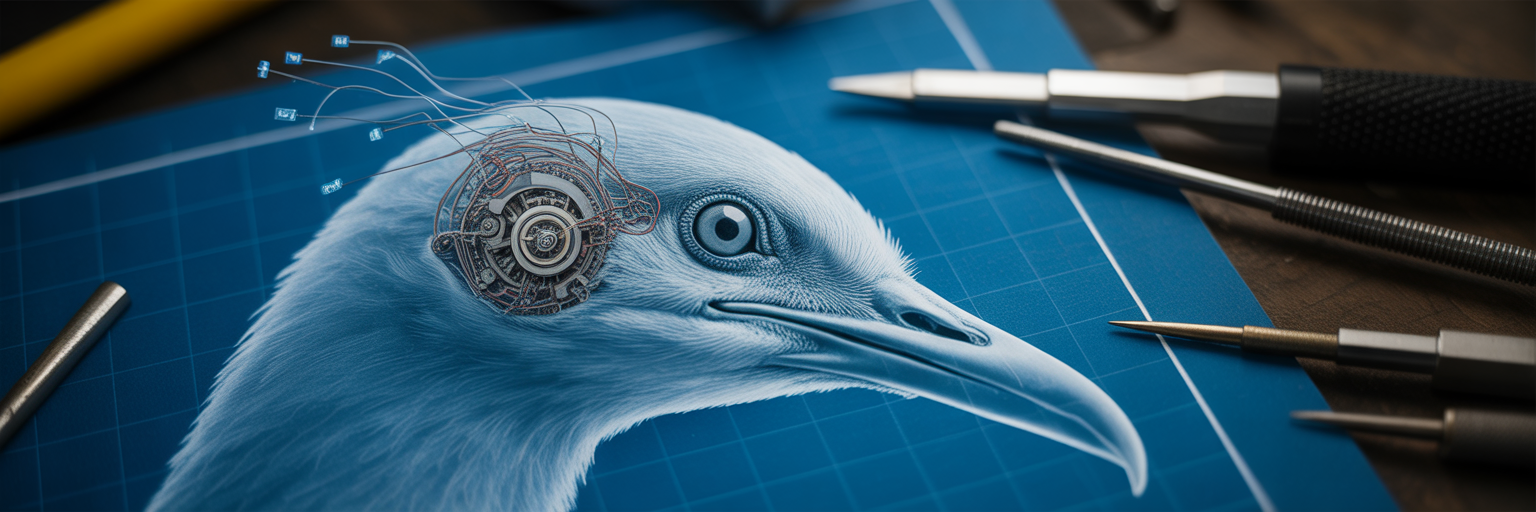
That creepy feeling you get watching a robin hunt is your intuition telling you something is off. The most obvious explanation, that the bird is literally hearing a worm squirming through the dirt, is the one that makes the least amount of sense. The entire performance seems designed to fool us, to make us believe in an auditory superpower that simply cannot exist.
Debunking the Auditory Myth
So, can birds hear worms? The short answer is a definitive no. The physics just don’t work. Imagine trying to hear someone whisper from the other side of a thick concrete wall. That’s a close approximation of what a robin would face. Soil, especially dense, damp soil, is an incredibly poor conductor of airborne sound. It’s a natural soundproofer. The faint, high-frequency rustles and scrapes a worm might make are almost instantly absorbed and muffled by the tightly packed particles of dirt, clay, and organic matter. The signal is too weak, and the barrier is too strong. For a bird’s ears to pick up that sound from above ground would require a level of hearing sensitivity that violates the laws of biophysics.
The Head-Cock: A Perfect Piece of Misdirection
This brings us back to that iconic head-cock. For centuries, humans have watched this behavior and concluded the bird is aiming its ear toward the ground, like a feathered sound engineer trying to get a clean signal. It’s a perfect piece of evolutionary misdirection. The gesture so perfectly mimics our own concept of listening that we’ve accepted it without question. This has only deepened the mystery, reinforcing the idea that the robin is a suspiciously talented creature whose abilities operate outside the known rules. The truth is, the head-cock is a critical part of the hunt, but it has absolutely nothing to do with hearing.
Introducing the Real Weapon: Tactile Sensing
If the robin isn’t using its ears, what is it using? The secret isn’t in its head, but at the very tip of its beak. The bird isn’t listening for the worm; it’s feeling for it. The entire hunting strategy is based on an exquisite sense of touch, a form of tactile sensing so refined it operates at a distance. The ground beneath its beak becomes an extension of its own nervous system, allowing it to detect the faintest movements from the world below. It’s not hearing a whisper through a wall; it’s feeling the vibration of a footstep through the floor.
| Sensory Factor | Auditory Sensing (Hearing) | Tactile Sensing (Feeling) |
|---|---|---|
| Medium for Signal | Airborne sound waves | Vibrations through solid soil |
| Signal Strength | Extremely weak, easily muffled | Faint but travels effectively in right conditions |
| Efficiency in Soil | Very low; soil dampens sound | High; soil particles transmit pressure waves |
| Primary Organ | Ears | Beak tip (mechanoreceptors) |
| Likelihood of Success | Almost zero | Very high for a specialized hunter |
The Bill That Feels the Earth’s Secrets
The idea that a bird can “touch” something without direct contact sounds like science fiction, but it’s the key to the robin’s unsettling success. The bird’s beak is not just a simple tool for pecking and pulling. It is a highly sophisticated sensory organ, an antenna tuned to the secret frequencies of the soil. This ability is made possible by a remarkable biological feature hidden within the tip of its bill.
Meet the Herbst Corpuscle: Nature’s Tiniest Seismograph
The real hero of this story is a microscopic structure called the Herbst corpuscle. The tip of a robin’s bill is packed with dense clusters of these specialized nerve endings. Imagine a tiny, layered onion, with a nerve fiber at its core, all suspended in a fluid-filled capsule. These are the Herbst corpuscles in birds, and they are exquisitely sensitive to the tiniest changes in pressure and vibration. Each one acts as a miniature seismograph, capable of detecting movements far too subtle for our own senses to perceive. When the bird presses its beak to the ground, it’s deploying an array of thousands of these detectors, turning its face into a high-resolution vibration sensor.
The Science of ‘Remote Touch’
This system enables a phenomenon known as “remote touch.” It’s a powerful concept to grasp. Think of your own fingertips, which are among the most sensitive parts of your body. Now imagine if that sensitivity was magnified a thousand times, to the point where you could feel the footsteps of an ant walking across the floor from the other side of the room, just by pressing your hand to the wood. That is the world the robin inhabits. It is, in essence, touching the worm through the medium of the soil. The ground itself becomes a conduit, transmitting information directly to the bird’s brain.
Decoding the Underground Chatter
The bird isn’t just feeling random noise. It’s decoding a language of vibrations. As an earthworm moves, its muscular contractions create rhythmic, predictable pressure waves that radiate through the surrounding soil. These are the signals the robin is tuned to. Its brain acts as a sophisticated processor, analyzing the strength, frequency, and timing of the vibrations received by the different Herbst corpuscles in its bill. By triangulating these faint signals, it can determine the worm’s exact location, its depth, and even its direction of travel. This complex neural computation is a masterclass in signal processing. The brain must filter out all the background noise—the rustle of wind, the vibrations from a distant car, the movements of its own body—to isolate the one true signal that means “food here.” This biological system’s reliance on trustworthy information handling is a principle mirrored in many advanced technologies, where, as insights we shared previously explain, secure data processing is essential for making critical decisions.
A Masterclass in Deceptive Body Language
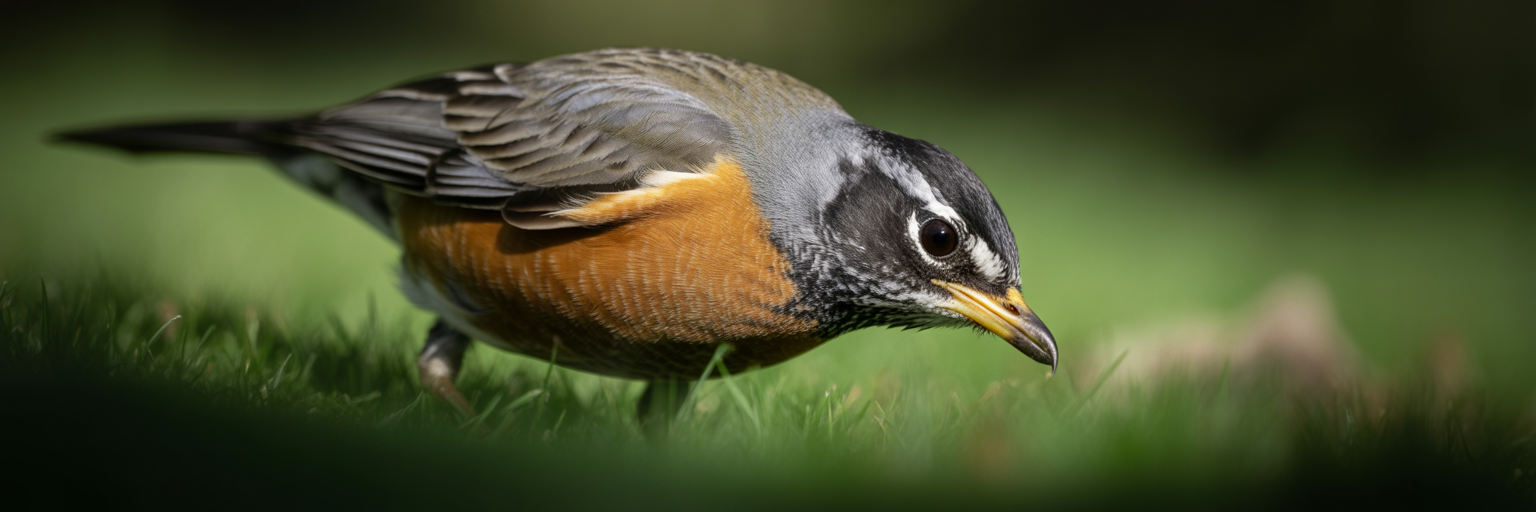
Now that we know the secret lies in the beak, we can revisit that strange, unsettling head-tilt with a new understanding. It’s not an act of listening; it’s a crucial biomechanical maneuver for hunting. The bird’s entire performance is a masterclass in efficiency, and its body language, while deceptive to us, is perfectly optimized for its unique sensory world.
The primary purpose of the tilt is to press the tip of the bill firmly and stably against the ground. Think of a doctor pressing a stethoscope against a patient’s chest. A light, unstable touch yields a weak, noisy signal. A firm, steady press provides a clear, strong connection. The robin is doing the exact same thing. By tilting its head, it can use its neck muscles and body weight to apply consistent pressure, maximizing the surface area of its sensory antenna and ensuring the best possible transmission of vibrations from the soil to the Herbst corpuscles.
This is not a single, static pose. If you watch closely, you’ll see the robin perform a series of tilts at different angles and in different spots. It’s not trying to get a better “listen” but is actively scanning the area. Each press of the beak is like taking a reading, sweeping the ground for the tell-tale vibrations of prey. It’s a methodical, deliberate process of data collection. The bird is building a tactile map of the underground environment, one data point at a time.
This is where the theme of “perfect misdirection” comes into full view. The most efficient way for the bird to use its bill as a sensor has the unintended consequence of making it look exactly like it’s using its ears. Its anatomy and hunting technique have conspired to create a perfect illusion, one that has fueled a myth for centuries. It reinforces the creepy intelligence of an animal whose actions are so hyper-optimized that they inadvertently deceive a completely different species. This kind of bizarre, effective adaptation is a hallmark of the natural world, which is full of Nature’s Unsettling Creations That Defy Belief.
Why Wet Lawns Are the Perfect Hunting Ground
Every gardener knows that robins seem to appear as if by magic after a good rain or a run of the sprinklers. For a long time, the common wisdom was that the rain either drove worms to the surface or simply made the ground softer and easier to dig. While there’s some truth to that, it misses the more profound, physical reason for the robin’s post-rain frenzy. The bird isn’t just taking advantage of easier digging; it’s exploiting a change in the laws of physics to its benefit.
The secret is that vibrations travel much more efficiently through dense, moist mediums. Dry, crumbly soil is full of tiny air gaps. When a worm moves, the pressure waves it creates are quickly scattered and absorbed by these pockets of air, just like sound is muffled by foam insulation. The signal becomes weak and distorted, making it difficult for the robin’s sensitive bill to get a clear reading. It’s like trying to have a conversation in a room full of static.
However, when water is introduced, it fills these microscopic air gaps. The soil particles, water, and organic matter bind together into a more solid, cohesive medium. This wet earth acts as a far superior conductor for vibrations. The worm’s faint pressure waves can now travel further and with much greater clarity. The signal is stronger, the noise is lower, and the robin’s job becomes exponentially easier. The wet lawn is not just a buffet; it’s a high-fidelity hunting ground where every movement below is broadcast in crystal-clear detail.
This shows that the robin has an instinctive, profound understanding of physics. It knows that its sensory equipment works best under specific environmental conditions, and it actively seeks out those conditions. This isn’t just a theory. As highlighted in a recent study published by The Conversation, research on other tactile foragers like the Hadeda Ibis has confirmed their “sixth sense” is far more effective in wet soil. This interplay between biology and environment is a crucial piece of the puzzle in understanding how do birds find worms.
A World of Underground Feelers
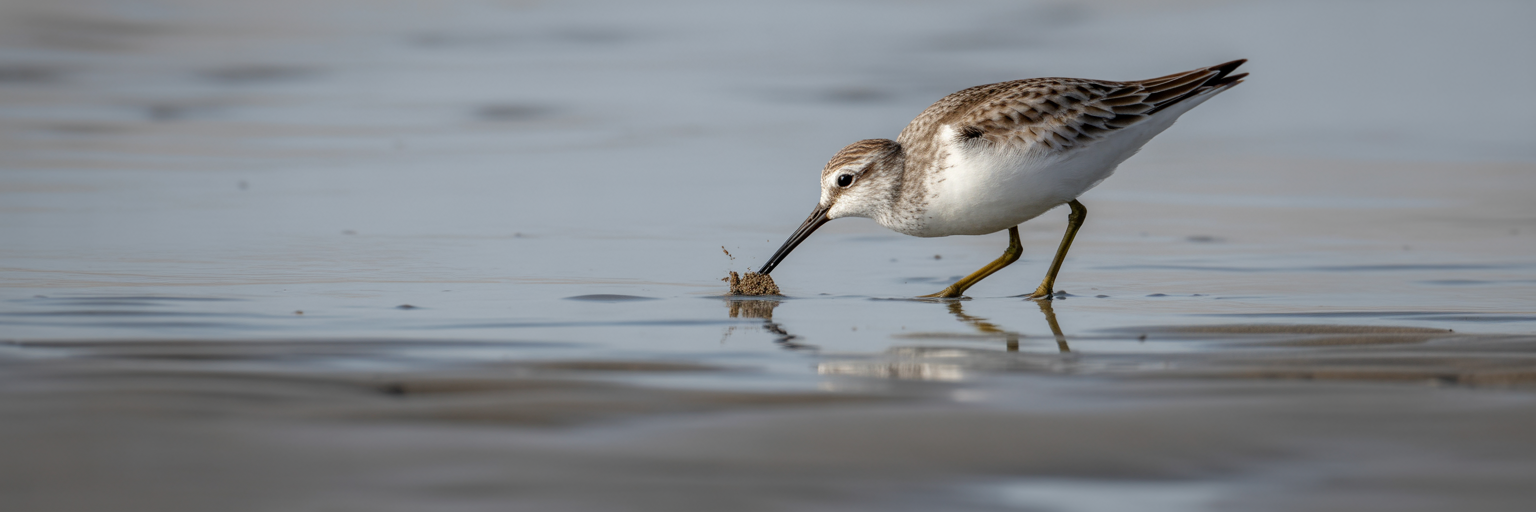
The American Robin’s creepy talent for finding worms is not an isolated fluke of evolution. It’s a window into a widespread and incredibly successful survival strategy. The ability to feel the hidden world beneath the surface is a superpower that has been adopted by birds all over the globe, each species adapting the same fundamental principle to its own unique environment. This strategy of tactile foraging in birds has unlocked a vast and reliable food source completely inaccessible to predators who rely on sight or sound alone.
This sensory advantage is not limited to your backyard. Many different types of birds have evolved this remarkable ability, showcasing nature’s tendency to converge on effective solutions.
- Shorebirds (Sandpipers, Godwits): Their long, slender bills are packed with Herbst corpuscles, allowing them to detect tiny crustaceans and worms buried deep in wet sand and mudflats as the tide recedes. They probe the ground like living metal detectors.
- American Woodcock: This forest dweller probes soft, damp soil for earthworms, even performing a distinctive “rocking” dance that may help generate vibrations to startle prey into moving, making them easier to detect.
- Kiwi: The national bird of New Zealand, this nocturnal creature has an excellent sense of smell but also uses its long beak to probe the ground, likely using tactile cues to pinpoint insects and grubs in the forest litter.
- Hadeda Ibis: A common sight on lawns in Southern Africa, this bird uses its large, curved bill to probe for insects and worms, relying heavily on the same vibration-sensing technique as the American Robin.
This gives these birds a profound competitive edge. While other animals are limited to what they can see, hear, or smell on the surface, these tactile hunters have access to a hidden pantry. The robin’s unsettling talent is a powerful reminder of how limited our own perception is. We are surrounded by creatures experiencing a reality completely different from our own, governed by senses we can barely imagine. The world of bird sensory abilities is vast and strange, challenging our very understanding of what it means to perceive the world.
The robin on your lawn is more than just a bird; it’s a testament to the incredible, often bizarre, solutions that life comes up with. It forces us to appreciate the complexity hidden in plain sight and the vast, secret sensory worlds operating all around us. It’s a world where some animals can navigate without a brain and others have evolved traits so strange they seem impossible, like animals that can survive being swallowed and escape alive. The next time you see a robin standing motionless on the grass, don’t just see a bird. See a master hunter, a geophysicist, and a creature with a secret sense that turns the solid earth into an open book.