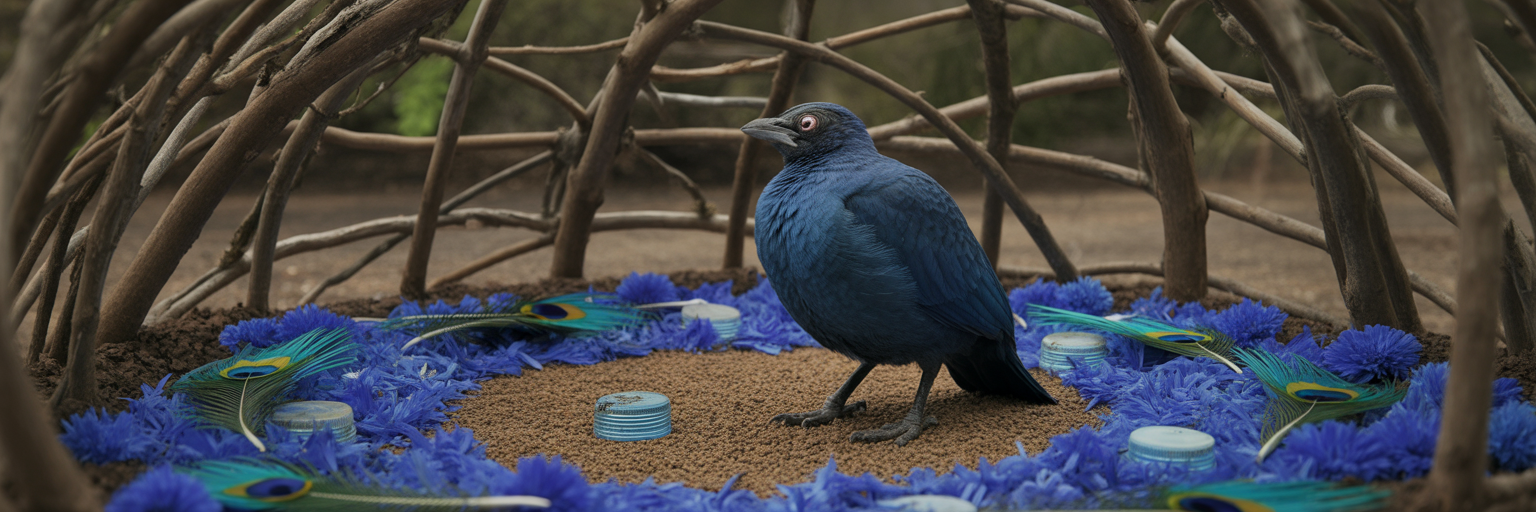
Meet the Winged Perfectionist with a Real Estate Obsession
In the animal kingdom, most creatures build homes for practical reasons like shelter or raising young. Then there is the bowerbird. This is not a creature driven by parental instinct or a need for warmth. This is a feathered fiend, a high-strung artist fueled by an ambition so pure and terrifying it would make a caffeine-addicted architect on a deadline look relaxed. Its entire existence revolves around a single, maniacal focus: interior design.
Let’s clear up a common misunderstanding right away. The elaborate structure it builds is not a nest. A nest is a sensible, functional home for eggs and chicks. The bower is something else entirely. It is a bachelor pad, a meticulously crafted art installation, a stage for seduction. This entire project, which consumes months of the male’s life, is not about creating a family home. It is a high-stakes, one-shot romantic pitch designed to impress a potential mate for a few fleeting moments.
So, what is a bowerbird? It is a creature that embodies the frantic energy of a designer who has just realized the client is arriving in five minutes and the throw pillows are misaligned. Except its pillows are iridescent beetle wings, its statement pieces are discarded bottle caps, and its perfectly arranged gallery wall is made of twigs and snail shells. The sheer labor involved is staggering. Each object is chosen, carried, and placed with an unnerving precision. A single gust of wind or a misplaced leaf can trigger a flurry of frantic adjustments.
This bird dedicates its life to a project that might be used only once, or not at all. It is a level of commitment to aesthetics that feels deeply, wonderfully unhinged. It forces us to ask a fundamental question: what drives this feathered perfectionist to dedicate its entire being to a decorative pursuit? The answer is a strange journey into the worlds of art, evolution, and a degree of aesthetic mania rarely seen outside of Milan Fashion Week.
The Architecture of Unhinged Ambition
Before a single decorative object is placed, the bowerbird must first become an architect. This is not the clumsy piling of twigs seen in other species. This is structural engineering with a terrifyingly specific vision. The male bowerbird operates with the focus of a master builder, and its architectural styles are as distinct as those of any human movement. As noted by Encyclopedia Britannica, these structures vary significantly between species, showcasing a diversity of building techniques that go far beyond simple nest-building.
The Avenue vs. The Maypole: Two Schools of Obsessive Design
The two primary schools of bowerbird thought are the “avenue” and the “maypole.” The avenue bower, favored by species like the Satin Bowerbird, is a corridor built from two parallel walls of twigs. These walls are meticulously woven and angled to create a perfect runway. The design is intentional; it forces the visiting female to view the male from a specific, flattering angle as he performs within the structure. It is less a home and more a theatrical stage, designed to frame the artist perfectly.
In contrast, the maypole bower is a central tower of twigs constructed around a sapling, creating a focal point for a large, decorated court. This style is more like a sculpture in a gallery. The male arranges his collection in circular patterns around the central maypole, and his performance takes place in the open court. While some birds that decorate nests might add a feather or two, the bowerbird builds an entire gallery from the ground up.
Forced Perspective: The Art of Deception
Just when you think the bowerbird’s architectural genius has peaked, you discover its use of deception. Some species, particularly the Great Bowerbird, are masters of forced perspective. They will arrange objects like pebbles, shells, and bones in a gradient, with the smallest items placed at the front of the bower and the largest items at the back. This creates an optical illusion that makes the bower’s corridor appear longer and more impressive to the approaching female. It is a devious, almost manipulative design trick, a calculated lie told with stones and twigs to make the real estate look better than it is. This isn’t a weekend hobby; it’s a life-consuming obsession where a single misplaced twig can lead to a frantic, all-day repair session.
| Feature | Avenue Bower (e.g., Satin Bowerbird) | Maypole Bower (e.g., Vogelkop Bowerbird) |
|---|---|---|
| Primary Structure | Two parallel walls of woven twigs, creating a corridor. | A central column of twigs built around a sapling. |
| Decorative Focus | Objects are concentrated at the entrances and within the avenue. | Objects are arranged in a circular court around the central maypole. |
| Courtship Display Style | Male performs within the avenue, using the walls to frame himself. | Male performs in the open court, using the maypole as a centerpiece. |
| Key Aesthetic Principle | Symmetry, perspective, and creating a focused viewing channel. | Color sorting, radial organization, and creating a 360-degree spectacle. |
A Curator’s Eye for Color and Found Objects
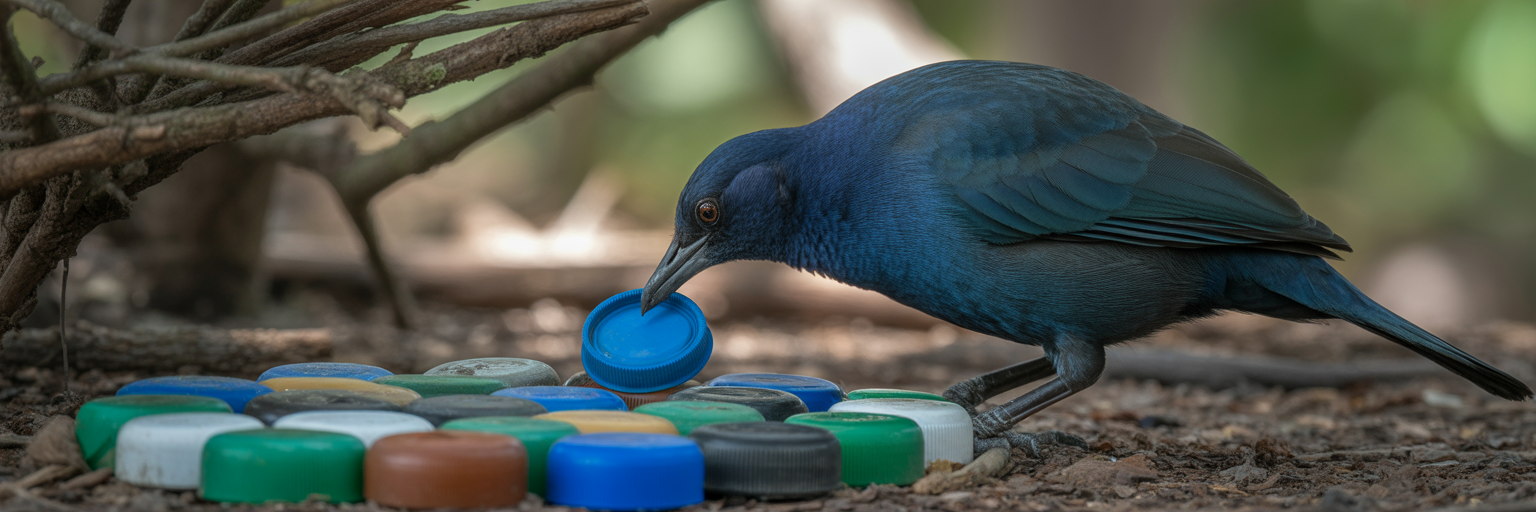
With the architecture complete, the bowerbird transitions from builder to curator. Now begins the relentless quest for objets d’art. The bird scours the forest floor for anything that catches its eye, and its taste is both specific and bizarre. Iridescent beetle wings, colorful flowers, bleached bones, and, in areas near human habitation, a treasure trove of plastic trash all become part of its palette. This is not random collection; it is a carefully managed inventory of aesthetic assets.
The Cult of Blue: An Obsession with a Single Color
Perhaps the most famous example of this curatorial obsession is the Satin Bowerbird’s fixation on a single color: blue. The male will go to extraordinary lengths to find bowerbird blue objects. Blue parrot feathers, blue berries, and, most prized of all, blue plastic items like bottle caps, straws, and pen lids are gathered and arranged with fanatical devotion. The leading theory is that blue is a relatively rare color in nature, so a large and vibrant collection of blue objects is a powerful signal of the male’s foraging skills and intelligence. It’s not just a preference; it’s a chillingly specific aesthetic, like a human designer who refuses to work with anything but a single Pantone shade.
The Art of Arrangement: When OCD Becomes an Advantage
Collecting the items is only half the battle. The true madness lies in the arrangement. The bowerbird sorts its treasures by color and type, creating distinct piles and zones of visual interest. A pile of yellow flowers here, a cluster of white snail shells there, and the prized blue objects displayed prominently at the entrance. The bird is in a constant state of curation, tweaking and adjusting. If a leaf falls into its collection of blue bottle caps, it is removed immediately. This meticulous organization is not just for show. As Scientific American points out, the meticulous arrangement and preference for specific colors suggest a genuine aesthetic sense, blurring the line between instinct and artistry.
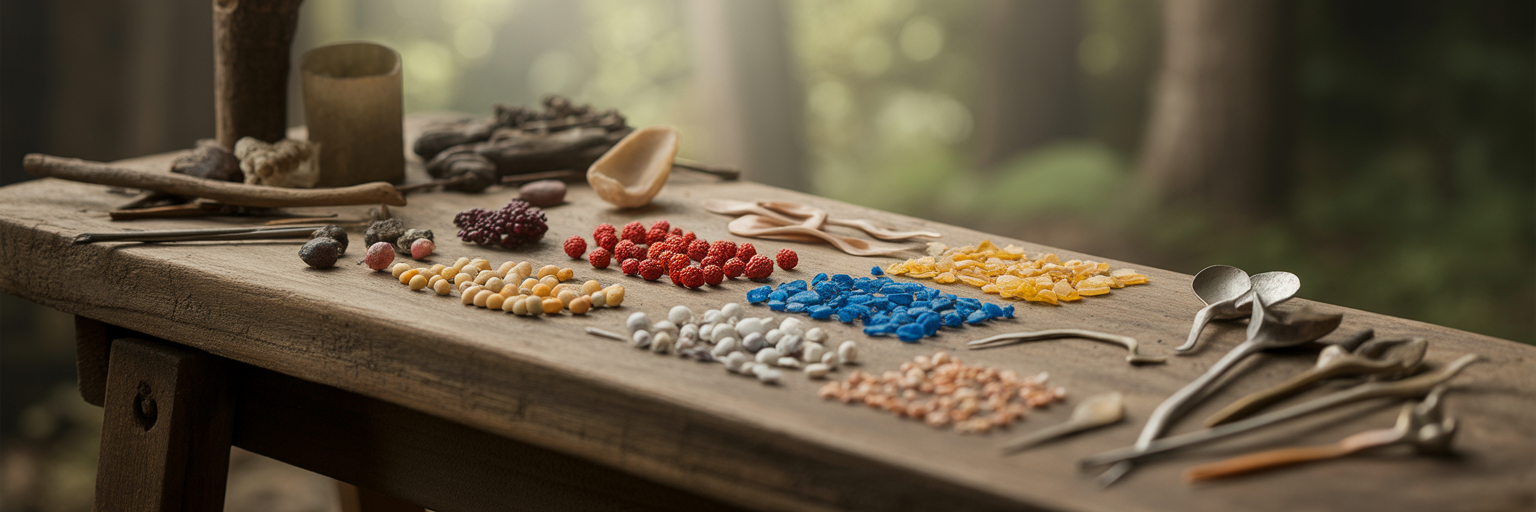
A bowerbird’s shopping list is a testament to its eclectic and obsessive taste. A typical haul might include:
- Vibrant blue parrot feathers and bottle caps.
- Iridescent beetle carapaces.
- White and yellow flowers, replaced daily as they wilt.
- Bleached snail shells and small animal bones.
- Colorful plastic straws, pen lids, and laundry pegs.
- Shiny pieces of glass or foil.
- Brightly colored berries and fungi (for decoration, not food).
Bowerbird ‘Painting’: The Final Step into Madness
Just when you think the bowerbird’s decorative fanaticism can go no further, some species take it a step further. They paint. Certain bowerbirds will chew berries or charcoal to create a rudimentary paste, then use a wad of bark or leaves as a brush to daub the mixture onto the inner walls of their bower. This is the final, absurd step into pure artistry. The bird is not just arranging objects; it is actively altering the color and texture of its creation. This behavior is one of nature’s unsettling creations that defy belief, showing a level of dedication that borders on the absurd.
The High-Stakes Performance for a Ruthless Critic
After months of architectural labor and obsessive curation, the moment of truth arrives. All this madness has a single purpose: the bowerbird mating ritual. The arrival of the female is not a romantic rendezvous. She is a stone-cold art critic, a merciless real estate appraiser with an evolutionary mandate to be brutally discerning. Her job is to judge, and she has seen it all before. She approaches the bower with an air of detached skepticism, ready to find fault in the slightest imperfection.
The male, sensing his audience, explodes into a frantic performance. It is not enough to have a perfect bower; he must now prove he is a worthy artist. He struts and puffs up his feathers, his eyes sometimes dilating in a bizarre, hypnotic display. He performs a complex dance, accompanied by a song that often includes uncanny mimicry of other birds, predators, or even the sound of a snapping twig. He will pick up his most prized decorative objects, one by one, and present them to her in a desperate, almost pleading gesture. “Look at this blue bottle cap! Is it not the most perfect blue you have ever seen?”
The female’s evaluation is swift and ruthless. She assesses the bower’s symmetry, the structural integrity, the quality and rarity of the decorations, and the male’s performance. Is the avenue straight? Is the collection of blue objects impressive enough? Is his dance energetic, his song complex? A messy bower, a lackluster collection, or a clumsy performance means instant rejection. She will simply turn and fly away, leaving the male to his perfect, empty gallery. This is the ultimate pass/fail test, with genetic survival on the line. It is a high-pressure audition for a single role, and the anxiety is palpable. This high-stakes game is a brutal part of the natural world, much like how some animals can survive being swallowed and escape alive, demonstrating the extreme lengths creatures go to for survival and reproduction.
The Evolutionary Psychology of an Avian Artist
This brings us to the ultimate question: why? What evolutionary pressure could possibly produce a behavior so elaborate, so time-consuming, and so aesthetically driven? Are these birds truly artists, or are they just slaves to a bizarre instinct? The truth is likely somewhere in between, positioning bowerbirds as the ultimate animal interior designers. While their drive is rooted in sexual selection, the behavior exhibits many of the hallmarks we associate with human artistry: a sense of aesthetics, a dedication to a vision, and even innovation.
The ‘Honest Signal’: A Résumé Made of Twigs and Trash
The leading scientific explanation for this behavior is the “honest signal” theory. A magnificent bower is an advertisement of a male’s fitness that simply cannot be faked. To build and maintain such a structure, a male must be intelligent enough to master complex architectural techniques. He must be healthy and strong enough to spend months on construction and defense. He must be resourceful enough to locate and collect rare and valuable objects. And he must be dominant enough to protect his creation from rivals. The bower, therefore, is not just a pretty structure; it is a physical résumé of good genes, a detailed portfolio proving his worth to a discerning female.
Cultural Fads in the Bowerbird World
Even more fascinating is the evidence of cultural transmission in bowerbird populations. Young, inexperienced males often build rudimentary bowers near those of older, more successful males. They watch, and they learn. Researchers have observed that decorative “fads” can spread through a local population, much like artistic movements in human society. In one area, a preference for white shells might be the trend, while in another, shiny pieces of green glass become the hot new item. This suggests that the behavior is not entirely hardwired. It is learned, refined, and passed down, a form of culture built around aesthetics. This is one of the strangest animal behaviors on the planet, offering a window into how evolution can produce something that looks so much like conscious art. It’s as fascinating as organisms that can live inside other living creatures without harm, showcasing nature’s bizarre solutions.
Sabotage, Theft, and the Dark Side of Design
The world of bowerbird design is not a friendly neighborhood art fair. It is a brutal, vicious competition where aesthetic jealousy drives rivals to acts of espionage, theft, and outright vandalism. The intense pressure to have the most impressive bower creates a dark underbelly of sabotage. A male bowerbird must be both a brilliant artist and a ruthless security guard, constantly defending his life’s work from competitors who are just as obsessed as he is.
Rival males will actively work to ruin each other’s chances. This isn’t just a matter of out-decorating the competition; it’s about actively destroying their work. The most common tactic is theft. A male will wait until his neighbor is away foraging, then raid his bower to steal the most prized decorations. Those rare blue objects are a prime target. But the sabotage often goes beyond simple larceny. Rivals will deliberately trash a bower, pulling apart the carefully woven twigs and scattering the meticulously arranged objects. It is the avian equivalent of a jealous artist slashing a competitor’s canvas in the dead of night.
To succeed in this cutthroat world, a male bowerbird follows an unspoken code of artistic warfare:
- Conduct Reconnaissance: Constantly monitor your neighbors’ progress and, more importantly, their collection of valuables.
- Steal the Best Stuff: When the rival is away, raid his bower for the rarest, most vibrant objects. A single blue bottle cap can be a major prize.
- Wreck the Foundation: A simple theft isn’t enough. To truly crush a rival’s spirit, dismantle part of his carefully woven structure, forcing him to waste precious time on repairs.
- Create Aesthetic Chaos: If destruction is too risky, simply rearrange his curated objects into a hideous, clashing mess to offend the sensibilities of any visiting critic.
This constant state of aggression and defense is a core part of the bowerbird’s life. The drive for aesthetic perfection is so powerful that it pushes them into a state of paranoia and conflict. This constant state of aggression and defense is a common theme in the wild, where even plants can control the growth of nearby roots to outcompete their neighbors.
Your Living Room Will Never Measure Up
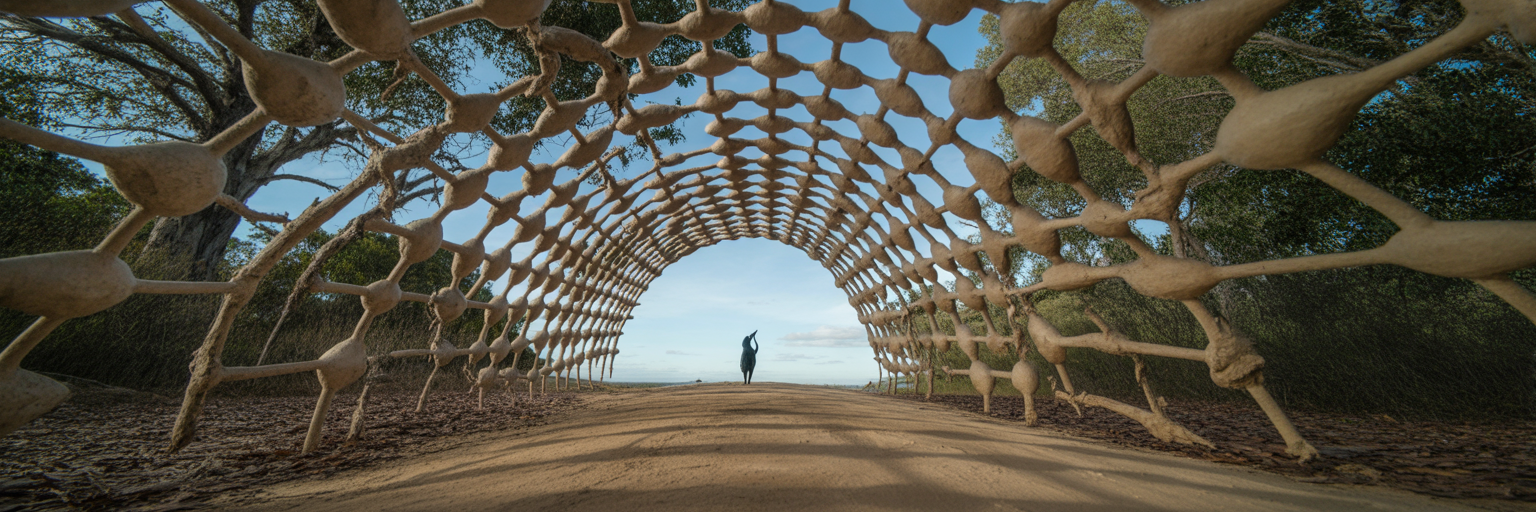
Let’s be honest. Most of us struggle to hang a picture frame straight. We spend weeks agonizing over paint swatches, only to pick a color that looks vaguely beige under artificial light. We call it “eclectic” when our furniture doesn’t match. Meanwhile, a bird in the forests of Australia and New Guinea is creating optical illusions with pebbles and building structurally sound avenues of twigs.
The bowerbird is a symbol of pure, unadulterated dedication to an aesthetic vision. It does not get distracted by trends on social media. It does not compromise its color palette because its partner has a different opinion. It works tirelessly, obsessively, for a single, perfect result, driven by a force that makes our own design ambitions seem quaint and half-hearted.
So the next time you feel a flicker of pride over your new accent wall or that perfectly placed decorative bowl, take a moment to remember the bowerbird. At this very moment, he is probably risking his life to steal a rival’s blue laundry peg, all in the name of artistic integrity. When it comes to interior design, we are all just amateurs. This winged maniac is the true master. This final section should leave the reader with a sense of awe and a slight feeling of inadequacy about their own home, encouraging them to explore more of nature’s strange wonders on Nature is Crazy.