Meet Nature’s Most Hardcore Sunbather
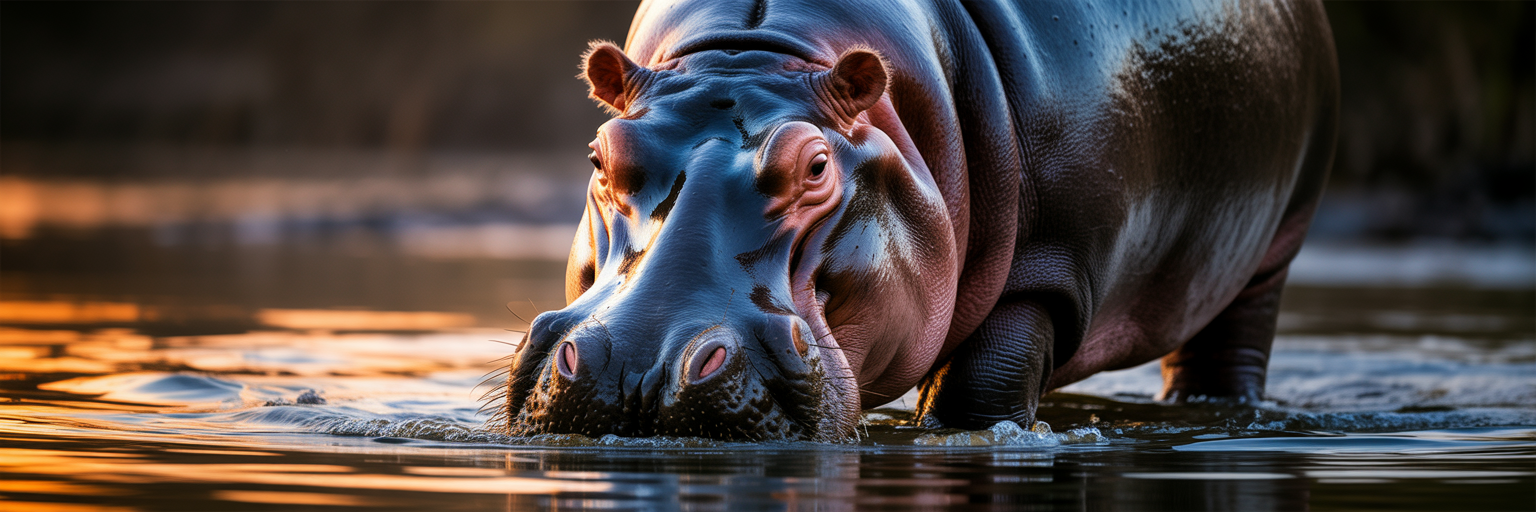
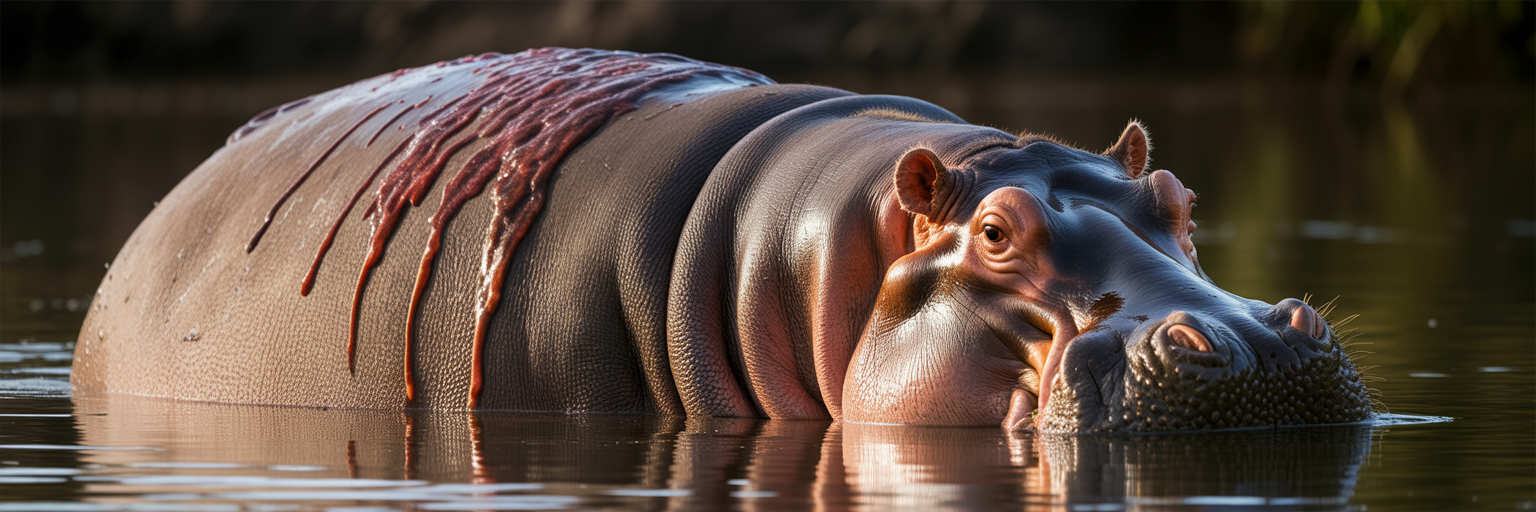
Picture this. You are deep in the African savanna, the sun beating down with an intensity that makes the air shimmer. In a muddy river, a massive creature surfaces. It is enormous, a two ton behemoth of muscle and blubber. As it hauls its colossal frame onto the riverbank, something truly bizarre begins to happen. Its skin, a grayish pink canvas, starts to glisten and then weep a thick, red fluid. It looks for all the world like the animal is sweating blood.
This is not a scene from a horror movie. This is just a Tuesday for the common hippopotamus. We tend to think of them as lazy, blubbery river horses, yawning comically in nature documentaries. But that image hides one of the most metal biological features on the planet. The initial visual of their skin oozing crimson is one of the most startling hippopotamus skin facts you will ever encounter. It looks brutal, painful, and frankly, impossible.
But before you call a wildlife veterinarian, you should know it is not actually blood. The truth is somehow even stranger. The hippo does not need to bleed to protect itself. Instead, it brews its own custom, blood colored goo. This is not a sign of injury but a display of one of nature’s most sophisticated survival tools. It is a biological response that turns the hippo into a walking, self-medicating, self-moisturizing fortress.
To understand this bizarre adaptation, you have to understand the hippo’s core problem. It lives in sub-Saharan Africa, a region defined by intense equatorial sun. Unlike other large mammals, the hippo has sensitive, mostly hairless skin. Yet, it spends a significant portion of its day exposed to that relentless UV radiation. It is an evolutionary paradox. How does a creature with such delicate skin survive under one of the harshest suns on Earth? The answer lies in that gruesome looking “blood sweat,” a substance that is far more complex and brilliant than it first appears.
The Truth Behind the ‘Blood Sweat’
That unsettling red secretion is the hippo’s solution to a very specific set of environmental challenges. While early observers were convinced they were witnessing hippos sweating actual blood, the reality is a carefully orchestrated biological process. This is not a passive leak but an active defense mechanism, a glandular response that has been refined over millions of years. It is a process that is both visually dramatic and functionally brilliant, turning the hippo’s skin into a high performance shield.
From Clear Ooze to Crimson Shield
The transformation of the hippo’s secretion is a spectacle in itself. It does not emerge red. Instead, the process unfolds in distinct stages. First, the substance appears as a colorless, thick, and oily fluid from glands located just beneath the skin. It is a viscous mucus that coats the hippo’s body, giving it a slick, wet appearance even when it is on dry land.
Within minutes of exposure to sunlight, a chemical reaction begins. The clear ooze starts to polymerize, and its color shifts dramatically. It turns a vibrant red orange, creating the startling illusion of hippo blood sweat. This is the phase that has fueled myths for centuries. Over the next few hours, as it continues to react with the air and sun, the secretion darkens further, eventually becoming a dirty brown. It dries into a brittle, lacquer like layer that provides a physical barrier on the hippo’s skin.
Not Sweat, But Something Stranger
It is crucial to understand that this secretion is not sweat at all. Humans and many other mammals sweat primarily for thermoregulation. The evaporation of sweat from our skin cools us down. The hippo’s goo, however, has nothing to do with cooling. It is produced by subcutaneous glands, not sweat glands, and its purpose is purely protective. This functional difference underscores the hippo’s unique evolutionary path. While other animals were developing ways to stay cool, the hippo was busy inventing a multi purpose skin treatment.
A Glandular Response to Danger
The secretion is not just a passive response to being out of the water. Its production is actively triggered by specific stimuli. The most obvious trigger is sun exposure, but it is also released under stress. During territorial disputes, which are frequent and incredibly violent, hippos will often be seen coated in the red fluid. Imagine two of these multi ton animals clashing, their massive jaws capable of snapping a crocodile in half, all while they appear to be bleeding profusely. This dramatic sight undoubtedly adds to their fearsome reputation and may even serve as a visual warning to rivals. For centuries, this spectacle convinced observers that hippos were so aggressive they literally sweat blood in their rage.
Inside the Hippo’s Chemical Sun Shield
Moving beyond the shocking visuals, the science behind the hippo’s secretion reveals a level of chemical sophistication that is truly astounding. This is not just a simple slime. It is a complex, self-activating cocktail that functions as a broad spectrum sunscreen, an antibiotic, and a moisturizer all in one. The groundbreaking discovery and analysis of these pigments were detailed by a team of Japanese researchers. Their 2004 study published in the scientific journal Nature was the first to isolate and identify the key components, confirming their powerful properties.
The Dynamic Duo: Hipposudoric and Norhipposudoric Acids
The stars of this biochemical show are two highly unstable, non-benzenoid aromatic compounds found nowhere else in the animal kingdom. The first is hipposudoric acid, a red pigment that gives the secretion its signature blood like color. The second is norhipposudoric acid, an orange pigment. Together, these two acids form the foundation of the hippo’s incredible defense system. They are the active ingredients in this bizarre but effective animal natural sunscreen.
A Molecular Sunblock
The primary job of these two acids is to absorb harmful ultraviolet radiation. This directly answers the question of how do hippos avoid sunburn. Hipposudoric acid is particularly effective at absorbing UV-B radiation, the kind most responsible for sunburn. Norhipposudoric acid, meanwhile, excels at absorbing longer wavelength UV-A radiation, which penetrates deeper into the skin. Working in tandem, they create a powerful, broad spectrum sunblock. You can think of them as molecular sponges, soaking up dangerous solar energy before it has a chance to damage the hippo’s sensitive skin cells.
The Polymerization Power-Up
What makes this secretion truly remarkable is its ability to become more effective over time. When first secreted, the acid molecules are separate. However, sunlight triggers a process called polymerization, causing the individual molecules to link together into long chains. It is like taking loose LEGO bricks and clicking them together to form a solid, stable wall. This polymerization is what thickens the secretion, turning it from a liquid ooze into a durable, physical barrier that clings to the skin for hours. In a beautiful paradox, the very thing the hippo needs protection from, sunlight, is the catalyst that activates the final and most robust stage of its defense. The unique ability of hippo skin to produce this complex chemical shield is a fascinating example of specialized evolution. Other animals have developed equally bizarre methods for survival, including some that we’ve covered which can regrow skin stronger than before, showcasing nature’s diverse approaches to protection.
| Component | Color | Primary Chemical Function | Analogy |
|---|---|---|---|
| Hipposudoric Acid | Red | Absorbs UV-B radiation and acts as an antibiotic. | The ‘Bodyguard’ that stops the most intense threats. |
| Norhipposudoric Acid | Orange | Absorbs UV-A radiation, which penetrates deeper into the skin. | The ‘Deep Cover Agent’ that handles stealthier dangers. |
| Polymerized Matrix | Darkens to Brown | Forms a stable, physical barrier on the skin after sun exposure. | The ‘Plastic Wrap’ that seals everything in and keeps it effective for hours. |
More Than a Sunblock It’s a Survival Kit

If the hippo’s secretion were only a sunscreen, it would already be one of nature’s most impressive adaptations. But its functions go far beyond simple UV protection. This blood colored goo is a comprehensive survival kit, a multi purpose tool that addresses nearly every major threat to a hippo’s health and well being. It is a potent antiseptic, a built in moisturizer, and likely even a bug repellent, making it indispensable for life in a harsh and dangerous environment.
Hippos are notoriously aggressive and territorial. Fights between males are common and incredibly violent, often resulting in deep, tusk sized puncture wounds. Now, consider their habitat: murky, stagnant water teeming with bacteria. For any other animal, such a wound would be a near certain death sentence from infection. This is where the antiseptic properties of the secretion become critical. Hipposudoric acid has been shown to inhibit the growth of several pathogenic bacteria, including Pseudomonas aeruginosa and Klebsiella pneumoniae, two microbes notorious for causing nasty infections. The hippo essentially slathers its wounds in a natural antibiotic, disinfecting them on the go.
It might seem counterintuitive, but an animal that spends most of its day in water is still at risk of dehydration. When hippos leave the water at night for their hours long grazing sessions on land, their skin is exposed to the dry air. Without protection, it would quickly lose moisture, leading to painful and dangerous cracking. The mucous like consistency of the secretion traps moisture against the skin, keeping it pliable and preventing it from drying out. It is a perfect moisturizer, custom made for the hippo’s unique lifestyle.
Finally, while less studied, it is logical to assume the secretion serves as an insect repellent. The thick, sticky nature of the goo would likely be a significant deterrent to biting flies and other parasites that are rampant in the hippo’s habitat. The acrid chemical composition may also make the hippo an unappealing target. It is an added bonus to an already incredible biological substance. The hippo’s ability to self-medicate and protect against environmental hazards is a masterclass in survival. This theme of overcoming impossible odds is seen across the animal kingdom, even in creatures we’ve explored that can survive being swallowed and escape alive, proving that evolution rewards resilience.
The Evolutionary Blueprint for a Living Sunscreen
This bizarre adaptation did not appear overnight. It is the product of millions of years of evolutionary pressure, a perfect solution sculpted by the unique challenges of the hippo’s lifestyle. To understand why this living sunscreen exists, we have to look at the intersection of the hippo’s physiology, its behavior, and its environment. It is a story of a creature caught between two worlds and the ingenious way nature solved the problems that arose from it.
The hippo occupies a semi aquatic niche that is unique among large herbivores. It spends its days in the relative safety of the water to stay cool and avoid predators, but it must come onto land at night to graze on grass. This dual lifestyle created a complex set of problems. It needed a defense that could work both in the water and on land, one that could protect it from the sun during the day and prevent its skin from drying out at night.
Compounding this problem is the hippo’s physiological vulnerability. Unlike elephants or rhinos, which have thick, tough hides, hippos have a surprisingly thin outer layer of skin, or epidermis. They are also mostly hairless, leaving that delicate skin completely exposed. This combination made them exceptionally susceptible to sunburn, dehydration, and infection. This intense selective pressure favored any mutation that offered even a slight advantage in skin protection, leading to one of the most weird animal adaptations on the planet.
The development of this secretion conferred a massive survival advantage. It allowed hippos to exploit their semi aquatic niche to its fullest potential, minimizing the risks that came with it. This single adaptation is a key reason for their evolutionary success, enabling them to thrive in an environment that would be lethal to other animals with similar skin. This profound physiological adaptation to a specific environment is a hallmark of evolution. Other creatures have developed equally stunning, if less visible, changes to thrive, such as animals we’ve written about that can change their internal organs seasonally to cope with resource scarcity.
Ultimately, the hippo’s secretion is a perfect example of what is known as “evolutionary tinkering.” Nature did not design a sunscreen from scratch. It most likely repurposed existing glandular pathways and biochemicals, modifying and refining them over countless generations. The result is this wonderfully strange, messy, and incredibly effective multi functional survival tool that is perfectly tailored to the hippo’s life.
Nature’s Other Bizarre Bodily Defenses
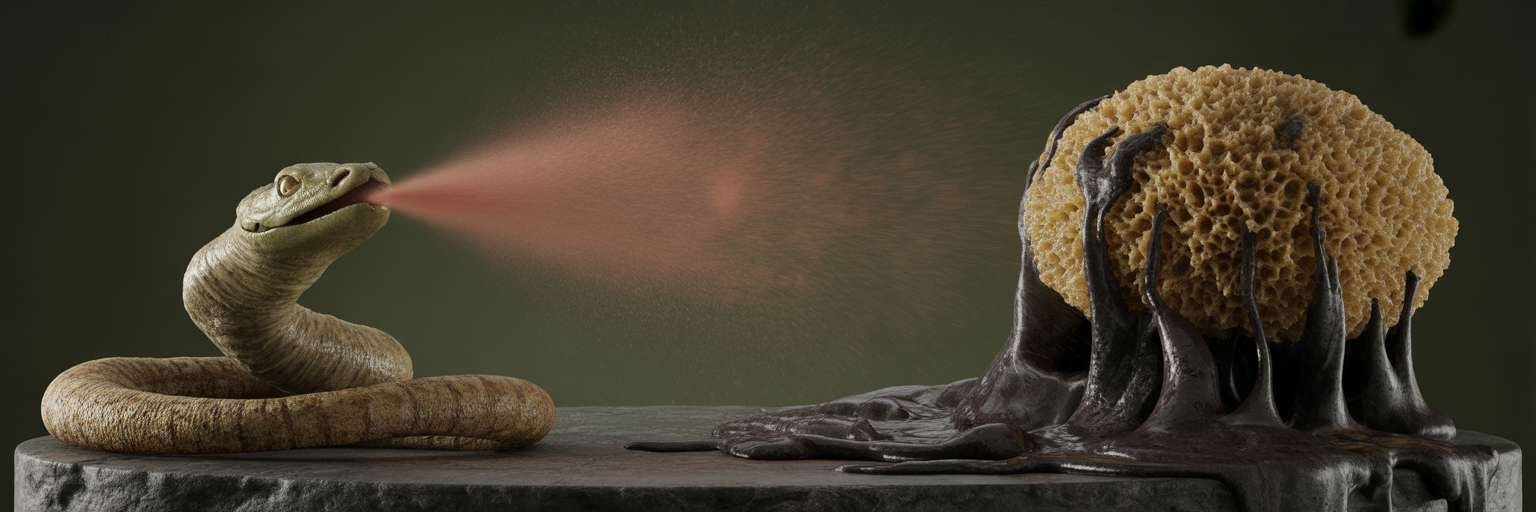
While the hippo’s blood sweat is uniquely impressive, it is not alone in the world of bizarre bodily fluids used for defense. The animal kingdom is filled with creatures that have evolved strange and often gruesome ways to weaponize or repurpose their own biology. Placing the hippo in this context helps reinforce just how insane and creative nature can be, while also highlighting what makes the hippo’s adaptation so special.
Perhaps the most famous example is the Texas horned lizard. When threatened by a predator like a coyote or fox, this small reptile has a truly shocking last resort. It can intentionally rupture blood vessels in the corners of its eyes, shooting a stream of blood up to five feet away. According to National Geographic, this blood contains chemicals derived from the ants that make up the lizard’s diet, making it particularly foul tasting to canids. It is a startling, desperate act of self-defense.
However, when you contrast this with the hippo, the sophistication of the hippo’s strategy becomes clear. The horned lizard’s defense is purely reactive and single use. It is a panic button pressed only in a moment of mortal danger. The hippo’s secretion, on the other hand, is proactive, preventative, and multi functional. It is not a last resort but a daily routine, an integrated system that provides continuous protection from a variety of threats.
Other creatures showcase the diversity of these fluid based strategies. The hagfish, a primitive, eel like creature, can produce gallons of suffocating slime in seconds to choke would be predators. An octopus can deploy a cloud of ink to create a visual screen for a quick escape. These are all effective but limited in their function. They are designed for a single purpose, whether it is defense or evasion.
This is what elevates the hippo to a class of its own. While other animals use fluids for a momentary advantage, the hippo has evolved a chemical cocktail that functions as a complete, daily use skincare and first aid kit. It is a testament to the power of evolution to create not just simple tricks, but complex, integrated systems that solve multiple problems at once.
What the Hippo Teaches Us About Survival
The story of the hippo and its blood sweat is more than just a piece of bizarre trivia. It is a profound lesson in survival, adaptation, and the hidden genius of the natural world. We started with a grotesque image of an animal seemingly bleeding under the sun and discovered a sophisticated, self applying, multi purpose skin treatment that is essential to every aspect of its life. It is a reminder that what appears strange or even repulsive at first glance can hide an elegant and powerful solution.
This incredible adaptation naturally leads to questions about biomimicry. What can we learn from the hippo’s chemical toolkit? Could the stable, UV absorbing polymers in its secretion inspire a new generation of more effective, biodegradable sunscreens for humans? Could the unique antibiotic properties of hipposudoric acid lead to new medicines capable of fighting drug resistant bacteria? The hippo’s strange biology may hold the key to solving some very human problems.
This drive to protect ourselves and our belongings is a deeply human instinct, mirroring the hippo’s biological imperative. We seek out everything from advanced sunscreens for our skin to durable protective coatings for our most-used electronics, all in an effort to withstand the wear and tear of the environment. The hippo simply found a way to manufacture its own.
In the end, the hippopotamus stands as a grotesque and beautiful example of evolution’s ingenuity. It challenges our perception of the lazy, slow moving creature and replaces it with an image of a master of survival. It is a powerful reminder that the natural world is filled with solutions far stranger and more brilliant than we could ever invent. The hippo’s story is just one of countless examples of nature’s unsettling creations that defy belief, each one a testament to life’s relentless drive to adapt and survive. So the next time you see a hippo, don’t just see a big mouth and a lot of blubber. See the chemical engineer, the pharmacist, and the most hardcore sunbather on the planet.