
Meet Nature’s Laziest Overachiever
Imagine living for 80 years. Now, imagine being consciously absent for 75 of them. You get to experience your fifth birthday, a few scattered holidays, and maybe your retirement party, but the rest is just a long, silent blank. This isn’t a flaw or a tragedy. For one particular creature, this is a bizarrely successful evolutionary masterstroke. It’s a life strategy built on the profound principle of doing almost nothing, and it works beautifully.
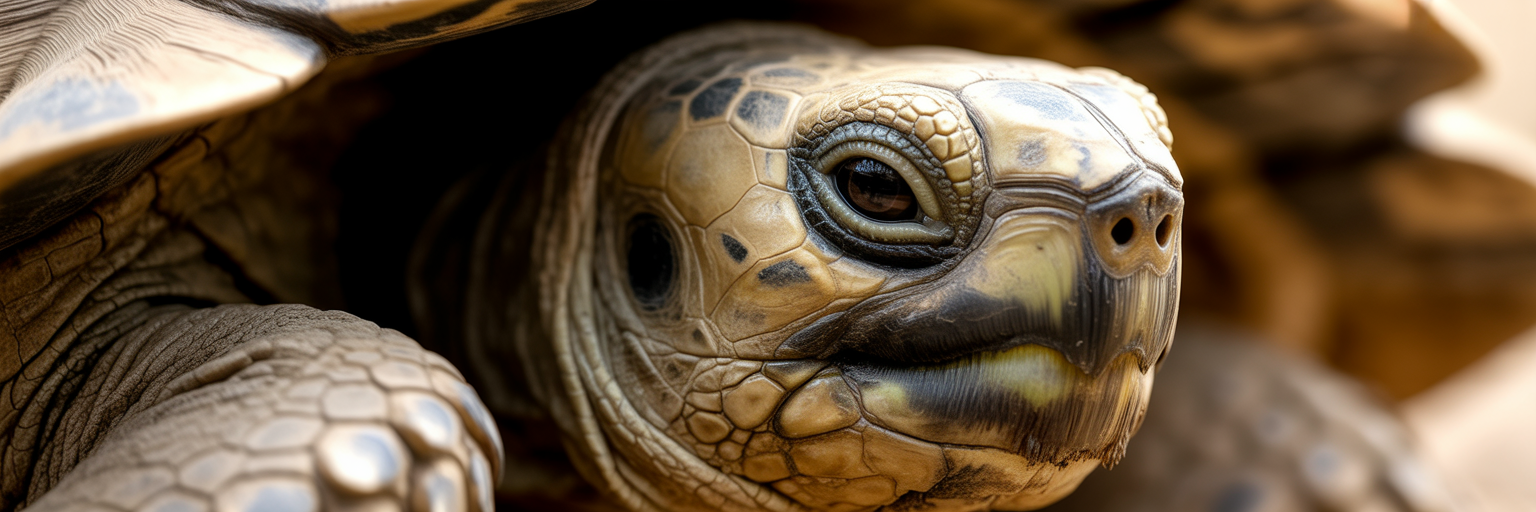
This animal has achieved a long, successful existence by essentially opting out of most of it. It’s the undisputed champion of inactivity, a master of disappearing in plain sight. The creature in question is the desert tortoise, an armored reptile that has perfected the art of the disappearing act.
The potential desert tortoise lifespan can stretch to an impressive 80 years, placing it among some of the longer-lived land animals. Yet, it might only be awake and active for a tiny fraction of that time. To understand this strange existence, you have to understand its home. The tortoise lives in the sun-blasted American deserts, like the Mojave, where the environment is a relentless antagonist. The ground can get hot enough to cook on, rain is a distant memory, and every living thing is locked in a desperate battle for water and shade.
In a place that actively tries to kill everything in it, the tortoise developed a biological cheat code. It doesn’t fight the desert. It doesn’t outrun it. It simply waits for it to go away. Its secret weapon is dormancy, a state of suspended animation that allows it to ghost its hostile surroundings for months, or even years, at a time. It’s a life of profound, strategic laziness.
The Art of the Endless Nap
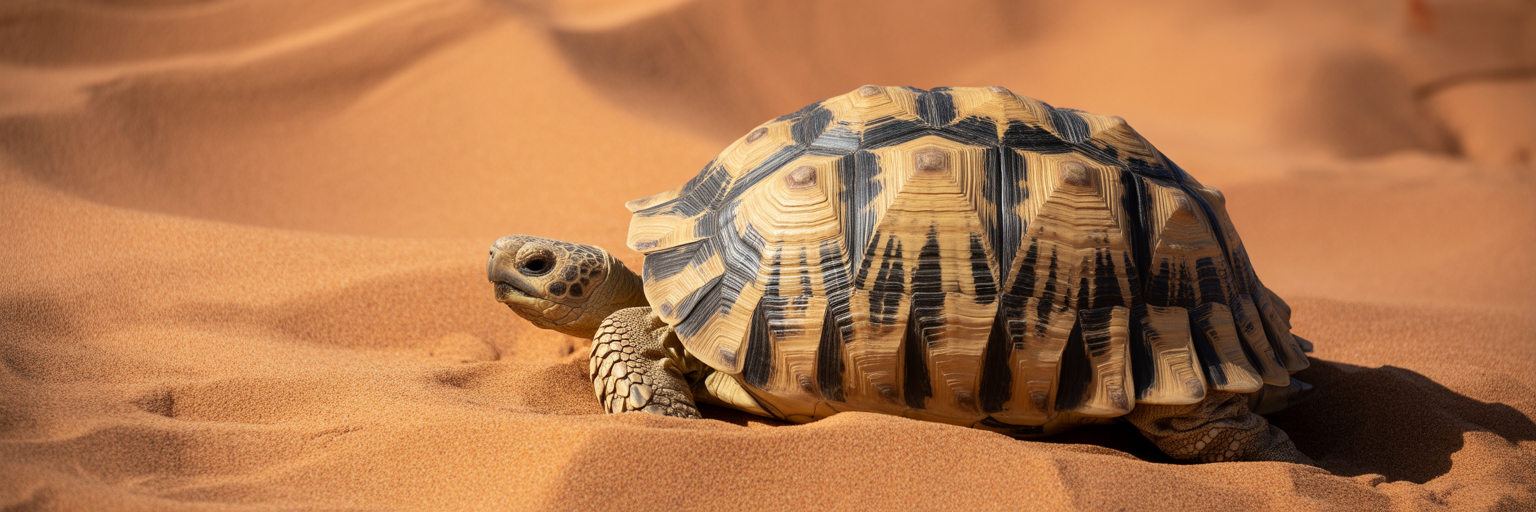
The tortoise’s ability to vanish isn’t just about finding a shady spot for a quick snooze. It’s a deep, physiological shutdown that makes a regular nap look like a frantic sprint. This is a creature that has turned non-existence into a survival tool.
Dormancy: More Than Just a Power Nap
Dormancy is life’s pause button. It’s a state far deeper than sleep, where the body’s systems slow to a near-standstill. Metabolism, heart rate, and breathing all plummet to conserve every last drop of energy. For the desert tortoise, this isn’t a brief rest; it’s a fundamental part of its life cycle, a way to sit out the seasons that are simply too difficult to endure.
Estivation: The Great Summer Shutdown
So, what is animal estivation? It’s the tortoise’s primary tool against the brutal desert summer. Think of it as a self-induced coma to wait out the worst parts of the year. When the heat becomes unbearable and water sources dry up, the tortoise retreats into its burrow and begins the shutdown sequence. It’s a willing descent into a state of suspended animation, a conscious choice to become almost inanimate until the world outside is livable again. This willing entry into a self-induced coma is a profound survival tactic, though some organisms take it even further. As highlighted in an article from Nature Is Crazy, some life forms can survive being completely dried out for years, a process known as anhydrobiosis.
Triggers for the Big Sleep
The tortoise doesn’t decide to estivate on a whim. It responds to clear environmental cues. When ground temperatures soar above 100°F and the last memory of rain has faded, its internal clock signals that it’s time to disappear. It retreats deep into its burrow, its heart rate slows to a crawl, and its breathing becomes so shallow and infrequent that it might appear to have stopped altogether. It’s a slow, deliberate fade into nothingness.
Estivation vs. Hibernation: A Tale of Two Sleeps
While both are forms of dormancy, estivation and hibernation are triggered by opposite problems. Hibernation is a response to cold and food scarcity, a way for animals like bears to survive winter. Estivation, on the other hand, is a strategy for surviving extreme heat and drought. The desert tortoise is a master of estivation, but its commitment to inactivity doesn’t stop there. Many also engage in brumation, a reptilian form of hibernation, during the colder winter months, making them year-round experts at doing absolutely nothing.
Life in a Subterranean Fortress
The secret to the tortoise’s long periods of absence isn’t just its biology; it’s also its architecture. The tortoise spends up to 95% of its life underground, which means its burrow is not just a temporary shelter. It is its true home, a custom-built, climate-controlled fortress that allows it to simply ignore the hostile world above.
The burrow is a work of architectural genius. Dug deep into the desert soil, its structure creates a stable microclimate. On a scorching summer day when the surface temperature is a deadly 140°F, the temperature a few feet down in the burrow can be a pleasant 85°F. It’s a natural bunker against the desert’s thermal warfare, providing a cool refuge in the summer and a warm, insulated space in the winter.
But there’s a creepy reality to this subterranean life. Imagine spending weeks, or even months, sitting motionless in absolute, silent darkness. The tortoise’s life is one spent waiting in a dark hole it dug for itself, a solitary confinement chosen for survival. It’s an unsettling thought: a lifetime of quiet, patient waiting in the dark. The burrow serves multiple, critical functions that make this strange life possible.
- A climate-controlled shelter: It provides a buffer against the extreme temperatures of the desert, both hot and cold.
- A fortress from predators: The burrow offers refuge from coyotes, birds of prey, and other animals that would see the slow-moving tortoise as an easy meal.
- A humidity chamber: The air inside the burrow is more humid than the dry surface air, which helps the tortoise conserve precious water by reducing moisture loss through its skin and lungs.
- An unwilling communal living space: Burrows are prime real estate. Tortoises sometimes find themselves sharing their subterranean apartments with snakes, rodents, or insects, adding to the creepy, underground vibe.
A Body on Standby Mode

The physiological magic behind the tortoise’s long sleep is its ability to put its body on standby. During dormancy, its metabolism slows to a near-standstill. It’s like a smartphone in ultra-power-saving mode, but one that can last for months on a single charge. This is the core of how animals survive desert heat at a biological level: they simply stop participating in it.
The metabolic changes are profound. The heart rate can drop from a normal 20-40 beats per minute to just a few beats per minute. Breathing slows from a couple of breaths per minute to as few as two or three breaths per hour. Oxygen consumption can be reduced by up to 99%. The tortoise is, for all practical purposes, a living statue. This minimalist approach means it needs very little food and water, surviving for extended periods on stored body fat and water recycled within its own body.
This slow-motion life is directly linked to its incredible longevity, but it also poses a creepy philosophical question: is an 80-year life spent mostly unconscious truly 80 years long? The ability to essentially pause life is one of nature’s most unsettling creations, a topic we explore further in our article about creations that defy belief.
| Physiological Metric | Active State (Foraging) | Dormant State (Estivation) |
|---|---|---|
| Heart Rate | 20-40 beats per minute | As low as 1-2 beats per minute |
| Breathing Rate | 1-2 breaths per minute | As few as 2-3 breaths per hour |
| Oxygen Consumption | 100% of baseline | Reduced by up to 99% |
| Primary Energy Source | Recently consumed plants | Stored body fat and water |
Note: These figures are averages and can vary based on the tortoise’s size, age, and specific environmental conditions. They illustrate the profound metabolic depression required for long-term dormancy.
The Brief, Hectic Moments of Being Awake
The tortoise’s life isn’t all silent darkness. When conditions are right, it emerges for short, frantic bursts of living crammed between long stretches of nothing. A rare desert rain acts as an alarm clock, signaling that the world is temporarily safe and full of resources. This is the tortoise’s brief window to get everything done.
Even when “awake,” the tortoise is cautious. It exhibits crepuscular behavior, meaning it avoids the worst of the day by being active only during the cooler hours of dawn and dusk. The desert tortoise sleeping habits are less about a daily cycle and more about a seasonal one, with long periods of dormancy punctuated by these brief, purposeful moments of activity. During this time, it must eat, drink, mate, and travel.
Its diet consists of desert flowers, grasses, and cacti, which it consumes with a slow, deliberate focus. This isn’t just a meal; it’s a calculated effort to consume enough calories and water to fuel the next several months of doing nothing. Every bite is an investment in its next long sleep. Its social life is similarly brief and functional. Interactions with other tortoises are usually centered on mating or competing for resources like food or a prime burrow. This solitary existence is another of the many fascinating animal behaviors, much like how some creatures can navigate without a brain, a concept we explore in another article.
Earth’s Other Extreme Sleepers
While the desert tortoise is a champion of inactivity, it’s not a complete anomaly. The desert is a powerful evolutionary force, and it has produced a variety of brilliant and creepy animal adaptations for survival. The tortoise is just one of many creatures that have found success by embracing extreme strategies.
For example, the fat-tailed dwarf lemur of Madagascar is known as the world’s only hibernating primate. As noted in a Scientific American article, this small creature sleeps for up to seven months of the year, curling up in a tree hole to wait out the dry season. Its strategy, developed in a completely different environment, highlights how different species can arrive at similar solutions to survive harsh conditions.
Other desert dwellers have their own unique tricks. The addax antelope has a coat that changes from brown in the winter to white in the summer to reflect sunlight, and its kidneys are so efficient it can survive almost indefinitely without drinking water. Many other desert rodents, amphibians, and insects also use estivation, burrowing underground to escape the heat. These examples show a spectrum of solutions to the desert problem. The tortoise isn’t a freak of nature; it’s just the valedictorian of the school of doing nothing. Some animals take this even further, developing the ability to change their internal organs seasonally, a bizarre adaptation you can read about in our article.
A Long Life of Quiet Disappearance
The desert tortoise has mastered life by opting out of most of it. Its profound “laziness” is a form of survival genius, a strategy that has allowed it to thrive in one of Earth’s most inhospitable places. Its existence raises a strange question: What does it mean to be alive but not conscious for the vast majority of your life? The tortoise’s life is a quiet, eerie meditation on time and survival.
It demonstrates an unsettling efficiency. It doesn’t fight the desert; it simply waits for it to pass by disappearing. It wins the game by refusing to play for most of the year. In a world that often values constant action and productivity, the tortoise is a slow, armored reminder that sometimes, the most effective strategy is to do nothing at all.
The desert tortoise, arguably the longest sleeping animal in terms of the proportion of its life spent dormant, is a testament to nature’s weird and wonderful solutions. It is both an inspiration for its incredible resilience and a creepy reminder that sometimes, the best way to live a long life is to sleep through it. For more on nature’s strangest phenomena, visit our homepage.